No. Online casinos are not legal in Thailand under the current legal framework. Thailand generally prohibits unauthorized gambling under the Gambling Act B.E. 2478 (1935), and Thai authorities actively treat online casino websites and other forms of internet gambling as illegal gambling operations. The restriction can apply not only to operators but also to people who participate in prohibited gambling.
Quick facts:
- Online casino gambling is illegal in Thailand.
- A casino being licensed in another country does not make online gambling legal for a player located in Thailand.
- Thai authorities actively block gambling websites and investigate operators, promoters and players.
- Thailand has discussed legalizing land-based casinos through entertainment complexes, but those proposals have not legalized online casinos.
- Accessing a gambling website does not mean that using it is lawful.
- Visitors and residents should treat Thai gambling law as applicable while they are in Thailand.
Thailand’s gambling rules are stricter than those of many regulated casino markets. Anyone considering gambling while visiting or living in Thailand should understand the distinction between an accessible offshore website and a gambling service that is actually permitted under Thai law.
Are Online Casinos Legal in Thailand?
Online casinos remain illegal in Thailand in 2026. The primary legislation is the Gambling Act B.E. 2478 (1935), which restricts gambling unless a particular activity is legally permitted or authorized.
The Gambling Act establishes restrictions on prohibited gambling and unauthorized participation.
The practical position is also clear from current enforcement. In June and July 2026, Thai government agencies reported large-scale operations against online gambling websites, including website blocking, investigations and arrests connected with illegal gambling.
This means that players should not interpret the availability of casino websites, apps or payment options in Thailand as proof that online gambling has become legal.
What Do Thailand Online Casino Laws Cover?
Thailand online casino laws are based primarily on gambling legislation that predates the internet, but Thai authorities apply the existing legal framework to modern forms of online gambling.
The restrictions can cover activities such as:
- online casino games;
- online slots;
- online roulette;
- online blackjack and baccarat;
- internet-based sports betting;
- illegal online lotteries;
- operating or administering gambling websites;
- advertising or promoting unauthorized gambling;
- encouraging other people to participate.
Thailand’s Justice Ministry has previously stated that operating online gambling through electronic media can create liability under the Gambling Act, while related financial activity can also trigger other laws in appropriate circumstances.
Players therefore should not assume that the absence of the words “online casino” in a law written decades before modern websites creates a legal loophole.
Can Players Be Punished for Online Gambling in Thailand?
Yes. Thai enforcement is not limited to casino operators. Players can also face legal consequences for participating in illegal gambling.
Thailand’s government specifically warned during its 2026 crackdown on World Cup gambling that players participating in prohibited gambling could be prosecuted under the Gambling Act. In one June 2026 government statement, authorities described penalties for certain gambling participants as potentially including imprisonment of up to two years, a fine of up to THB 2,000, or both, depending on the offense.
Section 12 of the Gambling Act contains different penalty structures depending on the form of gambling and the person’s role. Some offenses involving prohibited games can carry different maximum penalties, so a single penalty figure should not be treated as applicable to every gambling case.
For an individual traveler or resident, the practical conclusion is simple: online gambling should not be considered legally permitted simply because enforcement is more visible against operators than occasional players.
Are Offshore Online Casinos Legal for Thai Players?
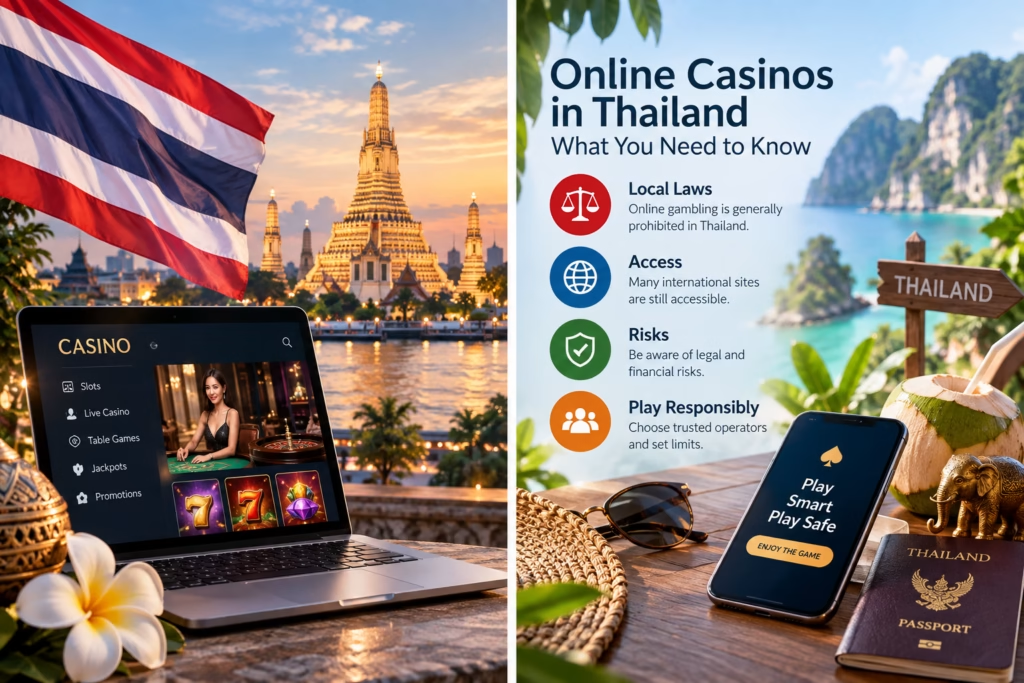
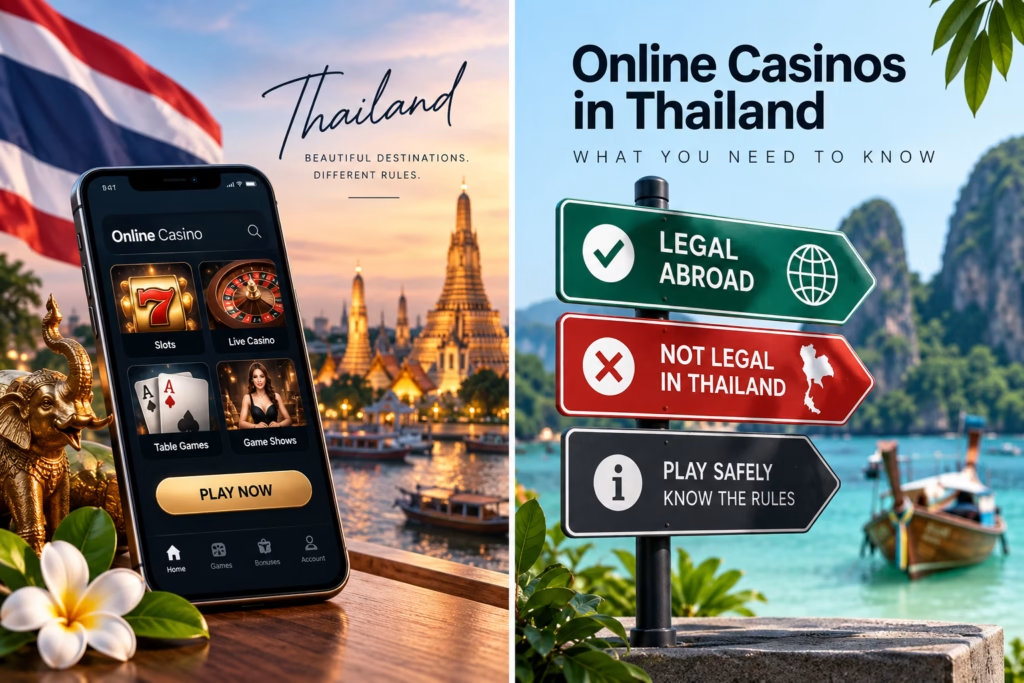
An offshore license does not make an online casino legal under Thai law.
An operator might hold a gambling license from another jurisdiction, but that license regulates the casino under the laws of the jurisdiction that issued it. It does not automatically authorize the casino to offer gambling legally inside Thailand.
This distinction is important because many international gambling websites can technically be opened from countries where the operator has no local license.
A player should separate three questions:
| Question | What it means |
| Can the website be accessed? | A technical question |
| Is the casino licensed somewhere? | A regulatory question about the operator |
| Is online gambling permitted in Thailand? | A Thai legal question |
A “yes” to the first two questions does not create a “yes” to the third.
For someone physically located in Thailand, the relevant concern is whether participating in that form of gambling is permitted under Thai law.
Does Using a VPN Make Online Gambling Legal in Thailand?
No. A VPN does not change the legal status of online gambling in Thailand.
A VPN can change how an internet connection appears geographically, but it does not create legal authorization to participate in an otherwise prohibited gambling activity.
The same principle applies to alternative domains, mirror sites, cryptocurrency payments and casino apps distributed outside conventional app stores. A different method of accessing or funding a gambling website does not automatically change the underlying legal position.
Thai authorities are also actively working to block gambling-related URLs. The Ministry of Digital Economy and Society reported that more than 55,000 gambling-related or associated URLs had been blocked during a World Cup enforcement campaign lasting a little over a month in June and July 2026.
Are Any Forms of Gambling Legal in Thailand?
Thailand permits only limited forms of gambling rather than maintaining a general legal casino market.
The most commonly recognized exceptions include the government lottery and regulated horse racing. Other activities may be subject to specific permissions and conditions under Thai law.
This limited legal gambling environment should not be confused with jurisdictions that license private online casino operators.
A legal lottery ticket in Thailand does not mean that online slots or roulette are legal. Each activity must be considered under the rules that apply to that particular type of gambling.
What About Thailand’s Plans to Legalize Casinos?
Thailand has repeatedly debated whether to allow regulated casinos inside large entertainment complexes, but those proposals have not made online casinos legal.
A major Entertainment Complex Bill was pursued in 2025. The Thai Cabinet withdrew the draft on July 8, 2025, and the House subsequently approved its withdrawal from the legislative process.
Casino legalization has continued to be discussed politically in 2026, but proposed entertainment-complex legislation concerns regulated physical casino resorts. It should not be interpreted as authorization for online casino gambling.
This distinction matters for searchers who see headlines such as “Thailand casino legalization” and conclude that Thai online gambling laws have changed. A proposal, Cabinet discussion or parliamentary bill does not become law merely because legalization is being considered.
Unless legislation is enacted and specifically establishes a regulated online gambling market, the existing restrictions remain the safer legal interpretation.
Can Tourists Gamble Online While Visiting Thailand?
Foreign tourists should not assume that their home country’s gambling laws continue to protect online casino activity while they are physically in Thailand.
For example, a visitor may have an account with a casino legally licensed in another country. That account’s existence does not automatically provide permission to gamble from Thailand.
Travelers should therefore distinguish between:
- having a legal casino account at home;
- being able to log into that account from Thailand;
- being legally permitted to place bets while physically in Thailand.
These are different questions.
The safest approach for visitors is to avoid unauthorized gambling while in Thailand rather than relying on the casino’s foreign license, account history or technical accessibility.
How Thailand Enforces Online Gambling Restrictions
Thailand’s approach includes more than simply banning casino operators on paper. Authorities have demonstrated active enforcement against the online gambling ecosystem.
Measures reported by the Thai government include:
- blocking gambling websites and URLs;
- investigating gambling operators;
- arresting people involved in gambling networks;
- taking action against gambling participants;
- investigating financial flows;
- targeting mule accounts associated with illegal operations;
- acting against advertising and promotional activity.
During the 2026 World Cup period, the Thai government reported enforcement against operators and individual gamblers as part of nationwide anti-online-gambling operations.
The Ministry of Digital Economy and Society has also reported hundreds of thousands of illegal URLs being blocked during fiscal 2026, with online gambling representing a significant proportion of enforcement activity.
These actions make it particularly risky to treat Thailand as a market where online gambling is technically prohibited but effectively tolerated.
Common Misconceptions About Online Casinos in Thailand
“The casino accepts Thai baht, so it must be legal”
No. Supporting THB deposits or displaying a Thai-language website does not prove that an operator has legal authority to provide online gambling in Thailand.
“The casino has an international gambling license”
A foreign gambling license can be relevant when evaluating the operator in the jurisdiction that issued the license, but it does not override Thailand’s domestic gambling laws.
“I can access the website, so it has not been banned”
Website accessibility is not a legal test. Blocking measures can change, operators can move to new domains and mirror websites can remain accessible temporarily.
“Casino legalization means online casinos are becoming legal”
Not necessarily. Thailand’s most prominent legalization proposals have concerned physical casinos within entertainment complexes. Land-based casino legislation and online casino regulation are separate legal issues.
“Only casino operators are prosecuted”
Thailand has also taken action against players and other people involved with illegal gambling. Recent official government communications specifically describe enforcement against gambling participants.
What Should Players Check Before Gambling in Another Country?
Anyone interested in online casino gaming should verify local laws before placing a real-money wager. Gambling regulation is territorial, so a casino that can legally serve players in one jurisdiction may be prohibited in another.
Check:
- whether online casino gambling is legal where you are physically located;
- whether operators require a local license;
- whether the specific casino holds the required license;
- whether local law restricts players as well as operators;
- whether deposits and withdrawals are legally supported;
- whether the operator offers responsible gambling tools;
- whether gambling winnings create tax or reporting obligations.
For Thailand, the key issue currently appears before the casino comparison stage. Real-money online casino gambling itself remains prohibited rather than being a locally licensed consumer market.
How This Information Was Reviewed
This legal overview is based on Thailand’s Gambling Act and current Thai government enforcement information, including official reports concerning online gambling website blocking and prosecutions in 2026. The Gambling Act is an older statute with different provisions and penalties for different gambling activities, so individual cases can depend on the precise facts and applicable provisions.
Casino legalization proposals should also be checked separately from current law. A draft entertainment-complex law, political announcement or future proposal does not by itself legalize either physical casinos or online gambling.
This article provides general information, not individual legal advice. Anyone facing an investigation, prosecution or other specific legal issue in Thailand should consult a qualified Thai lawyer.
Gambling should be treated as entertainment rather than a source of income. Where gambling is legal, players should set spending and time limits and never gamble with money needed for essential expenses.
FAQ
Are online casinos legal in Thailand?
No. Online casinos are not currently part of a legal, locally regulated gambling market in Thailand. Unauthorized gambling is restricted under the Gambling Act, and Thai authorities actively target online gambling websites and networks.
Is it illegal to play at an offshore casino from Thailand?
A foreign casino license does not authorize online gambling under Thai law. A player physically located in Thailand should not assume that an offshore license, foreign account or accessible website makes real-money casino gambling legal.
Can you be arrested for online gambling in Thailand?
Yes. Thai authorities have reported arrests and prosecutions involving gambling participants as well as operators. The applicable penalty depends on the conduct and legal provision involved.
What is the punishment for online gambling in Thailand?
Penalties vary according to the offense and form of gambling. Thailand’s government has stated that certain gambling participants can face up to two years in prison, a fine of up to THB 2,000, or both, while Section 12 provides different penalty ranges for particular prohibited games and roles.
Are crypto casinos legal in Thailand?
Using cryptocurrency does not by itself make an online casino legal in Thailand. The payment method and the legality of the underlying gambling activity are separate issues.
Can tourists use online casinos in Thailand?
Tourists should not assume that a casino account that is legal in their home country can legally be used for gambling while they are in Thailand. Local Thai law is the relevant consideration when gambling from within Thailand.
Will Thailand legalize casinos?
Thailand has considered legislation for land-based casinos inside entertainment complexes. A major bill was withdrawn in July 2025, and casino legalization has remained a political topic. Any future law would need to complete the legislative process before changing the current legal position.
Would legal land-based casinos make online casinos legal too?
No, not automatically. Regulation of physical casinos and regulation of internet gambling are separate matters. Legislation allowing casino resorts would need specific provisions for online gambling before it could be treated as authorization for online casinos.
Is online sports betting legal in Thailand?
Unauthorized online sports betting is treated as illegal gambling in Thailand. Thai authorities carried out extensive enforcement against online football betting during the 2026 World Cup, including action against operators and bettors.
Does a VPN make online casinos legal in Thailand?
No. A VPN changes technical routing or apparent location, not the law governing the gambling activity. Players should not treat VPN access as a legal exemption.
Brief Conclusion
Online casinos are not legal in Thailand in 2026. Thailand continues to restrict unauthorized gambling under the Gambling Act and actively blocks online gambling websites while investigating operators, promoters and players. Offshore licensing, cryptocurrency payments, VPNs and simple website accessibility do not create an exemption from Thai gambling law.
Thailand may continue debating regulated land-based casinos and entertainment complexes, but proposals for physical casino resorts should not be confused with legalization of online gambling. Until Thai law specifically changes, players in Thailand should treat real-money online casino gambling as prohibited.