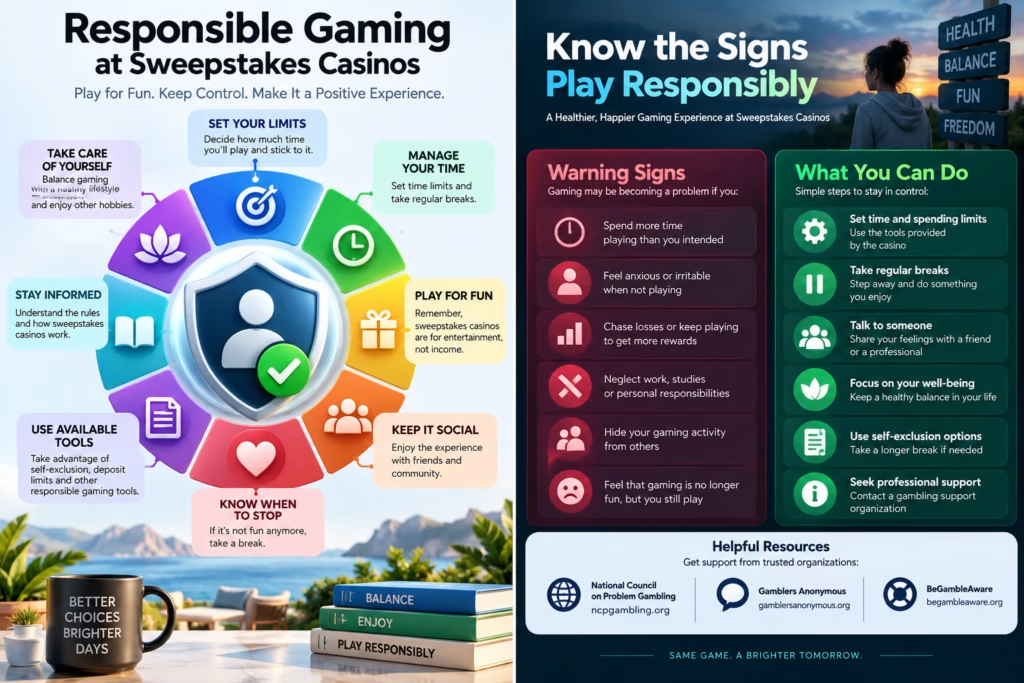
Sweepstakes casino responsible gaming means keeping play within clear limits for money, time and frequency, while using account controls when those limits become difficult to maintain. Sweepstakes casinos may use virtual currencies and promotional sweepstakes mechanics rather than the same account structure as conventional real-money online casinos, but excessive play can still create financial, emotional and behavioral harm.
The safest approach is to decide your limits before opening a game, track every purchase rather than only your current coin balance, and stop playing when you start chasing previous spending. Responsible gaming tools can help, but the exact controls available vary by platform and country.
Key points to remember:
- Treat every optional coin-package purchase as entertainment spending.
- Set a fixed spending and time limit before playing.
- Never increase spending to recover previous purchases or unsuccessful sessions.
- Check whether the platform offers purchase limits, cool-off periods, account closure or self-exclusion.
- Use self-exclusion when ordinary limits are no longer enough.
Responsible gaming is especially important for players who use sweepstakes casinos frequently, purchase coin packages regularly or find themselves extending sessions beyond the time or money they originally intended.
What Responsible Gaming Means at a Sweepstakes Casino
Responsible gaming at a sweepstakes casino means remaining in control of how much time and money you commit to the platform. The goal is not to find a system that makes casino-style games profitable. Game outcomes remain uncertain, and previous results do not create an obligation for a future game to compensate you.
Sweepstakes casinos can feel different from conventional gambling sites because platforms may use virtual currencies, free-entry mechanisms and promotional sweepstakes currencies. Those differences should not make spending limits less important. If real money is being used to purchase optional packages, that spending should be included in your entertainment budget regardless of how the virtual currency is described.
Impaired control, increasing priority given to gambling and continued participation despite negative consequences are widely recognized warning signs of gambling-related problems. Harm can also occur before a person meets the threshold for a clinical disorder.
Set a Sweepstakes Casino Budget Before You Play
A sweepstakes casino budget should be an amount you can spend without affecting rent, food, debt payments, savings, medical expenses or other essential commitments.
The important part is setting the number before the session begins. A limit created after several purchases is easier to change because the decision is being made while you are already involved in play.
For example, if your monthly entertainment budget is $200, that does not automatically mean all $200 should be available for sweepstakes casino purchases. You may decide that only a small fixed portion can be used for casino-style entertainment while the rest remains available for movies, games, restaurants or other activities.
A useful responsible gaming rule is simple:
Money allocated to sweepstakes casino play should be considered spent as soon as it is used for an optional purchase.
Do not mentally restore the budget because you redeemed a prize earlier in the month. This accounting method makes it easier to see how much the activity is actually costing you.
Track Purchases, Not Just Virtual Coin Balances
Virtual currencies can make spending harder to judge because the number displayed on the screen is separated from the amount originally paid.
A player may remember having thousands of virtual coins while forgetting that several separate purchases were required to obtain them. For responsible gaming purposes, the meaningful number is the total amount of real money spent.
Keep track of:
- the date of every optional purchase;
- the real-money amount paid;
- total spending for the week or month;
- the length of major playing sessions;
- any attempts to exceed the original budget.
A simple banking history or personal spreadsheet can reveal patterns that are difficult to notice while playing.
Set Time Limits as Well as Spending Limits
Responsible gaming requires both financial and time boundaries. A player can stay within a small monetary budget while still spending far more time on casino-style games than intended.
Decide how long a session can last before it begins. An alarm or timer can create an external stopping point rather than relying on how the session feels.
Longer play is particularly worth reconsidering when you notice yourself saying that you will stop after the next bonus, the next win or after recovering what you previously spent. Those conditions can keep moving as the session continues.
Casino-style games should remain one form of entertainment among many. If playing begins replacing sleep, exercise, work, relationships or other normal activities, reducing access is more useful than simply creating another informal promise to stop earlier next time.
Never Chase Previous Spending
Chasing occurs when a player increases spending or continues playing primarily to recover money lost or previously spent.
A common example is making another coin-package purchase because the previous session was unsuccessful and you feel that quitting now would make the earlier spending pointless. The earlier purchase is already a past expense. A new purchase does not improve the mathematical value of the previous one.
Casino-style game outcomes are uncertain, so extending a session cannot guarantee recovery.
If your main reason for continuing is to get back to where you started, ending the session is usually the more protective decision.
Responsible Gaming Tools to Look For
Responsible gaming controls differ between sweepstakes casinos, so players should check the platform’s current responsible play page and account settings rather than assuming a specific feature is available.
Useful controls may include:
| Responsible gaming tool | What it can do |
| Purchase limit | Restrict how much can be spent during a defined period |
| Cool-off period | Temporarily block or restrict access |
| Time reminder | Show how long a session has lasted |
| Account closure | Close access to an account |
| Self-exclusion | Prevent account access for a longer defined period |
| Marketing opt-out | Reduce promotional emails, notifications or messages |
| Transaction history | Help review previous purchases and activity |
A platform offering several clearly explained controls provides more options when a simple personal budget is not sufficient.
Sweepstakes Casino Self-Exclusion Explained
Sweepstakes casino self exclusion is a stronger account restriction intended for someone who wants to stop accessing a platform rather than merely reduce play.
Self-exclusion is different from taking a short break. A cooling-off option may temporarily restrict access, while self-exclusion can involve a longer period and may be harder to reverse.
Before requesting self-exclusion, check:
- how long the exclusion lasts;
- whether it can be reversed;
- whether promotional communication will stop;
- what happens to any remaining virtual currencies;
- how pending prize redemptions are handled;
- whether the exclusion applies only to one website or to related brands.
Self-exclusion at one sweepstakes casino should not automatically be assumed to block access to every other platform. Coverage depends on the operator, its affiliated brands and any applicable exclusion system.
When Self-Exclusion Is Better Than a Spending Limit
Self-exclusion becomes more appropriate when you repeatedly set limits and then break them.
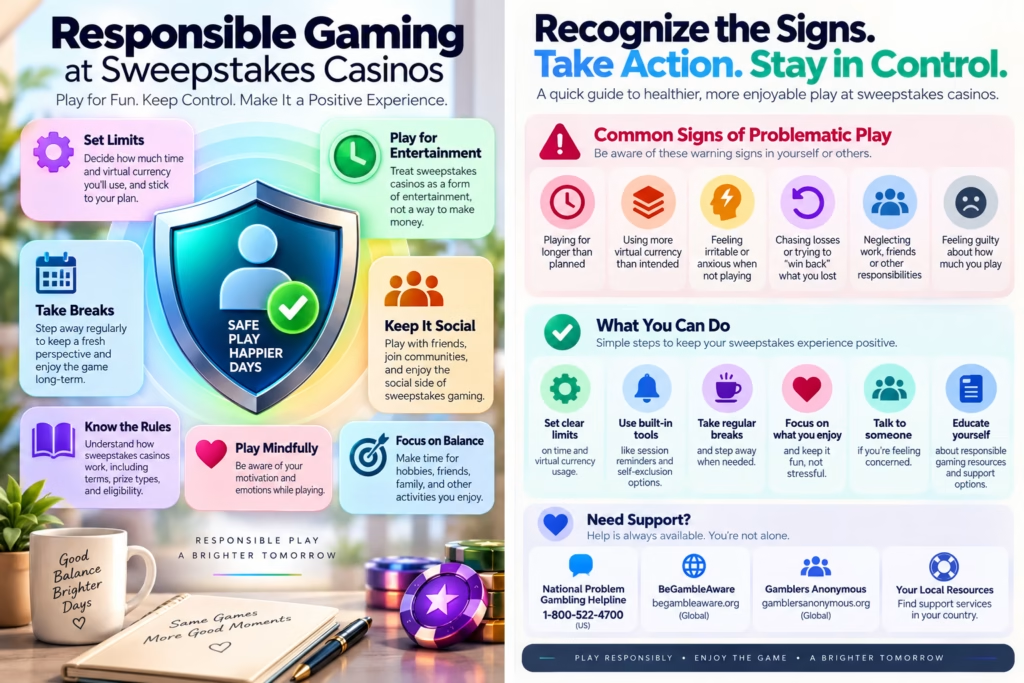
Warning signs can include repeatedly making unplanned purchases, opening the casino when you intended not to play, creating new accounts after restricting another account, hiding spending or playing primarily to recover previous losses.
Another warning sign is emotional dependence on the next session. If playing becomes a response to stress, anger, loneliness or financial pressure, simply reducing the maximum purchase amount may not address the underlying pattern.
Self-exclusion creates more distance between an urge and the ability to act on it. Stronger account restrictions can be useful when informal limits are repeatedly ignored.
Combine Self-Exclusion With External Controls
Self-exclusion is stronger when it is supported by controls outside the casino account.
Possible measures include blocking gambling-related websites on your devices, removing stored payment details, disabling promotional notifications and using payment or banking controls where they are available.
Someone who has accounts with several casino-style platforms should review all of them rather than closing only the account that was used most recently.
If promotional emails or push notifications trigger an urge to return, unsubscribe or disable them. The purpose is to reduce the number of situations in which you need to make another decision about whether to play.
How to Choose a Sweepstakes Casino With Better Responsible Gaming Controls
Responsible gaming features should be part of the selection process before you make a purchase.
Look for a clearly accessible responsible gaming section explaining account restrictions in straightforward language. Self-exclusion instructions should not require searching through unrelated promotional pages.
Also check whether the operator explains purchase history, account closure, eligibility requirements, prize-redemption rules and customer-support procedures.
A useful checklist is:
- Can you see your purchase history?
- Can you request a temporary break?
- Is longer-term self-exclusion available?
- Can promotional communication be disabled?
- Are account restrictions clearly explained?
- Can customer support explain what happens during exclusion?
- Are prize-redemption rules accessible before making purchases?
- Are eligibility and age requirements easy to find?
Do not assume that a well-designed homepage means equally strong responsible gaming controls. Check the tools themselves before playing.
Free Play Does Not Remove the Need for Limits
Free entry or free virtual coins can reduce direct financial exposure, but they do not automatically prevent excessive play.
Time is also a meaningful limit. Repeatedly checking promotions, collecting bonuses throughout the day or playing for long periods can become disruptive even without large purchases.
Free offers can also lead some players back into paid purchases. If that pattern makes it difficult to maintain a budget, restricting access to the platform may be more effective than relying on free-play-only intentions.
Common Responsible Gaming Mistakes
Treating Previous Purchases as Money That Must Be Recovered
Money already spent should not determine whether you make another purchase. Trying to recover previous spending can turn a limited entertainment session into repeated unplanned purchases.
Increasing the Budget During a Losing Session
A limit that can be increased whenever play is unsuccessful is not functioning as a real limit. Budget changes are better considered away from the casino and after enough time has passed to make a calm decision.
Believing a Long Losing Streak Makes a Win More Likely
Previous independent game outcomes do not create a guaranteed future win. A long unsuccessful session is not evidence that continuing will recover the cost.
Using Prize Redemptions to Justify Higher Spending
A previous redemption does not guarantee another one. Keep records of total spending rather than remembering only successful sessions.
Relying Only on Willpower
Account restrictions, timers, website blocking and payment controls create additional barriers. These tools can be particularly useful when personal limits have already been broken several times.
When to Stop Playing Completely
Stopping completely is worth considering when sweepstakes casino play is affecting essential spending, relationships, work, sleep or emotional wellbeing.
Other reasons to stop include borrowing money to continue, hiding purchases, repeatedly breaking personal limits or feeling unable to reduce play despite wanting to.
Gambling-related harm can include financial distress, relationship problems and mental-health consequences, and harm can occur before someone reaches a clinical threshold for gambling disorder.
If stopping independently is difficult, professional gambling-support services or healthcare professionals can provide additional help. The appropriate organization depends on your country, so use a recognized local service rather than assuming a helpline from another jurisdiction covers your location.
How This Information Was Reviewed
This guidance focuses on practical indicators of control: real-money spending, session length, repeated limit changes, chasing behavior, account restrictions and self-exclusion.
Responsible gaming features vary between sweepstakes casinos, so purchase limits, cooling-off periods, exclusion duration and account rules should always be verified directly in the current operator terms.
No responsible gaming tool can make an uncertain casino-style game profitable or guarantee a favorable result. Sweepstakes casino games should be treated as entertainment rather than a way to generate income.
Individual responsible gaming choices cannot eliminate all gambling-related harm. Effective limits, self-exclusion mechanisms and broader consumer protections can provide additional safeguards.
FAQ
What is sweepstakes casino responsible gaming?
Sweepstakes casino responsible gaming means controlling the time and real money you spend on casino-style entertainment and using stronger restrictions when personal limits stop working. Set financial and time limits before playing, track optional purchases and avoid trying to recover previous spending through additional play.
Do sweepstakes casinos offer self-exclusion?
Some sweepstakes casinos provide self-exclusion, account closure, cooling-off periods or similar restrictions, but availability and rules vary by operator. Check the casino’s current responsible gaming policy to see how long exclusion lasts, whether it can be reversed and what happens to remaining account balances or pending redemptions.
What is the difference between a cool-off period and self-exclusion?
A cool-off period is generally intended as a temporary break, while self-exclusion is usually a stronger restriction designed for someone who wants to prevent access for a longer period. Exact definitions and durations vary between platforms, so review the operator’s terms before choosing either option.
Does self-exclusion from one sweepstakes casino block other casinos?
Not necessarily. Self-exclusion may apply only to the operator or accounts specified in its policy unless a wider exclusion arrangement is explicitly stated. Someone trying to stop playing should therefore review every casino-style account they use rather than assuming one request covers unrelated platforms.
How much should I spend at a sweepstakes casino?
There is no universal responsible amount. The limit should be discretionary money that can be spent without affecting essential expenses, savings or financial obligations. If losing the full entertainment budget would create financial pressure, the amount is too high.
Can free sweepstakes casino play become a problem?
Yes. Financial spending is only one form of harm. Excessive time spent playing, repeatedly checking promotions or allowing casino activity to interfere with sleep, work and relationships can also indicate that stronger limits are needed.
What should I do if I keep breaking my casino budget?
Stop making additional purchases and consider stronger controls such as a cool-off period, self-exclusion, website blocking and payment restrictions. Repeatedly breaking limits indicates that simply choosing a new, higher limit is unlikely to solve the underlying problem.
Can responsible gaming tools guarantee that gambling remains safe?
No. Responsible gaming tools can create useful barriers and make spending or access easier to control, but they cannot eliminate all gambling-related risk. If play is already causing financial, emotional or relationship problems, stopping and seeking appropriate support is more protective than relying only on account limits.
Can I make money consistently at sweepstakes casinos?
Sweepstakes casino play should not be treated as a reliable source of income. Casino-style game outcomes are uncertain, and a previous prize redemption does not guarantee future success. Budget decisions should therefore assume that money spent on optional purchases may not be recovered.
Brief Conclusion
Sweepstakes casino responsible gaming starts with limits that are set before play begins and remain unchanged during the session. Track real-money purchases, control session length and never spend more in an attempt to recover previous spending.
If ordinary limits repeatedly fail, a sweepstakes casino self exclusion option, account closure, website blocking and payment controls provide stronger barriers. Responsible gaming tools vary between operators, so verify the current rules directly and treat sweepstakes casino play as entertainment rather than a way to make money.