
Yes, online casinos can be legal in the Philippines, but only when they operate within the country’s regulated gambling framework. PAGCOR, the Philippine Amusement and Gaming Corporation, continues to regulate domestic electronic gaming and authorized online gaming platforms. At the same time, Philippine Offshore Gaming Operators, commonly known as POGOs, are banned under the Anti-POGO Act of 2025.
The distinction matters because the Philippines has not simply banned every form of online gambling. Domestic PAGCOR-authorized online gaming continues to exist, while offshore gaming operations based in the Philippines and aimed at foreign players are prohibited.
Quick facts:
- PAGCOR-authorized domestic online gaming remains regulated and available in the Philippines.
- Players generally need to be 21 or older and must satisfy identity verification requirements.
- POGOs and other Philippine-based offshore gaming operations are prohibited.
- A casino accepting Filipino players does not automatically mean that it is authorized in the Philippines.
- Players should verify a platform through PAGCOR before depositing money.
These rules describe the position as of September 10, 2026. Several proposals to impose additional restrictions or wider online gambling bans have been introduced in Congress, but proposals that remain pending are not the same as enacted law.
Are Online Casinos Legal in the Philippines in 2026?
Online casino gambling is permitted within a regulated domestic system overseen principally by PAGCOR. PAGCOR’s Electronic Gaming Licensing Department regulates local gaming operations that can include electronic casino games, electronic bingo, sports betting, specialty games, online poker and numeric games.
This means the answer to “are online casinos legal in Philippines?” depends on the operator. A platform appearing on PAGCOR’s authorized lists is fundamentally different from an unlicensed website that merely allows visitors from the Philippines to create accounts.
PAGCOR maintains an official verification service listing authorized online gaming websites. The regulator specifically created this system to help players distinguish licensed platforms from fraudulent or unauthorized gambling websites.
Philippines Online Casino Laws Explained
Philippines online casino laws separate domestic regulated online gaming from offshore gaming operations.
The domestic sector continues to operate through PAGCOR-authorized casinos, gaming operators and electronic gaming platforms. PAGCOR states that its Electronic Gaming Licensing Department regulates local operations offering online and electronic gaming products.
Offshore gaming is different. Republic Act No. 12312, the Anti-POGO Act of 2025, declared offshore gaming operations in the Philippines unlawful. The law permanently revoked POGO-related licenses and removed the authority of PAGCOR and other government bodies to issue new offshore gaming licenses.
The law defines offshore gaming around operations conducted from the Philippines that provide internet gambling to offshore players. It should therefore not be interpreted as a blanket prohibition on every PAGCOR-regulated domestic online casino product.
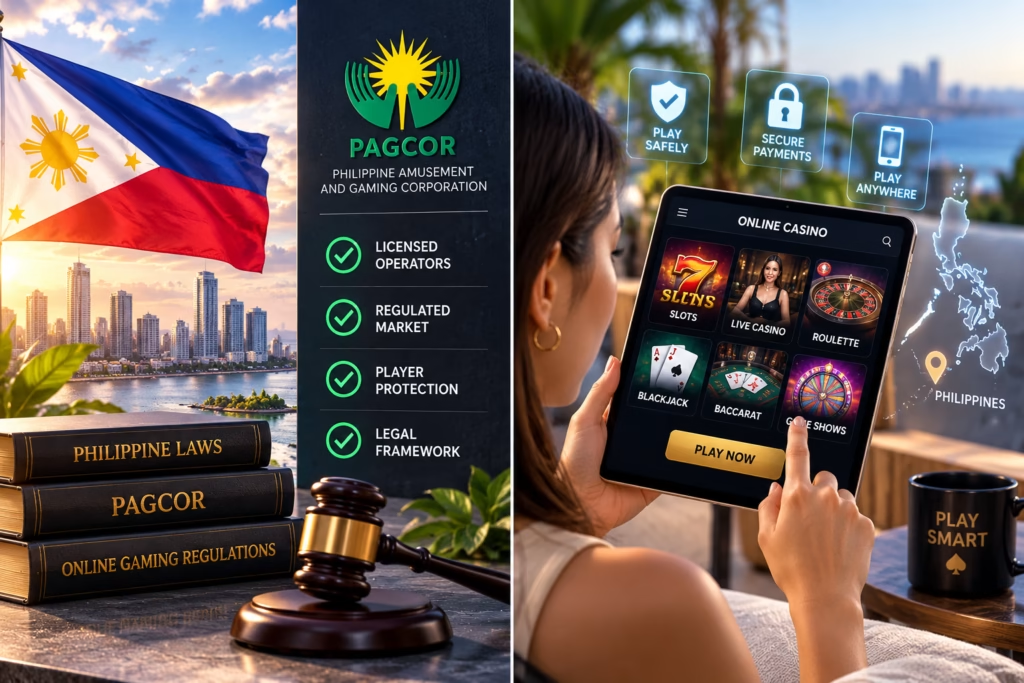
PAGCOR-Licensed Online Casinos vs POGOs
The difference between these two categories causes much of the confusion around Philippine gambling law.
| Type of platform | Current position |
| PAGCOR-authorized domestic online casino | Permitted when operated within PAGCOR regulations |
| PAGCOR-authorized eGaming platform | Permitted subject to licensing and player restrictions |
| Philippine Offshore Gaming Operator or POGO | Banned |
| Former POGO claiming an old PAGCOR license | Not authorized |
| Unknown offshore casino accepting Filipinos | Do not assume it is Philippine-authorized |
| Casino shown in PAGCOR’s current verification system | Can be checked against PAGCOR records |
PAGCOR has explicitly warned that offshore gambling websites claiming to retain PAGCOR offshore licenses are fraudulent or unauthorized because those licenses were cancelled.
For players, the practical rule is simple: check the specific casino rather than assuming all online casinos are either legal or illegal.
Are POGOs Still Legal in the Philippines?
No. POGOs are no longer legal in the Philippines.
The government first moved to terminate Philippine Offshore Gaming Operations, and Republic Act No. 12312 subsequently established the prohibition in legislation. The Anti-POGO Act bans the establishment, operation and conduct of offshore gaming in the Philippines and permanently cancels licenses associated with those operations.
The ban also covers various activities supporting prohibited offshore gaming operations, including certain service providers and infrastructure connected with POGOs.
This is important because websites sometimes claim that they hold a PAGCOR “offshore gaming” license. PAGCOR has repeatedly warned that such claims should not be trusted. Former POGO authorization is not evidence of a valid current license.
Can Filipinos Play at Online Casinos?
Eligible adults in the Philippines can use authorized online gaming platforms, subject to PAGCOR rules and individual operator requirements.
PAGCOR states that gaming is restricted to people aged 21 and above. Licensed operators also use Know Your Customer procedures to verify player age and identity.
Certain categories of people are prohibited or restricted from gambling under Philippine rules. PAGCOR identifies restrictions that include certain government officials and employees, members of the Armed Forces of the Philippines and Philippine National Police, people under 21, individuals included in the National Database of Restricted Persons and certain gaming industry employees.
A 20-year-old therefore should not assume that online casino gambling is permitted simply because a website accepts registration. The Philippine regulated gambling age is 21.
Are Foreign Online Casinos Legal for Filipino Players?
A foreign casino license does not automatically make an online casino authorized in the Philippines.
An offshore operator may hold a license from another jurisdiction, but that is separate from authorization under Philippine gambling regulations. PAGCOR advises players to use legitimate platforms registered or authorized within its regulatory system and maintains a dedicated database for checking online gaming sites.
This distinction becomes particularly important when a casino advertises directly to Filipino players but cannot be found through PAGCOR’s verification channels.
Players should not use accessibility as proof of legality. A website can technically be accessible from the Philippines even when the operator is not locally authorized.
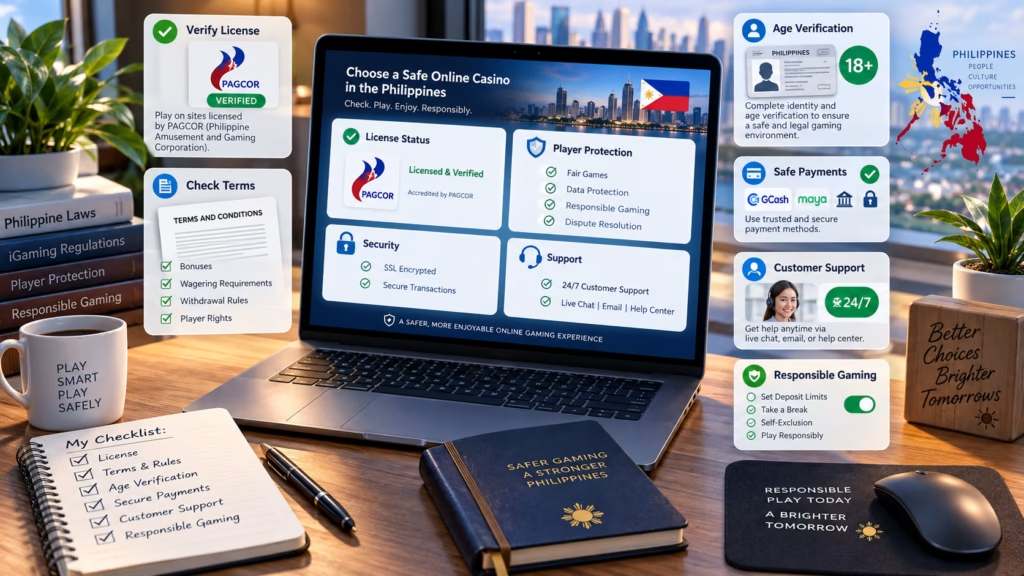
How to Check Whether an Online Casino Is Legal in the Philippines
The strongest indicator is not the casino’s own claim that it is “licensed.” The license should be independently verifiable.
- Search for the casino through PAGCOR’s official authorized gaming listings. PAGCOR operates a verification service specifically for this purpose.
- Check the exact website domain. Fraudulent websites can copy the name, logo or design of legitimate gambling companies.
- Look for clear operator information. The company operating the site should be identifiable rather than hidden behind anonymous marketing pages.
- Complete legitimate KYC verification. Regulated platforms are expected to verify player identity and eligibility.
- Read deposit and withdrawal rules before sending money. Limits, verification procedures and payment availability can vary.
- Check responsible gambling controls. Deposit limits, account restrictions and self-exclusion tools are positive regulatory signals.
- Be suspicious of old POGO claims. PAGCOR offshore gaming licenses are no longer valid.
PAGCOR has warned about websites using fabricated licenses and unauthorized copies of the regulator’s branding, making independent verification especially important.
Does PAGCOR Regulate Online Casinos?
Yes. PAGCOR continues to regulate Philippine domestic electronic and online gaming.
Its Electronic Gaming Licensing Department covers local operations involving electronic casino games, electronic bingo, sports betting, online poker and other approved gaming categories. PAGCOR’s regulatory pages were still publishing electronic gaming licensing memoranda in 2026, including updates to licensing frameworks.
PAGCOR also announced in August 2026 that it planned a dedicated application designed to help users access only licensed and regulated online gaming platforms. The regulator described the initiative as a way to combat illegal gambling sites and strengthen player protection.
That continuing regulatory activity is another reason the POGO ban should not be confused with a complete prohibition on domestic regulated online gambling.
Online Casino Payments in the Philippines
Payment availability does not determine whether a casino itself is legal.
Philippine financial regulators have separately tightened controls around the connection between payment applications and gambling platforms. In August 2025, the Bangko Sentral ng Pilipinas instructed BSP-supervised institutions to remove direct in-app links that redirected users to gambling websites.
That measure concerned payment-app access and consumer protection. It did not itself abolish PAGCOR’s regulated domestic online gaming market.
For players, the practical consequence is that payment methods can change even when the underlying gaming operator remains licensed. A casino may support one deposit channel today and modify or remove it later because of banking, regulatory or payment-provider policies.
Never send money to personal accounts, unofficial cryptocurrency addresses or payment instructions supplied through private messaging simply because a casino claims that its normal payment method is unavailable.
Common Misconceptions About Philippine Online Gambling Laws
“All online gambling was banned when POGOs were banned”
Incorrect. The Anti-POGO Act targets offshore gaming operations. PAGCOR continues to regulate domestic electronic and online gaming platforms.
“If I can open the website, the casino must be legal”
Incorrect. Website accessibility does not prove regulatory authorization.
“A PAGCOR logo proves that a casino is licensed”
Not necessarily. PAGCOR has documented cases involving fake certificates and unauthorized use of its branding. Verification through PAGCOR’s current records is more reliable.
“A foreign gambling license is enough”
Not for proving Philippine authorization. Overseas licensing and Philippine regulatory authorization are separate questions.
“Online gambling is going to be completely banned”
A number of lawmakers have introduced bills proposing full bans or tighter restrictions. As of September 10, 2026, important proposals identified in official legislative records remained pending rather than constituting a nationwide prohibition already in force.
What to Look for When Choosing a Philippine Online Casino
Legal status should be checked before bonuses, game selection or promotional offers.
A sensible evaluation order is:
PAGCOR authorization -> correct domain -> age and KYC requirements -> withdrawal rules -> payment options -> responsible gambling tools -> games and bonuses.
Starting with a huge welcome bonus and checking licensing afterward reverses the priorities that matter most.
Bonus terms also require careful reading. Wagering requirements, eligible games, maximum bets, withdrawal conditions and promotional availability can differ between operators. A bonus does not improve the random mathematical outcome of casino games, and it should not be treated as free money.
Players who decide to gamble should establish a fixed entertainment budget before depositing. Casino games involve the risk of losing money, and no casino license, RTP figure, betting system or bonus strategy guarantees a profit.
How This Information Was Reviewed
This guide distinguishes between Philippine domestic online gaming regulation and the separate legal prohibition on POGOs. The legal status was checked against PAGCOR’s current regulatory information, its authorized online gaming verification system, Republic Act No. 12312 and current legislative records concerning proposed additional online gambling restrictions.
Casino licensing can change, so players should verify the individual operator and exact domain before registering or depositing.
Online gambling should be treated as paid entertainment, not as an investment or source of income. Game outcomes are uncertain, losses are possible, and anyone struggling to maintain spending or time limits should stop gambling and use available responsible gambling support.
FAQ
Are online casinos legal in the Philippines?
Yes, certain online casinos and electronic gaming platforms are legal when they operate within the PAGCOR-regulated domestic gaming system. Unlicensed gambling websites should not be treated as authorized simply because they accept Filipino users.
Is online gambling completely banned in the Philippines?
No. The Philippines has banned POGOs and offshore gaming operations based in the country, but PAGCOR continues to regulate authorized domestic online gaming. Several wider online gambling bans have been proposed in Congress, but pending bills are not yet equivalent to an enacted nationwide ban.
What is the legal gambling age in the Philippines?
The regulated gambling age is 21 or older. PAGCOR prohibits people below 21 from gambling at regulated gaming establishments and platforms, and licensed online operators use identity checks to enforce age restrictions.
Are POGOs legal in the Philippines?
No. Philippine Offshore Gaming Operators are prohibited under Republic Act No. 12312, the Anti-POGO Act of 2025. Previous POGO licenses were permanently revoked.
How can I verify a legal Philippine online casino?
Check the casino through PAGCOR’s official authorized online gaming verification system and confirm that the exact domain you intend to use is associated with an authorized operator. Do not rely solely on logos or license images displayed on the casino’s website.
Are international online casinos legal in the Philippines?
An international gambling license does not automatically make a casino Philippine-authorized. Filipino players should verify whether a platform is recognized within PAGCOR’s regulatory system rather than relying only on an overseas license.
Can I use an e-wallet to deposit at an online casino?
Payment options depend on the operator and financial provider. Philippine regulators have imposed additional controls around gambling access through payment applications, so a payment method that was previously available may be restricted or removed.
Does a PAGCOR logo mean an online casino is legitimate?
No. PAGCOR has warned that illegal websites have used its logo and fabricated licensing certificates. The casino and its exact website domain should be independently verified through current PAGCOR records.
Can Philippine online casino laws change?
Yes. Gambling regulation is actively debated, and several bills proposing additional restrictions have been introduced. Players and operators should therefore check current PAGCOR regulations and enacted Philippine law rather than relying on older articles or casino marketing claims.
Quick Conclusion
Online casinos are not universally prohibited in the Philippines. PAGCOR-authorized domestic online gaming remains regulated, while POGOs and Philippine-based offshore gaming operations are banned. The safest way to determine whether a casino is authorized is to check the specific operator and exact domain through PAGCOR before depositing.
Players must generally be at least 21 years old, should read payment and withdrawal conditions carefully, and should treat casino gambling as entertainment with a real risk of financial loss.