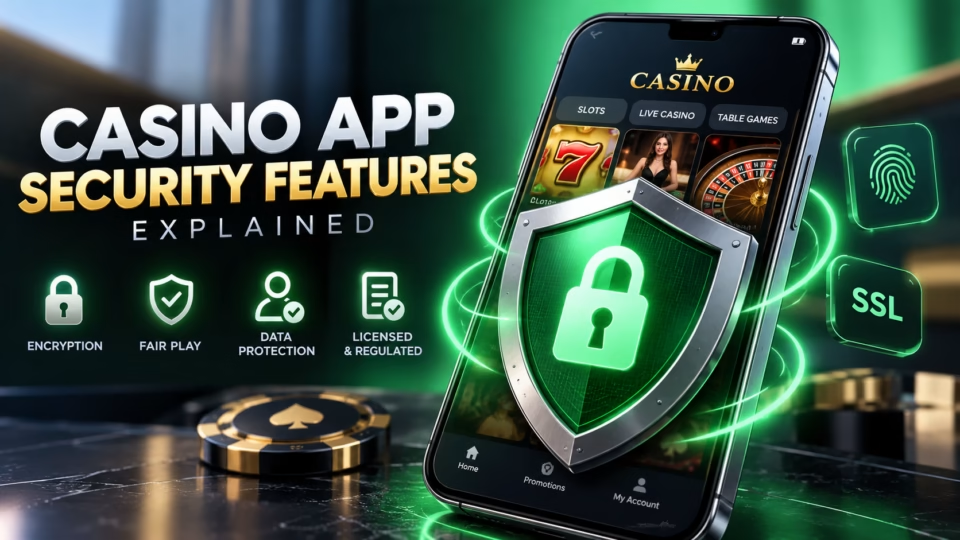
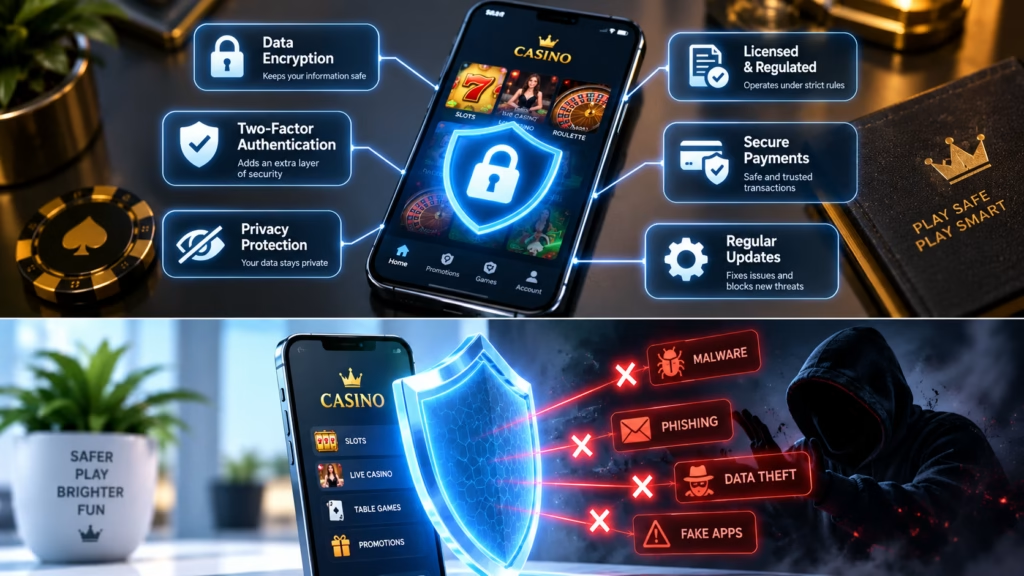
Casino app security features are the technical and account-level controls used to protect login credentials, personal information, payment data, gambling balances, and activity inside a mobile casino app. A well-designed app should combine encrypted connections, secure credential storage, strong authentication, session controls, payment safeguards, app-integrity checks, privacy controls, and regular security updates. No single feature can make a casino app completely secure.
Quick takeaways:
- HTTPS and modern TLS help protect information moving between the casino app and its servers.
- Two-factor authentication, biometrics, and re-authentication can reduce the risk of unauthorized account access.
- Sensitive credentials and authentication tokens should use protected storage rather than ordinary app files.
- A casino app should request only permissions that are necessary for its functions.
- Licensing, security audits, and technical standards provide additional trust signals, but requirements differ by jurisdiction.
Mobile casino security matters most to players who deposit or withdraw money through their phones, save payment methods, complete identity verification, or keep a gambling balance in their accounts. Extra caution is appropriate when using shared devices, outdated operating systems, unofficial APK files, rooted or jailbroken phones, or casino apps downloaded from unknown websites.
What Do Casino App Security Features Protect?
Casino app security features protect several different layers of a mobile gambling account. These include the password or login token used to access the account, personally identifiable information submitted during registration or KYC checks, payment details, account balances, gambling history, and communication between the device and casino servers.
Security therefore needs to work both inside the mobile application and on the operator’s backend systems. Strong mobile security normally includes server-side authentication and authorization, encrypted communications, protected token storage, secure session management, limited permissions, and protection of sensitive data stored on the device.
A polished interface or biometric login alone does not demonstrate strong mobile casino security. A secure-looking app can still have weaknesses in its backend, API configuration, data storage, third-party software, or account recovery process.
1. Encryption and Secure Connections
Encryption is one of the most important casino app security features because casino apps constantly exchange sensitive information with remote servers. Login details, account information, deposits, withdrawals, identity documents, and gambling transactions should not travel across the internet as unprotected data.
Modern mobile applications normally use HTTPS with Transport Layer Security, or TLS, to protect network communications. Sensitive data should also be protected when stored, not only while it is moving between the app and the server.
On iPhone and iPad, the operating system provides security requirements for app network connections and supports encrypted HTTPS connections with appropriate certificates.
Encryption does not mean that every casino app using HTTPS is automatically trustworthy. HTTPS primarily protects the connection. It does not prove that the operator handles stored information correctly, has strong account controls, or is legally authorized to offer gambling in a player’s jurisdiction.
2. Secure Storage of Passwords and Login Tokens
A casino app should minimize the amount of sensitive information stored directly on the phone. Passwords should not simply be saved in ordinary files, preferences, logs, or other locations that could become exposed if the device or application is compromised.
A safer design uses secure, revocable authentication tokens rather than storing a user password locally. Sensitive cryptographic keys and credentials should use platform-specific protected storage.
Apple devices provide protected storage for sensitive information such as passwords, cryptographic keys, and login tokens. Android also provides protected mechanisms for cryptographic keys and credentials, including hardware-backed storage on supported devices.
Players cannot normally inspect how an app stores every credential. This is one reason operator reputation, technical standards, security history, app updates, and regulatory oversight matter alongside visible security features.
3. Two-Factor Authentication and Strong Login Protection
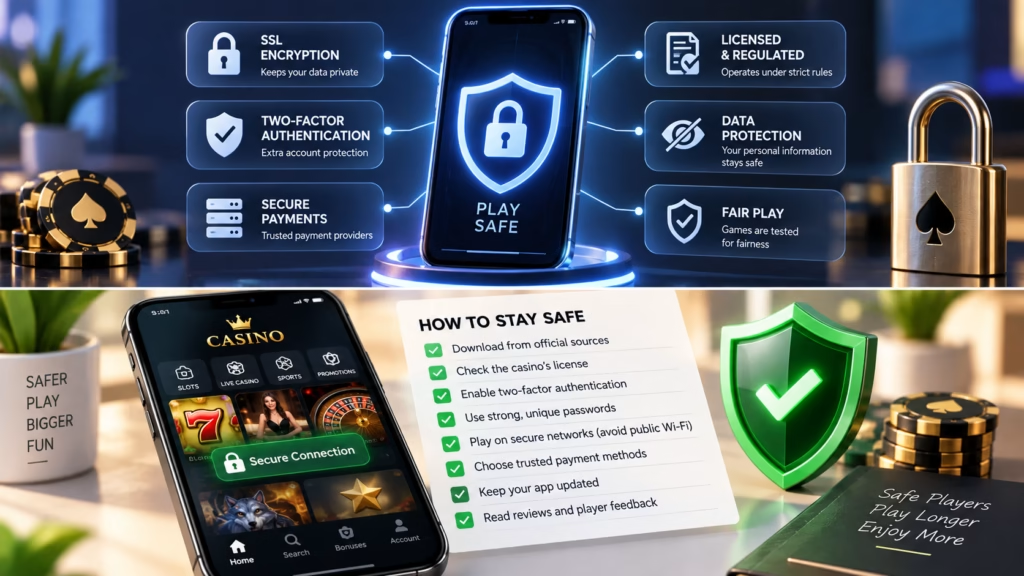
Two-factor authentication, commonly called 2FA, adds another verification step beyond the account password. Depending on the casino, the second factor may involve an authenticator app, passkey, email confirmation, SMS code, or another verification method.
2FA can reduce the damage caused by a stolen password because an attacker may still need the additional authentication factor. It is especially useful for accounts that contain stored balances or saved payment details.
The strongest implementation also protects sensitive actions after login. A casino may require the player to authenticate again before changing a password, modifying payment information, adding a withdrawal method, or performing another high-risk account action.
SMS verification is better than relying on a password alone in many situations, but it should not automatically be treated as the strongest possible form of authentication. Available security methods depend on the operator.
4. Face ID, Fingerprint and Biometric Login
Biometric authentication can make unauthorized access to a casino app more difficult when implemented through the security systems built into iOS or Android.
On supported devices, biometric controls such as Face ID, Touch ID, or fingerprint authentication can be used before protected login information is released or before access to the casino account is granted.
Biometrics should be viewed as an additional access-control layer, not proof that the entire casino platform is secure. Backend account protection, withdrawal verification, secure sessions, encrypted communications, and account recovery remain important.
Players should also keep the phone itself protected with a strong device passcode. Biometric protection is less useful if an attacker can easily unlock the underlying device or reset access through a weak account-recovery process.
5. Session Management and New Device Protection
Secure session management determines what happens after a player successfully logs in. A casino app should not leave an authenticated session available indefinitely on an unattended or stolen phone.
Useful protections can include:
- automatic logout after extended inactivity;
- revocable session tokens;
- the ability to log out other devices;
- alerts for suspicious or new-device logins;
- additional verification before sensitive account changes;
- session termination after a password or security change.
New-device notifications are particularly useful because they can alert a player to account access that was not initiated by them. If an unfamiliar login appears, the password should be changed promptly and active sessions should be reviewed where the operator provides that functionality.
6. Payment Security and Card Data Protection
Casino apps that process card deposits operate within a wider payment-security environment. Organizations that store, process, or transmit payment card information are expected to follow recognized payment-data security requirements.
Payment tokenization can further reduce exposure in some payment systems by replacing the underlying card number with another value. Properly implemented payment tokens can allow transactions without exposing the original card number to every participant in the transaction flow.
Players should not assume that a casino follows a particular payment-security standard simply because it accepts Visa or Mastercard. Where an operator makes a specific compliance claim, the claim should be verifiable.
Good account security also separates deposit convenience from withdrawal security. A saved deposit method should not automatically mean that anyone holding an unlocked phone can redirect withdrawals to a new destination without additional checks.
7. App Integrity and Protection Against Modified Apps
App-integrity controls help operators distinguish genuine casino applications from modified or manipulated copies.
Both Apple and Android provide technologies that developers can use to verify app integrity and identify suspicious requests coming from modified applications or unexpected device environments.
These protections matter because fake casino applications can imitate legitimate brands while attempting to steal passwords, payment information, or cryptocurrency.
Whenever possible, install the casino application through the operator’s verified website link or the official app marketplace used by that operator. Android users should be particularly cautious with APK files supplied through advertisements, messaging platforms, file-sharing sites, or unofficial download pages.
8. Privacy Permissions and Data Collection
A casino app should request only the device permissions it genuinely needs.
Location access may be required in regulated gambling markets where the operator must confirm that gambling takes place inside an authorized territory. Camera access can be necessary for identity-document scanning. Notifications may be used for account or security messages.
Those functions do not justify unrestricted access to unrelated information.
Before installing a casino app, review permissions involving:
- precise location;
- camera;
- microphone;
- contacts;
- photos and files;
- nearby devices;
- background location.
A permission is not automatically suspicious simply because it involves sensitive information. The important question is whether the permission has a clear relationship to the casino app’s function.
9. Licensing, Security Standards and Independent Oversight
A gambling license is not the same thing as cybersecurity, but regulatory oversight can provide an additional layer of accountability.
Some regulated gambling markets require remote operators and gambling software businesses to follow formal technical security standards and may require independent security assessment or audit. Exact requirements differ by jurisdiction and regulator.
Players should verify the operator against the official register of the regulator that applies to their location instead of relying only on a license logo displayed inside an app.
An app-store listing is another useful signal, but it does not replace gambling regulation or independent evaluation of the operator.
How to Check Casino App Security Before Depositing
Players evaluating casino app security features can use a simple checklist before sending money.
| Security check | What to look for |
| Official app | Download source matches the casino’s verified website or official store listing |
| Secure connection | Casino services use HTTPS |
| Account protection | 2FA, biometrics or additional login verification is available |
| Sensitive actions | Password, payment and withdrawal changes require extra verification |
| Permissions | Requests have a logical reason |
| App maintenance | Recent updates and supported operating-system versions |
| Operator identity | Company and regulatory information can be independently verified |
| Payment security | Recognized payment methods and clear handling of payment information |
| Privacy | Accessible privacy policy explaining collection and use of personal data |
| Account controls | Session management, limits, history and security settings are accessible |
The best approach is to evaluate several signals together. A legitimate license cannot compensate for a compromised device, and biometric login cannot compensate for a fraudulent operator.
Casino App Security Red Flags
Certain warning signs should make a player more cautious before installing an app or depositing money.
Be careful when an app:
- is available only through an unknown APK download page;
- asks users to disable Android security protections before installation;
- requests contacts, microphone or unrelated file access without explanation;
- provides no identifiable operator or company details;
- advertises itself as “100% secure” without explaining its controls;
- has no visible privacy policy or account-security settings;
- requires payment to a personal account unrelated to the operator;
- sends unexpected links asking the user to log in again;
- has not been updated for a long period despite requiring sensitive account access.
Security claims should be treated as evidence to investigate rather than guarantees.
Are iPhone Casino Apps Safer Than Android Casino Apps?
Neither iOS nor Android automatically makes every casino app secure. Both platforms provide strong security technologies, but the casino developer must implement them correctly.
Apple provides protected credential storage, hardware-backed security and app-integrity technologies. Android provides application sandboxing, protected key storage, biometric authentication, permission controls and app-integrity technologies.
The larger practical risk often comes from how the application is installed and maintained. Installing modified Android APK files from unknown sources can introduce risks that would not exist when installing the verified version. Similar risks arise on compromised or jailbroken iOS devices.
Keeping the operating system and casino application updated is therefore part of mobile casino security regardless of platform.
Common Casino App Security Myths
“A licensed casino app cannot be hacked”
Licensing can improve accountability, but no digital service is immune to vulnerabilities, phishing, stolen credentials or compromised devices.
“Face ID means my casino account is completely protected”
Face ID can protect local access, but account recovery, backend authentication, withdrawal controls and email security remain important.
“HTTPS means the casino itself is trustworthy”
HTTPS protects network communications. It does not confirm that the operator is reputable, licensed in your jurisdiction or handling stored information correctly.
“An app from an official store is automatically safe”
Official distribution can reduce some risks, but users should still verify the operator, permissions, privacy practices, security features and applicable gambling license.
Practical Mobile Casino Security Tips
Use a unique password for the casino account rather than recycling a password used for email, banking or social media. Enable the strongest additional authentication option offered by the operator and protect the associated email account with 2FA as well.
Keep the casino app and operating system updated. Avoid installing modified casino apps or unofficial APK files. Do not approve unexpected login prompts, password-reset requests or payment changes.
When possible, avoid leaving a large unnecessary balance in a gambling account. Review account history periodically and contact the operator quickly if you notice unfamiliar logins, deposits, withdrawals or changes to personal information.
Players should also use gambling-management tools available in their jurisdiction. Casino games should be treated as entertainment, not as a way to generate income, and gambling outcomes remain uncertain.
How This Information Was Reviewed
The security criteria in this guide focus on recognized mobile security principles including encrypted communication, secure credential storage, authentication, session management, minimum permissions, application integrity, payment-data protection and regulatory oversight.
The presence of individual casino app security features does not guarantee that an operator or application is secure. Players should independently verify the operator, applicable license, app source, permissions, security settings and payment conditions before depositing.
FAQ
What are the most important casino app security features?
The most important casino app security features include encrypted network connections, secure credential storage, strong authentication, session controls, app-integrity protection, payment security, sensible permissions and regular software updates. These controls work together, so one visible feature such as Face ID should not be used as the only security test.
How can I tell if a casino app is secure?
Check where the app comes from, who operates it, which regulator oversees the operator, what permissions it requests, whether additional authentication is available and whether sensitive account changes require extra verification. No checklist can guarantee that an app is free from vulnerabilities, but multiple independent trust signals reduce uncertainty.
Is Face ID safe for casino apps?
Face ID can provide a useful additional layer of account protection when the casino app uses supported authentication mechanisms correctly. Face ID does not replace secure passwords, backend authentication, session management or withdrawal verification.
Should a casino app offer two-factor authentication?
Two-factor authentication is a valuable security feature because it can make a stolen password less useful to an attacker. Players should generally enable the strongest additional authentication method offered by the casino, particularly when the account stores money or payment information.
Is it safe to install a casino APK?
An APK should be installed only when the source can be confidently verified. Files downloaded from advertisements, unofficial mirrors, messaging services or unknown websites carry a greater risk of being modified or fraudulent. Android users should verify the operator and official download instructions before sideloading an app.
Why does a casino app need my location?
Casino apps may request location access to enforce geographic restrictions or comply with local gambling rules. Location access should have a clear purpose. Unnecessary background location tracking or unrelated permission requests deserve closer examination.
Does HTTPS make an online casino safe?
No. HTTPS helps encrypt information traveling between the device and server, but it does not prove that the casino is legitimate, properly regulated or secure in every other respect. Operator verification, account protection and responsible data handling are separate issues.
Can a casino app safely store my card?
Card security depends on how the operator and its payment providers process and protect payment information. Players should look for clear payment-security practices and should not assume compliance with a particular standard unless an operator claim can be verified.
Are casino apps safer than casino websites?
Neither format is automatically safer. Native apps can benefit from device-level technologies such as protected credential storage, biometrics and integrity checking, while modern websites can also use strong encryption and authentication. The implementation and operator behind the service matter more than whether access happens through an app or browser.
Can casino app security protect me from gambling losses?
No. Cybersecurity protects accounts and information, not gambling outcomes. Security features cannot change RTP, predict results or guarantee winnings. Casino games involve financial risk and should be treated as entertainment. Players should set spending limits and stop when gambling is no longer comfortable or affordable.
Short Conclusion
Strong mobile casino security combines encrypted communications, protected credentials, additional authentication, controlled sessions, secure payments, limited permissions, app-integrity measures and verifiable operator oversight. Players should judge these protections together rather than trusting a single security badge or biometric-login feature.
Before depositing, verify the casino operator and applicable license, install the genuine app, review its permissions, enable available account protections and keep the device updated. Security can reduce account and data risks, but it cannot make gambling risk-free or turn casino games into a reliable source of income.