Casino KYC verification is the process an online casino uses to confirm a player’s identity and, when necessary, verify information such as address, payment ownership or source of funds. KYC stands for Know Your Customer. Depending on the casino’s jurisdiction and risk controls, verification may take place during registration, before gambling, after certain account activity or before a withdrawal can be completed.
For players, the practical issue is simple: casino verification before withdrawal can delay access to funds when documents are missing, outdated or inconsistent with account details. A reputable operator should explain its verification requirements clearly and request necessary information at an appropriate stage rather than using KYC simply as an obstacle to paying legitimate withdrawals.
Quick takeaways
- KYC normally checks identity, age and account ownership.
- Common documents include a passport or other government-issued ID and proof of address.
- Additional checks may involve payment methods, selfies, source of funds or other information.
- Verification requirements depend on the casino, jurisdiction and individual risk assessment.
- Completing requested verification early can reduce avoidable withdrawal delays.
- KYC approval does not guarantee instant payment because the casino may still have withdrawal processing times or additional legally required checks.
Casino KYC is especially important for players planning to make real-money deposits and withdrawals. Players who do not want to provide identity documents should check verification rules before depositing, because refusing a legally required KYC check can prevent an operator from completing certain transactions.
What Is Casino KYC Verification?
Casino KYC verification confirms that the person controlling an online casino account is the person whose details were used to create it. Casinos use KYC as part of identity, age, fraud prevention and anti-money laundering controls.
Identity verification can be performed electronically using independent databases or through documents submitted by the player. When electronic verification cannot establish enough information, the casino may ask the player to upload supporting documents.
In Great Britain, for example, remote gambling operators must verify information establishing a customer’s identity before allowing the customer to gamble. The minimum information includes name, address and date of birth. UK rules also state that a withdrawal request should not trigger demands for information that the operator could reasonably have requested earlier, although additional information can still be requested when another legal obligation requires it.
This example should not be treated as a worldwide rule. KYC timing and documentation requirements can differ substantially between jurisdictions.
Why Do Casinos Require KYC Before Withdrawals?
Casino KYC verification helps an operator determine whether a withdrawal is being requested by the legitimate account holder and whether the transaction meets regulatory and internal compliance requirements.
Several different checks can be involved.
Identity and Age Verification
Casinos may need to establish that the player is a real person and meets the applicable legal gambling age. The exact minimum age depends on the jurisdiction.
Identity data commonly includes:
- full legal name;
- date of birth;
- residential address;
- nationality or country of residence;
- details from an identification document.
A mismatch between registration information and submitted documents can lead to additional verification.
Payment Method Ownership
A casino may check whether a deposit or withdrawal method belongs to the account holder. This can help detect unauthorized cards, stolen payment credentials and third-party transactions.
Depending on the operator and payment method, verification might involve proof showing the account holder’s name. Players should follow the casino’s instructions and avoid sending unnecessary sensitive information that has not been requested.
Anti-Money Laundering Checks
KYC is also part of broader customer due diligence and anti-money laundering controls. Casino operators can be required to identify and verify customers and may apply additional risk-based checks when circumstances justify them.
These checks are not necessarily identical for every player. Account activity, transaction patterns, jurisdiction and other risk indicators can affect what information an operator requests.
What Documents Are Usually Needed for Casino KYC?
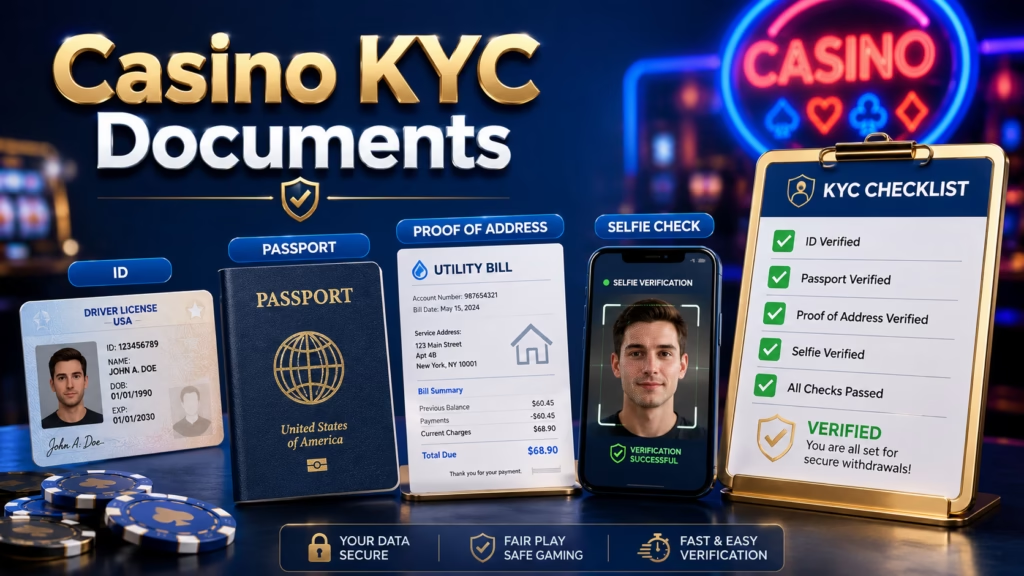
The exact casino KYC documents depend on the operator, but several categories are common.
| Verification purpose | Documents that may be requested |
| Identity | Passport, national ID card or driving licence |
| Address | Utility bill, bank statement or other accepted proof of residence |
| Payment ownership | Bank or payment account information showing ownership |
| Identity matching | Selfie, facial verification or liveness check |
| Additional financial checks | Documents supporting source of funds when legally or risk-based required |
A document normally needs to be valid, readable and consistent with the information registered on the casino account.
For proof of address, operators may impose limits on how old the document can be. Because those limits vary, players should check the casino’s current verification instructions rather than assuming that any bank statement or utility bill will qualify.
How Casino Verification Before Withdrawal Usually Works
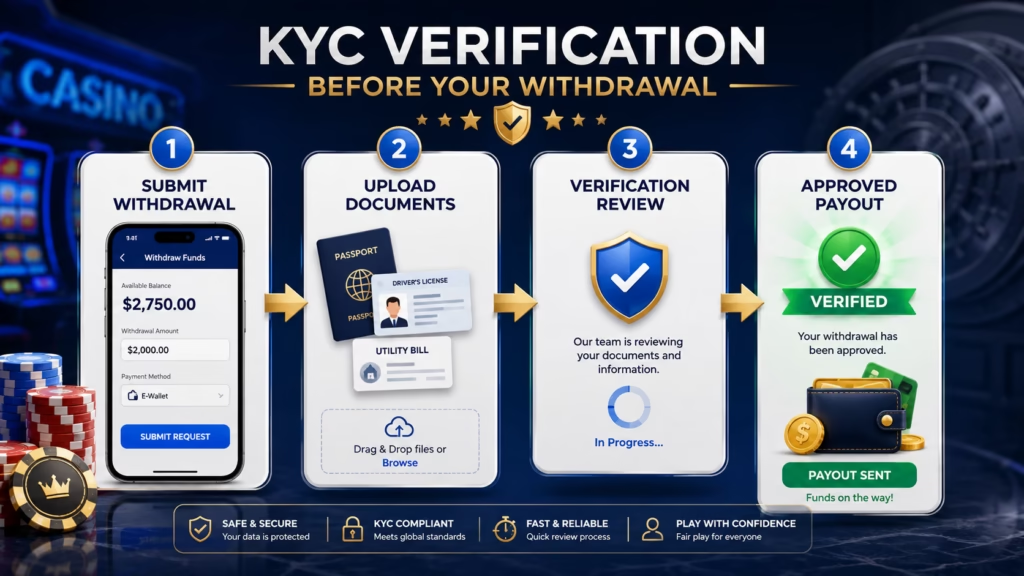
Casino verification before withdrawal generally follows a sequence of identity confirmation, document review and withdrawal approval, although the exact workflow varies between operators.
1. The Casino Requests Verification
The player receives a request through the casino account, verification portal or another official communication channel.
The request should specify which information is required and how it should be submitted.
2. The Player Uploads the Documents
Documents are normally uploaded through a secure verification system. Images should show the required information clearly without being cropped unless the casino specifically instructs otherwise.
Submitting altered documents, documents belonging to another person or inconsistent personal information can result in rejection and potentially further account review.
3. The Casino Checks the Information
Verification may be automated or manually reviewed.
Electronic verification can sometimes be completed quickly. Manual checks usually take longer, particularly when information does not match or additional documentation is necessary. There is no universal verification time that applies to every operator.
4. Additional Information May Be Requested
Passing basic ID verification does not necessarily end every compliance review.
A casino may require additional information if there is a legitimate regulatory, fraud-prevention or anti-money laundering reason. Possible examples include clarification of account information, payment ownership or financial activity.
5. The Withdrawal Is Processed
Once required checks are complete, the withdrawal enters the casino’s normal payment process.
KYC completion and withdrawal processing are separate stages. A verified account can therefore still have a pending withdrawal because of operator processing times, payment provider procedures, banking delays or another permitted review.
Why Can a Casino Ask for KYC Again?
A previously verified casino account can sometimes require additional verification because customer information and account circumstances can change.
Possible reasons include:
- an identification document has expired;
- the residential address has changed;
- a new payment method has been added;
- account information no longer matches;
- unusual activity requires further review;
- additional customer due diligence becomes necessary;
- regulatory requirements require information to remain current.
Repeated verification does not automatically mean the withdrawal will be rejected. However, the operator should have a legitimate reason for requesting relevant information.
In Great Britain, operators are expected to keep identity information accurate, and a withdrawal should not be used as an opportunity to demand information that could reasonably have been collected earlier.
KYC vs Source of Funds Checks
KYC and source of funds checks are related but not identical.
KYC verification primarily establishes who the customer is. Source of funds verification examines where money associated with gambling activity comes from when such information is required.
A player can therefore pass ordinary identity verification and later be asked for additional financial information.
Depending on the circumstances, an operator might request evidence connected to employment income, banking activity or another legitimate source of money. The exact evidence depends on the operator’s legal obligations and assessment of the account.
Players should not assume that every withdrawal requires a source of funds check. These checks are generally risk-based or connected to applicable regulatory obligations rather than being a universal document requirement for every transaction.
How to Reduce KYC Withdrawal Delays
The best way to avoid preventable KYC delays is to make sure account information is accurate before depositing and to understand the casino’s verification policy before playing.
Use Your Real Legal Details
The name, date of birth and address entered during registration should match your official documents.
Even a nickname, shortened surname or old address can create additional work if the verification system cannot match the information.
Use Payment Methods in Your Own Name
Third-party payment methods can create ownership and compliance issues.
Players should check the casino’s payment rules before depositing, particularly when using cards, bank accounts, digital wallets or other payment methods that may need ownership verification.
Check KYC Rules Before Depositing
A casino’s terms should explain:
- what identity information can be requested;
- which documents are accepted;
- whether verification is required before gambling or withdrawal;
- withdrawal processing conditions;
- supported payment methods;
- relevant account restrictions.
Transparent verification information is a useful criterion when comparing online casinos.
Complete Verification Promptly
If the casino offers account verification before the first withdrawal, completing it early can remove one possible source of delay later.
This does not guarantee faster withdrawals because payment processing and additional legally required checks can still apply.
Submit Clear and Current Documents
Blurry photographs, cropped documents and expired IDs are common reasons for failed document review.
Before uploading a document, check that the requested information is visible and that the document meets the operator’s stated requirements.
Red Flags in Casino Withdrawal Verification
KYC is a legitimate compliance process, but players should still distinguish reasonable verification from unclear withdrawal barriers.
Potential warning signs include:
- verification requirements are difficult to find before depositing;
- the operator repeatedly requests the same accepted documents without explaining why;
- requests appear unrelated to the stated verification purpose;
- the casino continually introduces new requirements after previous checks are completed;
- customer support cannot explain what information remains outstanding;
- withdrawal conditions conflict with the casino’s published terms.
A request for additional information is not automatically improper. Legal obligations can require an operator to perform further checks at a later stage.
However, some regulators impose limits on how KYC is used. In Great Britain, for example, operators should not request extra identity information at withdrawal if it could reasonably have been requested earlier, while later requests can still be appropriate when another legal obligation requires them.
How to Choose a Casino With Clear KYC and Withdrawal Rules
Players comparing casinos should evaluate the verification process before considering bonuses or promotional claims.
Useful criteria include:
1. Clear licensing information. Check which entity operates the casino and which regulator or jurisdiction applies.
2. Accessible KYC policy. The operator should explain what information may be required.
3. Transparent withdrawal terms. Look for processing rules, available payment methods, limits and possible fees.
4. Clear account ownership rules. Check whether payment methods must be registered in the player’s name.
5. Reachable customer support. Verification problems are easier to resolve when the operator provides a clear support and complaints process.
6. Responsible gambling tools. Deposit limits, self-exclusion and other account controls are important regardless of how attractive the casino’s payment options appear.
A casino advertising unusually easy withdrawals should not be selected on that claim alone. Licensing, applicable regulation, payment rules, security, KYC transparency and responsible gambling controls provide a much more useful basis for comparison.
Common Casino KYC Myths
“KYC only happens when I win”
KYC is not inherently connected to winning. Verification requirements can apply before gambling, during the customer relationship or when additional checks become necessary.
“A verified account can never be checked again”
Previous verification does not prevent an operator from requesting updated or additional information when circumstances or legal obligations justify it.
“KYC approval means my withdrawal will be instant”
KYC approval only confirms that the required verification stage has been completed. Casino processing times and payment provider processing can still affect when funds arrive.
“A large withdrawal will always require source of funds documents”
There is no single worldwide rule stating that every withdrawal above one universal amount automatically requires the same documents. Requirements depend on jurisdiction, operator obligations and the circumstances of the account.
What to Do if KYC Is Delaying a Withdrawal
If casino KYC is delaying a withdrawal, first identify exactly which verification step remains incomplete.
A practical sequence is:
1. Check the casino account and official messages for outstanding requests.
2. Confirm that submitted documents meet the stated requirements.
3. Ask support which specific document or check is unresolved.
4. Keep records of document submissions and relevant communication.
5. Read the operator’s withdrawal and complaints procedure.
6. If the issue remains unresolved, check whether the applicable regulator, licensing authority or approved dispute-resolution mechanism provides an escalation route.
Do not attempt to bypass verification by creating another account, changing identity information or using someone else’s payment method. These actions can create additional account and compliance problems.
How This Information Was Reviewed
This guide separates basic identity verification from payment ownership checks, customer due diligence and source of funds reviews because these processes can involve different requirements.
Casino KYC rules are not universal. Players should verify the operator’s current terms and the rules of the regulator or jurisdiction governing the casino. As one regulatory example, UK remote operators must establish customer identity before gambling and should not postpone information requests until withdrawal when the information could reasonably have been collected earlier.
KYC procedures do not make casino gambling profitable or predictable. Casino games should be treated as entertainment, outcomes remain uncertain, and players should set spending and time limits before gambling.
FAQ
What is casino KYC verification?
Casino KYC verification is the process used to confirm that a casino customer is who they claim to be. It may involve checking a player’s name, age, address, identification documents and, when necessary, other information required for compliance or fraud prevention.
Do all casinos require KYC before withdrawal?
Not every casino uses exactly the same verification timing. Requirements depend on jurisdiction, licensing conditions, operator procedures and account circumstances. Some jurisdictions require basic identity checks much earlier. In Great Britain, remote operators must verify identity before allowing a customer to gamble.
What documents are needed for casino verification before withdrawal?
A casino may request government-issued identification, proof of address and information confirming payment method ownership. Selfie or facial verification and additional financial documents may also be requested in certain situations. The exact requirements should be checked with the operator.
How long does casino KYC verification take?
There is no universal KYC processing time. Automated electronic verification may be completed very quickly, while manual document checks can take longer, especially when information is unclear or additional documents are required.
Can a casino ask for KYC after I have already been verified?
Yes. A casino may request updated or additional information when documents expire, personal details change or further legally required checks become necessary. The reason and scope of the request depend on the operator and applicable regulation.
Why does a casino want proof of address?
Proof of address may be used to confirm that the residential information registered on the casino account belongs to the customer. It can also help the operator establish jurisdiction and satisfy identity verification requirements.
Can a casino request source of funds documents?
Yes, source of funds information may be requested when required by applicable anti-money laundering or customer due diligence obligations. It is different from ordinary identity verification, and the exact documents depend on the circumstances.
Does passing KYC guarantee that my withdrawal will be approved immediately?
No. Passing KYC removes one possible verification requirement but does not guarantee immediate payment. Withdrawal processing, payment provider procedures and further legally required checks can still affect the transaction.
What should I do if a casino keeps requesting documents?
Ask the operator to identify exactly what remains unverified and why the additional information is necessary. Keep copies of relevant communication and use the casino’s formal complaints procedure if the issue cannot be resolved. Where applicable, further escalation may be available through the relevant regulator or dispute-resolution service.
Short Conclusion
Casino KYC verification is a normal part of regulated online gambling, but players should understand the requirements before depositing rather than discovering them during a withdrawal. Use accurate registration details, choose payment methods in your own name, read the casino’s verification and withdrawal rules, and submit only the documents legitimately requested.
The strongest sign of a player-friendly verification process is not ‘no KYC.’ It is transparency: clear requirements, reasonable document requests, understandable withdrawal rules and an identifiable regulatory framework. Gambling should remain entertainment, not a way to earn income, and players should use firm spending limits regardless of how quickly a casino processes withdrawals.