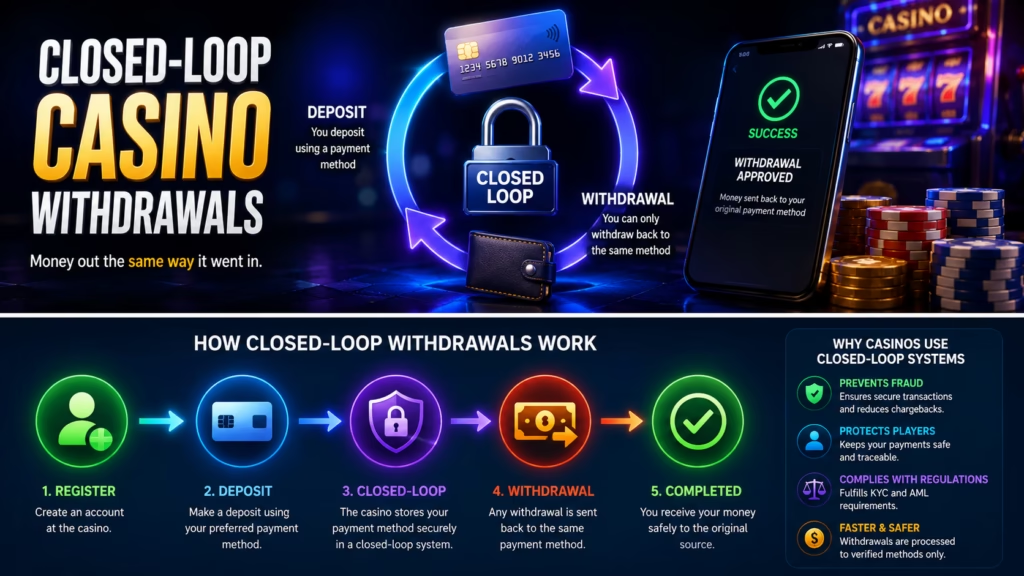
Closed-loop casino withdrawals mean that an online casino generally sends withdrawn funds back to the same payment method used to make the deposit. If you deposited with a Visa card, PayPal account or another supported method, the casino may require some or all of the withdrawal to return through that original payment source before another withdrawal option becomes available.
The system is mainly designed to reduce money laundering, payment fraud and the use of stolen or third-party payment methods. Open-loop payments, where money can enter through one method and leave through another, can create additional money-laundering and fraud risks, while closed-loop processing keeps the payment trail easier to verify.
Quick points to know:
- A withdrawal to the original payment method is often required before another method can be used.
- Multiple deposit methods can make a withdrawal more complicated because each method may have its own net deposit balance.
- Some cards and payment services accept deposits but cannot receive withdrawals.
- An expired card, closed e-wallet or unavailable payment method may require manual review and an alternative payout route.
- Closed-loop rules vary between casinos, jurisdictions and payment providers, so the cashier and withdrawal terms should always be checked before depositing.
Closed-loop withdrawals are especially important for players who use several cards, e-wallets or bank accounts. Understanding the policy before depositing can prevent a situation where money is available in the casino balance but cannot be withdrawn through the method the player expected.
What Is a Closed-Loop Casino Withdrawal?
A closed-loop casino withdrawal is a payment process that links withdrawals to the payment source originally used for deposits. Instead of allowing a player to deposit from one account and immediately withdraw to an unrelated account, the casino attempts to keep money moving back through the same financial channel.
For example, suppose a player deposits $100 using a debit card and later has a withdrawable balance of $250. Depending on the casino’s policy, the first $100 may need to be returned to that debit card. The remaining $150 may then be sent to the card or another eligible withdrawal method.
The exact allocation is not universal. Some operators calculate deposits and withdrawals separately for each payment method, while others determine which withdrawal option should be used automatically.
Why Do Casinos Use Closed-Loop Withdrawals?
Casinos use closed-loop withdrawals primarily to reduce the risk of their payment systems being used to move money between unrelated financial accounts.
Without a closed-loop process, someone could potentially deposit money using one payment source and withdraw it through another. This creates problems when casinos need to establish where funds originated and who ultimately received them.
Open-loop systems can create money-laundering risks because funds can be transferred between payment methods in ways that make their origin or destination harder to trace. Fraudulent or stolen cards can create additional risk.
Closed-loop withdrawals can therefore help casinos:
- link deposits and withdrawals to the same customer;
- reduce the usefulness of stolen payment details;
- identify unusual movement between payment accounts;
- prevent third-party payment methods from being used;
- maintain a clearer transaction history for AML and fraud monitoring.
Closed-loop processing should not be confused with a guarantee that a withdrawal will be approved. Identity verification, payment ownership, bonus conditions and other legitimate account checks can still affect a withdrawal.
How a Withdrawal to the Original Payment Method Works
A withdrawal to the original payment method usually begins with the casino checking the methods previously used to fund the account.

One Deposit Method
The simplest situation involves one payment method.
- You deposit $200 using Visa.
- You play and later have $350 available for withdrawal.
- The casino identifies Visa as the original funding source.
- The withdrawal is routed back to that Visa card if the card and payment network support incoming gambling payments.
Whether the entire $350 or only the deposited $200 must return to the card depends on the operator’s withdrawal policy.
Multiple Deposit Methods
Closed-loop withdrawals become more complicated when several payment methods have been used.
Suppose you deposited:
- $150 using a debit card;
- $100 using PayPal.
The casino may require withdrawals to reduce or clear the outstanding deposit amount associated with both sources before additional winnings can be routed more freely.
Some gambling operators describe this using net deposits. A payment method has positive net deposits when more money has entered the casino through that method than has previously been withdrawn back to it. Positive net deposits on multiple methods may need to be balanced before a player can withdraw more than the amount originally deposited through one of them.
This is why adding several payment methods unnecessarily can make future withdrawals less straightforward.
Example of Closed-Loop Withdrawal Allocation
Consider this simplified example:
| Transaction | Method | Amount |
| Deposit | Visa | $200 |
| Deposit | PayPal | $100 |
| Total deposited | $300 | |
| Current withdrawable balance | $500 |
A casino using strict closed-loop logic could first require money to be returned against the $200 Visa deposit and $100 PayPal deposit.
After those deposit balances have been accounted for, the remaining $200 represents additional funds above the original deposits. The casino’s terms determine which eligible method can receive that amount.
This example illustrates the concept rather than a universal withdrawal formula. Casinos can use different allocation systems.
Can You Withdraw Casino Winnings to a Different Payment Method?
You may be able to withdraw winnings to a different payment method, but usually only after the casino’s closed-loop requirements have been satisfied or when the original method cannot accept withdrawals.
For example, a casino might allow a bank transfer when:
- a card supports deposits but not withdrawals;
- the original card has expired;
- the payment provider no longer supports casino payouts;
- the original e-wallet has been permanently closed;
- local banking or payment rules prevent the normal return transaction.
An alternative payout method will normally need to belong to the same verified player. A different person’s bank account, card or e-wallet can trigger payment ownership and AML concerns.
Do not assume that making a new deposit with another payment method will automatically solve the problem. Contacting the casino’s payment support team is usually the better option when an original method is unavailable.
What Happens If Your Deposit Card Has Expired?
An expired deposit card does not necessarily mean the casino balance is inaccessible. The outcome depends on the card issuer, payment processor and casino.
Some replacement cards remain linked to the same underlying bank account, allowing incoming credits to be routed correctly. In other situations, the casino may request confirmation that the old card is no longer available and offer an alternative withdrawal method such as a verified bank transfer.
If a card has been cancelled because the associated bank account was closed, tell the casino before requesting repeated withdrawals. Repeated failed transactions can add unnecessary delays.
What If a Payment Method Allows Deposits but Not Withdrawals?
A payment method can be available for casino deposits without supporting casino withdrawals.
This can occur because deposit and payout capabilities are separate functions within a payment network. Restrictions can also differ by country, card issuer and operator.
For this reason, players who care about convenient cashouts should check both sides of the cashier before depositing:
Deposit supported does not automatically mean withdrawal supported.
Does Closed-Loop Withdrawal Make Cashouts Slower?
Closed-loop processing does not automatically make withdrawals slow, but payment mismatches can cause additional checks.
A straightforward withdrawal using a verified payment method already associated with the player’s account can be easier to process than a request involving a new bank account, third-party payment source or unavailable deposit method.
Possible causes of additional review include:
- different names on the casino and payment accounts;
- several deposit methods;
- an expired or closed payment method;
- unusual transaction patterns;
- unresolved identity verification;
- suspected third-party funding;
- regulatory or AML concerns.
A legitimate withdrawal should not be delayed simply because the player wants to withdraw. Operators should collect relevant verification information at an appropriate stage rather than accepting deposits and then using avoidable checks to frustrate a later withdrawal.
Closed-Loop vs Open-Loop Casino Payments
| Closed-Loop Payments | Open-Loop Payments |
| Withdrawal linked to deposit source | Deposit and withdrawal methods may differ |
| Stronger payment traceability | Money can move between payment channels |
| Common AML and fraud-control mechanism | Creates additional AML risks |
| Multiple payment methods may need reconciliation | More flexibility for the user |
| Alternative methods may require verification | Easier movement between financial accounts |
Greater withdrawal flexibility may sound convenient, but completely unrestricted movement between unrelated payment methods can create serious compliance problems for gambling operators.
How to Avoid Closed-Loop Withdrawal Problems
The easiest way to avoid payment problems is to think about the withdrawal before making the deposit.
Use One Primary Payment Method
Using one reliable payment method for both deposits and withdrawals keeps the payment history simpler. Adding several cards and e-wallets can create multiple balances that need to be reconciled later.
Use a Payment Method in Your Own Name
Casino and payment-account ownership should match. Using a friend’s card, partner’s e-wallet or another person’s bank account can create verification problems.
Check Whether the Method Supports Withdrawals
Before depositing, open the casino’s payments page and check whether the same method appears under both deposits and withdrawals.
Check Withdrawal Limits and Fees
Closed-loop eligibility does not tell you whether a method is practical. Also review minimum cashout amounts, maximum transaction limits, processing times and potential fees.
Complete Requested Verification Correctly
A casino may need identity or payment verification depending on the jurisdiction, account activity and risk profile. Make sure your account information matches the payment information you provide.
What to Check When Choosing a Casino for Easy Withdrawals
Players comparing casinos should look beyond the number of deposit options advertised on the homepage.
A useful payment section should clearly explain:
1. which methods support both deposits and withdrawals;
2. expected withdrawal processing periods;
3. minimum and maximum cashout amounts;
4. whether withdrawal fees apply;
5. how multiple payment methods are handled;
6. what happens if the original payment method becomes unavailable;
7. what verification may be required;
8. whether closed-loop withdrawal rules apply.
A casino offering ten deposit methods is not necessarily more convenient than one offering four. For withdrawals, clear rules and compatible payment methods are usually more important than the size of the payment-method list.
Common Closed-Loop Withdrawal Mistakes
One common mistake is depositing with whichever method is fastest without checking whether the same method can receive withdrawals.
Another mistake is rotating between several cards and e-wallets. The player may later discover that the casino requires previous deposits to be returned through several different sources before winnings can be sent through the preferred method.
Third-party payments are another avoidable problem. Even when a deposit technically processes, a mismatch between the casino account holder and payment-account owner can trigger additional scrutiny.
Finally, players should not treat a casino account as a way to transfer money between payment systems. Gambling operators monitor unusual financial activity, and multiple payment methods, third-party payment methods and open-loop arrangements can be treated as higher-risk patterns.
How This Information Was Reviewed
This guide distinguishes between the general closed-loop payment principle and operator-specific withdrawal rules. The explanation is based on common AML controls, payment-source matching practices, net-deposit logic and typical handling of unavailable withdrawal methods.
Players should still check the casino’s current cashier, withdrawal policy and terms before depositing because payment availability, limits and processing rules can vary by operator and jurisdiction.
Casino gambling should be treated as entertainment rather than a way to earn money. Set spending limits before playing, never gamble with money needed for essential expenses, and stop if gambling stops being enjoyable or controlled.
FAQ
What does closed-loop withdrawal mean at an online casino?
A closed-loop withdrawal means the casino generally tries to send funds back through the payment method originally used to deposit. The exact amount that must return to each method depends on the casino’s payment policy and applicable rules.
Why must I withdraw to the same method I used to deposit?
Casinos may require withdrawal to the original payment method to improve transaction traceability and reduce fraud and money-laundering risks. Moving funds freely from one unrelated payment source to another creates additional compliance risks.
Can I withdraw casino winnings to another bank account?
Possibly, but the bank account normally needs to belong to the verified casino account holder, and the casino may first require outstanding closed-loop obligations to be resolved. The operator’s withdrawal policy determines whether another bank account can be used.
What happens if I deposited using two different cards?
The casino may require withdrawals to be allocated between both cards according to deposits or net deposit balances. Some operators automatically determine where each part of the withdrawal should be sent.
Can I withdraw if my original card has expired?
Usually there will be a process for handling an expired card, but the exact solution depends on the casino and card issuer. The operator may attempt the original route, request proof that the card is unavailable or approve another verified method.
Why is my preferred withdrawal method unavailable?
A withdrawal method may be unavailable because you have not deposited with it, another payment method has an outstanding net deposit balance, the method cannot receive payouts in your country or additional verification is required.
Should I deposit with a new method to unlock withdrawals?
Do not make an unnecessary deposit solely to try to unlock another withdrawal option. Ask the casino’s payment support team which method can receive the existing balance and what verification is required.
Are closed-loop casino withdrawal rules the same worldwide?
No. Closed-loop principles are widely used for payment security and AML controls, but the exact procedure varies by casino, jurisdiction and payment provider. Always check the operator’s current withdrawal terms rather than assuming another casino’s rules apply.
Quick Takeaway
Closed-loop casino withdrawals connect cashouts to the payment methods previously used for deposits. The system helps casinos control fraud, third-party payments and money-laundering risks, but it can complicate withdrawals when several payment methods have been used.
For the simplest experience, use a payment method in your own name that supports both deposits and withdrawals, avoid unnecessary payment-method changes and read the casino’s withdrawal policy before depositing. If the original method becomes unavailable, contact the operator instead of trying to bypass the closed-loop process with another deposit.