
A third-party casino payment is a deposit made with a card, bank account, e-wallet, crypto wallet, or other payment method that does not belong to the person who owns the casino account. At many regulated online casinos, third-party payments are prohibited or subject to additional verification because they create identity, fraud, anti-money laundering, and source-of-funds risks.
If you are considering a casino deposit with someone else’s card, the safest approach is not to make the payment until you have checked the casino’s payment rules. Permission from the cardholder does not automatically make the transaction acceptable.
Quick Answers
- Many regulated casinos expect deposits to come from a payment method controlled by the registered player.
- A spouse’s, partner’s, parent’s, friend’s, or employer’s card can still count as a third-party payment.
- Cardholder permission does not necessarily override the casino’s terms.
- Third-party deposits may trigger payment verification, source-of-funds checks, a refund, or account review.
- Using your own verified payment method is usually the simplest way to avoid payment and withdrawal complications.
Third-party payment rules matter most to players who are about to deposit and are deciding which card, bank account, or e-wallet to use. The key question is not simply whether the payment processor accepts the transaction. The casino must also be willing to accept the source of the funds under its own rules and the regulatory requirements that apply to it.
What Is a Third-Party Casino Payment?
A third-party casino payment occurs when the person funding the gambling account is different from the verified owner of that gambling account.
For example, if a casino account is registered to John Smith but a deposit is made using a debit card belonging to Sarah Smith, the payment may be treated as third-party funding even if John and Sarah are married and share household expenses.
- debit or credit cards belonging to another person;
- another person’s bank account;
- e-wallets registered in another name;
- business or company accounts;
- prepaid cards funded by another person;
- cryptocurrency wallets that the player cannot prove they control;
- money transferred through an intermediary before reaching the casino.
The exact definition depends on the operator, payment method, and jurisdiction. A casino may also distinguish between ownership of the payment account and the original source of the money.
Can You Deposit at a Casino With Someone Else’s Card?
Depositing at an online casino with someone else’s card is often prohibited, even when the cardholder has given permission. The casino may require the casino account holder and the payment method owner to be the same person or may require additional evidence before accepting the payment.
Regulators and licensed operators commonly treat third-party payment methods as a higher-risk area because they can complicate identity verification, fraud controls, anti-money laundering checks, and source-of-funds reviews.
The practical rule is simple: do not assume that consent from the cardholder makes the deposit acceptable. A husband using his wife’s card, an adult using a parent’s card, or a player using a friend’s e-wallet can still breach an operator’s payment terms.
Before depositing, check the casino’s sections covering deposits, payment methods, account verification, KYC, withdrawals, and prohibited third-party funding.
Why Casinos Restrict Third-Party Payments
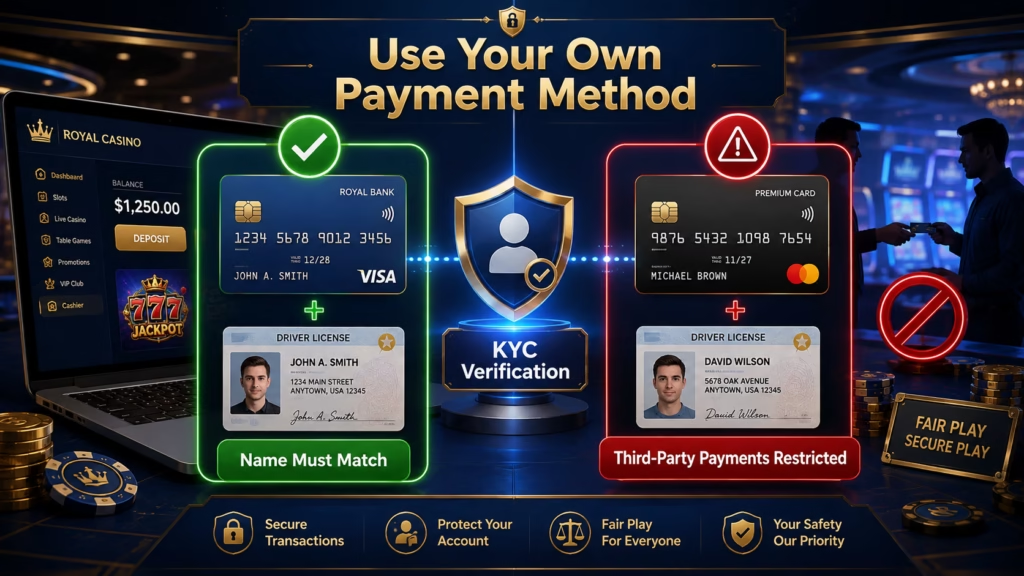
Identity and KYC Controls
Online casinos commonly use Know Your Customer, or KYC, procedures to establish who owns and operates an account.
A payment from an unrelated name creates an obvious question: is the verified customer actually controlling the gambling account and the money being used?
This does not mean every mismatched payment is fraudulent. It means the operator may need additional information before it can understand the transaction.
Anti-Money Laundering Checks
Third-party funding can make it harder for an operator to determine where gambling funds originated.
Regulated casinos may apply risk-based checks when payments involve another person’s account, multiple payment methods, prepaid methods, e-wallets, or cryptoassets.
For a normal player, the practical consequence is that a deposit that looks unnecessarily complicated may receive more scrutiny than a straightforward payment from the player’s own account.
Payment Fraud and Chargebacks
A casino also needs to reduce the possibility that a card has been used without authorization.
A deposit made from another person’s card can later result in a dispute between the casino, player, cardholder, bank, and payment processor. This is one reason casino terms frequently restrict third-party funding.
Responsible Gambling Controls
Payment ownership can also interact with responsible gambling controls.
If a player can fund an account through other people’s cards or accounts, deposit limits and other financial controls may become harder to apply effectively. Shared payment information can also be relevant when operators investigate duplicate accounts or attempts to circumvent account restrictions.
What Can Happen If You Use Someone Else’s Card?
A third-party casino deposit does not have one universal outcome. The casino’s response depends on its terms, licence requirements, payment processor, circumstances, and whether the transaction raises additional compliance concerns.
| Situation | Possible Result |
| Payment method name does not match casino account | Deposit may be rejected or reviewed |
| Casino detects third-party funding after deposit | Additional verification may be requested |
| Ownership of an e-wallet cannot be established | Transaction may be rejected, frozen, or reversed depending on applicable rules |
| Player requests a withdrawal | Existing payment discrepancies may receive additional scrutiny |
| Casino cannot accept the source of funds | Funds may need to be returned according to the operator’s procedures |
| Fraud or account misuse is suspected | Account activity may be restricted while the matter is investigated |
A third-party deposit should therefore not be viewed as a shortcut when your normal payment method is unavailable.
Operators may also request information later when another legal, regulatory, fraud, or payment obligation requires it, even if the deposit itself was initially processed.
Are Third-Party Casino Payments Illegal?
A third-party casino payment is not automatically illegal everywhere in the world. Gambling laws, payment regulations, operator licence conditions, and casino terms differ between jurisdictions.
The important distinction is between:
1. whether a payment method is legal in your jurisdiction;
2. whether the casino is legally permitted to accept it;
3. whether the casino’s own terms permit it;
4. whether the payment is authorized by its legitimate owner;
5. whether the operator can satisfy KYC and anti-money laundering requirements.
A transaction can therefore be authorized by the cardholder but still prohibited by the casino.
Players should also check whether the online casino itself is legally available in their country. Payment acceptance does not prove that an operator is authorized to offer gambling services to a particular location.
Third-Party Payment Rules Can Differ by Country
There is no worldwide casino payment rule that applies identically to every operator.
Different jurisdictions can impose different identity, anti-money laundering, payment, and withdrawal requirements. Some regulators place particular emphasis on payment-method ownership and control, while others may restrict specific funding methods altogether.
Because of these differences, the casino’s current terms and the rules that apply in the player’s jurisdiction should be checked before depositing.
Common Third-Party Payment Scenarios
Using Your Wife’s, Husband’s, or Partner’s Card
A partner’s card can still be considered a third-party payment because the name and ownership of the payment method differ from the casino account.
Marriage or living at the same address does not automatically make two financial accounts interchangeable for casino verification purposes.
If you share finances, use a payment method on which you can demonstrate legitimate ownership or control and check the operator’s rules before depositing.
Using a Parent’s Card
Using a parent’s card can create the same ownership problem.
This is particularly sensitive because gambling operators must verify the age and identity of customers. The casino needs to establish that the registered player, rather than another person, is operating and funding the gambling account.
Using a Friend’s Card
A friend’s card is one of the clearest examples of a third-party payment.
Even with explicit permission, the casino may reject the deposit because the payment method does not belong to the registered player.
Using a Joint Bank Account
Joint accounts are different because more than one person may legally own the account.
However, a joint bank account should not automatically be assumed acceptable. The casino may require evidence showing that the registered player is genuinely one of the account holders.
Check the casino’s rules or ask its payment support team before depositing if account ownership is not obvious from the transaction.
Using a Business Card
A company card or business bank account can create additional questions because the funds may technically belong to a company rather than the player personally.
Unless the casino explicitly permits this arrangement and can verify the relationship, a personal payment method is generally simpler.
Using Someone Else’s E-Wallet
PayPal, Skrill, Neteller, and similar accounts can also be treated as third-party payment methods when the e-wallet owner differs from the casino player.
Moving money through an e-wallet does not automatically remove the original ownership or source-of-funds issue.
Can You Deposit Money That Someone Else Transferred to You?
Money received from another person is not necessarily identical to using that person’s payment method.
For example, a legitimate transfer from a relative into your own bank account may leave you in control of the payment method used to make the casino deposit. However, the original source of funds can still become relevant if the operator conducts financial checks.
For ordinary deposits, this does not mean every personal transfer causes a problem. It means players should be able to explain legitimate funding if a regulated operator reasonably requests supporting information.
How to Make a Casino Deposit Without Creating Payment Problems
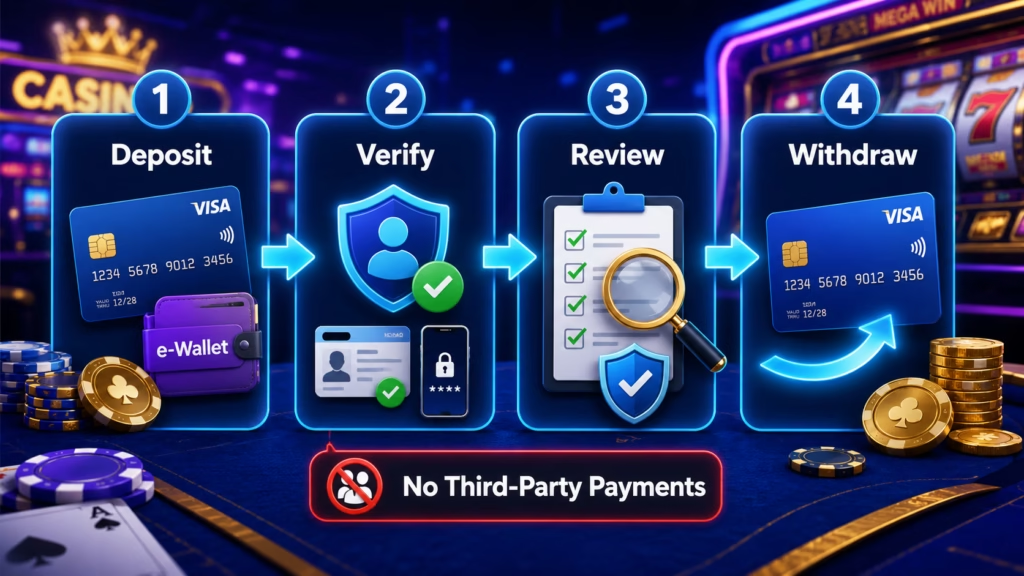
The simplest approach is to keep the identity of the player, casino account, and payment method consistent.
1. Use a payment method you own or control. Your own debit card, bank account, or verified e-wallet usually creates fewer ownership questions.
2. Complete casino verification accurately. Your name, date of birth, address, and other details should match your genuine identity.
3. Check the payment terms. Look specifically for references to third-party cards, third-party deposits, payment ownership, withdrawals, KYC, and source of funds.
4. Check withdrawal rules before depositing. Some casinos prefer or require funds to be returned through the original payment route where possible.
5. Do not use another person’s payment method to bypass a restriction. This can turn an ordinary payment issue into an account or compliance problem.
6. Contact support before paying if ownership is unusual. This is particularly sensible for joint accounts, company accounts, prepaid methods, or payment accounts where your ownership may not be obvious.
A casino accepting the payment at checkout does not necessarily mean the deposit has passed every subsequent compliance check.
How to Choose a Casino Based on Payment Rules
Payment quality should be evaluated before the first deposit, not after a withdrawal problem appears.
A useful casino payment page should clearly explain:
- accepted deposit methods;
- supported currencies;
- minimum and maximum deposits;
- payment processing fees, if any;
- withdrawal methods;
- expected processing procedures;
- identity verification requirements;
- third-party payment restrictions;
- payment ownership requirements;
- geographic availability.
Players comparing casinos should favor operators that publish understandable payment and verification rules rather than choosing only on bonuses or deposit speed.
If an operator’s third-party payment policy is unclear, asking support for confirmation before depositing is more sensible than testing the rule with someone else’s card.
Common Mistakes About Third-Party Casino Payments
“The cardholder gave me permission, so the casino has to accept it.” No. Cardholder permission and casino acceptance are separate issues.
“If the deposit worked, the payment must be approved.” Not necessarily. A payment processor can authorize a transaction before other account or compliance checks are completed.
“Using my spouse’s card is the same as using my own.” Not necessarily. Separate card ownership can still create a third-party payment issue.
“I can deposit with one person’s card and withdraw to my bank.” Do not assume this is allowed. Withdrawal routing and payment verification depend on the casino’s rules and applicable regulatory obligations.
“Using an e-wallet hides the difference in ownership.” An e-wallet can itself require ownership verification, and regulated operators may examine both payment control and source of funds.
How This Information Was Reviewed
This guidance is based on the distinction between player identity, payment-method ownership, source of funds, anti-money laundering controls, and operator-specific payment terms.
Exact rules still need to be checked with the casino and regulator applicable to the player’s jurisdiction. Payment policies can change, and different licence regimes can impose different requirements.
Casino gambling should be treated as paid entertainment rather than a way to generate income. Use money you can afford to lose, set spending limits before playing, and do not borrow money or use another person’s funds to continue gambling.
FAQ
Can I deposit at an online casino with someone else’s debit card?
Many online casinos do not allow deposits from a debit card belonging to another person. Even when the cardholder consents, the transaction may be treated as a third-party payment and can trigger rejection or additional verification. Check the casino’s payment terms before attempting the deposit.
Can I use my wife’s or husband’s card at an online casino?
A spouse’s card can still count as a third-party payment because the card belongs to a different person. Sharing a household or finances does not automatically satisfy the casino’s payment ownership requirements. A payment method in your own name is usually the cleaner option.
What happens if I already deposited with someone else’s card?
The outcome depends on the casino. The operator may request proof of payment ownership, investigate the source of funds, reverse the payment, restrict further transactions, or take another action permitted by its terms and applicable regulations. Contact the casino rather than attempting additional deposits to work around the issue.
Can I withdraw casino winnings after depositing with another person’s card?
A withdrawal may be possible only after the operator resolves any payment ownership and verification issues. Casinos may need to establish where the original deposit came from and which withdrawal destination is appropriate. Do not assume that a successful deposit guarantees an unrestricted withdrawal.
Is a joint bank account considered a third-party payment?
A joint account may be acceptable when the casino can establish that the registered player is a legitimate account holder. Policies differ between operators, so check whether proof of joint ownership is required before depositing.
Can I use someone else’s PayPal, Skrill, or Neteller account?
An e-wallet belonging to another person can be treated as a third-party payment method. The casino may require the e-wallet account and casino account to belong to the same verified individual.
Is it illegal to use another person’s card at a casino if they give permission?
There is no single worldwide rule making every authorized third-party casino payment illegal. However, the transaction can still violate casino terms, payment-provider rules, or gambling regulations applicable to the operator. Local rules should be checked separately.
Can someone transfer money to me so I can deposit from my own bank account?
A legitimate transfer into your own account is different from directly using another person’s card, but the origin of the money can still matter during source-of-funds checks. If an operator requests evidence, provide accurate information rather than trying to disguise where funds originated.
Why does a casino care whose card I use?
Casinos need to manage identity verification, financial fraud, money laundering, payment disputes, and responsible gambling risks. A payment method owned by a different person can make it harder to establish who controls the account and where the deposited money came from.
What is the safest payment method for an online casino deposit?
The most straightforward option is normally a permitted payment method that you personally own and control, with identity information matching your verified casino account. Also check that both the casino and payment method are legally available in your jurisdiction. No payment method changes the random nature of casino games or guarantees winnings.
Brief Conclusion
Third-party casino payments can create problems even when the cardholder has willingly provided permission. Many regulated operators restrict deposits from someone else’s card, bank account, or e-wallet because payment ownership is connected to KYC, fraud prevention, anti-money laundering controls, and source-of-funds checks.
For the lowest-friction option, use a payment method that belongs to you, check the casino’s third-party payment and withdrawal rules before depositing, and ask the operator for clarification when using a joint or unusual payment account. Casino gambling involves financial risk, so set limits in advance and treat it as entertainment rather than a source of income.