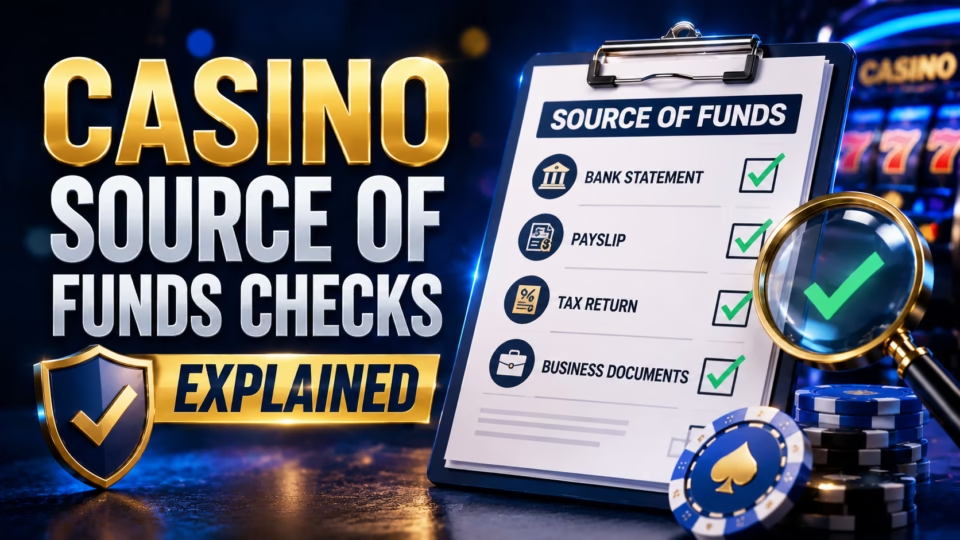
A casino source of funds check is a verification process used to establish how a player obtained the money being deposited or gambled. The purpose is not simply to confirm which bank account sent the payment. The casino may need to understand the underlying origin of the money, such as salary, business income, investments, property proceeds, inheritance or another legitimate source.
Source of funds checks are mainly connected with anti-money laundering, customer due diligence and financial crime controls. Gambling operators generally apply these controls according to risk rather than treating every customer in exactly the same way. Higher-risk activity can therefore receive greater scrutiny than ordinary low-risk account activity.
Quick Answers
- A source of funds check asks where the money used for gambling originally came from.
- There is no single worldwide deposit amount that automatically triggers the same check at every casino.
- Common evidence includes bank statements, payslips, tax documents, investment records and evidence of property or business sales.
- Unusual transaction patterns, third-party payments, high spending relative to the customer’s known profile and higher-risk payment methods may result in additional verification.
- Source of funds verification is different from ordinary identity verification and from a broader source of wealth assessment.
For players, the practical issue is simple: if a regulated casino requests source of funds evidence, provide documentation that clearly connects the money you are using with a legitimate underlying source. Avoid depositing through payment methods belonging to another person unless the operator explicitly permits and can verify that arrangement.
What Is a Casino Source of Funds Check?
A casino source of funds check, often shortened to an SOF check, establishes the origin of money involved in a particular gambling transaction or series of transactions.
For example, transferring $5,000 from a checking account does not necessarily establish the source of those funds. The underlying source might be monthly salary, business revenue, investment proceeds or money received from selling an asset. The important distinction is that source of funds concerns how the money was obtained, not simply the account from which it was transferred.
A casino may therefore ask two separate questions:
1. Where did the payment come from? This identifies the bank account, card, e-wallet or other payment method.
2. How did you obtain the money? This establishes the actual source of funds.
The second question is what gambling source of funds verification is designed to answer.
Why Do Casinos Check Source of Funds?
Casinos perform source of funds checks primarily to reduce the risk of money laundering, fraud, terrorist financing and other financial crime.
Gambling can potentially be misused to move illicit funds through deposits, bets and withdrawals. A person could, for example, deposit money derived from crime, conduct limited gambling activity and attempt to withdraw the remaining balance as apparently legitimate gambling funds.
Common risk indicators can include disproportionate spending, third-party payment methods, unusual wagering followed by withdrawals, multiple payment methods, cryptoassets, prepaid payment methods and transactions involving higher-risk jurisdictions.
A source of funds request does not automatically mean that the casino believes a player has committed a crime. The request may simply result from the operator’s risk controls, transaction monitoring or regulatory obligations.
What Can Trigger a Casino Source of Funds Check?
There is no universal worldwide source of funds threshold that applies to every online casino. Requirements vary according to jurisdiction, licence conditions, operator policies, customer risk and transaction history.
Common situations that may lead to additional source of funds verification include:
- deposits or gambling activity that appear unusually high compared with previous activity;
- a sudden increase in deposits or stakes;
- transactions inconsistent with known employment or income information;
- multiple payment methods being used on one account;
- deposits made using payment methods belonging to third parties;
- funds received from unexplained third parties;
- unusually large or complex transactions;
- gambling activity with little play followed by a withdrawal;
- connections with jurisdictions considered higher risk for financial crime;
- inconsistent information in previously supplied documents;
- politically exposed person status in circumstances where enhanced due diligence is required;
- payment methods that make the underlying origin of funds harder to establish.
Risk-based customer due diligence means that the amount of information requested can increase as the perceived financial crime risk increases. This is why two players depositing the same amount can receive different verification requests.
What Documents Can Be Used as Proof of Source of Funds?
The correct document depends on how the money was obtained. A bank statement alone may show that money exists, but the casino may need additional evidence explaining where a particular credit or balance came from.
| Source of money | Possible supporting evidence |
| Salary or wages | Payslips, bank statements showing salary payments, employment records |
| Self-employment | Tax returns, business bank statements, accounting documents |
| Business income | Company accounts, dividend records, business ownership records |
| Investments | Brokerage statements, investment statements, evidence of asset sales |
| Property sale | Sale agreement, completion statement, bank records showing proceeds |
| Inheritance | Probate documentation, will-related records, bank statement showing receipt |
| Gift | Gift declaration and evidence showing the transfer and its origin |
| Loan | Loan agreement and evidence of payment |
| Insurance or compensation | Settlement documentation and payment records |
| Previous gambling winnings | Casino or betting statements and related bank records where accepted |
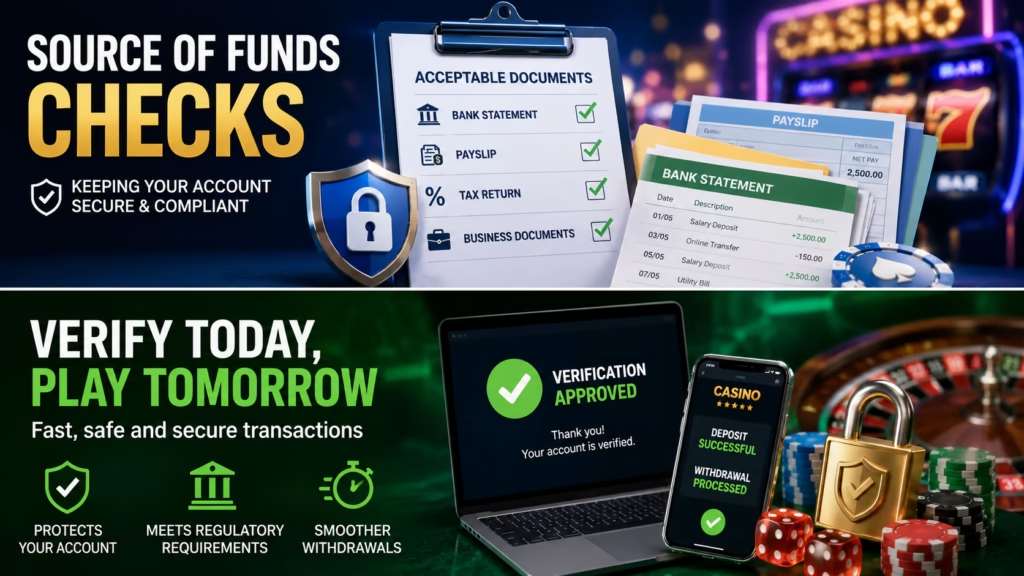
Examples of supporting evidence can include bank statements, payslips, tax returns, loan agreements, investment statements, sale agreements, business records and evidence of gifted funds. The casino decides whether the documents are sufficient for its specific compliance requirements, so requirements can differ between operators and jurisdictions.
How to Pass Gambling Source of Funds Verification
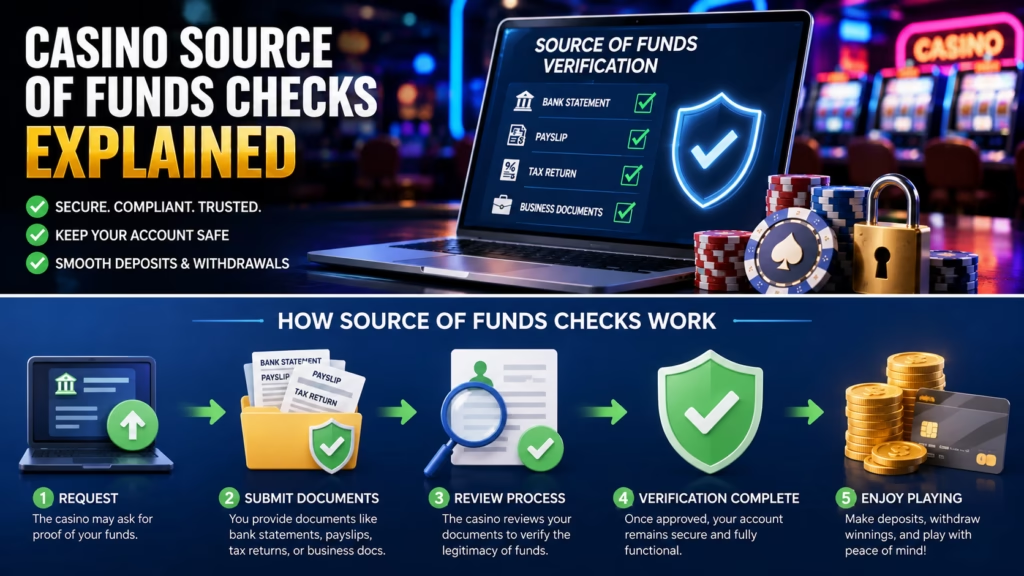
The most effective approach is to provide a clear documentary chain connecting your money to its legitimate source.
1. Identify the actual source
Do not describe the source simply as “my bank account” if the money originally came from salary, investments or a property sale.
A more useful explanation would be: Source: salary from employment. Evidence: recent payslips plus a bank statement showing the corresponding salary deposits.
2. Match the explanation to the documents
The name, amounts, dates and transactions should make sense together. If you claim that funds came from selling shares, for example, an investment statement showing the sale and a bank statement showing the resulting transfer provide a clearer trail than an unrelated account balance.
3. Provide complete, readable documents
Do not deliberately edit transaction records or remove information required to verify the source. Casinos may request additional material when documents are incomplete, inconsistent or cannot be independently verified.
4. Explain unusual transactions
Large one-off transfers can require context. If a large payment resulted from selling a car, receiving an inheritance or transferring money between your own accounts, explaining that fact and providing matching documentation may prevent unnecessary back-and-forth.
5. Avoid unexplained third-party funding
Money received from friends, relatives, companies or unrelated accounts can require additional checks because the casino may need to understand both the relationship and the original source of those funds. Third-party funding and payment methods not held in the player’s own name can create additional financial crime risk concerns.
Source of Funds vs Source of Wealth
Source of funds and source of wealth are related but different checks.
Source of funds asks: Where did the money involved in this transaction come from?
Source of wealth asks: How did this person build their overall financial wealth?
Someone might have accumulated wealth through decades of business ownership, investments and property. The specific $20,000 being deposited at a casino, however, might have come from the sale of shares.
- Source of wealth: business and investment assets
- Source of funds: proceeds from a particular share sale
Source of wealth checks usually require a broader picture than source of funds verification. Enhanced due diligence can involve both, particularly where the customer’s risk profile requires additional scrutiny.
Source of Funds Check vs KYC Verification
A casino source of funds check is not the same as standard KYC identity verification.
KYC, or Know Your Customer, normally focuses on confirming who the customer is. Depending on the jurisdiction and operator, this can involve:
- full name;
- date of birth;
- residential address;
- identity document;
- proof of address;
- verification of a payment method.
Source of funds verification focuses on where the money came from. A player can therefore successfully complete identity verification and later receive a separate source of funds request if their activity triggers further due diligence.
Are Source of Funds Checks the Same as Affordability Checks?
No. A source of funds check establishes whether money has an identifiable and legitimate origin. An affordability or financial-risk process is concerned with whether gambling activity may indicate financial difficulty or gambling-related harm.
The distinction matters because proving that someone legitimately earns a high income does not automatically establish that a particular level of gambling is appropriate for them.
Some regulated markets apply separate financial vulnerability or financial-risk controls in addition to anti-money laundering source of funds verification. Terminology and requirements differ by country, so players should check the rules applying to the casino’s licence and their own jurisdiction.
Can a Casino Ask for Source of Funds When You Withdraw?
A source of funds request can occur around the time of a withdrawal if activity legitimately triggers additional anti-money laundering checks. However, regulated operators are generally expected to conduct risk monitoring throughout the customer relationship rather than deliberately postponing predictable verification until a player wins.
A temporary review does not automatically mean that a casino can confiscate a legitimate balance. If a withdrawal remains blocked, check the casino’s written reason, verification requirements, complaints procedure and licensing regulator. The exact legal position varies internationally.
What Happens If You Refuse a Source of Funds Check?
Refusing to provide required source of funds information can prevent a casino from completing its customer due diligence.
Depending on the jurisdiction, operator and circumstances, this may lead to:
- limits on additional deposits;
- restrictions on gambling activity;
- enhanced account review;
- requests for alternative documents;
- temporary account restrictions;
- termination of the customer relationship where the operator cannot satisfy its compliance obligations.
The casino’s handling of existing deposits and winnings must still follow applicable law, licensing requirements and its enforceable terms. A request for documents should therefore not be confused with automatic forfeiture of funds.
Common Source of Funds Mistakes
Saying the bank is the source of funds
A bank is usually the route through which money moved, not the economic origin of the money. If $10,000 entered your account from a property sale, the source is the property sale, not the bank itself.
Providing documents that do not explain the deposit
A bank balance showing $50,000 does not necessarily explain how the money was earned. Provide evidence that connects the relevant funds with salary, investments, business income, a sale or another legitimate source.
Using someone else’s payment method
Third-party cards, bank accounts and e-wallets can create both payment verification and source of funds issues. Using a payment method registered in your own name usually creates a clearer transaction trail.
Splitting transactions to avoid checks
Making numerous smaller deposits instead of one larger payment is not a reliable way to avoid monitoring. Transaction monitoring can consider linked transactions and patterns rather than individual payments alone.
Assuming every casino uses the same threshold
There is no single worldwide amount below which a player can assume source of funds verification will never occur. Operators use different legal requirements, internal risk controls and customer profiles.
How to Choose a Casino When Verification Matters
Verification requirements should be part of the casino selection process, especially if you expect to make larger deposits or withdrawals.
Before depositing, check:
1. Who regulates the casino. Confirm the operator and licence details through the relevant regulator rather than relying only on a logo in the website footer.
2. KYC requirements. Read what documents the casino says it may request.
3. Withdrawal rules. Check verification procedures, withdrawal limits and processing conditions before playing.
4. Payment ownership rules. Confirm whether payment methods must be registered in the account holder’s name.
5. Privacy information. Review how financial and identity documents are collected, processed and retained.
6. Customer support access. A clear verification channel can be valuable if additional documents are requested.
7. Country eligibility. Casino availability and gambling regulations depend on jurisdiction.
A casino with minimal verification should not automatically be considered better. Weak customer due diligence can indicate weaker compliance controls rather than a player benefit.
How This Information Was Reviewed
This guide distinguishes ordinary KYC, source of funds, source of wealth and financial-risk checks because these processes serve different purposes. The material is based on established anti-money laundering and customer due diligence principles used in regulated gambling markets.
Exact requirements, document lists and thresholds can vary by country and operator, so players should verify the casino’s current terms and the rules of the relevant licensing authority.
Source of funds approval also says nothing about the likelihood of winning. Casino games remain games of chance, and financial verification does not make gambling profitable or predictable. Set spending limits before playing and treat gambling as entertainment rather than a way to generate income.
FAQ
What is a casino source of funds check?
A casino source of funds check verifies how a player obtained the money being used for gambling. The casino may request evidence showing that the funds originated from salary, business income, investments, an asset sale, inheritance or another legitimate source.
What proof of funds do online casinos accept?
Online casinos may accept bank statements, payslips, tax records, investment statements, business documents, property sale records, inheritance documents, loan agreements or similar evidence. The correct document depends on the declared source, and individual casino requirements may differ.
Why is my casino asking for bank statements?
A casino may request bank statements to understand transaction history, confirm ownership of funds and connect deposits with their underlying source. A bank statement may not be sufficient by itself if it shows the money arriving but does not explain where the money originally came from.
Is there a casino source of funds threshold?
There is no universal worldwide casino source of funds threshold. Checks can depend on local regulation, the casino’s AML procedures, the size and pattern of transactions, payment methods and the customer’s individual risk profile.
Can a casino ask where I got my money?
Yes. A casino may need to ask how gambling funds were obtained when required by anti-money laundering, customer due diligence or other regulatory obligations. The exact information it may legally request depends on the jurisdiction and circumstances.
Can a casino block a withdrawal during a source of funds check?
A casino may temporarily review a withdrawal when legitimate AML concerns require additional verification, but withdrawal rules depend on the jurisdiction. In regulated markets, operators generally should not use unnecessary verification purely as a tactic to delay legitimate withdrawals.
What happens if I cannot prove my source of funds?
The casino may request alternative documentation, restrict further activity or decide that it cannot continue the customer relationship if required due diligence cannot be completed. The treatment of an existing balance depends on applicable law, licence conditions and the specific circumstances.
Is source of funds the same as source of wealth?
No. Source of funds explains where the money for a particular transaction came from, while source of wealth explains how a person’s overall wealth was accumulated. A casino may request one or both depending on the level and nature of the risk.
Do all casino players undergo source of funds checks?
No. Casinos generally apply financial crime controls according to regulatory requirements and risk. Some customers may complete only standard identity verification, while others may require additional source of funds or enhanced due diligence because of their transaction patterns or risk profile.
Does passing a source of funds check mean gambling is financially safe?
No. Passing a source of funds check only helps establish the origin of the money. It does not show that gambling is affordable, guarantee winnings or reduce the randomness of casino games. Gambling should be treated as entertainment, and players should set financial limits before depositing.
Brief Conclusion
A casino source of funds check establishes how gambling money was obtained, not simply which account sent it. Salary records, bank statements, investment evidence, business documents and asset-sale records are common forms of proof, but the required evidence depends on the source and the casino’s regulatory obligations.
There is no single worldwide trigger for gambling source of funds verification. The clearest approach is to use payment methods in your own name, keep a traceable record of where deposited money came from and check the casino’s verification and withdrawal rules before playing.