No KYC casinos can prevent some types of fraud without routinely requesting passports or other identity documents because fraud detection does not depend entirely on knowing a player’s legal identity. Instead, these casinos may analyze crypto wallets, transaction histories, devices, IP addresses, account behavior, deposit and withdrawal patterns, and connections between multiple accounts.
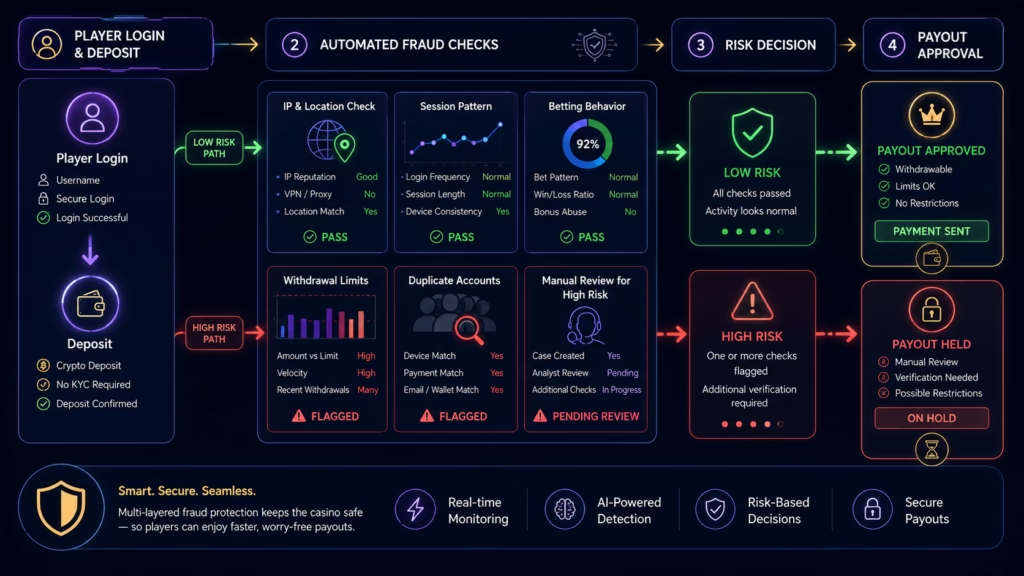
The important distinction is that no KYC does not necessarily mean no fraud checks, no AML controls, or guaranteed anonymity. A casino may allow registration and normal play without document verification but still perform automated risk screening in the background or request additional information when suspicious activity triggers a review.
Quick takeaways
- No KYC casino fraud prevention can rely on wallet screening, transaction monitoring, device intelligence and behavioral analysis.
- Crypto deposits are pseudonymous, but blockchain transactions can still reveal risk patterns and connections to known illicit addresses.
- Device fingerprinting can help identify multi-accounting, account takeovers, bots and bonus abuse.
- Large, unusual or high-risk transactions may trigger additional checks or manual review.
- A casino advertised as “no KYC” may still reserve the right to request verification under specific circumstances.
- Rules differ substantially between jurisdictions, so players should check the casino’s licensing information and verification terms before depositing.
No KYC casinos may appeal to players who value faster registration and greater privacy. They require extra caution, however, because reduced onboarding friction should never be treated as proof that an operator is trustworthy, properly regulated or guaranteed to process withdrawals.
How No KYC Casino Fraud Prevention Works
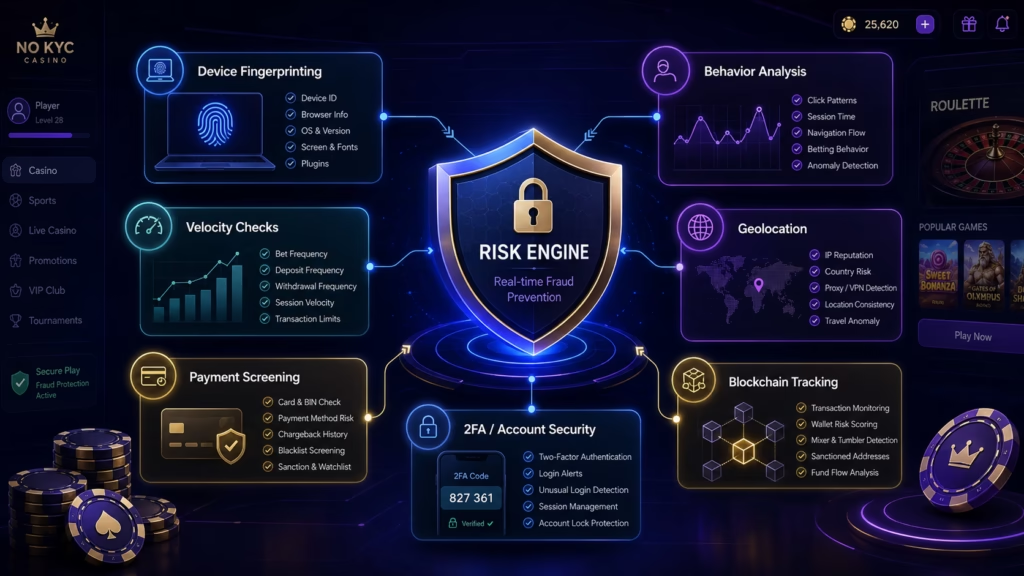
No KYC casino fraud prevention usually replaces universal document checks with risk-based monitoring. Instead of verifying every player’s identity at registration, the operator can analyze technical and financial signals and intervene when those signals indicate elevated risk.
Modern fraud systems can combine device information, account activity, transaction details and behavioral events into continuously updated risk scores. These systems can detect unusual devices, reused devices, suspicious login patterns and coordinated groups of accounts without necessarily requiring a passport at the beginning of the process.
This approach is particularly relevant to cryptocurrency casinos because blockchains provide transaction data that can be analyzed independently of traditional identity documents.
1. Crypto Wallet Screening
Crypto wallet screening allows a casino to estimate the risk associated with a deposit or withdrawal address without necessarily knowing the wallet owner’s legal name.
Blockchain intelligence systems can compare wallet addresses against databases containing addresses associated with scams, sanctions, ransomware, darknet markets, stolen funds and other high-risk activities. Wallets can also be evaluated based on their exposure to other addresses rather than only direct interaction with a known illicit wallet.
For example, a casino could treat these situations differently:
- a wallet with an ordinary transaction history;
- a newly created wallet receiving funds from a major exchange;
- a wallet with substantial exposure to an identified mixer;
- a wallet connected to addresses associated with scams or stolen cryptocurrency;
- a wallet that suddenly begins moving unusually large amounts.
Wallet screening does not prove that a particular person committed fraud. It provides a risk signal that an operator can use together with other information.
2. Blockchain Transaction Monitoring
Transaction monitoring examines how cryptocurrency enters and leaves a casino rather than relying solely on the identity of the player.
Blockchain monitoring systems can analyze transaction amounts, frequency, counterparties, wallet exposure, movement patterns and other characteristics. Configurable rules can then generate alerts when transactions cross predefined risk thresholds.
This matters because fraud and money laundering frequently involve patterns rather than a single obviously suspicious transaction.
A risk system might flag activity such as:
- multiple deposits followed by an unusually rapid withdrawal;
- transactions involving high-risk counterparties;
- sudden changes in transaction size;
- repeated transactions occurring unusually quickly;
- movement between several related wallets;
- deposits associated with previously identified illicit activity.
Blockchain monitoring therefore gives crypto casinos another layer of information even when conventional ID verification has not occurred.
3. Device Fingerprinting
Device fingerprinting can identify suspicious connections between casino accounts without requiring identity documents.
A device fingerprint is created from technical characteristics associated with a phone, computer or browser. Fraud systems may use these signals to determine whether multiple supposedly independent accounts appear to originate from the same device or technical environment.
Device intelligence can identify patterns associated with reused devices, bots, emulators, location spoofing, VPN usage, remote-access tools and other potentially suspicious environments. It is commonly used to investigate multi-accounting and account takeover attempts.
For a casino, this can be especially useful for preventing bonus abuse.
Consider a promotion limited to one account per player. A fraudster might create several accounts using different email addresses and crypto wallets. Traditional account information makes them appear unrelated, while device analysis may reveal that all of them are being operated from the same device or coordinated technical environment.
Device matching is still only a signal. Shared networks, privacy tools and legitimate device changes can produce false positives, which is why reliable systems normally combine several indicators.
4. IP Address and Geolocation Checks
IP and location analysis can help casinos identify account sharing, prohibited jurisdictions and unusual access patterns.
A login from a new country shortly after activity from another distant location may deserve additional scrutiny. Similarly, dozens of accounts appearing from the same network may indicate coordinated activity.
Operators may also use location signals to enforce geographic restrictions.
This is particularly important for no KYC casinos because legal access to online gambling varies significantly by jurisdiction. A casino accepting cryptocurrency does not automatically make that casino legal or available everywhere.
Players should therefore check both local law and the operator’s restricted-country list rather than assuming that no KYC means unrestricted access.
5. Behavioral Risk Scoring
Behavioral monitoring looks for changes in how an account behaves instead of focusing only on who owns the account.
Fraud prevention systems can process events such as registrations, logins, password changes, security-setting changes and transactions. These events can be combined into a dynamic risk profile that changes as new activity occurs.
For example, an account might attract additional scrutiny if it suddenly:
- logs in from an unfamiliar device;
- changes security settings;
- adds a new withdrawal destination;
- deposits a much larger amount than usual;
- requests a withdrawal shortly afterward.
None of those actions individually proves fraud. Combined together, however, they can justify temporary restrictions or manual investigation.
This type of analysis also helps detect account takeovers where a criminal gains access to a legitimate player’s casino account.
6. Multi-Accounting and Bonus Abuse Detection
No KYC casinos can fight multi-accounting by connecting accounts through devices, networks, wallets and behavioral similarities.
Bonus abuse is a major reason gambling operators track relationships between accounts. A user attempting to repeatedly claim a welcome bonus could create new usernames, emails and wallet addresses while still leaving technical connections between the accounts.
Fraud-network systems can identify shared devices and groups of related accounts, allowing an operator to detect patterns that would be difficult to see by reviewing each account separately.
Players should read promotional terms carefully because rules covering duplicate accounts, household accounts, VPNs and bonus eligibility differ between operators.
7. Withdrawal Monitoring
Withdrawals are one of the most important fraud-control points because this is when funds leave the casino’s control.
An operator may therefore apply stricter risk rules to withdrawals than to ordinary gameplay.
Potential controls include:
- wallet risk screening;
- withdrawal velocity limits;
- additional account-security checks;
- manual investigation of unusual activity;
- confirmation of withdrawal details;
- enhanced monitoring of unusually large transactions.
A legitimate withdrawal being reviewed does not automatically mean fraud has been detected. Automated systems can generate false positives, particularly when behavior suddenly changes.
Players should check withdrawal limits, processing rules and verification clauses before depositing rather than discovering those requirements after requesting a payout.
Can a No KYC Casino Suddenly Ask for ID?
Yes. A casino marketed as no KYC may still request identity or source-of-funds information under certain circumstances if its terms allow it or applicable regulations require additional checks.
This is one of the most important details to understand before using a no KYC casino.
“No KYC” commonly describes reduced or conditional verification rather than an absolute promise that documents can never be requested. Fraud alerts, AML concerns, unusually large transactions, payment disputes or regulatory obligations may trigger enhanced verification.
International AML standards can require customer due diligence for casinos in specified circumstances, while implementation depends on national law and regulatory frameworks.
Regulation can be substantially stricter in individual markets. In Great Britain, for example, licensed online gambling businesses must verify a customer’s age and identity before allowing the customer to gamble. A genuinely anonymous online casino model therefore does not meet the normal UK verification framework.
No KYC vs Traditional KYC Fraud Prevention
| Control | No KYC Model | Traditional KYC Model |
| Passport or ID at registration | Often not required initially | Commonly required or electronically verified |
| Wallet screening | Commonly applicable to crypto transactions | Can also be used |
| Device fingerprinting | Can be important | Can supplement identity checks |
| Behavioral monitoring | Important | Important |
| Transaction monitoring | Important | Important |
| Multi-account detection | Device, wallet and behavior signals | Identity plus technical signals |
| Enhanced verification | May be triggered by risk | Usually available |
| Guaranteed anonymity | No | No |
Traditional KYC provides stronger identity attribution, but identity verification does not replace fraud monitoring. A verified account can still be compromised, used for suspicious transactions or involved in payment fraud.
No KYC operators therefore tend to depend more heavily on signals that can be evaluated without knowing the player’s verified legal identity.
What Should Players Check Before Choosing a No KYC Casino?
The safest way to evaluate a no KYC casino is to examine its rules and operational transparency rather than focusing only on fast registration.
Before depositing, check:
- which company operates the website;
- which jurisdiction and regulator, if any, oversee the operator;
- whether your country is accepted;
- exactly when KYC can be requested;
- whether source-of-funds checks can occur;
- minimum and maximum withdrawal amounts;
- withdrawal processing rules;
- supported cryptocurrencies and networks;
- bonus restrictions and wagering requirements;
- account-security options;
- complaint and dispute procedures;
- responsible gambling tools.
The absence of an initial document request is a convenience feature, not evidence that a casino is trustworthy.
A more useful question is whether the operator clearly explains what happens when a transaction or account is flagged.
Common Myth: No KYC Means Completely Anonymous
No KYC gambling is not necessarily completely anonymous because an operator can collect significant technical and transactional information without collecting a passport.
A casino may potentially see an account’s:
- IP address;
- browser and device characteristics;
- login history;
- wallet addresses;
- deposit history;
- withdrawal destinations;
- account behavior;
- blockchain transaction history.
Cryptocurrency itself is generally pseudonymous rather than automatically anonymous. Blockchain intelligence tools can analyze relationships between wallets and known entities, which is why crypto businesses can perform risk screening without initially knowing a user’s legal identity.
Players who choose no KYC casinos primarily for privacy should therefore read the casino’s privacy policy and data-retention terms rather than assuming that “no documents required” means “no data collected.”
How This Information Was Reviewed
This overview evaluates no KYC casino fraud prevention by separating identity verification from the technical controls that can operate without documents. The mechanisms discussed include blockchain monitoring, wallet screening, device intelligence, behavioral analysis, transaction risk scoring and enhanced review.
The exact controls used by an individual casino cannot be assumed without reviewing that operator’s policies. Licensing rules, KYC thresholds, withdrawal checks and geographic restrictions can also differ by jurisdiction.
Casino gambling should be treated as entertainment rather than a way to earn money. Fraud controls do not change the mathematical advantage built into casino games, and they do not improve a player’s chances of winning. Set spending limits before playing and avoid gambling with money needed for essential expenses.
FAQ
How do no KYC casinos prevent fraud?
No KYC casinos may prevent fraud through wallet screening, blockchain transaction monitoring, device fingerprinting, IP analysis, behavioral risk scoring and multi-account detection. These tools can identify suspicious patterns without requiring every player to submit identity documents at registration.
Do no KYC casinos perform AML checks?
Some no KYC casinos may conduct AML monitoring even when they do not require routine document verification. Crypto transactions can be screened for high-risk wallet exposure and suspicious transaction patterns. The exact AML obligations depend on the operator, its activities and the jurisdiction involved.
Can a casino track me without KYC?
Yes. A casino can potentially collect IP addresses, device information, login history, wallet addresses and transaction data without obtaining a passport. No KYC should therefore not be interpreted as complete anonymity.
Can blockchain analytics identify suspicious casino deposits?
Yes. Blockchain intelligence can flag addresses and transactions associated with known high-risk entities or suspicious exposure patterns. A risk alert does not by itself prove wrongdoing, so additional investigation may still be required.
Why would a no KYC casino block a withdrawal?
A withdrawal could be delayed or reviewed because of account-security concerns, unusual transaction behavior, wallet-risk alerts, bonus-rule investigations or verification requirements contained in the casino’s terms. Players should check withdrawal and KYC clauses before depositing because policies vary significantly between operators.
Can a no KYC casino ask for identification after I deposit?
Yes. Some operators reserve the right to request verification when specific risk, compliance or transaction conditions are triggered. “No KYC” should therefore be interpreted according to the casino’s actual terms rather than as an unconditional guarantee that identification will never be requested.
How do no KYC casinos detect multiple accounts?
No KYC casinos can compare device fingerprints, network information, wallet relationships and account behavior. Several accounts sharing technical or behavioral characteristics may be flagged for investigation even when different email addresses are used.
Are no KYC casinos safer because they store fewer identity documents?
Not necessarily. Collecting fewer identity documents may reduce certain privacy concerns, but it does not prove that an operator is secure, financially reliable or properly regulated. Players should evaluate licensing, ownership transparency, withdrawal terms, security controls and dispute procedures separately.
Are all crypto casinos no KYC?
No. Cryptocurrency support and KYC policy are separate characteristics. A crypto casino may still require identity verification because of its licence, jurisdiction, transaction size, risk policies or internal compliance rules.
Is a no KYC casino legal everywhere?
No. Online gambling and customer-verification requirements vary by country and jurisdiction. In some regulated markets, licensed online gambling businesses must verify age and identity before gambling. Players should verify the rules that apply where they are physically located.
Brief Conclusion
No KYC casino fraud prevention does not require every fraud check to begin with a passport. Crypto wallet screening, blockchain analytics, device fingerprinting, behavioral monitoring and transaction risk scoring can identify many suspicious patterns without routine document verification.
However, no KYC should not be confused with no monitoring or guaranteed anonymity. Verification may still be triggered by specific activity, casino terms or regulatory obligations. Before depositing, check the operator’s licence, KYC policy, withdrawal rules, geographic restrictions and security procedures, and treat casino gambling strictly as entertainment rather than a source of income.