A source of funds check at a No KYC casino is a compliance review used to establish where the money deposited or withdrawn through a player’s account came from. A casino that advertises No KYC registration may still request financial information when a transaction or account activity triggers anti-money laundering, fraud, sanctions, or other compliance controls.
The important distinction is simple: No KYC does not necessarily mean no verification under any circumstances. It usually means the operator does not require a traditional identity-document check from every player at registration. Source of funds checks can still occur later.
- A No KYC casino may request source of funds evidence even if registration required only an email address or crypto wallet.
- Larger or unusual transactions are more likely to trigger additional checks, but there is no universal amount that applies worldwide.
- Crypto deposits are not automatically exempt because blockchain transactions can still be reviewed for risk.
- Source of funds and source of wealth are related but different compliance checks.
- A casino may restrict deposits, withdrawals or account access while a review is unresolved, depending on its terms and regulatory obligations.
Players looking specifically for No KYC casinos should therefore compare both the initial verification requirements and the operator’s rules for exceptional compliance reviews.
What Is a Source of Funds Check at a No KYC Casino?
A source of funds check asks where the specific money being used for gambling came from. The purpose is normally to determine whether the transaction is reasonably consistent with legitimate funds rather than proceeds of crime, third-party misuse or another suspicious source.
For example, an operator may want to establish whether a large deposit came from salary, business income, investment proceeds, savings, the sale of an asset or cryptocurrency that the player legitimately controls.
Regulated gambling frameworks commonly use risk-based customer due diligence. In Great Britain, for example, Gambling Commission guidance requires casinos to apply customer due diligence according to money-laundering risk and notes that operators may need information about customers’ source of funds and legitimate income.
Requirements are not identical worldwide. The casino’s licensing jurisdiction, payment methods, customer location, transaction history and internal risk controls can all affect whether additional evidence is requested.
Can a No KYC Casino Still Ask for Source of Funds?
Yes. A No KYC casino can still conduct a source of funds check.
“No KYC casino” is commonly used to describe an operator where standard account creation does not require the full document-verification process associated with conventional online casinos. It should not be interpreted as a guarantee that the operator will never request documents or information.
An operator may allow registration and ordinary crypto deposits without identity verification but reserve the right to perform enhanced checks when risk indicators appear.
This distinction matters most before depositing substantial amounts. A player who chooses a casino specifically because it advertises No KYC should read its verification, AML and withdrawal terms rather than relying solely on the phrase “No KYC.”
Why Do No KYC Casinos Perform Source of Funds Checks?
Source of funds checks are primarily designed to manage money laundering, fraud, sanctions, stolen-funds and third-party payment risks.
International anti-money laundering standards use a risk-based approach to customer due diligence, transaction monitoring and additional controls for higher-risk situations.
Online gambling presents particular challenges because transactions occur remotely and can involve cards, e-wallets, cryptocurrency and multiple payment methods. Gambling regulators also identify third-party payments, disproportionate spending, funds from unknown sources and unusual withdrawal behavior as relevant risk indicators.
A source of funds request therefore does not automatically mean the casino believes a player has committed wrongdoing. Risk-based systems can trigger checks simply because an activity pattern requires additional verification.
What Can Trigger a No KYC Casino Source of Funds Check?
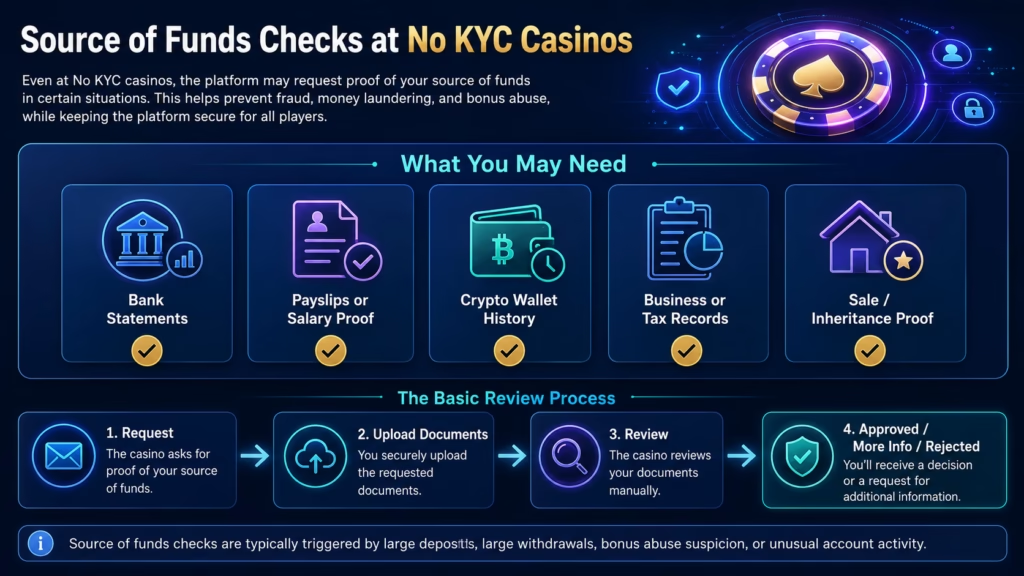
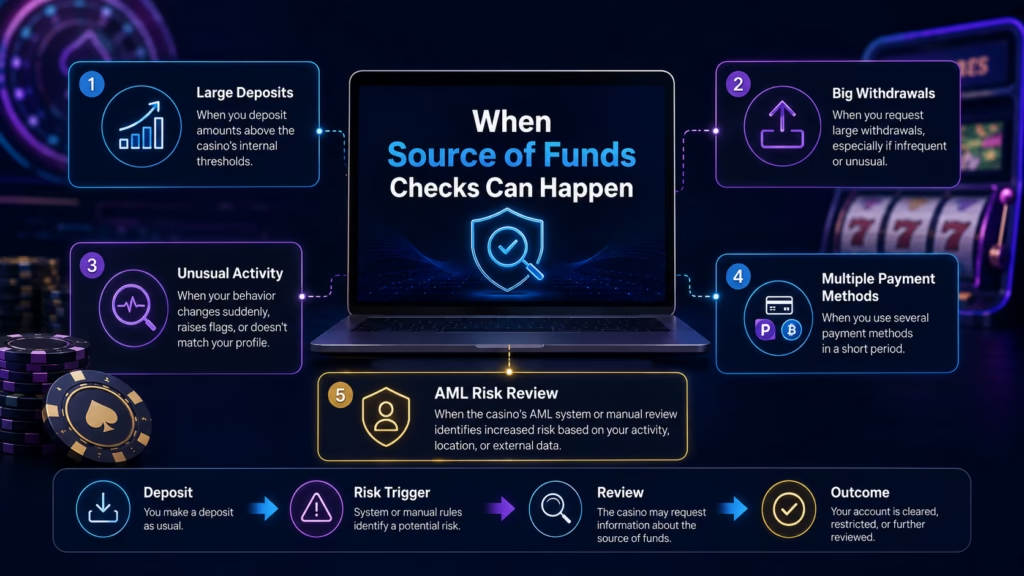
There is no worldwide source of funds threshold that applies to every No KYC casino. Different operators use different risk models, and some triggers are based on behavior rather than a single transaction amount.
Common situations that may attract additional scrutiny include:
- a sudden increase in deposit size or frequency;
- unusually large withdrawals;
- activity significantly different from the player’s previous pattern;
- deposits made using several unrelated payment methods;
- payments originating from another person’s account or wallet;
- significant transfers from third parties;
- deposits followed by little gambling and a rapid withdrawal request;
- transactions involving higher-risk jurisdictions;
- cryptocurrency transactions associated with higher-risk blockchain activity;
- information that conflicts with previously supplied account details;
- a regulatory, fraud, sanctions or AML alert.
A legitimate transaction can still trigger automated controls, so a review by itself should not be interpreted as evidence of illegal activity.
What Documents Can a Casino Request?
The evidence required for a No KYC casino source of funds check depends on how the funds were obtained.
| Source of funds | Evidence that may be requested |
| Employment income | Payslip, bank statement or employment-related evidence |
| Business income | Business records, bank statements or other supporting documents |
| Savings | Bank statements showing accumulated funds |
| Investment proceeds | Brokerage or investment account records |
| Property or asset sale | Sale agreement and evidence of payment |
| Cryptocurrency | Exchange transaction history, wallet transaction records or evidence of wallet control |
| Inheritance | Relevant legal or banking records |
| Loan | Loan agreement and evidence showing the origin of transferred funds |
These are examples rather than a universal checklist. Casino terms and regulatory requirements vary, and requesting one document does not necessarily mean every player will be required to provide the same evidence.
Bank statements are one commonly recognized method for establishing legitimate source of funds under gambling compliance guidance.
Source of Funds vs Source of Wealth
Source of funds identifies where the money involved in a particular transaction or gambling relationship came from. Source of wealth considers how a person accumulated their overall wealth.
For example:
- Receiving $15,000 from the sale of investments describes a potential source of funds.
- Building substantial assets through a long-term business career describes a potential source of wealth.
A casino may require one or both depending on the customer’s risk profile and the rules applying to the operator.
The difference becomes particularly relevant for higher-risk customers. Regulatory frameworks may require more extensive due diligence where the casino needs to understand whether gambling activity is consistent with the customer’s financial circumstances.
How Do Source of Funds Checks Work With Cryptocurrency?
Using Bitcoin, Ethereum, USDT or another cryptocurrency does not automatically prevent a source of funds check.
A crypto casino may examine transaction history or use blockchain analytics to assess whether deposited assets are associated with unusual or higher-risk activity. The operator may also ask how the cryptocurrency was acquired.
A player who purchased cryptocurrency through an exchange, for example, may be asked for transaction history showing the purchase and subsequent transfer. Someone transferring funds from a self-custody wallet could potentially be asked for information demonstrating control of that wallet.
The exact process varies considerably between casinos.
Crypto can reduce the amount of conventional banking information involved in a deposit, but it should not be treated as a guaranteed method of avoiding AML controls.
Can a Casino Ask for KYC After Advertising No KYC?
Yes. Some casinos marketed as No KYC reserve the right to request identity verification, source of funds information or enhanced due diligence in exceptional situations.
This is why the wording of the casino’s terms matters.
Before depositing, check whether the operator states that verification may be required for:
- suspicious or unusual transactions;
- large withdrawals;
- AML investigations;
- sanctions screening;
- account ownership disputes;
- payment-method ownership;
- bonus abuse or fraud investigations;
- regulatory requirements.
A genuine No KYC experience for ordinary transactions does not necessarily remove these exceptions.
Can a Withdrawal Be Delayed During a Source of Funds Check?
A withdrawal may be delayed while a source of funds review is taking place, depending on the casino’s terms and legal obligations.
The practical issue for players is that verification conditions sometimes become important only after money has already been deposited. A casino that offers instant registration can still have more extensive withdrawal-compliance procedures.
Before choosing an operator, check its withdrawal policy for references to KYC, enhanced due diligence, AML verification and requests for additional documentation.
Be cautious with any casino that provides almost no explanation of when withdrawals may be reviewed or restricted. Transparency about verification procedures is more useful than a simple “No KYC” marketing claim.
How to Choose a No KYC Casino if You Want Fewer Verification Problems
A good No KYC casino should be evaluated by more than how quickly an account can be opened.
Read the verification policy before depositing
Look specifically for circumstances where identification or financial documents can be requested. If the casino claims “no verification” on one page but its terms allow unrestricted document requests, the terms are more important.
Check withdrawal rules
Review withdrawal limits, processing conditions, supported currencies and whether enhanced verification can be introduced before payment.
Use payment methods you control
Depositing from another person’s bank account, card, exchange account or crypto wallet can create ownership and compliance questions. Third-party funding is widely treated as an important AML risk in gambling compliance.
Keep transaction records
Players using cryptocurrency may find it useful to retain exchange purchase records and transaction histories. Keeping records does not guarantee approval, but it can make legitimate ownership easier to demonstrate if a review occurs.
Do not deposit more simply because verification is minimal
No KYC registration does not reduce gambling risk. Set spending limits based on money you can afford to lose rather than on how much the casino permits you to deposit.
Common Myths About Source of Funds Checks
“No KYC means the casino can never ask for documents”
False. No KYC usually describes the standard onboarding process, not every possible compliance scenario.
“Crypto casinos cannot determine where cryptocurrency came from”
False. Public blockchain transactions can provide transaction-history information, and operators may use blockchain-risk screening alongside other controls.
“Only very large deposits trigger checks”
Not necessarily. Transaction patterns, third-party payments, jurisdictional risk and other factors can matter independently of transaction size.
“A source of funds request means the casino thinks I committed a crime”
Not necessarily. Risk-based compliance can require further information even where the customer’s funds are legitimate. A higher-risk classification does not by itself prove that a customer is involved in money laundering or other criminal activity.
How This Information Was Reviewed
This guide distinguishes standard No KYC registration from AML and enhanced due diligence because these processes should not be treated as the same thing.
The compliance principles were reviewed against current international anti-money laundering standards and gambling-regulator guidance covering casino customer due diligence, source of funds and remote gambling risks.
Exact verification rules still depend on the casino, licensing jurisdiction and customer circumstances. Players should therefore check the operator’s current terms before depositing.
Casino gambling should be treated as entertainment rather than a source of income. No KYC access, fast withdrawals or cryptocurrency payments do not improve the mathematical odds of casino games. Set limits before playing and avoid gambling with money required for essential expenses.
FAQ
What is a source of funds check at a No KYC casino?
A source of funds check establishes where money deposited or withdrawn through a casino account originated. A No KYC casino may conduct this review even when normal registration does not require identity documents.
Do all No KYC casinos require source of funds checks?
No. Source of funds checks are usually risk-based rather than automatically performed for every customer. The operator, jurisdiction, transaction size, payment method and account behavior can affect whether a review occurs.
How much can I deposit before a casino asks for source of funds?
There is no universal worldwide amount. Casinos and regulators can use different thresholds and risk indicators, and some reviews can be triggered by transaction patterns rather than a specific deposit amount.
Can a crypto casino ask where my Bitcoin came from?
Yes. A crypto casino may ask how cryptocurrency was acquired or request transaction records if a compliance review is triggered. Using cryptocurrency does not automatically remove AML obligations.
What proof can I provide for cryptocurrency source of funds?
Possible evidence includes exchange purchase records, account transaction history, blockchain transaction records and information demonstrating control of a wallet. The exact evidence accepted depends on the casino.
Can a No KYC casino suddenly request ID?
Yes. Some No KYC casinos reserve the right to request identification when enhanced due diligence, fraud prevention, account ownership or regulatory checks are triggered. Always check the verification provisions in the casino’s terms.
Can a casino refuse my withdrawal if I do not complete a source of funds check?
A casino may restrict or delay transactions when required information has not been provided, depending on its terms and applicable regulatory requirements. The exact outcome cannot be assumed without reviewing the operator’s rules and jurisdiction.
Is source of funds the same as KYC?
No. KYC normally establishes who the customer is, while source of funds examines where particular money came from. The two processes can overlap during enhanced due diligence.
Is source of wealth the same as source of funds?
No. Source of wealth describes how a person’s overall wealth was accumulated, while source of funds focuses on the origin of money involved in a particular transaction or gambling relationship.
Does passing a source of funds check make a casino safe?
No. A source of funds check is only one compliance measure. Players should separately evaluate the casino’s licensing information, withdrawal terms, security practices, reputation and responsible gambling controls before depositing.
Short Conclusion
A source of funds check at a No KYC casino is possible even when the casino normally allows registration and deposits without traditional identity verification. No KYC should therefore be understood as reduced routine verification, not a guarantee of permanent anonymity or exemption from AML controls.
Before depositing, check the casino’s KYC, AML and withdrawal terms, use payment methods that belong to you and keep records showing how legitimate funds were obtained. If minimal verification is your priority, compare the exceptions in each operator’s terms rather than relying only on a “No KYC” label.