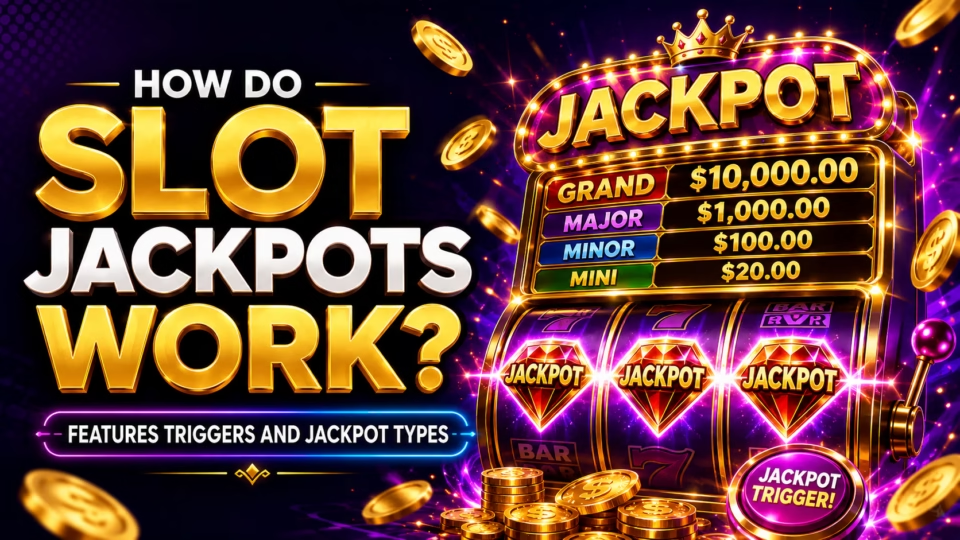
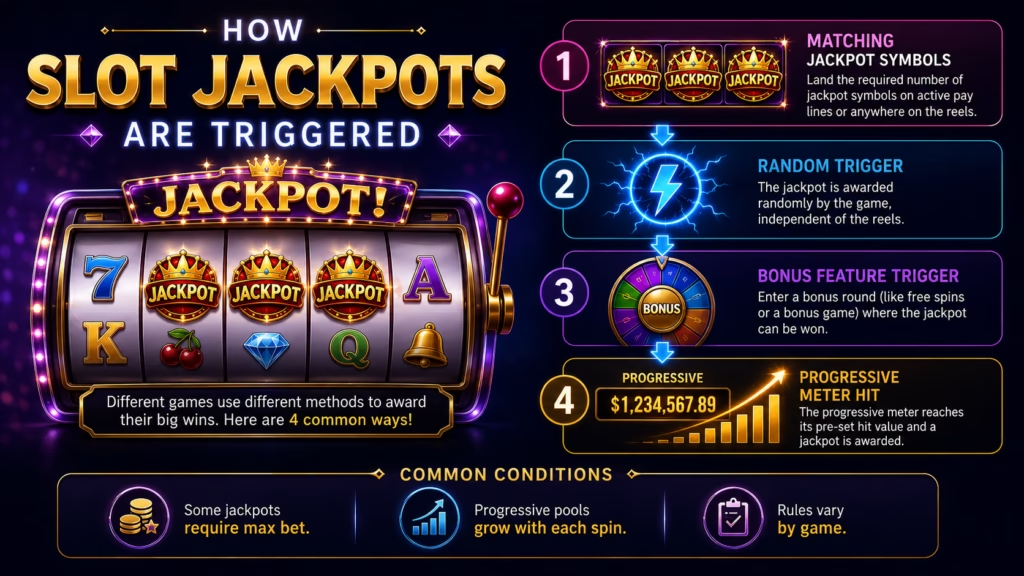
Slot jackpots work by awarding a large fixed or progressive prize when specific conditions are met. Depending on the game, a jackpot may be triggered by landing particular symbols, entering a bonus round, spinning a prize wheel or activating a random jackpot event. Progressive jackpots increase over time, while fixed jackpots remain at a predetermined value.
Quick answers
- A fixed jackpot always pays the amount stated in the game rules.
- A progressive jackpot grows as qualifying wagers are placed.
- Jackpot triggers may be symbol-based, bonus-based or completely random.
- Some games require a particular bet level or side wager to qualify.
- A jackpot cannot be predicted from previous spins because slot outcomes are random.
Jackpot slots are usually more appealing to players who accept lower odds of winning the top prize in exchange for a larger potential payout. Players with limited budgets should be more cautious because jackpot mechanics may increase volatility and some games require higher qualifying bets.
What Is a Slot Jackpot?
A slot jackpot is the largest prize available within a slot game or connected jackpot network. The jackpot may be a fixed amount programmed into the paytable or a progressive amount that rises as players place qualifying wagers.
A jackpot is different from an ordinary maximum win. A regular maximum win usually comes from a specific combination of symbols, multipliers and bonus features. A jackpot may use a separate prize system with its own trigger, eligibility rules and prize pool.
For example, a slot may have a normal maximum payout of 5,000 times the bet while also offering a separate progressive jackpot. Winning the progressive prize may depend on a random event rather than achieving the highest-paying symbol combination.
Players should check the game rules because the word “jackpot” is not used consistently across all slots. In some games, it describes a genuinely progressive prize. In others, it is simply the name given to the highest fixed payout.
How Do Jackpot Slots Work?
Jackpot slots work by combining the normal slot game with an additional prize mechanism. The base game still uses a random number generator to determine symbols and wins, while the jackpot feature follows its own trigger conditions.
- The player places an eligible wager.
- The spin result is generated randomly.
- The game checks whether the jackpot trigger has occurred.
- If the conditions are met, the jackpot prize is awarded.
- A progressive jackpot resets to its starting value after being won.
The exact order can differ between games. A jackpot may be linked directly to the symbols on the reels, or the system may perform a separate random jackpot check after each eligible spin.
The jackpot amount does not normally indicate that a win is close. A large progressive prize can continue growing without becoming easier to trigger unless the official game rules specifically use a must-hit-by system.
How Progressive Jackpots Grow
A progressive jackpot grows because part of the qualifying betting activity contributes to the prize pool. The contribution may come from one slot machine, several games at one casino or a network of casinos.
The visible jackpot total usually begins with a seed amount. The seed is the minimum value to which the jackpot returns after somebody wins it. Additional contributions then increase the prize until the next successful trigger.
The exact contribution structure is not always shown to players. The casino or game provider may display the current jackpot value without revealing how much of each wager is added to the pool.
Progressive jackpots commonly follow this cycle:
- The jackpot starts at a predetermined seed value.
- Eligible wagers cause the displayed prize to increase.
- A qualifying player triggers the jackpot.
- The winner receives the applicable prize.
- The jackpot resets and begins growing again.
Not every bet necessarily contributes directly to the prize. Jackpot funding arrangements differ between providers, operators and game networks. The official paytable and jackpot rules are the best sources for game-specific information.
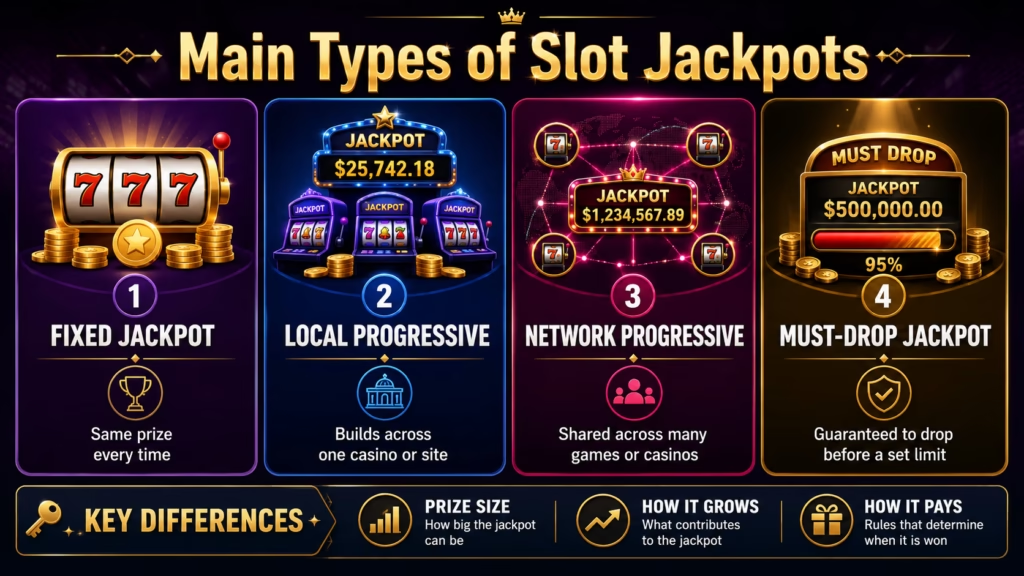
Main Types of Slot Jackpots
Different jackpot types create very different playing experiences. The most important distinction is whether the prize is fixed, progressive or controlled by a maximum payout threshold.
| Jackpot type | How it works | Main characteristic |
| Fixed jackpot | Pays a predetermined amount | Prize does not grow |
| Standalone progressive | Grows from wagers on one machine or game instance | Smaller player pool |
| Local progressive | Connects several games within one casino | Shared casino-level prize |
| Wide-area progressive | Connects games across multiple casinos or operators | Larger potential prize pool |
| Mystery jackpot | Triggered randomly during an eligible spin | May not require specific symbols |
| Must-hit-by jackpot | Must be awarded before reaching a stated upper limit | Guaranteed to trigger within a defined range |
| Multi-level jackpot | Offers several prizes such as Mini, Minor, Major and Grand | Different prize levels and triggers |
Fixed Jackpots
A fixed jackpot pays the same stated value whenever its winning conditions are completed. The prize may be expressed as a cash amount, a bet multiplier or a fixed number of credits.
Fixed jackpots are generally easier to understand because the player can see the exact potential payout in the paytable. However, the jackpot may scale with the wager, so a larger bet can produce a larger cash prize even when the multiplier remains unchanged.
Standalone Progressive Jackpots
A standalone progressive jackpot is connected to a single slot or machine. Because fewer wagers feed the prize, the jackpot may grow more slowly than a networked jackpot.
Standalone progressives may appeal to players who want jackpot mechanics without joining a very large shared network. The actual odds still depend on the game rules and should not be assumed to be better merely because the prize is smaller.
Local Progressive Jackpots
A local progressive jackpot connects multiple games within the same casino or operator. Qualifying activity from the connected games contributes to a shared prize pool.
Local jackpots can grow faster than standalone prizes because more players are participating. They are usually smaller than wide-area jackpots, although the prize size depends on network activity and the jackpot’s starting value.
Wide-Area Progressive Jackpots
A wide-area progressive jackpot links games across several casinos, brands or locations. A large number of eligible wagers can cause the prize to grow substantially.
Wide-area jackpots often attract attention because of their headline prize values. However, a larger jackpot does not mean that a player has a stronger chance of winning. The probability is determined by the game’s jackpot system, not by the amount currently displayed.
Mystery Jackpots
A mystery jackpot is awarded through a random trigger rather than a visible winning combination. A player may receive the prize after an ordinary-looking spin, provided the wager meets the eligibility requirements.
Mystery jackpots are often presented as surprise prizes. The reels may stop first and then display a jackpot animation, pick feature or prize reveal. The triggering event is still random and cannot be identified in advance.
Must-Hit-by Jackpots
A must-hit-by jackpot must be awarded before its displayed value reaches a specified upper limit. For example, the interface may state that the prize must be won before reaching a particular amount.
A must-hit-by limit does not reveal the exact winning spin. The jackpot may trigger shortly after its reset or near the upper threshold. Players should not assume that a prize close to its limit offers a guaranteed personal advantage unless the official rules explain how the trigger probability changes.
Multi-Level Jackpots
Multi-level jackpot slots offer several prize tiers, commonly labelled Mini, Minor, Major and Grand. The smaller prizes may be awarded more frequently, while the top level is usually harder to trigger.
Each jackpot level may have separate rules. One prize might be fixed, another progressive and another awarded through a bonus wheel. Players should review every level individually rather than assuming all jackpot tiers operate in the same way.
What Triggers a Slot Jackpot?
A slot jackpot can be triggered by symbols, bonus features, random events or special jackpot interfaces. The trigger depends entirely on the game design.
Specific Jackpot Symbols
Some games require a particular number of jackpot symbols to appear in designated positions. The symbols may need to land on an active payline, across specific reels or anywhere in view.
A symbol-based trigger is visible, but the outcome remains random. Previous appearances of jackpot symbols do not make a complete combination more likely on the next spin.
Bonus Wheels and Pick Features
A jackpot may be awarded through a wheel, pick-and-click feature or prize selection screen. The player usually enters the feature by landing bonus symbols or triggering a random event.
The apparent choice may or may not affect the final prize. In some games, the result is determined when the feature begins and the selections only reveal it. The game rules should explain how the feature operates.
Random Jackpot Triggers
A random jackpot can activate after any eligible spin without requiring a specific reel combination. The jackpot system may evaluate each qualifying wager independently from the standard slot result.
Random does not mean that every bet has identical eligibility. Bet size, stake level, side bets or game mode may affect whether the spin qualifies.
Accumulated Meters or Collect Features
Some jackpot slots ask players to collect symbols, fill meters or unlock jackpot levels. These visual systems can create a sense of progress toward a prize.
A full or nearly full meter does not always mean the jackpot is about to be awarded. Some meters are persistent features, while others reset between sessions or act mainly as visual representations of a random process. The official rules should explain whether collected progress changes the actual probability.
Do You Need to Bet Maximum Coins to Win a Jackpot?
Maximum betting is not required for every jackpot slot. Some games allow any standard wager to qualify, while others require a minimum stake, maximum coin setting or optional jackpot side bet.
The safest approach is to check the eligibility message before playing. Important details may include:
- Minimum qualifying bet
- Required number of active paylines
- Maximum coin requirement
- Optional jackpot contribution
- Eligible game modes
- Restrictions on bonus funds
- Different prize values for different stakes
A higher bet may increase the cash value of a jackpot or provide more entries into a weighted system, but this depends on the specific game. Players should never increase their wager based only on the assumption that maximum bets are always necessary.
How Jackpots Affect RTP and Volatility
Jackpot prizes can form part of a slot’s theoretical return to player, but the exact calculation varies by game. A portion of the theoretical return may be allocated to an extremely rare jackpot event rather than regular base-game wins.
This means two slots with similar advertised RTP values may feel very different. A jackpot slot can return more of its theoretical value through rare large prizes, while another game may distribute more value through smaller and more frequent wins.
RTP does not predict the result of a single session. It is a long-term theoretical percentage calculated across a very large number of game rounds. A player can lose quickly, win early or never experience a result close to the published figure.
Jackpot slots are often associated with medium or high volatility because a meaningful part of the potential return may come from infrequent prizes. However, volatility must be checked for each game because not every jackpot slot follows the same payout pattern.
Jackpot Slots vs Regular Slots
The main difference between jackpot slots and regular slots is the structure of the top prize.
| Feature | Jackpot slot | Regular slot |
| Top prize | May use a separate jackpot system | Usually comes from the paytable |
| Prize value | Can be fixed or progressive | Usually fixed as a multiplier |
| Trigger | Symbols, bonus feature or random event | Standard reel and bonus mechanics |
| Network | May connect multiple games or casinos | Usually limited to one game |
| Volatility | Often higher, but varies | Can be low, medium or high |
| Eligibility | May require a qualifying wager | Standard bets usually qualify for normal wins |
A jackpot slot may suit players who value the possibility of a very large prize more than frequent payouts. A regular slot may be more suitable for players who prefer simpler rules, clearer maximum-win conditions or more predictable bet requirements.
Neither format offers a reliable way to make money. Every spin remains random, and the casino retains a mathematical advantage over time.
Common Myths About Slot Jackpots
“The jackpot is due after a long losing period”
A jackpot does not normally become due because it has not been won recently. Random jackpot systems do not compensate players for previous losses.
The main exception is a must-hit-by jackpot, which must trigger within a defined prize range. Even then, no individual player is guaranteed to receive it.
“A nearly full meter means the next spin will win”
A visual meter may not represent the actual probability of a jackpot. Many meters are designed to build anticipation rather than show how close the game is to awarding the prize.
Players should only treat a meter as meaningful progress when the official rules clearly state that collected items or levels affect the trigger.
“Maximum bets always improve jackpot odds”
Maximum bets do not automatically improve the probability of winning. They may be required for eligibility in some games, but other jackpots can be won with lower qualifying stakes.
Betting more also increases the amount that can be lost per spin. The correct wager is one that satisfies the rules while remaining within a predetermined budget.
“A larger jackpot is easier to win”
A larger displayed jackpot does not normally make the trigger more likely. The prize grows because more qualifying activity has occurred, not because the system is preparing to pay.
Must-hit-by jackpots may behave differently near their upper limits, but the specific probability model should not be guessed without official information.
“Changing machines improves the chance of winning”
Switching games does not create a predictable advantage. Each eligible spin is evaluated according to the rules of the selected slot, regardless of whether another player recently won or lost.
How to Choose a Jackpot Slot
A jackpot slot should be evaluated by its rules rather than by the size of the advertised prize alone.
1. Identify the Jackpot Type
Check whether the prize is fixed, progressive, mystery, must-hit-by or part of a multi-level system. The jackpot type affects how the prize grows and what conditions must be completed.
2. Check the Qualifying Bet
Confirm the minimum wager and whether a side bet or maximum coin setting is required. A jackpot that requires an uncomfortable stake is not suitable for a limited bankroll.
3. Review the Trigger
Find out whether the jackpot uses symbols, a bonus wheel, collected items or a random trigger. A clear understanding of the trigger prevents false assumptions about visible progress.
4. Check RTP and Volatility
RTP provides a long-term theoretical measure, while volatility describes how unevenly wins may be distributed. Neither value predicts the next result, but both help explain the likely playing experience.
The exact RTP may vary between casinos or game configurations. The value displayed in the paytable of the active version is more relevant than a figure found on a third-party website.
5. Compare the Base Game
A jackpot is only one part of the slot. Review the base-game features, paylines, ways to win, bonus rounds, multipliers and ordinary payout potential.
A large jackpot may have little practical value to a player who does not enjoy the underlying game or cannot comfortably meet the qualifying bet.
6. Confirm Availability and Withdrawal Rules
Jackpot availability can depend on the casino, country and selected game version. Casino terms may also contain identity verification, withdrawal and bonus-fund conditions.
These terms do not change the random nature of the jackpot, but they may affect how an awarded prize is processed.
Practical Bankroll Rules for Jackpot Slots
Jackpot slots should be played with a fixed entertainment budget rather than money needed for bills, savings or debt payments.
A practical approach is to:
- Decide the maximum session loss before starting.
- Choose a qualifying wager that allows enough spins within the budget.
- Avoid increasing bets to recover losses.
- Ignore the belief that a growing jackpot must be won soon.
- Stop when the time or spending limit is reached.
- Avoid playing while stressed, angry or under the influence of alcohol.
- Use casino limit tools when available.
A jackpot’s size can encourage players to spend more than planned. The potential prize does not reduce the cost of each spin or improve the player’s control over the result.
How This Information Was Reviewed
This guide evaluates slot jackpots by their prize structure, funding model, trigger mechanism, eligibility requirements, RTP relationship and likely effect on volatility.
Game-specific information should always be checked in the active slot’s paytable and official rules. Jackpot values, qualifying bets, available features and RTP settings may differ between casinos and jurisdictions.
RTP, volatility, bonus features and jackpot meters do not guarantee any result. Slot games should be treated as paid entertainment rather than a method of earning money. Players should stop when gambling is no longer enjoyable, when limits are exceeded or when losses create financial or emotional pressure.
FAQ
How do slot jackpots work?
Slot jackpots work by awarding a fixed or progressive prize when a qualifying spin meets the jackpot conditions. The trigger may involve specific symbols, a bonus feature, a prize wheel or an independent random event.
How do jackpot slots work with progressive prizes?
Progressive jackpot slots add value to a shared prize pool as qualifying wagers are placed. When an eligible player triggers the jackpot, the prize is paid and usually resets to a predetermined seed amount.
Are slot jackpots completely random?
Most slot jackpots use random number generation, although the exact trigger system differs between games. Even symbol-based and bonus-based jackpots remain random because the triggering symbols or features cannot be predicted.
Can a jackpot be won with a minimum bet?
Some jackpots can be won with the minimum qualifying wager, while others require a higher stake, maximum coins or a separate side bet. The game rules should state exactly which bets are eligible.
Does betting more increase jackpot odds?
Betting more only increases jackpot eligibility or probability when the official rules explicitly use a stake-based system. In many games, a larger bet simply increases the amount risked and does not improve the chance of triggering the jackpot.
What happens after a progressive jackpot is won?
A progressive jackpot normally resets to its seed value after being awarded. The prize then begins growing again as new qualifying wagers are placed.
Are progressive jackpots included in RTP?
Progressive jackpot payouts may be included in the game’s theoretical RTP, but calculation methods vary. Players should check whether the displayed RTP includes the jackpot contribution and whether different casino versions use different settings.
Is a jackpot more likely to pay when its value is high?
A high jackpot value does not usually mean that the prize is close to being won. Must-hit-by jackpots are an exception because they must trigger before reaching a stated limit, although the exact winning spin remains unknown.
Can a casino choose who wins a jackpot?
A properly operated slot jackpot should follow the game’s programmed rules and random trigger system rather than a manual choice by the casino. Players should use reputable operators and check the applicable licensing and game information available in their region.
Can jackpot slots provide regular income?
Jackpot slots cannot provide reliable income because outcomes are random and the casino has a long-term mathematical advantage. Jackpot games should be treated as entertainment, with strict spending and time limits.
Brief Conclusion
Slot jackpots use fixed prizes, progressive pools or special trigger systems to create larger potential payouts than ordinary slot combinations. The most important details are the jackpot type, qualifying bet, trigger method, RTP setting and volatility.
A growing prize does not make a jackpot predictable, and visible meters do not necessarily show that a win is close. Check the official paytable before playing, use a fixed entertainment budget and never treat jackpot slots as a way to earn money.