
Crypto casinos in Canada are online gambling sites that accept Bitcoin, Ethereum, stablecoins or other digital assets for deposits and withdrawals. The important distinction is that accepting Canadian players or Canadian IP addresses does not automatically mean a crypto casino is regulated in Canada. In Ontario, regulated private operators must be registered with the Alcohol and Gaming Commission of Ontario and operate under an agreement with iGaming Ontario. As of August 6, 2026, iGaming Ontario listed 48 regulated operators across 83 gaming websites.
Key points for Canadian players:
- Crypto deposits can be convenient, but blockchain transfers are normally difficult or impossible to reverse after confirmation.
- Bitcoin casinos in Canada may still require identity verification, especially before withdrawals.
- Regulation should be checked before bonuses, game selection or deposit speed.
- Cryptocurrency price movements can change the real value of a casino balance even before gambling results are considered.
- A crypto casino should be treated as entertainment, not as a way to generate income.
Crypto casinos are generally most relevant to players who already understand cryptocurrency wallets and blockchain networks. Players unfamiliar with wallet addresses, network selection or crypto volatility may find conventional payment methods easier to manage.
Are Crypto Casinos Legal in Canada?
Online gambling regulation in Canada depends heavily on provincial rules rather than one nationwide commercial casino licensing system.
Section 207 of Canada’s Criminal Code allows provincial governments to conduct and manage lottery schemes under provincial law. Ontario has gone further by creating a regulated competitive iGaming market where approved private operators can provide online casino gaming under provincial oversight.
Ontario players should distinguish between a casino that merely accepts Canadians and a casino officially regulated for Ontario. A regulated Ontario operator must be registered with the AGCO and, except for OLG.ca, have an operating agreement with iGaming Ontario. Regulated sites are subject to requirements involving game integrity, player protection, responsible gambling and anti-money-laundering controls.
The situation outside Ontario varies by province. Players should therefore check their provincial gambling authority before assuming that an offshore Bitcoin casino has local regulatory approval.
How Crypto Casinos in Canada Work
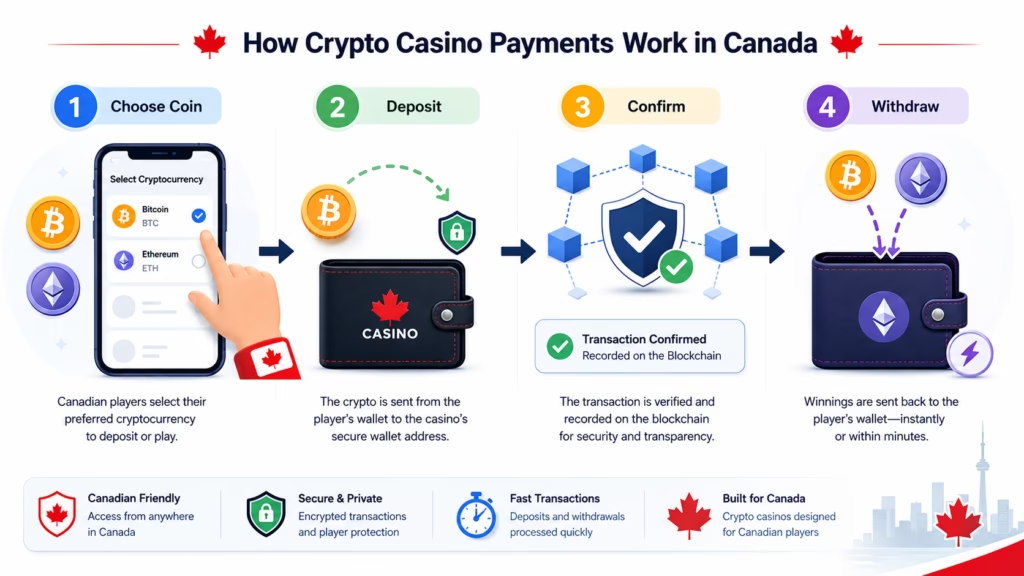
A crypto casino normally allows a player to transfer cryptocurrency from a personal wallet or exchange account to a deposit address supplied by the casino.
The basic process usually looks like this:
- Create and verify the casino account if verification is required.
- Select Bitcoin, Ethereum, Litecoin, a stablecoin or another supported cryptocurrency.
- Select the correct blockchain network.
- Copy the casino’s deposit address.
- Send the cryptocurrency from the player’s wallet.
- Wait for the required blockchain confirmations.
- Use the credited casino balance to play available games.
- Request withdrawals to a compatible wallet address.
The blockchain transfer is only one part of the process. A casino can still impose internal withdrawal reviews, identity verification, bonus restrictions and withdrawal limits after a transaction has appeared on-chain.
Players should also check whether the casino keeps the balance denominated in cryptocurrency or automatically converts deposits into CAD, USD or another internal currency. Automatic conversion can significantly change exposure to cryptocurrency price movements.
Bitcoin Casinos Canada vs Traditional Online Casinos
Bitcoin casinos and conventional online casinos can provide similar games, but their payment mechanics are different.
| Factor | Crypto Casino | Conventional Casino |
| Deposits | Blockchain transaction | Card, bank transfer, Interac or e-wallet |
| Transfer reversal | Usually difficult or impossible | Some payment systems provide dispute mechanisms |
| Settlement time | Depends on blockchain and casino processing | Depends on bank and payment provider |
| Currency value | May fluctuate | Usually stable fiat currency |
| KYC | May still be required | Usually required by regulated operators |
| Network fees | Possible | Banking or payment fees may apply |
| Geographic regulation | Must be checked separately | Often easier to verify locally |
Cryptocurrency does not automatically make a casino faster, cheaper or more private. Those characteristics depend on the operator, blockchain network, withdrawal policy and verification procedures.
Which Cryptocurrencies Do Online Casinos Accept?
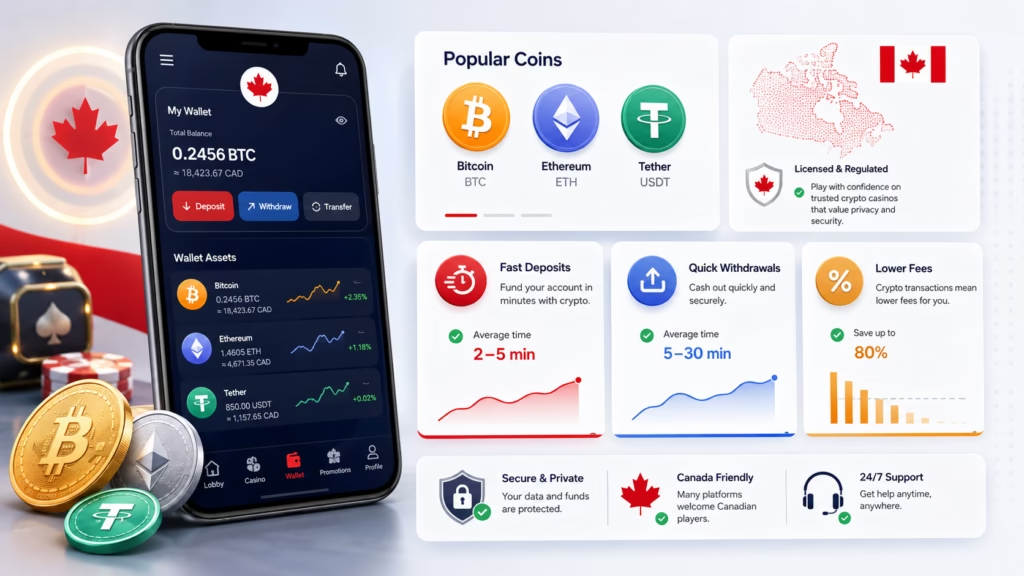
Crypto-focused casinos worldwide commonly support several digital assets rather than Bitcoin alone.
Bitcoin
Bitcoin remains one of the most recognizable cryptocurrency payment options. The main variables are blockchain confirmation time, network fees and the casino’s required number of confirmations.
Ethereum
Ethereum is another widely supported option, although transaction costs can vary considerably depending on network activity.
Litecoin
Litecoin is sometimes used for casino payments because transfers can be relatively inexpensive and confirmations are typically quicker than Bitcoin transactions.
Stablecoins
Stablecoins such as USDT or USDC may appeal to players who want to reduce exposure to the price swings associated with Bitcoin or Ethereum. Stablecoins still carry network, issuer and platform risks, so they should not be treated as equivalent to insured Canadian-dollar deposits.
Other crypto casinos may support Dogecoin and additional tokens. Availability should always be checked directly with the operator.
How to Choose a Crypto Casino in Canada
The strongest crypto casino is not necessarily the one advertising the largest welcome bonus. Regulation, withdrawals and payment transparency are more important.
1. Check Regulatory Status
Ontario residents can verify regulated operators directly through iGaming Ontario. Approved websites display the iGaming Ontario logo and are included in its regulated operator directory.
An offshore licence and Ontario authorization are not the same thing. Players should identify exactly which organization regulates the casino and whether that authorization applies to their location.
2. Check Crypto Deposit Rules
Before sending cryptocurrency, verify:
- accepted coins;
- supported blockchain networks;
- minimum deposit;
- required confirmations;
- deposit fees;
- whether deposits are converted into fiat currency.
Sending a token through an unsupported network can result in lost funds.
3. Read Withdrawal Conditions
Withdrawal rules are particularly important at crypto casinos. Check the minimum withdrawal, maximum withdrawal per transaction, processing time, network fee and whether additional verification can be requested.
A casino advertising “instant withdrawals” may still perform an internal security or KYC review before broadcasting the cryptocurrency transaction.
4. Check Identity Verification Before Depositing
Crypto payments should not be confused with anonymous gambling.
Ontario’s regulated iGaming system requires player identity information to be verified during account creation. Offshore operators may have different procedures, but many can request identity documents before processing withdrawals.
Players who specifically want privacy should read the actual verification policy rather than relying on terms such as “crypto casino” or “no KYC.”
5. Review Game Information
A casino should provide clear rules for its games. For slots, relevant information can include RTP, paylines or ways to win, bonus rules and provider information.
RTP represents a theoretical long-term return calculated across a large number of wagers. It does not predict what will happen during an individual session.
6. Read Bonus Terms
A large crypto bonus can become poor value when the wagering conditions are restrictive.
Check:
- wagering requirements;
- minimum deposit;
- eligible cryptocurrencies;
- game contribution percentages;
- maximum bet while wagering;
- excluded games;
- bonus expiry;
- withdrawal restrictions;
- maximum cashout conditions, if applicable.
Wagering requirements are conditions requiring bonus funds to be wagered a specified number of times before qualifying winnings can be withdrawn.
Are Crypto Casino Withdrawals Faster?
Crypto withdrawals can be fast after a casino approves the request, but cryptocurrency does not eliminate operator processing.
Casino approval: The operator reviews the request and may perform security or identity checks.
Blockchain settlement: Once sent, the transaction needs network confirmation.
Wallet access: The receiving wallet or exchange may require additional confirmations before funds become available.
A useful approach is to make a small withdrawal before maintaining a larger balance at an unfamiliar casino. This tests the withdrawal workflow without assuming that promotional claims reflect actual processing conditions.
Do Bitcoin Casinos in Canada Require KYC?
Many Bitcoin casinos serving Canadians can require KYC.
KYC, or Know Your Customer verification, normally involves confirming identity, age and sometimes payment information. Crypto payments do not remove these requirements when they are imposed by regulation or operator policy.
A casino that allows registration without documents may still request verification after a withdrawal request, account review or unusual transaction. Players should check KYC rules before depositing rather than discovering them after a large win.
Crypto Casino Security Risks
Cryptocurrency adds several risks that do not exist in exactly the same form with conventional casino payments.
Irreversible transfers: Sending crypto to the wrong address or network may permanently lose the funds.
Price volatility: Bitcoin or Ethereum can change significantly in value while held in a casino account.
Operator custody: Cryptocurrency deposited with a casino is generally controlled by the operator until withdrawn.
Weak regulatory recourse: Disputes with unregulated offshore operators can be significantly harder to resolve. Ontario regulators cannot resolve disputes involving operators outside the regulated provincial market.
These risks make regulatory status and withdrawal reliability more important than the size of a crypto bonus.
Crypto Casino Taxes in Canada
Canadian tax treatment of crypto gambling can involve both gambling rules and cryptocurrency rules.
The CRA states that an individual’s gambling activities can produce taxable business income when the circumstances amount to carrying on a gambling business. Even frequent gambling is not automatically considered a business, and the determination depends on factors such as organization, knowledge, purpose and overall conduct.
Cryptocurrency introduces another layer. CRA guidance includes gambling among transactions where the value of crypto assets may need to be determined for tax purposes, and crypto activity can potentially create business income or capital gains and losses depending on the circumstances.
Players using significant amounts of cryptocurrency should retain transaction records including acquisition cost, wallet transfers and the Canadian-dollar value of relevant transactions. Individual tax circumstances can differ, so complex cases should be checked with a Canadian tax professional.
Common Crypto Casino Mistakes
One of the biggest mistakes is choosing a casino solely because it accepts Bitcoin. Cryptocurrency support says very little about regulatory protection, game quality or withdrawal reliability.
Other common mistakes include:
- sending crypto through the wrong blockchain network;
- depositing before reading KYC rules;
- assuming crypto withdrawals are always instant;
- ignoring cryptocurrency price volatility;
- accepting a bonus without checking wagering requirements;
- maintaining unnecessary amounts of crypto in a casino account;
- assuming an offshore licence means the casino is locally regulated in Canada;
- using location-masking tools without checking operator rules.
For Ontario’s regulated market, players must be physically located in Ontario to play on regulated sites. Trying to bypass geolocation requirements can create account and withdrawal problems.
Responsible Gambling at Crypto Casinos
Cryptocurrency can make deposits feel less like spending traditional money, so limits should still be based on the real Canadian-dollar value of the funds being risked.
Players should decide on a spending limit before depositing and avoid increasing that limit to recover previous losses. Gambling should be treated as entertainment, and strategies based on supposed lucky patterns should not be used as a basis for risking more money.
Ontario also introduced BetGuard in May 2026. It provides centralized self-exclusion across regulated Ontario iGaming platforms, preventing enrolled players from accessing existing accounts, opening new ones or receiving marketing from regulated sites.
Crypto casino games remain games of chance. Bitcoin, blockchain technology, RTP statistics, bonuses and betting systems cannot guarantee a winning session.
How This Information Was Reviewed
Crypto casinos in Canada should be compared using regulatory status, payment transparency, KYC requirements, withdrawal conditions, cryptocurrency networks, game rules, bonus terms and responsible gambling protections.
Current regulatory details were reviewed against Canadian government and Ontario regulatory information. Casino-specific conditions can change, so players should independently verify payment methods, withdrawal limits, supported networks, bonus terms and regulatory status before depositing.
No cryptocurrency, casino game or betting strategy guarantees profit. Gambling should remain discretionary entertainment rather than a source of income.
FAQ
Are crypto casinos legal in Canada?
Crypto casino regulation depends on the province and the operator. Ontario has a regulated competitive iGaming market where approved private operators must meet AGCO and iGaming Ontario requirements. Elsewhere in Canada, regulatory structures differ, so players should verify the rules applicable in their province before using a crypto casino.
Can I play at Bitcoin casinos in Ontario?
Ontario residents can use online casinos that are authorized for Ontario, but Bitcoin availability depends on the individual operator’s payment methods. A casino accepting Bitcoin elsewhere does not automatically mean its crypto service is authorized for Ontario.
Do Canadian crypto casinos require ID verification?
Many do. Ontario-regulated operators require identity verification, while offshore crypto casinos may request KYC at registration, withdrawal or during an account review. Crypto payments should not be assumed to provide anonymous gambling.
What is the best cryptocurrency for casino deposits?
There is no single best cryptocurrency for every player. Bitcoin has broad recognition, Litecoin may offer lower transaction costs in some conditions, and stablecoins may reduce price volatility. The correct option depends on supported networks, fees, withdrawal rules and personal risk tolerance.
Are Bitcoin casino withdrawals instant?
Not necessarily. Blockchain settlement can be quick, but the casino may first perform internal withdrawal processing, KYC checks or security reviews. “Instant” should therefore be interpreted as a potential processing model rather than a guaranteed withdrawal time.
Can a crypto casino transaction be reversed?
Confirmed blockchain transactions are generally difficult or impossible to reverse. Players should carefully verify the cryptocurrency, network and wallet address before sending funds.
Are crypto casino winnings taxable in Canada?
Tax treatment depends on the circumstances. Gambling can generate taxable business income in cases where the activity constitutes a gambling business. Crypto transactions can also have separate tax implications involving capital gains, losses or business income. Players with significant activity should keep records and obtain tax advice appropriate to their circumstances.
How can I identify a legitimate crypto casino in Canada?
Start with regulatory status rather than bonuses. Ontario residents can compare the operator against iGaming Ontario’s official directory. Players elsewhere should identify the applicable provincial authority and verify who regulates the casino, its withdrawal rules, KYC procedures and complaint process.
Can I use a VPN to access a crypto casino?
Using a VPN to bypass geographic restrictions can conflict with casino rules and regulatory geolocation requirements. Ontario-regulated play requires the player to be physically located in Ontario, so location requirements should be followed rather than circumvented.
Brief Conclusion
Crypto casinos in Canada can provide convenient Bitcoin and cryptocurrency payments, but payment technology should not determine the choice of casino. Regulatory status, withdrawal rules, KYC requirements, supported blockchain networks and bonus conditions matter more.
Ontario players have a clear regulated-market directory through iGaming Ontario, while players elsewhere should check the rules applying in their province. Crypto transfers also introduce irreversible transactions and cryptocurrency price risk, so deposits should remain within predetermined entertainment limits.