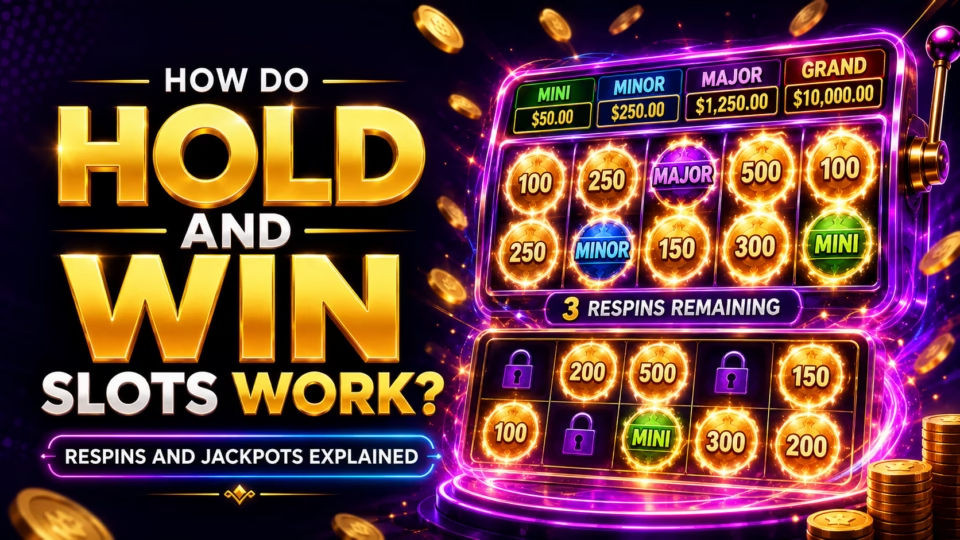
Hold and win slots use a bonus mechanic in which special symbols become locked on the reels while the remaining positions respin. The feature normally starts with a limited number of respins, and every new qualifying symbol resets the counter. The round ends when no respins remain or when every available position has been filled.
The locked symbols may show cash values, multipliers, jackpot labels or collection effects. At the end of the feature, the game adds the relevant values and awards any jackpots triggered under its rules.
Key points:
- Hold and win features usually lock cash or bonus symbols in place.
- New qualifying symbols commonly reset the respin counter.
- Jackpots may be awarded by landing special symbols, filling the grid or meeting another stated condition.
- The mechanic can produce an easy-to-follow bonus round, but the outcome remains random.
- Rules, RTP settings and jackpot conditions differ between games, so the paytable should always be checked.
Hold and win slots often appeal to players who prefer visible progress during a bonus feature. Every locked symbol stays on screen, making it clear how the round is developing. However, players should be cautious about assuming that a nearly full grid is more likely to complete. Each respin is still governed by the game’s random number generator.
What Are Hold and Win Slots?
Hold and win slots are casino games built around a respin bonus in which selected symbols remain fixed while empty reel positions spin again. The objective is usually to collect as many cash-value or jackpot symbols as possible before the respin counter reaches zero.
The mechanic is sometimes described using names such as Hold and Spin, Lock and Respin, Cash Respins or similar provider-specific terms. These formats may look alike, but their exact rules are not necessarily identical. A game may change the number of starting respins, the triggering requirement, the grid size, the available jackpots or the way values are calculated.
Most hold and win games combine two separate stages:
- A regular base game with standard reel spins.
- A special respin round activated by qualifying symbols or another bonus trigger.
The base game may also include wilds, scatters, free spins or multipliers, but those features are separate from the hold and win mechanic unless the game rules specifically connect them.
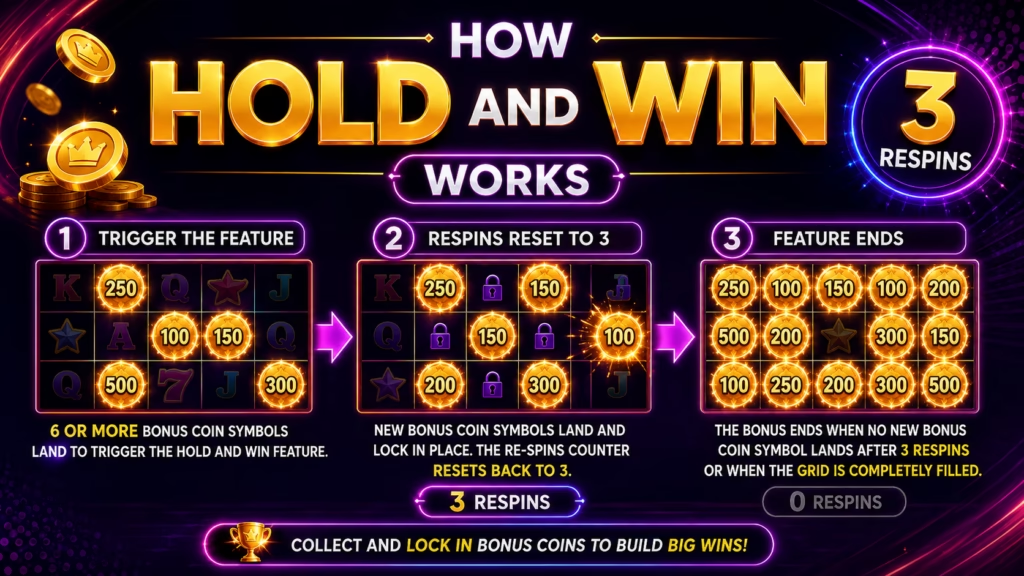
How Does a Hold and Win Feature Work?
A typical hold and win feature follows a simple sequence: trigger the bonus, lock the qualifying symbols, respin the remaining positions and collect the final values.
1. The Feature Is Triggered
Many hold and win slots require a minimum number of cash symbols, bonus symbols or special icons to appear during one base-game spin. Six qualifying symbols are a common trigger in some games, but the required number can be higher or lower.
Some slots also allow the feature to start through:
- A bonus-buy option
- A random base-game trigger
- A special collector symbol
- A free-spins round
- A jackpot or feature wheel
- A separate bonus bet
The trigger condition should be confirmed in the game rules because a similar-looking symbol may behave differently in another slot.
2. Qualifying Symbols Become Locked
When the bonus begins, the triggering symbols remain fixed on the grid. These locked symbols usually display cash values based on the current stake, although they may also contain jackpots, multipliers or special effects.
For example, a player might enter the feature with six symbols showing values such as 1x, 2x, 5x and 10x the stake. Those symbols remain in position while every unoccupied reel space is respun.
The visible cash amounts are normally converted according to the player’s bet. A value marked 5x would generally represent five times the applicable stake value, but the exact calculation can depend on the game’s betting structure.
3. The Remaining Positions Respin
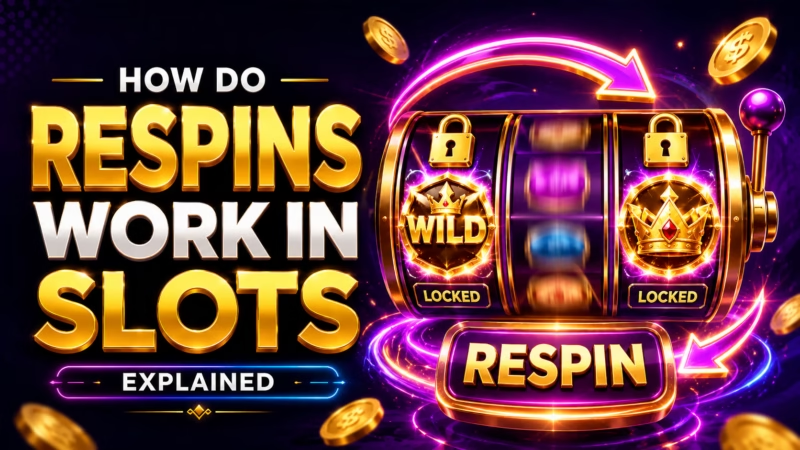
The game usually awards three respins at the beginning of the feature. Only the empty positions spin, while the collected symbols remain locked.
When a new qualifying symbol lands, it is added to the grid. In many games, the respin counter then returns to its starting value. This reset mechanic allows the feature to continue as long as new symbols keep appearing.
A simplified example would look like this:
- The feature starts with three respins.
- No new symbol lands, leaving two respins.
- A new cash symbol lands, resetting the counter to three.
- Two unsuccessful respins reduce the counter to one.
- Another qualifying symbol lands, resetting it to three again.
The feature can therefore last much longer than three spins, but it can also end after three unsuccessful respins.
4. The Feature Ends
A hold and win round normally ends in one of two ways:
- The respin counter reaches zero.
- Every available position on the bonus grid becomes occupied.
When the round finishes, the game totals the collected cash values and applies any jackpots, multipliers or modifiers that were activated.
Filling the complete grid often awards a premium jackpot in this type of slot, but that rule is not universal. Some games award the top jackpot through a dedicated symbol or another condition instead.
How Do Jackpots Work in Hold and Win Slots?
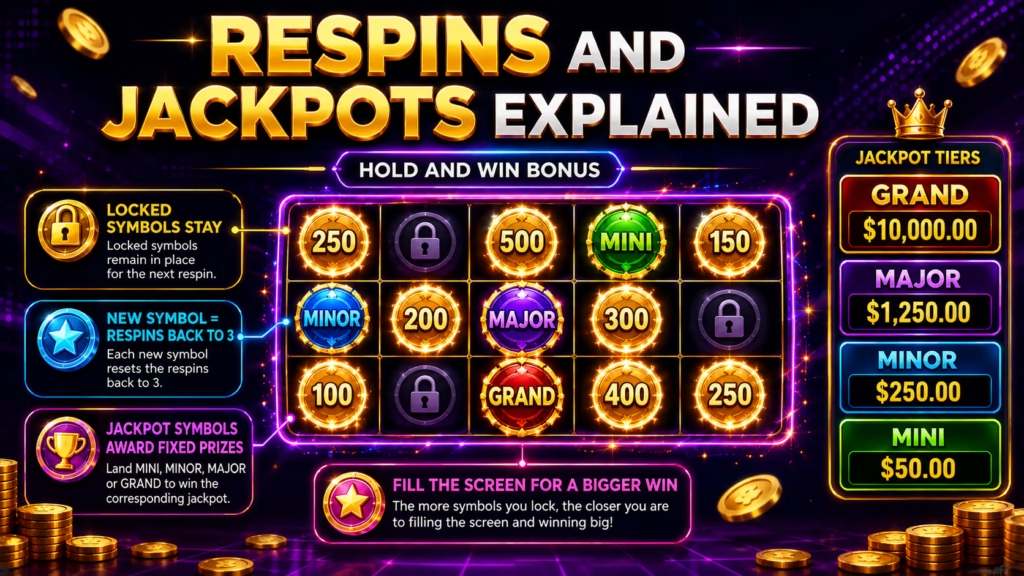
Hold and win jackpots are prize levels connected to special symbols or collection conditions within the respin feature. Mini, Minor, Major and Grand are common jackpot names, although providers may use different labels.
Jackpots can be awarded in several ways.
| Jackpot method | How it may work |
| Dedicated jackpot symbol | A symbol marked Mini, Minor, Major or Grand lands and awards that prize |
| Full-grid collection | Filling every position activates a specified jackpot |
| Symbol quantity | Collecting a required number of symbols awards a prize tier |
| Collector mechanic | A special symbol gathers values or advances a jackpot meter |
| Random award | A jackpot is selected through a separate random feature |
| Progressive prize | The jackpot value grows according to the game’s stated rules |
A jackpot label does not automatically mean that the prize is progressive. Many hold and win slots use fixed jackpots calculated as a multiple of the stake. A fixed Grand jackpot might always be worth a stated bet multiplier, while a progressive jackpot may increase over time.
Players should check whether a jackpot is:
- Fixed or progressive
- Linked to the current stake
- Available at every bet level
- Restricted to particular jurisdictions or casinos
- Awarded immediately or only after another condition is completed
These details can significantly affect the potential prize and should not be inferred from the jackpot’s name alone.
Common Hold and Win Variations
Cash-on-Reels Symbols
Cash-on-reels symbols display individual monetary or multiplier values. The final feature win is usually the total of all collected values.
This is the simplest version of the mechanic and may suit players who want a bonus round that is easy to understand.
Collector Symbols
A collector symbol gathers the values of other symbols on the grid. Depending on the rules, it may collect values once, collect them repeatedly or increase them before adding them to the total.
A collector can significantly change the feature’s result, but landing one is never guaranteed.
Multiplier Symbols
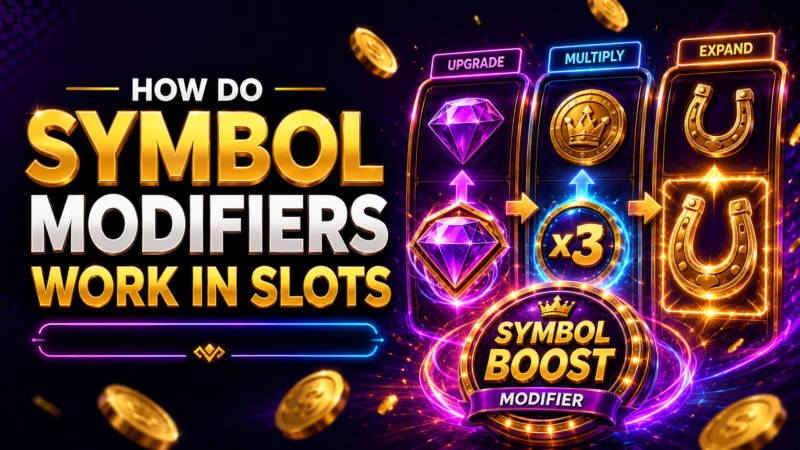
Multiplier symbols increase selected cash values or the entire accumulated total. A multiplier might apply to one neighboring symbol, a reel, a row or all collected prizes.
The order in which collectors and multipliers are applied matters. The paytable should explain whether a value is multiplied before or after it is collected.
Expanding Bonus Grids
Some games begin with a smaller respin area and unlock additional positions when certain symbols land. A larger grid provides more collection spaces, but it may also require more symbols to complete the board.
Persistent or Upgradable Features
A game may include meters, levels or modifiers that change the hold and win feature. These upgrades may last for one bonus round, several spins or a defined session within the game.
Players should not assume that progress will remain after closing the slot. Persistence rules vary and may reset when the game is reloaded.
Multiple Hold and Win Modes
Some slots offer several versions of the feature, such as a standard cash round, a multiplier round and a jackpot-focused round. The mode may be selected randomly or determined by the triggering symbols.
Hold and Win vs Free Spins
Hold and win respins and free spins are different bonus formats, even when both appear in the same slot.
| Feature | Hold and win respins | Free spins |
| Reel behavior | Collected symbols remain locked | Reels normally spin again in full |
| Main objective | Fill positions and collect values | Create standard winning combinations |
| Number of spins | Often resets when a new symbol lands | Usually starts with a fixed number |
| Prize structure | Cash values and jackpots | Payline, ways or cluster wins |
| Visual progress | Locked symbols show accumulated progress | Results are usually evaluated spin by spin |
Hold and win features may feel more controlled because symbols remain visible, but the player is not controlling the outcome. The random number generator determines which symbols appear on every respin.
Do Hold and Win Slots Have Better RTP?
A hold and win mechanic does not automatically produce a higher return to player. RTP is determined by the complete mathematical model of the game, including the base game, bonus features, jackpot contributions and available RTP configuration.
Two visually similar hold and win slots can have different RTP percentages. The same game may also be supplied to casinos with more than one approved RTP setting. Players should check the information panel or official game documentation for the version being offered.
RTP represents a theoretical long-term return across a very large number of bets. It does not predict what will happen during an individual session, bonus round or respin feature.
Are Hold and Win Slots Highly Volatile?
Many hold and win slots are medium-high or high volatility because a meaningful portion of their potential payout may be concentrated in the bonus round. This can create sessions with numerous small or unproductive spins followed by occasional larger feature wins.
However, hold and win does not define volatility by itself. A developer can build the mechanic into a lower-volatility or more balanced mathematical model.
Players who prefer frequent small wins should examine the stated volatility, hit frequency and paytable instead of judging the game only by its bonus format. Players with a limited budget should also use smaller stakes because repeated attempts to trigger the feature can consume a bankroll quickly.
How to Evaluate a Hold and Win Slot
A hold and win slot should be evaluated through its rules and mathematical characteristics, not through graphics or jackpot labels alone.
Check these points before playing:
1. Trigger requirement: Find out how many symbols are needed and whether alternative triggers exist.
2. Starting respins: Confirm the number of respins and whether new symbols reset the counter.
3. Cash-value calculation: Check whether values are based on total bet, coin value or another stake component.
4. Jackpot conditions: Identify how each jackpot is awarded and whether it is fixed or progressive.
5. RTP: Check the exact RTP version available at the casino.
6. Volatility: Consider whether the likely win pattern suits your budget and expectations.
7. Maximum win: Confirm whether jackpots are included in the advertised maximum.
8. Special symbols: Review collectors, multipliers, upgrades and grid-expansion rules.
9. Feature purchase: Check the price and restrictions before using a bonus buy.
10. Demo availability: Use free-play mode to understand the rules, while remembering that demo results do not predict real-money outcomes.
A clear paytable is particularly important in games with several collector or multiplier symbols. Small differences in activation order can produce very different results.
Common Myths About Hold and Win Slots
A Nearly Full Grid Is Due to Complete
A nearly full hold and win grid is not necessarily more likely to fill on the next respin. The remaining position may still have a low probability of receiving the required symbol.
Visual progress can create the impression that the jackpot is close, but previous respins do not guarantee the next result.
Increasing the Bet Makes the Feature Trigger
A higher bet usually increases the monetary value of potential prizes, but it does not necessarily increase the probability of triggering the feature. Some games do change eligibility or feature settings at particular stakes, so the rules must be checked.
A Long Losing Period Means a Bonus Is Coming
Random slot outcomes do not become due after a sequence of losses. A hold and win feature may trigger on the next spin or may not appear during the session.
Chasing a bonus because it feels overdue can lead to spending beyond the intended limit.
Every Hold and Win Slot Works the Same Way
Hold and win is a broad mechanic rather than one universal rule set. Trigger counts, respin resets, jackpots, collectors and prize calculations can all vary.
Practical Tips for Playing Responsibly
Set a fixed spending limit before starting a hold and win slot. The visible jackpot levels and almost-completed grids can encourage repeated play, so the limit should not depend on whether the bonus has triggered.
Choose a stake that allows enough spins without exceeding the planned budget. Increasing the bet to recover losses does not improve the reliability of the outcome.
Stop when the planned time or money limit is reached. A hold and win bonus should be treated as entertainment, not as a financial objective.
Avoid playing when stressed, under the influence of alcohol or trying to solve money problems. Players who find it difficult to stop should use casino limit tools, time-outs, self-exclusion options or support from an appropriate responsible gambling organization.
How This Information Was Reviewed
This explanation is based on the recurring structural elements used in hold and win games: locked qualifying symbols, limited respins, counter resets, cash-value collection and jackpot conditions.
Because providers can modify every part of the mechanic, players should verify the trigger requirement, RTP, volatility, bet calculation, jackpot rules and special-symbol behavior in the official paytable of the specific game.
RTP, volatility and bonus features describe how a slot is designed over time. They do not guarantee a feature trigger, a jackpot or a profitable session. Slot results remain random, and real-money play should always be approached as paid entertainment.
FAQ
How do hold and win slots work?
Hold and win slots lock qualifying cash or bonus symbols on the grid and respin the remaining positions. New symbols commonly reset the respin counter, and the round ends when the counter reaches zero or the grid is full.
What triggers a hold and win bonus?
A hold and win bonus is usually triggered by landing a required number of special symbols in one spin. Six symbols are common in some games, but the exact requirement must be checked in the paytable.
How many respins do you get in a hold and win feature?
Many hold and win features begin with three respins. A new qualifying symbol often resets the counter to three, although some games use a different starting number or reset rule.
What happens when the hold and win grid is full?
Filling the grid normally ends the feature and awards all collected values. Some games also award a Grand jackpot or another premium prize, but this condition is not universal.
Are hold and win jackpots progressive?
Hold and win jackpots can be fixed or progressive. A fixed jackpot usually has a stated value or bet multiplier, while a progressive jackpot can grow according to the game’s rules.
Can you use a strategy to win hold and win slots?
No strategy can guarantee a hold and win feature or jackpot because every spin is random. Stake size and bankroll limits can control spending, but they cannot predict or control the result.
Does a larger bet improve the chance of triggering the bonus?
A larger bet does not automatically improve the trigger probability. It may increase prize values or unlock certain options, but any effect on feature frequency must be confirmed in the game rules.
Can hold and win slots include free spins?
Yes, a slot can contain both hold and win respins and free spins. They are usually separate bonus features with different rules, although one feature may sometimes activate or modify the other.
Is a hold and win slot suitable for beginners?
A basic hold and win slot may suit beginners because locked symbols and respin counters are easy to follow. Games with several collectors, multipliers and jackpot conditions require more careful reading of the paytable.
Can demo mode show how often the jackpot will appear?
Demo mode can help explain the feature, but it cannot predict future real-money results. Outcomes are random, and a short demo session does not provide a reliable measure of RTP, hit frequency or jackpot probability.
Brief Conclusion
Hold and win slots lock qualifying symbols, respin the empty positions and collect cash values or jackpots until the respin counter expires. The mechanic is simple to follow, but trigger requirements, jackpot rules, RTP and special symbols vary between games. Check the official paytable, set firm limits and treat every feature as entertainment rather than a way to earn money.