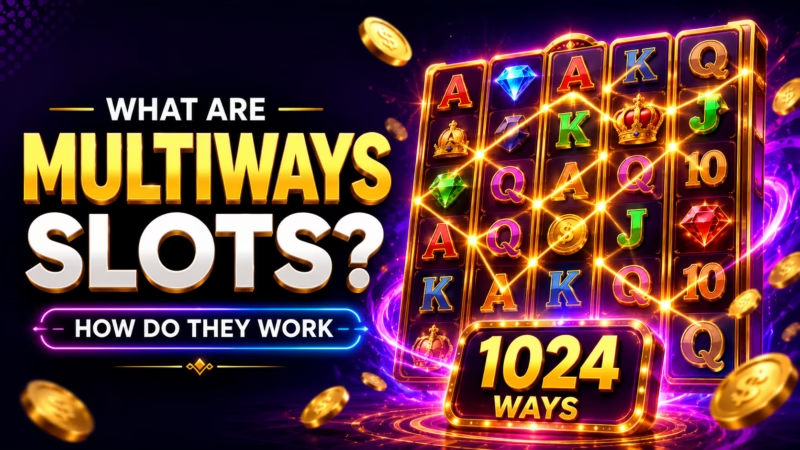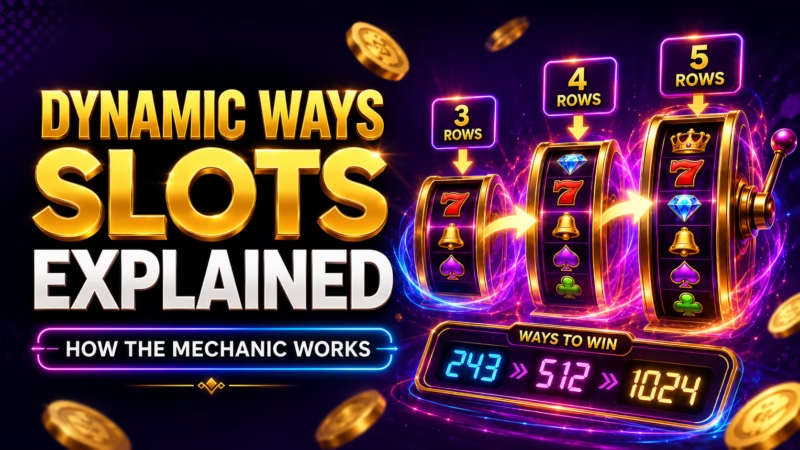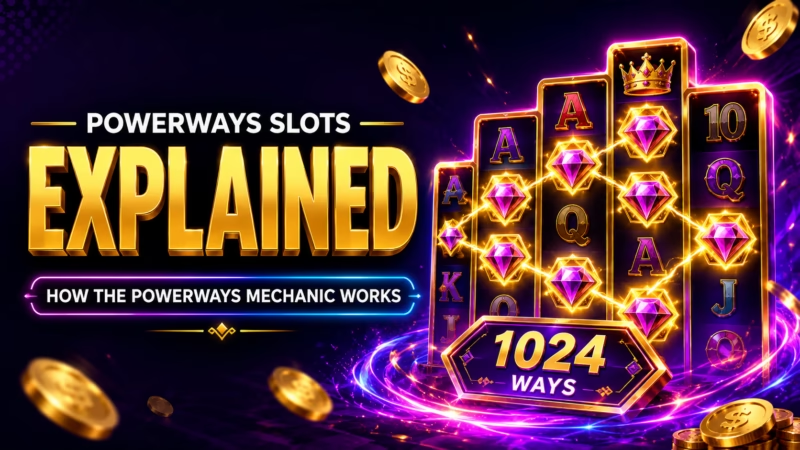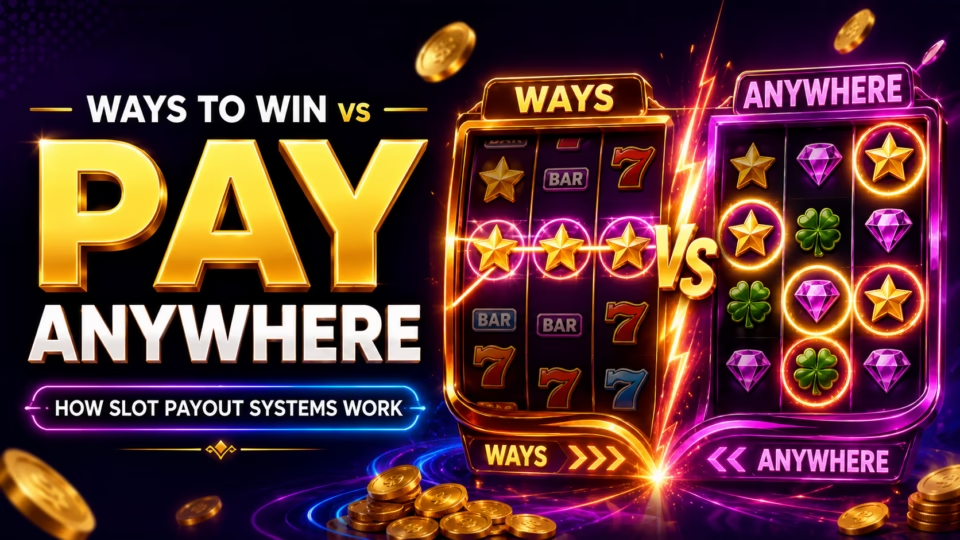
Ways to Win and Pay Anywhere are two different approaches to determining winning symbol combinations in slots. Ways to Win usually removes fixed paylines but still requires matching symbols to appear on consecutive reels in qualifying positions. Pay Anywhere typically removes the traditional line structure more completely and awards wins based on enough matching symbols appearing anywhere within the qualifying game area, although exact rules depend on the slot.
Quick takeaways
- Ways to Win: matching symbols usually need to land on consecutive reels, starting from a specified side or reel defined by the game rules.
- Pay Anywhere: matching symbols may qualify regardless of their exact reel or row position, depending on the game’s payout rules.
- Neither system improves your chances automatically: RTP, volatility, symbol weighting and the paytable determine the underlying mathematical behavior.
- Pay Anywhere can create visually larger symbol combinations: several matching symbols may contribute to a single payout.
- Always check the paytable: “Pay Anywhere” is not implemented identically in every slot.
Players who dislike tracing traditional paylines may find both systems easier to understand visually. Ways to Win tends to suit players who want a recognizable reel-based structure, while Pay Anywhere may appeal more to players who prefer modern slots built around symbol counts, large grids and chain reactions.
What Does Ways to Win Mean in Slots?
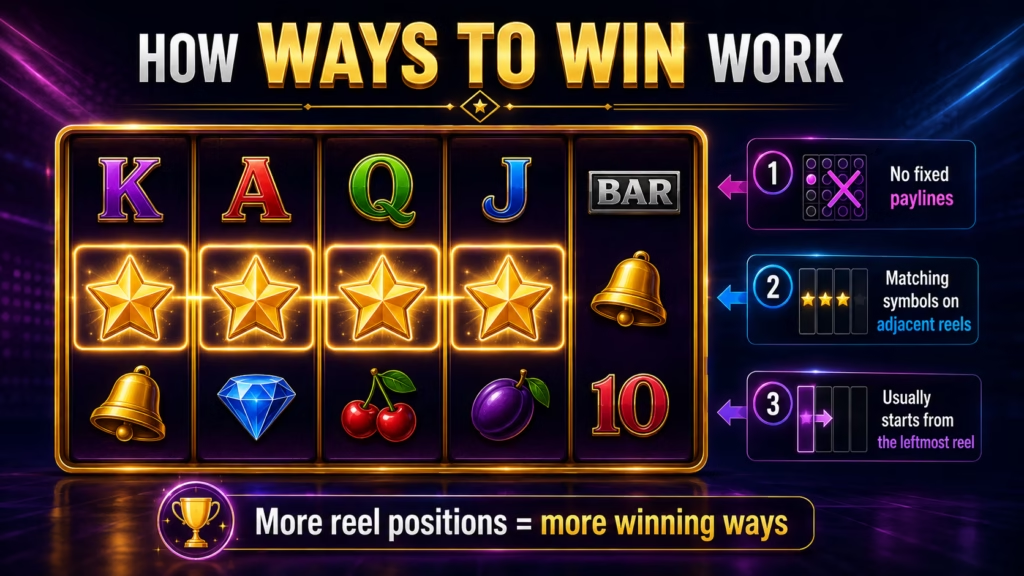
Ways to Win is a payout system where winning combinations are determined by symbol positions across reels rather than by fixed paylines. A typical winning combination requires matching symbols to appear on consecutive reels according to rules defined in the game’s paytable.
Consider a five-reel slot. If a game pays matching symbols from left to right, three matching symbols could form a winning combination when they appear somewhere on reels 1, 2 and 3. The symbols normally do not need to occupy the same horizontal row.
That is the main difference between Ways to Win and conventional paylines. A payline specifies exact positions across the reels. A Ways to Win system cares primarily about which reels contain the matching symbols.
How multiple symbols create more ways
Ways-based slots can count several combinations from a single spin when multiple matching symbols appear on qualifying reels.
For example, imagine a symbol appears:
- twice on reel 1
- three times on reel 2
- twice on reel 3
If every qualifying position can combine with every qualifying position on the next reel, those symbols could create:
2 x 3 x 2 = 12 winning ways
This explains why a Ways to Win game can generate several winning combinations from what visually looks like one group of matching symbols.
The exact calculation depends on the game’s rules. Wild symbols, expanding reels, special symbols and bonus features can change how qualifying ways are counted.
What Does Pay Anywhere Mean in Slots?
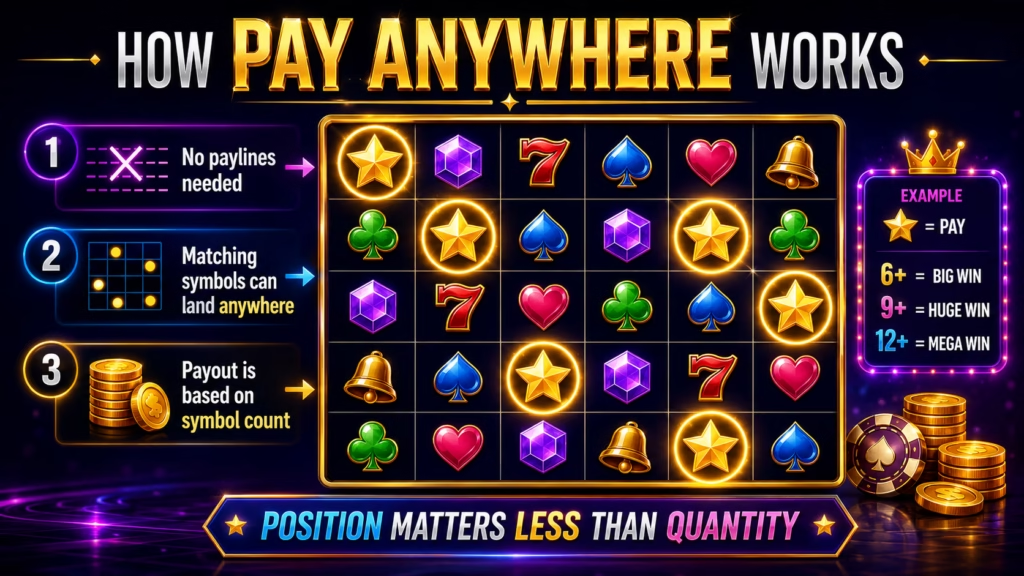
Pay Anywhere generally describes a payout mechanic where matching symbols do not have to follow conventional paylines or standard consecutive-reel patterns. Instead, the game may award a payout once a required number of matching symbols appears anywhere within the eligible reel or grid area.
For example, a Pay Anywhere slot might require eight matching symbols to appear during one spin. If the required number appears, their exact row positions may not matter.
This creates a different visual experience from Ways to Win. A Ways system normally evaluates combinations across reels. A Pay Anywhere system may evaluate the total number of matching symbols across a broader playing area.
However, Pay Anywhere is not one universally standardized mathematical format. Different developers can use similar terminology for mechanics with different qualifying rules. One game may count matching symbols across the entire grid, while another may impose additional restrictions.
The paytable and game rules are therefore the definitive source for how a specific Pay Anywhere slot works.
Ways to Win vs Pay Anywhere: Main Differences
The difference between Ways to Win and Pay Anywhere slots comes down to where matching symbols must appear and how the game groups them into a winning combination.
| Feature | Ways to Win | Pay Anywhere |
| Fixed paylines required | Usually no | Usually no |
| Consecutive reels commonly matter | Yes | Not necessarily |
| Exact row position matters | Usually no | Usually no |
| Total symbol count may trigger payouts | Sometimes indirectly | Common in some implementations |
| Multiple matching symbols can increase payouts | Yes | Often |
| Rules standardized across all slots | No | No |
| Paytable should be checked | Yes | Yes |
The key point is that Ways to Win still normally preserves a reel-to-reel progression. Pay Anywhere can remove that requirement and instead evaluate matching symbols across a larger eligible area.
Example of a Ways to Win Payout
Imagine a five-reel slot where wins are evaluated from left to right.
A high-value symbol appears:
- 1 time on reel 1
- 2 times on reel 2
- 3 times on reel 3
- 0 times on reel 4
The first three reels contain qualifying symbols, producing:
1 x 2 x 3 = 6 ways
Because reel 4 contains no matching symbol, the combination stops there.
If the game’s paytable awards a three-symbol payout, the six qualifying ways would be evaluated according to that payout value and the game’s bet structure.
This is why “ways” are not simply the number of matching symbols visible on screen. They represent the number of qualifying positional combinations.
Example of a Pay Anywhere Payout
Imagine a slot using a 6×5 grid and requiring at least eight matching symbols for a payout.
Suppose ten matching symbols appear across different parts of the grid. They may be spread across several rows and columns without forming a conventional line.
If the game’s rules define ten matching symbols as a qualifying Pay Anywhere combination, the payout is based on the corresponding paytable entry.
Some games combine this system with cascading reels. Winning symbols disappear, new symbols fall into the empty positions and another combination may form without requiring a completely new paid spin.
Cascades are a separate feature, however. A Pay Anywhere mechanic does not automatically mean a game includes cascading wins.
Ways to Win Is Not the Same as Paylines
A payline defines specific reel positions that must contain matching symbols, while Ways to Win generally allows qualifying symbols to occupy different rows.
In a traditional five-reel slot, a payline might run straight through the middle row or follow a zigzag pattern. Symbols outside that exact pattern do not contribute to that particular line win.
A Ways to Win slot removes this requirement. If matching symbols occupy qualifying reels, several vertical positions may contribute.
This can make wins easier to identify without making the slot mathematically more favorable.
A game with thousands of ways can still have a lower RTP or higher volatility than a conventional 20-payline slot. The number of possible winning patterns alone does not tell you how much a game returns over the long term.
Pay Anywhere Is Not Automatically Cluster Pays
Pay Anywhere and Cluster Pays can look similar, but they should not automatically be treated as the same mechanic.
Cluster Pays normally requires matching symbols to form a connected group, often through horizontal or vertical adjacency. The required cluster size is defined by the game’s rules.
A Pay Anywhere system may instead count matching symbols regardless of whether they touch one another.
For example:
- Eight matching symbols scattered around a grid might qualify under a Pay Anywhere system.
- Eight matching symbols might need to touch one another to qualify under Cluster Pays.
- A Ways to Win game may require matching symbols on consecutive reels even when they are vertically separated.
The slot’s official paytable should specify which structure applies.
Does Pay Anywhere Give More Wins Than Ways to Win?
Pay Anywhere does not necessarily produce more frequent wins than Ways to Win. Hit frequency depends on the game’s complete mathematical model, including symbol probabilities, reel or grid configuration, payout thresholds and bonus mechanics.
A Pay Anywhere game can display many matching symbols while requiring a relatively high number before paying anything. A Ways to Win game can offer thousands of theoretical combinations while assigning different probabilities and payout values to those combinations.
The headline mechanic therefore cannot be used to predict how frequently a specific slot will pay.
If win frequency matters to you, look for published information about volatility, hit frequency or the game’s mathematical characteristics where available. Remember that these figures describe long-term behavior and cannot predict an individual session.
Do More Ways to Win Mean Better RTP?
A larger number of winning ways does not automatically mean a higher RTP. RTP is determined by the entire payout model rather than by the displayed number of possible combinations.
A 10,000-ways slot could theoretically have a lower RTP than a 243-ways game. Likewise, a Pay Anywhere game can have either a relatively high or low theoretical return depending on its configuration.
The same principle applies to Megaways slots. A dynamically changing number of ways can make the reel structure more variable, but the number shown on screen should not be interpreted as a measure of expected value.
Check the RTP listed in the game’s rules or information screen because RTP configurations can sometimes vary between versions or operators.
How Ways to Win and Pay Anywhere Affect Volatility
Neither Ways to Win nor Pay Anywhere defines volatility by itself. The payout distribution determines whether wins tend to be smaller and more frequent or less frequent with greater potential values.
A developer can design a Ways to Win slot around frequent low-value combinations. Another Ways slot may concentrate much more theoretical return in bonus rounds and rare combinations.
Pay Anywhere games can vary just as much. Requiring increasingly large numbers of matching symbols may create steep payout tiers, while multipliers and cascades can concentrate more potential value into extended winning sequences.
Players should therefore evaluate payout systems and volatility separately.
Which System Is Easier to Understand?
Ways to Win is usually easier for players already familiar with standard reel slots because it keeps the basic idea of matching symbols across consecutive reels.
Pay Anywhere can be easier visually once the symbol threshold is understood. Instead of tracing a path across reels, the player may simply need to see how many matching symbols landed.
A practical rule is:
- Choose Ways to Win if you like traditional reels but do not want fixed paylines.
- Consider Pay Anywhere if you prefer grid-based mechanics and symbol-count payouts.
- Consider Cluster Pays if you like connected symbol groups.
- Consider Megaways if you prefer reel sizes and the number of ways changing between spins.
These are preferences about gameplay structure, not strategies for improving the mathematical outcome.
What to Check Before Playing Either Type
The mechanic name gives only part of the information needed to understand a slot.
Before playing a Ways to Win or Pay Anywhere slot, check:
- Winning combination rules: Determine whether wins must start from reel 1, can pay from either direction, or depend on a symbol-count threshold.
- RTP: Check the version offered by the casino where this information is available.
- Volatility: This indicates how payouts may be distributed, although it cannot predict individual spins.
- Paytable: Compare payouts for different symbols and combination sizes.
- Wild behavior: Check whether wilds substitute for regular symbols and whether any symbols are excluded.
- Cascades or respins: Determine whether one initial win can lead to additional evaluations.
- Multipliers: Check when multipliers activate and whether they reset.
- Bonus rules: Free spins and other features may use a different reel configuration or payout system.
This information is more useful than choosing a game simply because it advertises a very large number of ways.
Common Misconceptions About Ways to Win and Pay Anywhere
“More winning ways mean I am more likely to make money”
No. More ways describe how combinations can be formed, not whether the slot provides a positive financial expectation. Slot outcomes remain random, and casino games should be treated as entertainment rather than a source of income.
“Pay Anywhere means every matching symbol pays”
Not necessarily. Most implementations require a minimum number of qualifying symbols or another condition. Check the paytable for the exact threshold.
“Pay Anywhere slots have no reel structure”
Not always. A game can visually use reels while applying a payout calculation that evaluates symbols across a broader area.
“Ways to Win means every spin has thousands of chances to win”
The advertised number of ways describes possible positional combinations under the game’s structure. It should not be interpreted as thousands of independent chances or as a probability of winning.
How This Information Was Reviewed
The comparison between Ways to Win and Pay Anywhere is based on how each payout structure defines qualifying symbol combinations, including reel position, consecutive-reel requirements, symbol counts and related mechanics such as wilds, cascades and multipliers.
The exact implementation should always be verified in the individual game’s paytable because developers may use different terminology or rules. RTP, volatility and bonus features describe aspects of the mathematical model, but none can predict the result of a particular spin or guarantee a winning session.
Slots involve real financial risk when played for money. Set spending and time limits before playing, never chase losses and treat casino games as paid entertainment rather than a method of generating income.
FAQ
What is the main difference between Ways to Win and Pay Anywhere slots?
Ways to Win usually requires matching symbols on consecutive qualifying reels, while Pay Anywhere may award a payout based on enough matching symbols appearing anywhere in the eligible game area. Exact rules vary by slot, so the paytable should always be checked.
Do Ways to Win slots have paylines?
Ways to Win slots generally do not use traditional fixed paylines. Winning combinations are normally determined by matching symbols appearing on qualifying consecutive reels, regardless of their vertical position.
Do matching symbols have to touch in Pay Anywhere slots?
Matching symbols do not necessarily have to touch in a Pay Anywhere system. Some games count qualifying symbols across the entire eligible area. Connected-symbol requirements are more commonly associated with Cluster Pays, although individual game rules can differ.
Is Pay Anywhere the same as Cluster Pays?
No, not necessarily. Cluster Pays generally requires connected matching symbols, while Pay Anywhere may count matching symbols without requiring them to form a connected cluster. Developers can implement these mechanics differently.
Are Megaways slots the same as Ways to Win slots?
Megaways uses a variable ways-to-win structure in which the number of symbols visible on each reel can change between spins. Standard Ways to Win slots can use a fixed reel configuration, so not every ways-based slot is a Megaways game.
Does a slot with more ways have a better chance of winning?
Not automatically. The number of ways alone does not determine hit frequency, RTP or expected results. Symbol probabilities, payout values, volatility and other elements of the mathematical model also matter.
Which is better, Ways to Win or Pay Anywhere?
Neither system is objectively better. Ways to Win may suit players who prefer recognizable reel-based combinations, while Pay Anywhere may appeal to players who like grid-based layouts and symbol-count mechanics. Neither format guarantees better results.
Can Pay Anywhere slots have cascades and multipliers?
Yes, Pay Anywhere can be combined with cascades, multipliers, free spins and other features, but these mechanics are separate from the payout system itself. Check the game’s rules to see exactly how they interact.
Can RTP tell me whether a Ways or Pay Anywhere slot will pay during my session?
No. RTP is a long-term theoretical percentage and does not predict the outcome of a specific session or spin. Actual short-term results can vary substantially because each outcome is random.
Brief Conclusion
The core difference between Ways to Win and Pay Anywhere is how the game identifies a winning combination. Ways to Win normally connects qualifying symbols across consecutive reels without fixed paylines, while Pay Anywhere can award wins based on matching symbols appearing across the eligible game area without requiring the same reel-to-reel pattern.
Neither mechanic is inherently more profitable, more generous or more likely to produce a winning session. Compare the actual paytable, RTP, volatility, payout thresholds and bonus rules before choosing a game, and treat slots as entertainment rather than a way to make money.