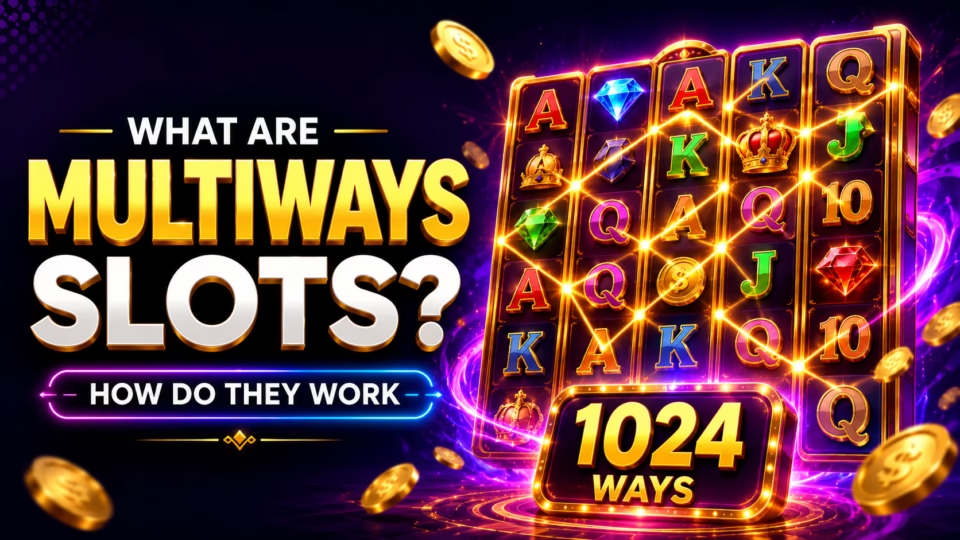
Multiways slots are online slots that replace traditional fixed paylines with multiple ways to form winning symbol combinations across adjacent reels. Instead of requiring matching symbols to land on a predefined line, a Multiways slot usually pays when qualifying symbols appear on consecutive reels, commonly starting from the leftmost reel. The exact number of ways and the rules used to calculate them depend on the individual game.
The term Multiways slots does not describe one universal mathematical system. Different providers use fixed or variable reel layouts, different numbers of ways to win, and different rules for how combinations are counted. For example, Multiways-style games can offer hundreds, thousands, tens of thousands, or even more potential symbol combinations.
Key Points About Multiways Slots
- Multiways slots normally use ways to win instead of fixed paylines.
- Matching symbols usually need to appear on adjacent reels, rather than on one specific line.
- Several copies of the same symbol on a reel can create multiple winning combinations.
- The number of ways may be fixed or may change as the reel layout changes.
- More ways to win do not automatically mean a higher RTP, more frequent wins, or better value.
Multiways games are usually more appealing to players who prefer modern video slots and want fewer restrictions on where symbols must land. Players who prefer simple three-reel games, clearly visible paylines, or very predictable game layouts may find the format less intuitive.
How Do Multiways Slots Work?
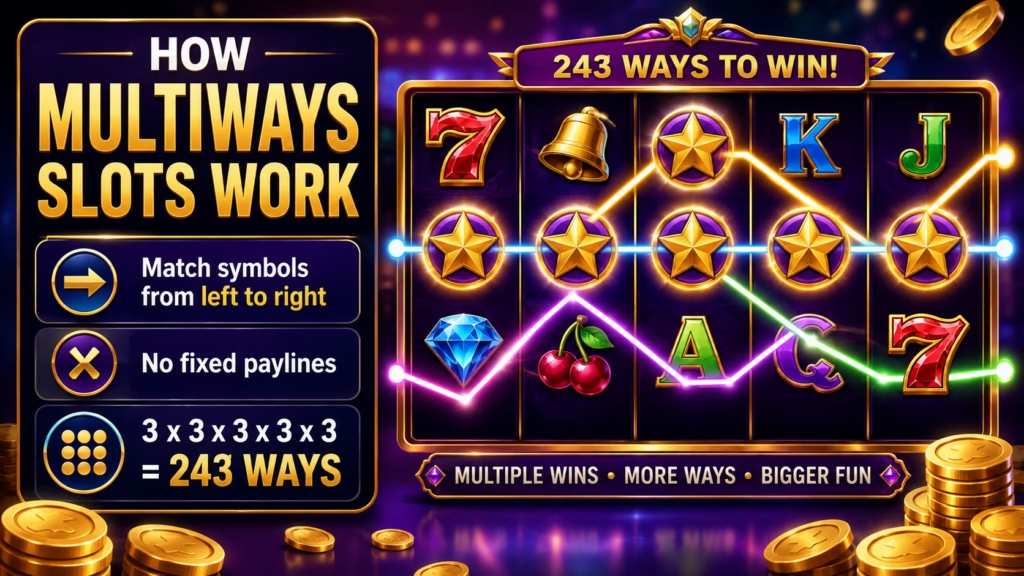
Multiways slots work by counting combinations of matching symbols across adjacent reels rather than checking predetermined paylines. If a game pays from left to right, a qualifying symbol normally has to appear on reel 1, reel 2, reel 3 and potentially further consecutive reels.
Imagine a five-reel slot where three matching symbols are required for a payout. If the same symbol appears once on the first reel, twice on the second reel and twice on the third reel, those symbols can produce several separate combinations because every eligible position can participate in a winning way.
The important difference is position. On a conventional payline slot, symbols generally need to sit on one of the game’s predefined lines. In a Multiways system, vertical position often does not matter as long as the required symbol appears on the necessary adjacent reels.
Individual games can modify these rules. Some Multiways-style games pay only from the left, while certain systems can award combinations from either side. Players should therefore check the game’s paytable rather than assuming every title carrying a Multiways-style description follows identical rules.
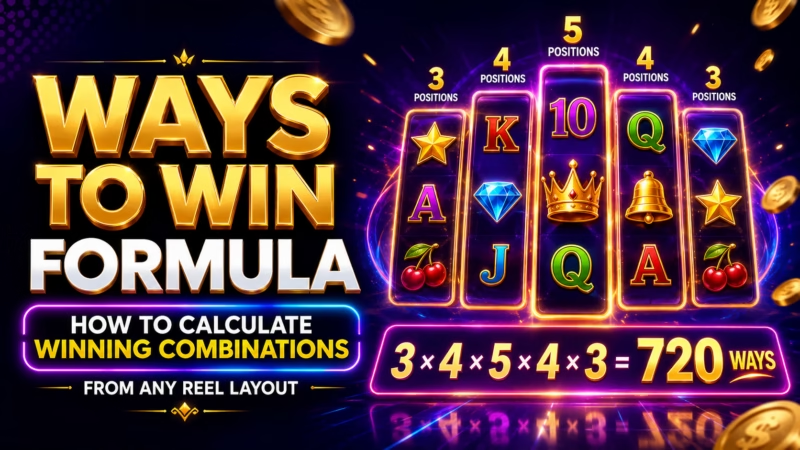
How Are the Number of Ways to Win Calculated?
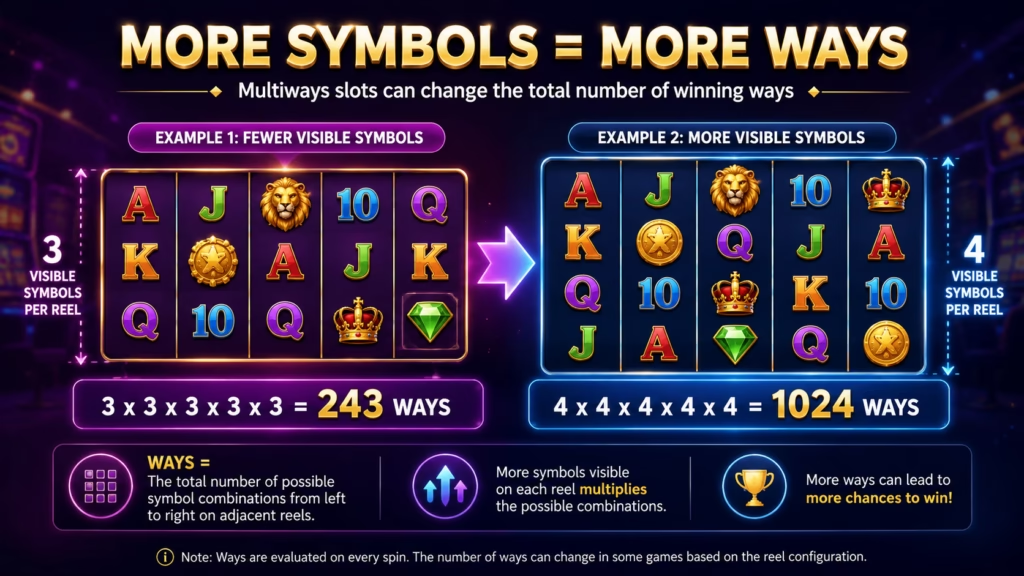
The number of ways in a Multiways slot is normally based on how many symbol positions can participate across the relevant reels. A simple five-reel grid with three symbol positions on every reel can create:
3 × 3 × 3 × 3 × 3 = 243 ways
This is why 243-way slots became a familiar alternative to traditional payline games.
A larger reel grid can generate substantially more combinations. For example, a 5 × 6 × 6 × 6 × 6 × 5 layout can provide up to 32,400 ways to win.
The calculation becomes particularly important when reel heights are variable. If the number of symbols shown on individual reels changes, the total number of available ways can also change from one spin to another.
The number displayed by a game should still be treated as the number of possible winning routes, not as the probability that a particular spin will win.
What Does a Multiways Win Look Like?
A Multiways win normally occurs when enough matching symbols appear across the required number of consecutive reels.
Consider a hypothetical five-reel slot:
- Reel 1 contains two diamond symbols.
- Reel 2 contains three diamonds.
- Reel 3 contains one diamond.
- Reels 4 and 5 contain no diamonds.
If three matching symbols on consecutive reels qualify for a payout, the game could create:
2 × 3 × 1 = 6 separate three-reel diamond combinations.
Those combinations can exist even though the diamonds are sitting on different horizontal rows. This makes Multiways slots visually different from fixed-payline games. A screen may appear to contain scattered symbols, yet several combinations can be active at the same time.
Multiways Slots vs Traditional Payline Slots
The main difference between Multiways and payline slots is where matching symbols are allowed to land.
| Feature | Multiways Slots | Traditional Payline Slots |
| Win structure | Ways to win | Fixed or adjustable paylines |
| Symbol position | Usually any eligible position on adjacent reels | Symbols must follow a defined payline |
| Number of combinations | Often hundreds or thousands | Commonly a fixed number of lines |
| Reel configuration | Can be fixed or variable | Usually fixed |
| Ease of reading wins | May require some familiarity | Paylines can be easier to visualize |
Neither structure is automatically better. A 20-payline slot can have a higher RTP than a Multiways slot, while another Multiways title can have the higher RTP. The mathematical return depends on the game’s complete model, including symbol distribution, payouts and bonus mechanics, rather than the number of visible winning routes alone.
Multiways vs Megaways Slots
Multiways and Megaways are related concepts, but they should not be treated as interchangeable terms. Multiways is generally used to describe slots where multiple symbol positions can form wins across adjacent reels. Implementations vary between games and providers.
Megaways™ is a specific slot mechanic created by Big Time Gaming. The standard mechanic uses changing reel heights, with reels capable of displaying between two and seven symbols, creating as many as 117,649 ways to win in a conventional six-reel configuration. The mechanic has also been licensed to other game developers.
Multiways = broader ways-to-win concept
Megaways = specific branded dynamic-reel mechanic
Megaways is therefore one prominent form of multiway slot design, but a game does not need Megaways mechanics to offer thousands of ways to win.
Fixed Multiways vs Dynamic Multiways
Multiways games can broadly be divided into fixed-way and dynamic-way formats.
Fixed Multiways
A fixed Multiways slot keeps the same number of symbol positions available on each standard spin.
A five-reel, three-row game may consistently provide 243 ways to win. Players always know the basic number of possible routes even though the actual symbols remain random.
This format may be easier for players moving from regular payline slots because the grid remains visually stable.
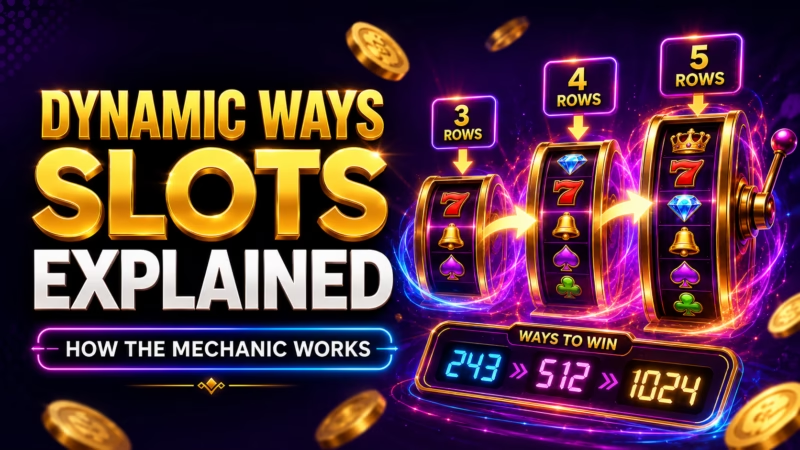
Dynamic Multiways
Dynamic Multiways-style games can change the number of active positions or reel heights.
As the grid changes, the number of potential ways can change too. Megaways is a well-known example, with symbol heights changing between spins.
Other Multiways games can use expanding reels or special features to increase the available combinations temporarily. There is no single maximum that applies to every Multiways game.
Do More Ways to Win Mean Better Chances of Winning?
More ways to win do not automatically mean a Multiways slot has better overall odds. The number of ways describes how symbols are allowed to combine. It does not tell you the complete probability of receiving a payout or how much those combinations are worth.
A developer can balance a game with many winning combinations by changing factors such as:
- symbol frequency;
- symbol values;
- reel distributions;
- bonus probabilities;
- multiplier behavior;
- wild frequency;
- payout values.
This is why comparing a 243-way game with a 10,000-way game based only on the headline number can be misleading. Players interested in the mathematical characteristics of a slot should examine RTP, volatility, paytable rules and bonus mechanics together.
Do Multiways Slots Pay More Often?
A Multiways mechanic alone cannot tell you how frequently a slot will produce wins. A game with thousands of ways may be designed to produce many small combinations, or it may still have substantial periods without meaningful payouts. Another game with fewer ways could have a completely different hit frequency.
The distinction matters because three commonly confused measurements describe different things:
- Ways to win describe how combinations are formed.
- RTP represents a theoretical long-term return under the game’s stated conditions.
- Volatility describes the general distribution and size pattern of payouts.
None of these measurements predicts what will happen during a specific short session.
What Features Are Common in Multiways Slots?
Multiways is primarily a payout structure, so bonus features vary considerably between games.
Cascading Reels
Winning symbols disappear and new symbols fall into their positions. One paid spin can therefore create several consecutive evaluations.
Cascades can work particularly well with ways-to-win systems because newly arriving symbols can connect with symbols already present on adjacent reels.
Wild Symbols
Wilds can substitute for regular symbols according to the individual game’s rules. Because several copies of the same symbol can participate in Multiways combinations, the position and behavior of wilds can significantly affect individual wins.
Multipliers
Multipliers may increase qualifying payouts and are frequently combined with cascades or free spins.
A multiplier changes the value of a win, but it does not make a future winning combination predictable.
Free Spins
Free-spin rounds may add expanded reels, additional wilds, persistent multipliers or other modifications to the base Multiways system.
Exact bonus rules should always be checked in the game’s paytable because features carrying similar names can behave differently.
How to Evaluate a Multiways Slot
The number of ways should be only one part of the decision when comparing Multiways slots.
Check these factors first:
- Win rules: Determine whether combinations must begin on the first reel and whether wins pay left to right, both ways, or under another rule.
- Number of ways: Check whether the figure is fixed or changes between spins.
- RTP: Review the RTP shown in the game information because different configurations may exist.
- Volatility: Higher volatility can mean more uneven payout patterns and may not suit players who prefer smaller fluctuations.
- Paytable: Compare symbol values instead of judging the game only by its number of combinations.
- Bonus mechanics: Check how free spins, wilds, cascades and multipliers interact with the Multiways system.
- Bet limits: Confirm the actual minimum and maximum stake available at the casino.
- Bonus Buy rules: If a feature purchase exists, check its cost, availability and separate RTP information where provided.
A free demo, where legally and technically available, can also help explain the mechanics without requiring a real-money wager.
Common Myths About Multiways Slots
“More ways guarantee more wins”
They do not. More ways create more possible symbol combinations, but the underlying mathematical model determines actual probabilities and payouts.
“Multiways slots have higher RTP”
There is no universal Multiways RTP. RTP is set at the individual game or configuration level.
“The maximum number of ways is available on every spin”
Not necessarily. A fixed-way game may use the same number continuously, while a dynamic game can display different numbers depending on reel height or feature state.
“More symbols on the reels mean a big win is more likely”
A larger grid can create more potential combinations, but payout values, symbol distribution and other game rules also matter.
“A pattern of losing spins means a Multiways win is due”
Past spins do not make a future random result owed to the player. Slot outcomes should not be treated as predictable sequences.
Who Are Multiways Slots Best Suited To?
Multiways slots may suit players who enjoy modern video slots, visually busy reel grids and wins that are not restricted to fixed lines. They can be particularly appealing to players who already understand 243 ways, Megaways, cascading reels or other modern slot mechanics.
Multiways slots may be less suitable for someone who prefers easily traceable paylines or wants a very simple slot interface. A large number such as 32,400 or 262,144 ways can also look more meaningful than it really is unless the player understands the underlying paytable.
Regardless of format, a slot should be treated as paid entertainment rather than a method of making money. Set spending and time limits before playing, and stop if gambling is no longer enjoyable or affordable.
How This Information Was Reviewed
This explanation evaluates Multiways slots according to their payout structure, reel configuration, ways-to-win calculation, relationship with traditional paylines and differences from branded mechanics such as Megaways.
Because Multiways is not one universal specification, individual game rules remain the authoritative source for exact win directions, RTP, volatility, reel behavior, bonus conditions and available betting options.
RTP, volatility, bonus features and the number of ways describe characteristics of a game. They do not guarantee a particular result in an individual session.
FAQ
What are Multiways slots?
Multiways slots are slot games that typically award wins through matching symbols on consecutive reels rather than requiring the symbols to follow fixed paylines. The exact rules and number of ways vary between individual games.
How do Multiways slots work?
Multiways slots usually count every eligible occurrence of a matching symbol across adjacent reels as part of potential winning combinations. Multiple copies of the same symbol on one reel can therefore create several separate ways to win.
What is a 243-way slot?
A 243-way slot commonly uses five reels with three symbol positions on each reel. Multiplying 3 × 3 × 3 × 3 × 3 produces 243 possible positional combinations. Actual win requirements still depend on the game’s paytable.
Are Multiways and Megaways the same?
No. Multiways is a broader description for ways-to-win slot structures, while Megaways™ is a specific mechanic created by Big Time Gaming that dynamically changes reel heights and can provide up to 117,649 ways in its standard format.
Do Multiways slots have better odds?
Not necessarily. A larger number of ways does not by itself indicate a higher RTP or better mathematical value. RTP, symbol distribution, paytable values and bonus mechanics must also be considered.
Can Multiways slots have fixed reel sizes?
Yes. Some Multiways slots use a fixed grid and a constant number of ways, while others use expanding or variable reels that change the number of available combinations.
Do Multiways slots have paylines?
Usually not in the traditional sense. Multiways systems generally replace fixed paylines with ways to win, although terminology used in casino interfaces and game descriptions can vary.
Can Multiways slots guarantee more frequent wins?
No. The Multiways mechanic does not guarantee any win frequency. Hit frequency depends on the individual mathematical model, and the outcome of each spin remains random.
What should I check before playing a Multiways slot?
Check the paytable, win direction, number of ways, RTP, volatility, bet limits and bonus rules. If real money is involved, set a spending limit in advance and treat the game as entertainment rather than a source of income.
Brief Conclusion
Multiways slots replace rigid paylines with a more flexible ways-to-win system in which matching symbols can usually connect across adjacent reels regardless of their vertical position. Some games keep the number of ways fixed, while others change reel sizes and can produce thousands of different combinations.
The headline number of ways should not be confused with better odds. RTP, volatility, symbol distribution and paytable rules determine how the complete game behaves. Check the individual game’s rules before playing, and remember that no Multiways mechanic can predict or guarantee a winning spin.