A No KYC casino can still ask for verification when a specific risk, transaction, withdrawal, or regulatory trigger occurs. In most cases, “No KYC” means that full document verification is not automatically required when you register or make an ordinary deposit. It does not necessarily mean that the casino promises never to request identification.
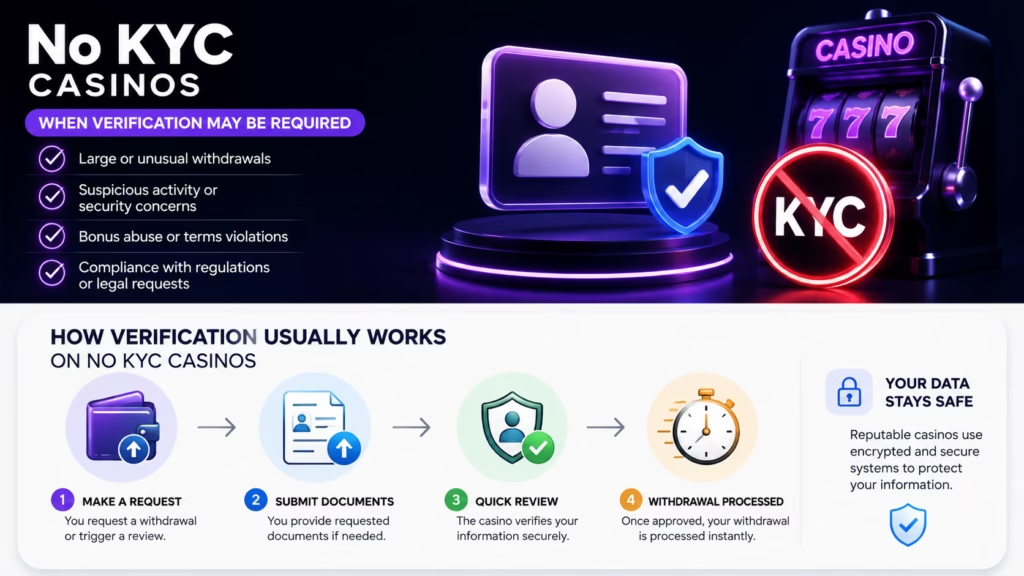
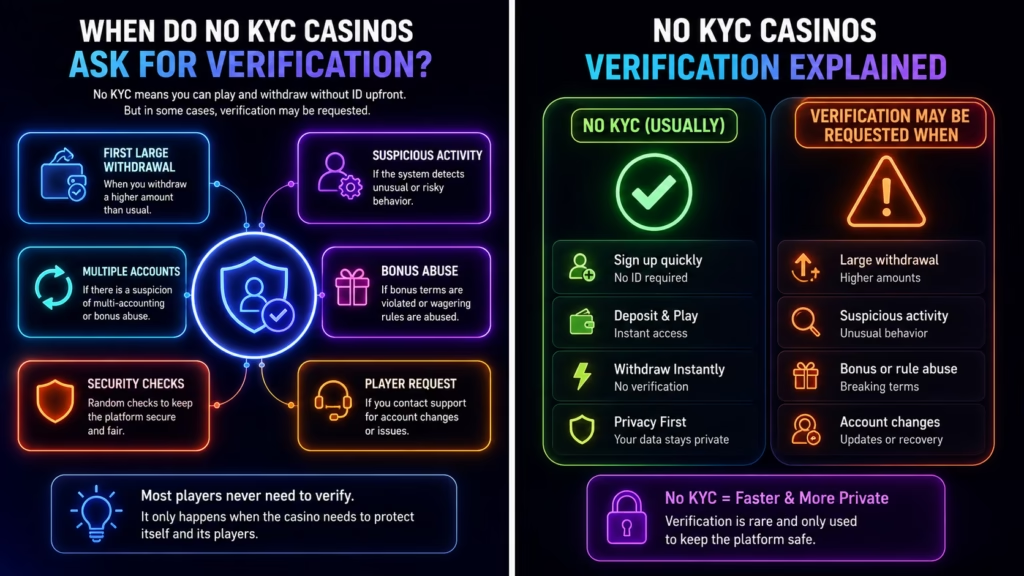
The most common No KYC casino verification triggers are a large or unusual withdrawal, reaching an AML transaction threshold, suspicious account activity, a payment method that cannot be linked to the account holder, a change in country or IP address, sanctions screening, or a request to establish the source of funds.
Quick Answer
- No KYC usually means no routine document upload at registration, not “verification is impossible.”
- A withdrawal can trigger KYC, particularly if the amount or transaction pattern falls outside the casino’s normal risk profile.
- Casinos operating under AML rules may have transaction thresholds after which customer due diligence becomes mandatory.
- Crypto casinos can ask players to prove control of a wallet or provide identity information when blockchain transactions create compliance concerns.
- The casino’s Terms and Conditions, AML Policy, Withdrawal Policy, and Privacy Policy should explain when additional checks can occur.
The practical lesson is simple: never choose a No KYC casino solely because its landing page says “no verification.” Check what its rules say about withdrawals and enhanced verification before depositing.
What Does “No KYC Casino” Actually Mean?
A No KYC casino generally allows at least part of the customer journey without traditional identity-document verification. Registration may require only an email address, username, crypto wallet, or similar basic information.
However, “No KYC” is not a universal regulatory category with one worldwide definition. Different operators use the term differently.
One casino may allow registration, deposits, gambling, and ordinary withdrawals without documents. Another may advertise “No KYC” because documents are not needed initially, while reserving the right to request them when an AML or security trigger occurs.
This distinction matters because regulatory standards can be much stricter than casino marketing terminology. Some jurisdictions require identity verification before gambling, while others may allow a more risk-based approach with additional checks at specified thresholds or when suspicious activity appears.
When Do No KYC Casinos Ask for Verification?
There is no single worldwide trigger. Verification generally appears when the casino’s automated or manual risk controls decide that the account requires additional customer due diligence.
| Verification trigger | What may happen |
| Large or unusual withdrawal | Identity or source-of-funds documents may be requested |
| Cumulative transaction threshold | Formal KYC or customer due diligence may become mandatory |
| Suspicious activity | Account and transactions may receive enhanced review |
| Payment ownership problem | Casino may ask who controls the card, bank account, e-wallet, or crypto wallet |
| New country, IP, or device | Additional security or location checks may appear |
| Account details do not match | ID or address verification may be requested |
| High-risk transaction pattern | Source of funds or source of wealth may be checked |
| Sanctions or PEP alert | Enhanced due diligence may be required |
| Multiple-account or fraud concerns | Identity verification may be used to establish who controls the account |
These triggers are not identical at every operator. A casino’s licensing jurisdiction and internal risk policies determine how and when they are applied.
1. A Withdrawal Triggers Additional Checks
Withdrawals are one of the situations in which players are most likely to encounter verification at a casino marketed as No KYC.
The withdrawal itself is not necessarily the legal reason for verification. Instead, the transaction may expose a risk factor that was not relevant during registration or smaller transactions.
For example, an account that deposited a relatively small amount and later attempts a substantially larger withdrawal may receive additional review. A first withdrawal to a new payment method can also require more scrutiny.
Legitimate operators should not deliberately postpone information requests simply to make withdrawals difficult. Additional checks can still be required at the withdrawal stage when a new legal, security, or compliance issue appears.
For players, the important question is therefore not simply “Does this casino require KYC?” It is “Can this casino require KYC before processing my withdrawal?” Check that point before depositing.
2. You Reach a Transaction or AML Threshold
A No KYC casino may have to introduce customer due diligence once your transactions reach a regulatory threshold.
Thresholds differ considerably between jurisdictions. Some regulatory frameworks require additional customer due diligence when a single transaction or linked transactions reach a specified amount, while others apply verification much earlier.
This illustrates why “No KYC” should not be interpreted as permanent anonymity. A casino may offer a low-friction account initially while still having legally defined points at which further verification becomes necessary.
3. Your Activity Looks Unusual
Unusual transaction activity is one of the strongest No KYC casino verification triggers.
AML systems compare account behavior with information the operator already knows about the customer. If transactions suddenly differ from the expected pattern, the casino may seek additional information.
- deposits followed rapidly by withdrawal attempts with little gambling activity;
- unusually large increases in transaction volume;
- repeated transactions structured in unusual amounts;
- movement between multiple funding methods;
- account activity that appears inconsistent with the customer’s previous behavior.
A verification request in this situation can therefore involve considerably more than showing an ID. The casino may ask for an explanation of the transaction pattern or supporting financial information.
4. The Casino Needs Source-of-Funds Information
Source-of-funds verification may occur when the casino needs to understand where money used for a particular transaction originated.
The operator could request evidence such as a bank statement, payment record, wallet transaction history, employment information, or another document appropriate to the situation.
For higher-risk cases, the review may expand into source of wealth, which addresses the broader origin of a person’s wealth rather than one particular deposit.
These checks do not automatically mean that the player has done anything wrong. AML regulation commonly follows a risk-based approach, meaning higher-risk accounts and transactions receive more scrutiny than routine low-risk activity.
5. The Payment Method or Crypto Wallet Cannot Be Verified
A casino may request verification when it cannot establish that the player controls the payment method used to deposit or withdraw.
This can be especially important with cryptocurrency. A crypto casino may need to establish whether a wallet belongs to or is controlled by the player. Wallet-control checks can be separate from traditional passport-based KYC.
Using third-party cards, bank accounts, e-wallets, or crypto wallets can therefore create additional verification problems.
Before depositing, check whether the casino requires deposits and withdrawals to use payment methods held in your own name or under your control.
6. Your Location or Account Information Changes
Changes in IP address, country, device, payment instrument, or identity information can trigger additional checks.
These signals matter because operators may use them to detect account theft, restricted-country access, payment fraud, or inaccurate registration information.
Using a VPN does not automatically mean a casino will request KYC, but attempting to disguise a prohibited location can create both compliance and Terms and Conditions problems.
Players should check whether online gambling and the specific operator are permitted in their jurisdiction before playing.
7. The Casino Detects Possible Fraud or Account Sharing
Security concerns can turn a normally document-free account into a verified account.
Possible triggers include contradictory personal information, account sharing, suspected stolen credentials, several accounts linked to the same person, or payment instruments belonging to another individual.
When an operator is not sufficiently confident about a player’s identity, additional measures can include extra identification, a selfie or liveness check, a photograph of the player holding an ID, or confirmation through verified contact methods.
A casino may also investigate multiple accounts when its rules prohibit them, particularly where bonuses or promotions are involved.
8. Sanctions or PEP Screening Creates a Match
AML screening can require additional verification when a customer appears to match a sanctions list or is identified as a politically exposed person, commonly called a PEP.
These checks are separate from ordinary account registration. Operators may need enough information to distinguish between two people with similar names or determine whether enhanced due diligence is necessary.
This is another reason why a casino that offers simplified registration may still collect identity information later.
What Documents Can a No KYC Casino Request?
If verification becomes necessary, the requested documents depend on what the casino is trying to establish.
- passport or national identity card;
- driving licence where accepted;
- recent bank statement;
- utility bill or another proof of address;
- selfie or liveness check;
- photograph holding an identity document;
- proof that a payment account belongs to you;
- evidence of crypto wallet ownership or control;
- source-of-funds evidence;
- source-of-wealth information in higher-risk situations.
The exact request should match the reason for the review. A request for extensive financial information deserves more scrutiny from the player than a simple email or identity confirmation.
No KYC vs Anonymous Casino: They Are Not the Same Thing
A No KYC casino is not necessarily an anonymous casino.
Even without a passport upload, an operator can potentially obtain or process information connected with:
- your IP address;
- device data;
- email account;
- blockchain transactions;
- crypto wallet addresses;
- payment information;
- location;
- transaction history;
- account behavior.
Cryptocurrency can reduce reliance on conventional banking information, but most public blockchains are transparent ledgers rather than truly anonymous payment networks.
Players seeking privacy should therefore evaluate what information a casino collects, not simply whether it requests a passport during registration.
How to Check Verification Rules Before Depositing
The safest way to evaluate a No KYC casino is to investigate its withdrawal and verification rules before sending money.
- Terms and Conditions: Search for “verification,” “KYC,” “CDD,” “identity,” and “enhanced due diligence.”
- Withdrawal Policy: Check whether withdrawals can be paused until documents are supplied.
- AML Policy: Look for transaction thresholds and circumstances that trigger additional due diligence.
- Payment Rules: Determine whether third-party payment methods are prohibited.
- Licence Information: Verify the licence directly with the named regulator rather than relying only on a casino logo.
Pay particular attention to vague clauses allowing the casino to request “any documents at any time.” Such wording does not automatically make an operator unreliable, but you should understand how much discretion it gives the casino before depositing a meaningful amount.
Should You Choose a Casino That Promises “Never KYC”?
A claim of “never KYC under any circumstances” deserves more scrutiny than an ordinary No KYC policy.
A regulated operator may have legal obligations involving customer identification, sanctions screening, anti-money laundering controls, fraud prevention, or transaction monitoring.
The more credible wording is usually that verification is not routinely required, rather than that verification is impossible under every circumstance.
This distinction becomes especially important when choosing a casino for larger deposits or withdrawals. Low-friction registration has little value if the withdrawal conditions are unclear.
A better selection process is to compare the casino’s licence, withdrawal rules, payment support, verification triggers, fees, withdrawal limits, reputation, and responsible gambling controls together rather than ranking operators purely by how little information they request.
Common Misconception: No KYC Means Guaranteed Instant Withdrawals
No KYC does not guarantee an instant withdrawal.
Withdrawal speed can still depend on:
- internal security review;
- blockchain confirmations;
- casino processing time;
- withdrawal limits;
- payment-method restrictions;
- bonus conditions;
- fraud checks;
- AML review.
A casino can therefore process normal crypto withdrawals automatically while sending an unusual transaction for manual review.
Players specifically looking for fast payouts should examine the operator’s actual withdrawal rules rather than assuming that a No KYC label automatically means every payout is instant.
How This Information Was Reviewed
The distinction between initial registration and later verification is based on how regulated casino customer due diligence works in practice: identity verification, transaction monitoring, risk assessment, sanctions screening, payment ownership, source-of-funds checks, and withdrawal procedures can operate at different stages of the customer relationship.
Verification requirements vary significantly by jurisdiction. Some regulated markets require identity verification before gambling, while other systems may use thresholds and risk-based customer due diligence.
Before playing, verify the casino’s current licence and Terms and Conditions because policies can change. Online casino games involve financial risk and random outcomes. Gambling should be treated as entertainment, not as a method of earning money, and players should set spending limits they can afford.
FAQ
Do No KYC casinos ever ask for ID?
Yes. A No KYC casino can ask for ID if its terms, security procedures, or regulatory obligations require additional verification. Common triggers include unusual withdrawals, AML thresholds, payment ownership concerns, suspicious activity, or inconsistent account information. “No KYC” usually refers to reduced or delayed verification rather than a guarantee that documents will never be requested.
Can a No KYC casino ask for verification when I withdraw?
Yes, verification can occur during a withdrawal if a new compliance or security issue arises. Additional checks can be required when the withdrawal creates a new risk signal, such as a large amount, a new payment method, or inconsistent account data. Always read the withdrawal policy before depositing.
What is the most common No KYC casino verification trigger?
A transaction that creates additional risk is one of the most common triggers. This could involve an unusually large withdrawal, reaching a regulatory threshold, inconsistent transaction behavior, or problems establishing ownership of the payment method. Exact triggers depend on the operator and jurisdiction.
Are there withdrawal limits before KYC is required?
Some casinos or regulatory regimes use transaction thresholds, but there is no universal worldwide No KYC limit. The exact amount, if any, depends on the operator’s licence, AML obligations, and internal risk rules. Check the casino’s own terms rather than relying on a generic limit found elsewhere.
Can a crypto casino verify my wallet?
Yes. A crypto casino may ask you to demonstrate control of a cryptocurrency wallet when ownership cannot be established or a transaction requires additional AML review. Wallet verification is different from traditional passport-based KYC, although both may be requested in the same investigation.
Can a casino ask for source of funds even after KYC?
Yes. Identity verification and source-of-funds verification answer different questions. An ID establishes who you are, while source-of-funds checks examine where money used for a specific transaction came from. Higher-risk activity may therefore require additional financial information even if identity verification has already been completed.
Does using a VPN trigger KYC at a No KYC casino?
A VPN can contribute to additional account checks if the casino detects inconsistent or restricted-location information, but it does not automatically trigger KYC at every operator. Using a VPN to bypass geographic restrictions can violate casino terms and may create withdrawal problems.
Does completing KYC guarantee that a withdrawal will be paid?
No. KYC completion does not guarantee a payout or eliminate other withdrawal conditions. The casino may still apply legitimate rules concerning account security, payment methods, withdrawal limits, bonus terms, or regulatory reviews. Completing KYC also has no effect on random game outcomes and does not improve a player’s chances of winning.
Short Conclusion
No KYC casinos can ask for verification when a transaction, withdrawal, account change, payment method, AML threshold, or risk signal requires additional checks. The phrase “No KYC” should therefore be understood as reduced routine verification, unless the casino’s rules clearly state something more specific.
Before depositing, check the casino’s licence, AML policy, withdrawal terms, transaction limits, and exact verification triggers. The most important question is not whether documents are required at registration, but whether unexpected KYC can prevent or delay access to your funds later.