Walking wilds slots use wild symbols that move from one reel position to another across consecutive spins, respins, or bonus rounds. A walking wild typically shifts by one position in a defined direction after each spin, while a shifting wild is a broader mechanic that can move vertically, horizontally, diagonally, or according to rules set by the game developer.
The main purpose of both mechanics is to keep a wild symbol active for more than one spin and create additional opportunities for winning combinations. However, walking and shifting wilds do not guarantee wins. The result of every spin remains random, and the exact behavior of moving wild symbols depends on the slot’s rules and paytable.
Quick takeaways:
- Walking wilds usually move one position after each qualifying spin.
- Shifting wilds slots may use more flexible movement patterns.
- Moving wilds can remain active across several spins or respins.
- Wild symbols normally substitute for regular paying symbols, but exclusions can apply.
- A moving wild can increase the number of opportunities to complete combinations, but it cannot predict or guarantee a payout.
Walking and shifting wild mechanics are usually more appealing to players who enjoy interactive bonus features and symbols that remain relevant across several spins. Players who prefer very simple slots may find standard wilds easier to follow.
What Is a Walking Wild in Slots?
A walking wild is a wild symbol that changes position between consecutive spins instead of disappearing immediately after the spin on which it lands. The wild generally moves one reel position at a time until it leaves the reel grid or the feature ends.
For example, imagine a walking wild landing on the fourth reel. The game may award a respin and move the wild one reel to the left. On the next respin, the same wild could move to reel two, then reel one, before disappearing.
The exact sequence is determined by the individual slot. A walking wild might move:
- from right to left;
- from left to right;
- upward or downward;
- one reel or position per respin;
- until it reaches the edge of the grid.
Some slots activate walking wilds during the base game, while others reserve them for free spins or dedicated bonus features. The game rules should always be checked because there is no universal walking wild format.
How Do Walking Wilds Work?
Walking wilds generally follow a simple sequence: the wild appears, remains active for another spin or respin, moves to a new position, and continues moving until a defined condition ends the feature.
A typical walking wild sequence could work like this:
- A wild symbol lands on the reels.
- The slot evaluates the current spin normally.
- A respin is triggered if the game’s rules include one.
- The wild moves one position in its specified direction.
- The reels spin again while the wild remains active.
- The process continues until the wild leaves the grid or another ending condition is reached.
The wild can potentially contribute to winning combinations on each spin where it remains on the grid. However, other symbols are still determined by the game’s random outcome generation, so the moving wild does not ensure that a compatible combination will appear around it.
A walking wild is therefore better understood as a persistent opportunity rather than a guaranteed payout.

What Are Shifting Wilds in Slots?
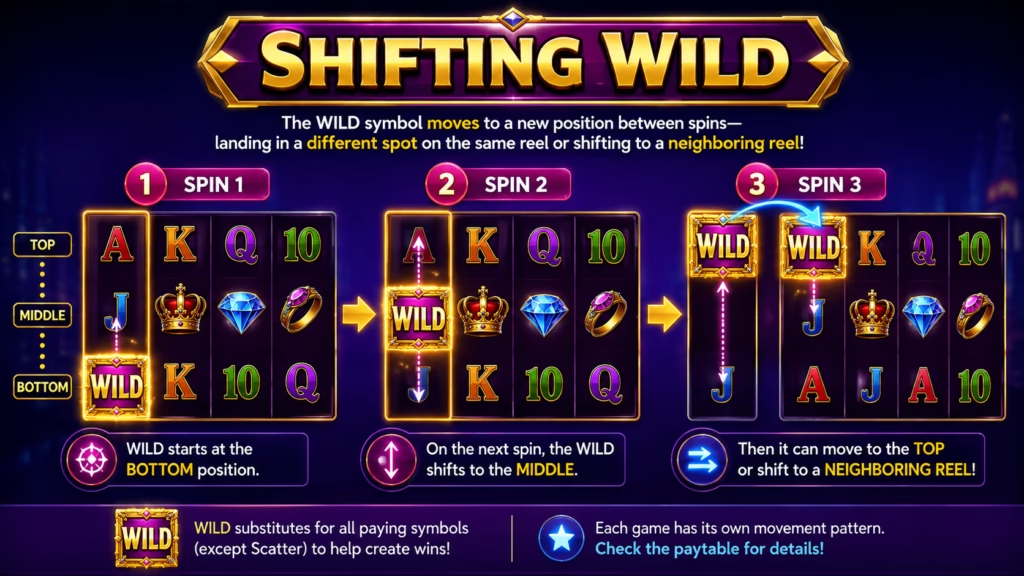
Shifting wilds are wild symbols that change location between spins or stages of a feature. Unlike the classic walking wild mechanic, a shifting wild does not necessarily move one predictable step horizontally across the reels.
Depending on the game, shifting wilds may move:
- one reel to the left or right;
- one row upward or downward;
- diagonally;
- between predetermined positions;
- according to a special bonus rule.
Because slot developers use feature names differently, “shifting wild” and “walking wild” can sometimes describe very similar mechanics. The important factor is not the name but the movement rules explained in the game’s paytable.
If a slot advertises shifting wilds, check whether the wild remains locked during movement, triggers respins, changes direction, or disappears after a specific number of spins.
Walking Wilds vs Shifting Wilds
Walking wilds and shifting wilds are closely related, but walking wilds generally follow a more structured movement pattern.
| Feature | Walking Wilds | Shifting Wilds |
| Basic behavior | Wild moves between spins | Wild changes position between spins |
| Typical movement | One position or reel at a time | Can use several movement patterns |
| Direction | Often fixed | May be fixed or variable |
| Duration | Often several spins or respins | Depends on feature rules |
| Respins | Common but not universal | May or may not be included |
| Predictability of movement | Usually higher | Often more variable |
| Guaranteed win | No | No |
The distinction is mainly mechanical. A walking wild often behaves as a specific type of shifting wild, while “shifting wild” can describe a wider range of moving-symbol systems.
Walking Wilds vs Sticky Wilds
Walking wilds should not be confused with sticky wilds. A sticky wild stays in the same position for multiple spins, while a walking wild changes position.
Suppose a wild lands on reel three during free spins. A sticky wild might remain on reel three for the rest of the bonus. A walking wild might instead move to reel two on the next spin and reel one after that.
Both mechanics extend the useful life of a wild beyond one spin, but they affect the reel grid differently.
Sticky wilds concentrate their effect on a fixed position. Walking wilds gradually influence different positions as they move across the grid.
Do Walking Wilds Trigger Respins?
Walking wilds can trigger respins, but respins are not an automatic requirement of the mechanic. Some games connect every movement of the wild to a new respin, while others move the wild only when the next normal spin or free spin begins.
A common structure is a walking wild that enters the reels and triggers repeated respins while moving toward the opposite side. Another slot might introduce walking wilds during a fixed number of free spins without adding any extra spins.
Check the feature description for three details:
- whether a respin is awarded;
- when the wild moves;
- what causes the sequence to end.
These rules determine how long the wild can remain useful.
Can Multiple Walking Wilds Appear at Once?
Some slot designs allow several walking or shifting wilds to appear simultaneously. When multiple moving wilds are active, each symbol may follow its own movement path or move according to the same feature rules.
Multiple wilds can create more possible substitution positions across the grid, but they still do not guarantee a winning combination. The surrounding symbols must form a valid payline, cluster, ways-to-win combination, or other winning pattern used by the slot.
Whether several moving wilds can coexist should be confirmed in the game’s official rules because some slots restrict the feature to one active wild.
What Symbols Can Walking Wilds Replace?
Walking wilds usually substitute for standard paying symbols, helping complete valid combinations. However, a wild may not substitute for every symbol in a slot.
Common exclusions can include:
- scatter symbols;
- bonus symbols;
- jackpot symbols;
- special feature symbols;
- other symbols specifically excluded by the paytable.
A player should therefore not assume that a walking wild can replace a missing scatter or automatically help trigger a bonus round. The game’s paytable provides the definitive substitution rules.
Do Walking Wilds Increase RTP?
The presence of walking wilds does not automatically mean a slot has a higher RTP. RTP is determined by the entire mathematical model of the game, including symbol probabilities, payouts, bonus mechanics, and other features.
A walking wild can make certain sequences feel more active because the wild remains relevant across several spins. That does not mean the feature creates an advantage over another slot with a similar RTP.
Two games can have different bonus mechanics while having similar theoretical RTP values. Likewise, two walking wilds slots can use very different mathematical models.
The exact RTP should be checked in the game’s information panel or official paytable. RTP is a long-term theoretical percentage and does not predict what will happen during an individual session.
Do Walking Wilds Affect Slot Volatility?
Walking wilds can influence how wins are distributed, but the presence of the mechanic alone is not enough to determine whether a slot has low, medium, or high volatility.
Volatility describes the general pattern of payout frequency and size within a game’s mathematical model. A walking wild feature could be part of either a relatively steady game or a slot designed around less frequent but potentially larger feature sequences.
The correct approach is to evaluate volatility separately rather than assuming that more elaborate wild features mean higher or lower risk.
Players who want to understand the likely rhythm of a game should check its stated volatility, paytable, bonus structure, and RTP where these details are provided.
Example of a Walking Wild Feature
Consider a hypothetical five-reel slot where a walking wild starts on reel five and moves one reel to the left after each respin.
Initial spin: Walking wild lands on reel five.
Respin 1: Wild moves to reel four.
Respin 2: Wild moves to reel three.
Respin 3: Wild moves to reel two.
Respin 4: Wild moves to reel one.
After reaching the final position, the feature ends.
During each stage, the wild can substitute for eligible regular symbols according to the slot’s rules. The example illustrates how the mechanic works, not how frequently wins occur. The reel outcomes surrounding the wild remain random.
Why Walking Wilds Can Feel Different From Standard Wilds
Walking wilds create a different playing experience because one symbol can remain relevant across several consecutive outcomes. A standard wild normally affects only the spin on which it appears.
This persistence makes it easier for players to follow what is happening during a feature. Instead of every spin starting with a completely empty grid, a known wild position may carry over into the next stage.
The important distinction is psychological as well as mechanical. Knowing that a wild will move into another position can create anticipation, but it does not reveal which symbols will appear around it.
The movement of the wild may be predictable while the outcome of the next spin remains random.
How to Evaluate Walking and Shifting Wilds Slots
The best way to compare walking wilds slots is to examine the actual feature rules rather than choosing a game simply because it advertises moving wild symbols.
Movement Pattern
Find out where the wild begins and how it moves. A predictable right-to-left walking wild behaves differently from a shifting wild that can change rows or directions.
Duration
Check how many spins the wild can remain active. Some features end when the symbol leaves the reel grid, while others use a fixed number of spins.
Respins
Determine whether every movement awards another respin or whether the wild simply moves during existing spins.
Wild Substitution Rules
Confirm which symbols the wild can replace. Scatter and bonus symbols are often governed by separate rules.
Bonus Interaction
Some moving wilds appear only during free spins or another feature. Others can activate during normal gameplay.
RTP and Volatility
Evaluate RTP and volatility separately from the wild mechanic. Neither statistic can predict an individual spin or guarantee that the feature will be profitable.
Common Misconceptions About Moving Wilds
A Walking Wild Is Guaranteed to Create a Win
A walking wild creates additional substitution opportunities but cannot guarantee that the required symbols will land around it.
The Next Spin Is Easier to Predict
A predictable wild position does not make the rest of the reel outcome predictable. Random game outcomes remain independent of where a persistent feature symbol is displayed, subject to the specific game’s mathematical rules.
More Walking Wilds Mean Better RTP
The number of wilds alone does not determine RTP. The slot’s complete mathematical model determines its theoretical return.
Walking Wilds and Sticky Wilds Are the Same
Walking wilds move. Sticky wilds remain fixed. Some games can combine both concepts, but the mechanics are fundamentally different.
Every Moving Wild Triggers a Respin
Respins are game-specific. A moving wild can instead shift during normal spins or free spins.
Who May Enjoy Walking Wilds Slots?
Walking wilds slots may suit players who prefer bonus mechanics that develop across several spins rather than disappearing immediately after one outcome.
They are particularly likely to appeal to players who enjoy:
- persistent wild features;
- respin mechanics;
- visually clear bonus progression;
- free-spin features with changing reel states;
- more interactive slot mechanics.
Players looking for very simple gameplay may prefer slots with standard wild symbols. Moving wilds can introduce additional rules involving movement direction, respins, feature duration, and symbol interactions.
Regardless of the mechanic, slots should be treated as entertainment rather than a method of earning money. Set spending and time limits before playing, and stop if gambling is no longer enjoyable.
How This Information Was Reviewed
This guide evaluates walking and shifting wilds according to their movement, duration, substitution behavior, interaction with respins, and differences from related mechanics such as sticky wilds.
Individual slot developers can implement these features differently, so the game’s official rules and paytable should be checked before playing. In particular, verify the wild’s movement direction, eligible substitutions, respin rules, RTP, volatility, and bonus conditions.
RTP, volatility, wild symbols, and bonus features describe how a slot is structured. They cannot predict the outcome of an individual spin or guarantee a winning session. Casino games should be approached as paid entertainment with predetermined spending limits.
FAQ
What are walking wilds in slots?
Walking wilds are wild symbols that move to another reel position between consecutive spins, respins, or bonus stages. They usually substitute for eligible paying symbols while moving across the grid. Their exact direction and duration depend on the individual slot.
What are shifting wilds in slots?
Shifting wilds are moving wild symbols that change position between spins. Their movement may be horizontal, vertical, diagonal, or based on another predefined rule. The term is broader than walking wilds and can describe several types of moving-wild mechanics.
What is the difference between walking wilds and shifting wilds?
Walking wilds typically move in a consistent step-by-step direction, while shifting wilds may use more flexible movement patterns. Some developers use the terms similarly, so the game’s paytable is the best source for the exact mechanic.
Do walking wilds guarantee a win?
No. Walking wilds can provide additional opportunities to complete winning combinations, but the surrounding reel symbols still need to form a valid winning pattern. Slot outcomes remain random, and no wild feature guarantees a payout.
Do walking wilds always trigger respins?
No. Some walking wild features award a respin every time the symbol moves, while others move the wild during normal spins or free spins. The exact behavior must be checked in the rules of the individual game.
Can a walking wild replace a scatter?
Not necessarily. Wild symbols commonly substitute for standard paying symbols, while scatters, bonus symbols, and other special symbols may be excluded. The paytable should specify exactly which symbols the wild can replace.
Are walking wilds the same as sticky wilds?
No. Walking wilds change position between spins, while sticky wilds remain fixed in one position for a specified period. Both can persist across multiple spins, but they affect the reel grid in different ways.
Can several walking wilds appear at the same time?
Some slots allow multiple walking wilds to be active simultaneously, while others restrict the mechanic to one wild. Multiple wilds can increase the number of substitution positions, but they do not guarantee winning combinations.
Do walking wilds make a slot higher RTP?
Not automatically. RTP depends on the complete mathematical model of the slot rather than one feature. A game with walking wilds can have a higher or lower RTP than another moving-wild slot, so the stated RTP should be checked separately.
Are walking wilds slots better than regular slots?
Walking wilds slots are not objectively better. They may be more appealing to players who enjoy persistent features and respins, while players who prefer straightforward gameplay may prefer standard wild mechanics. Neither format provides guaranteed wins.
Brief Conclusion
Walking wilds are persistent wild symbols that typically move one position at a time across consecutive spins or respins. Shifting wilds use the same general idea but can follow more varied movement patterns. Both mechanics can create additional opportunities for wild substitutions, but neither changes the basic reality of slot play: individual outcomes remain random, RTP and volatility do not predict a session, and moving wilds never guarantee a win. Always check the game’s paytable for the exact movement, substitution, respin, RTP, and bonus rules before playing.