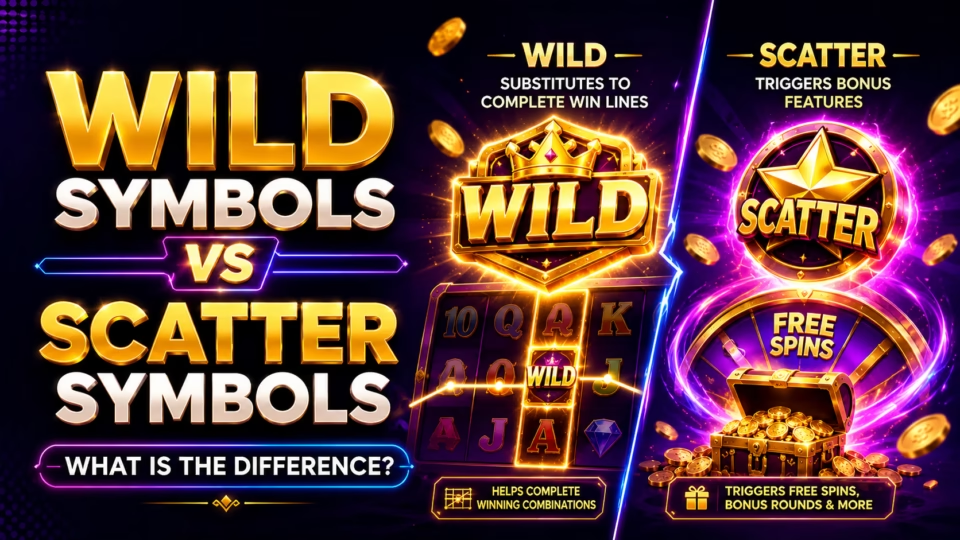
Wild symbols and scatter symbols are two common slot features, but they perform different jobs. Wild symbols usually help complete winning symbol combinations by substituting for other symbols, while scatter symbols usually trigger bonus features, free spins, or special payouts when enough of them appear.
The exact rules depend on the slot. A wild may substitute for most regular symbols but exclude scatters or bonus icons. A scatter may pay anywhere on the reels in one game but only activate a feature in another. The paytable and game rules are therefore the final authority for any specific slot.
Quick answer
- Wild symbols usually replace regular paying symbols to help form winning combinations.
- Scatter symbols commonly trigger free spins, bonus rounds, or scatter-specific payouts.
- Wilds often work within the slot’s normal pay system, such as paylines or ways to win.
- Scatters often do not need to appear on the same payline, although rules vary.
- Neither wilds nor scatters make a win predictable. Every spin remains random in a properly functioning RNG-based slot.
For beginners, the easiest distinction is functional: a wild normally helps build a winning combination, while a scatter normally unlocks or activates something special.
What Is a Wild Symbol?
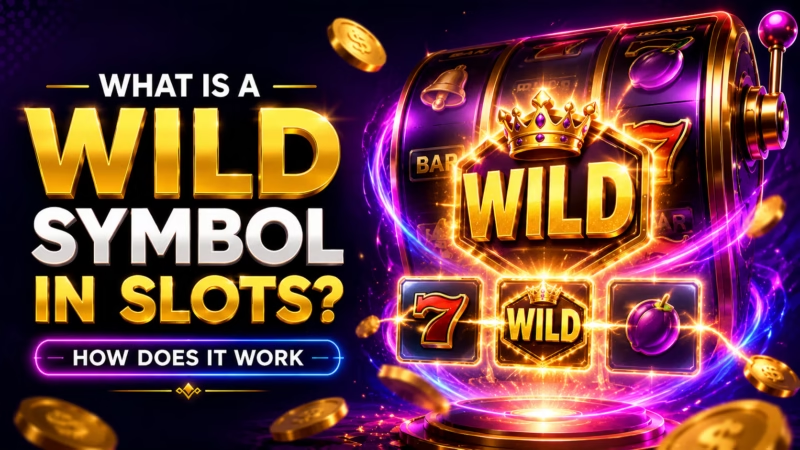
A wild symbol is a slot symbol that typically substitutes for one or more regular symbols when the game evaluates winning combinations. Its purpose is similar to a wildcard in a card game: it can fill a missing position that would otherwise prevent a combination from paying.
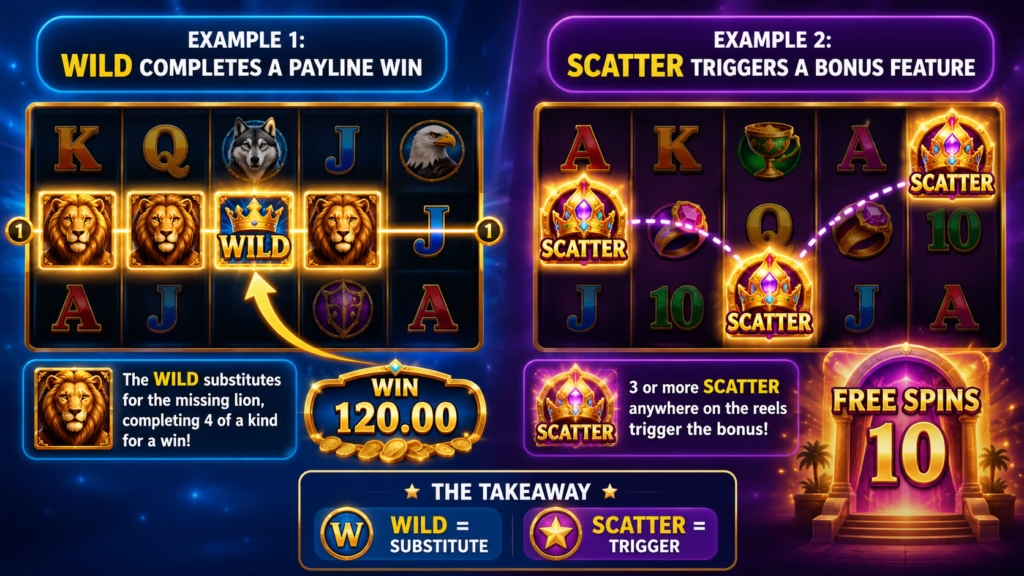
For example, imagine a three-reel winning combination requires: Diamond + Diamond + Diamond. If the reels show Diamond + Wild + Diamond, the wild may substitute for the missing diamond, allowing the combination to qualify as a win according to the game’s paytable.
Wild substitution rules are not universal. Many games prevent wilds from replacing scatters, bonus symbols, jackpot symbols, or other special icons. Some slots also restrict wilds to certain reels.
How Wild Symbols Affect Gameplay
Wild symbols can increase the number of combinations capable of becoming winning combinations because they provide additional matching possibilities. Their actual impact depends on where wilds can appear, which symbols they can replace, the game’s pay structure, and whether the wild has additional features.
A wild does not mean that a spin will automatically pay. The final result still needs to satisfy the slot’s rules.
In a traditional payline slot, the wild may need to appear in a valid sequence across an active payline. In a ways-to-win game, it may contribute to matching symbols on consecutive reels. Cluster-based slots can use wilds differently again, so the paytable should always be checked before assuming how substitution works.
Common Types of Wild Symbols
Standard Wild
A standard wild substitutes for selected regular symbols when determining wins. It is the simplest version and is often represented by a large WILD icon or another clearly marked symbol.
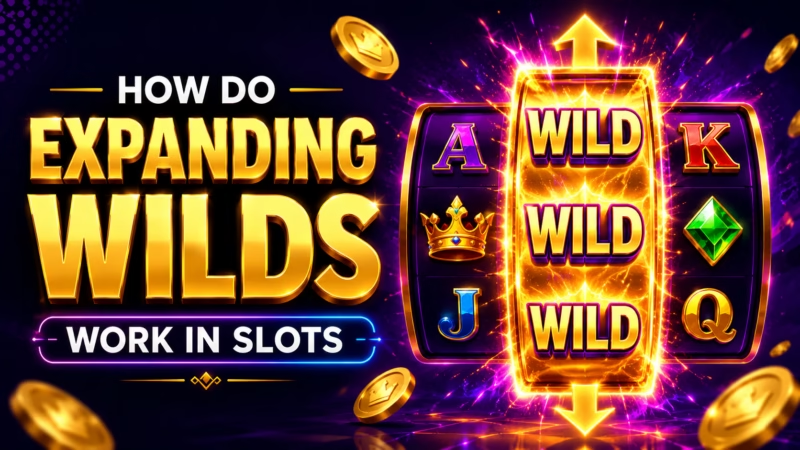
Expanding Wild
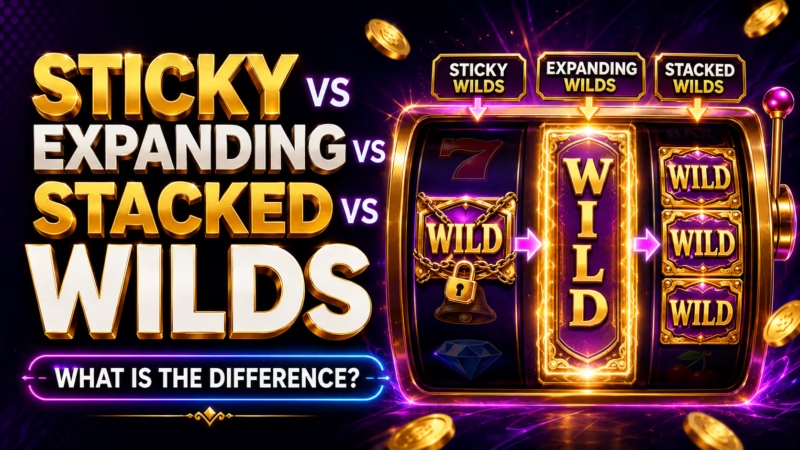
An expanding wild can grow to cover additional positions, such as an entire reel. The expansion conditions vary. Some expand whenever they appear, while others expand only during a bonus feature.
Sticky Wild
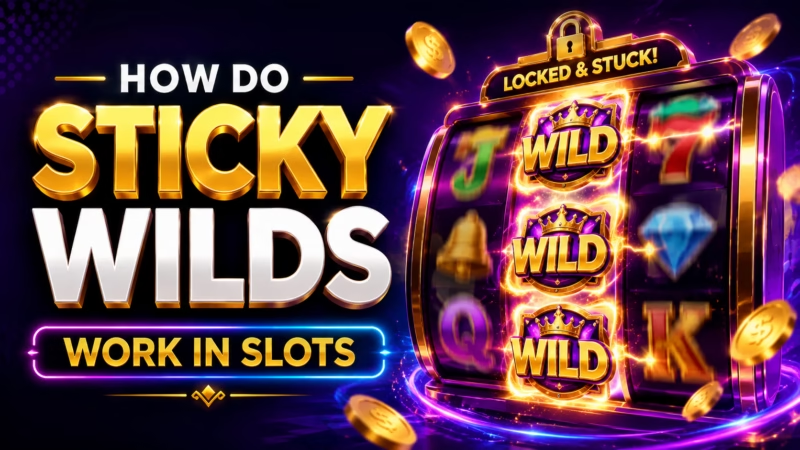
A sticky wild remains fixed in position for multiple spins or respins. Sticky wilds are particularly common in bonus rounds because keeping a substitute symbol in place can create additional opportunities for combinations to form.
Walking or Moving Wild
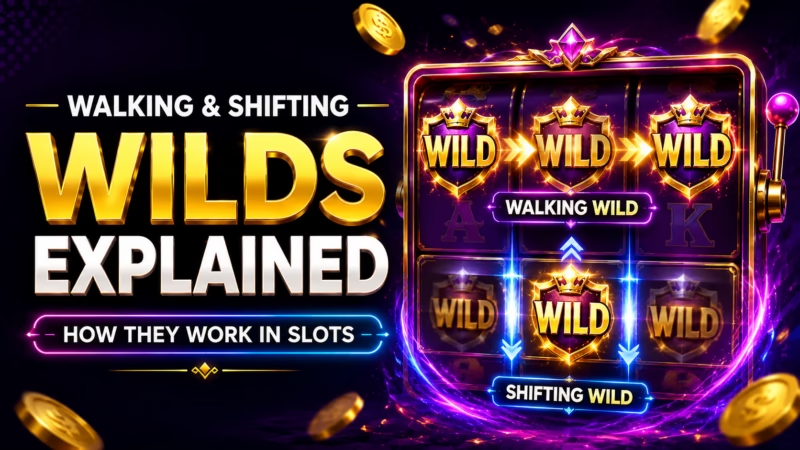
A walking wild moves across the reels between spins or respins. The feature may continue until the wild leaves the reel grid or another predefined condition is reached.
Multiplier Wild
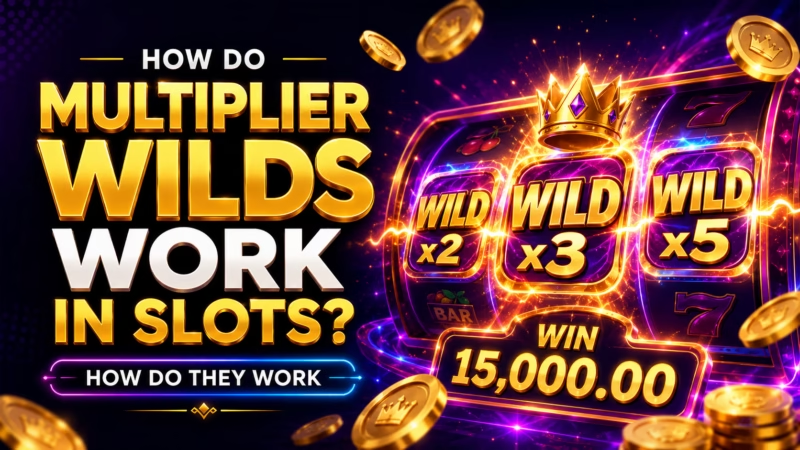
A multiplier wild combines substitution with a multiplier. For example, a winning combination involving a 2x wild may have its payout multiplied according to the game’s rules. The multiplier may apply to the entire winning combination, only to the wild’s contribution, or according to another calculation method. The official paytable should be checked rather than assuming all multiplier wilds work identically.
What Is a Scatter Symbol?
A scatter symbol is a special slot symbol that usually activates a feature or awards a scatter-related payout when a required number appears during the same spin. Unlike ordinary symbols, scatters commonly do not need to line up on a standard payline.
A typical slot might require three scatter symbols to trigger a free spins round. Another game may award a prize for two, three, four, or five scatters. Some slots use scatters only as feature triggers and provide no separate cash payout for them.
The important distinction is that scatter behavior is controlled by specific game rules rather than one universal slot standard.
Do Scatter Symbols Have to Be on a Payline?
Scatter symbols often pay or trigger features regardless of their exact positions on the reels, but this should not be treated as a universal rule.
A game may count three scatters anywhere on the visible grid. Another may require scatters on specific reels. Some bonus systems use special symbols that behave similarly to scatters but follow entirely different trigger conditions.
Checking the game’s paytable or help screen is the safest way to determine whether scatter positions matter.
Wild Symbols vs Scatter Symbols
The difference between wild and scatter symbols becomes clearer when their primary functions are compared directly.
| Feature | Wild Symbol | Scatter Symbol |
| Main purpose | Helps form winning combinations | Usually triggers bonuses or special payouts |
| Substitutes for other symbols | Usually yes | Usually no |
| Must follow paylines | Often depends on normal win rules | Commonly no |
| Can trigger free spins | Sometimes, but not normally its main role | Very commonly |
| Can have multipliers | Yes, in some slots | Sometimes |
| Can activate bonuses | Some special wilds can | Commonly |
| Exact behavior varies by game | Yes | Yes |
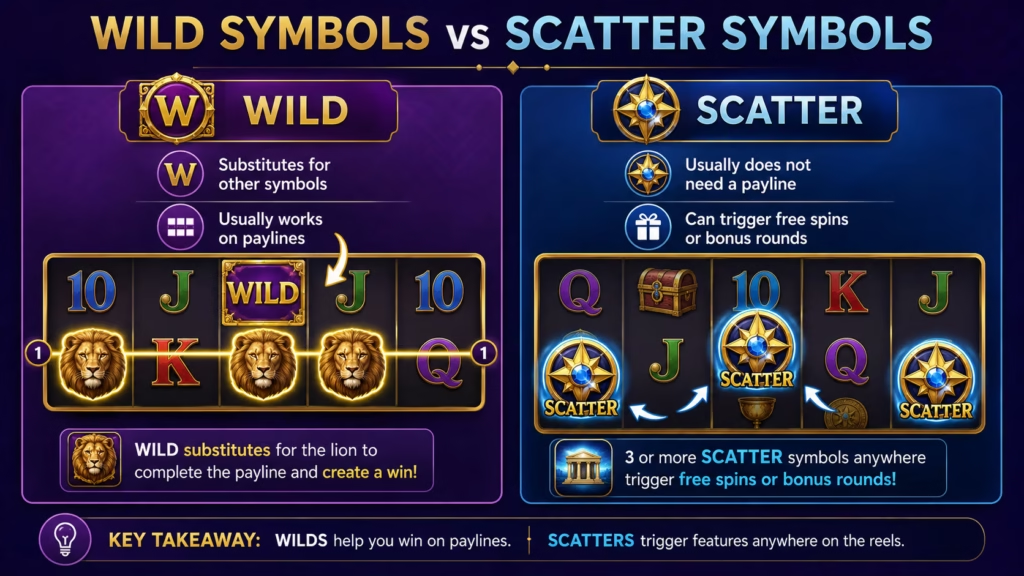
The most useful rule to remember is simple: wilds usually modify symbol combinations, while scatters usually activate features or scatter-specific rewards.
Example of a Wild Symbol
Suppose a slot pays for three matching crown symbols appearing on consecutive reels.
The result is: Crown | Wild | Crown.
If the game’s wild substitutes for crown symbols, the result can be evaluated as three crowns.
However, consider: Crown | Scatter | Crown.
A scatter would not normally replace the missing crown. Instead, the scatter would be evaluated according to its own rules, such as whether enough scatter symbols appeared to activate a bonus.
This example shows why wilds and scatters cannot normally be treated as interchangeable symbols.
Example of a Scatter Symbol
Imagine a five-reel slot in which three or more scatter symbols award free spins.
The scatters appear on reels 1, 3, and 5.
They do not create a normal left-to-right sequence, but the game may still count all three and activate the free spins feature because scatter rules are evaluated separately from standard paying combinations.
A different slot could require scatters on specific reels or use another threshold. The exact trigger condition should always be verified in the game’s rules.
Can a Symbol Be Both Wild and Scatter?
Yes. Some slots use hybrid symbols that combine wild and scatter functions, although this is less common than having separate symbols.
A hybrid symbol might substitute for regular symbols while also contributing toward a bonus trigger. Another game may change a scatter into a wild during a feature or allow a special wild to activate a bonus under certain conditions.
There is no universal definition for hybrid mechanics. The symbol’s actual functions should be determined from the paytable rather than from its appearance alone.
Do Wilds or Scatters Increase RTP?
Wild and scatter mechanics can influence a slot’s mathematical design, but seeing more wilds or scatters does not automatically mean the game has a higher RTP.
RTP, or return to player, is a theoretical long-term percentage built into the game’s mathematical model. It reflects many elements together, including symbol probabilities, paylines or ways to win, bonus frequency, prize values, multipliers, jackpots, and other mechanics.
A slot can therefore have frequent wilds but relatively small average payouts. Another can have rare scatters leading to potentially valuable bonus rounds. The frequency of a single symbol is not enough to determine overall RTP.
RTP also does not predict what will happen during one gaming session. Short-term results can differ substantially from the theoretical long-term percentage.
Do Wilds or Scatters Affect Volatility?
Wild and scatter features can contribute to slot volatility, but neither mechanic determines volatility by itself.
A game with frequent standard wilds and many modest winning combinations may feel different from one in which most of the potential payout is concentrated inside a rarely triggered scatter bonus. The second design may produce larger swings even if both games contain wild and scatter symbols.
To understand volatility, players should consider the entire payout structure rather than simply counting special symbols. Bonus frequency, prize distribution, multipliers, maximum payout potential, and base-game hit patterns can all matter.
Wild vs Scatter in Free Spins
During free spins, wild and scatter symbols can take on additional functions.
Wilds may become sticky, expanding, stacked, moving, or multiplied. A bonus round may therefore make wilds more powerful than their base-game versions.
Scatters commonly remain connected to bonus activation or retriggering. For example, landing a specified number of scatters during free spins may award additional spins.
Retriggers are game-specific. A slot may require three scatters, allow a single special symbol to add spins, or prevent retriggers entirely.
Common Misconceptions About Wild and Scatter Symbols
A Wild Always Creates a Win
A wild does not automatically produce a winning spin. It normally needs to form part of a combination that satisfies the game’s payout rules.
A Scatter Can Replace Regular Symbols
A standard scatter usually does not substitute for regular symbols. Substitution is primarily associated with wild symbols unless the rules explicitly describe a hybrid mechanic.
Three Scatters Always Trigger Free Spins
Three scatters are a common trigger, but they are not a universal standard. Some games require different quantities, particular reel positions, collected symbols, or entirely different bonus conditions.
Wilds Can Always Replace Scatters
Many slots specifically exclude scatters and bonus symbols from wild substitution. The game’s help screen should state which symbols a wild can replace.
More Wilds Mean Better Odds
Seeing many wild symbols does not by itself prove that a slot offers better odds or a higher RTP. Symbol frequency is only one part of a much larger mathematical model.
How to Check Wild and Scatter Rules Before Playing
The fastest way to understand wild and scatter symbols is to open the game’s paytable, information screen, or official rules.
- Which symbols can the wild replace?
- Are scatters excluded from wild substitution?
- Which reels can contain wild symbols?
- Does the wild expand, stick, move, or multiply payouts?
- How many scatters are required for a feature?
- Do scatters have to appear on particular reels?
- Do scatters award direct payouts?
- Can scatters retrigger free spins?
- Do wild or scatter mechanics change during the bonus round?
- Are special rules applied when several modifiers appear together?
These details matter more than the symbol artwork. Two slots can use almost identical WILD and SCATTER icons while applying completely different mathematical rules.
Which Symbol Is Better: Wild or Scatter?
Neither wild nor scatter symbols are inherently better because they serve different functions.
Wilds may appeal more to players who enjoy seeing special symbols interact directly with base-game winning combinations. Expanding, sticky, or multiplier wilds can also make reel activity easier to follow visually.
Scatters may be more interesting to players who focus on free spins and bonus rounds because scatters frequently serve as the gateway to those features.
The presence of either feature should not be used as a reason to expect profit. Slot outcomes remain random, and neither feature guarantees that a bonus or winning combination will produce a particular payout.
How This Information Was Reviewed
The comparison between wild and scatter symbols is based on their standard functions in modern slot design: symbol substitution, winning-combination evaluation, bonus triggering, scatter payouts, free spins, retriggers, and common wild modifiers.
Individual games can change these rules significantly. Before playing a specific slot, check its official paytable or game information for substitution restrictions, scatter requirements, feature conditions, RTP information, and bonus rules.
RTP, volatility, wild frequency, and scatter frequency describe parts of a game’s mathematical structure. They cannot predict the result of an individual spin or session. Casino games should be treated as paid entertainment rather than a way to generate income. Set spending and time limits before playing, and stop if gambling stops being enjoyable or begins affecting your finances.
FAQ
What is the main difference between wild and scatter symbols?
The main difference is that wild symbols generally substitute for regular symbols to help complete winning combinations, while scatter symbols generally trigger bonuses or special payouts. The exact functions vary between slots, so the game’s paytable should always be checked.
Can wild symbols replace scatter symbols?
Wild symbols often cannot replace scatter symbols. Many games exclude scatters, bonus symbols, jackpots, and other special icons from wild substitution. Some slots use different rules, so check the wild description in the game’s information screen.
Do scatter symbols need to land on the same payline?
Scatter symbols commonly do not need to appear on the same payline. Many games count scatters anywhere on the reels or grid, although some slots require particular reels or positions. The specific trigger conditions depend on the game.
Do three scatter symbols always trigger free spins?
No. Three scatters are a common free spins requirement, but slots can require two, four, five, or another condition. Some games use scatters for payouts rather than free spins, while others use entirely different bonus-trigger mechanics.
Do wild symbols pay by themselves?
Some wild symbols have their own payout values, while others function only as substitutes. A wild may also have additional properties such as a multiplier, expansion, movement, or sticky behavior. The paytable determines whether the wild has an independent payout.
Can a scatter also be a wild?
Yes, some slots use a symbol that performs both wild and scatter functions. These hybrid mechanics are game-specific. A symbol may substitute for regular symbols while also counting toward a bonus trigger, but this should never be assumed unless the rules confirm it.
Are wild symbols more valuable than scatters?
Wild symbols are not automatically more valuable than scatters. Their value depends on the game’s payout model. A wild may frequently help create smaller combinations, while a scatter may unlock a less frequent bonus with different payout potential.
Do more scatter symbols mean a higher RTP?
No. Scatter frequency alone does not determine RTP. RTP reflects the complete mathematical model of the slot, including symbol probabilities, normal payouts, bonuses, multipliers, jackpots, and other features. RTP also does not predict short-term results.
Can wild or scatter symbols guarantee a win?
No. Neither wild nor scatter symbols guarantee a win. Their appearances and effects are governed by the game’s rules and random outcome generation. Even when a bonus is triggered, the value of the resulting feature can vary substantially.
Where can I find the exact wild and scatter rules?
The exact wild and scatter rules should be available in the slot’s paytable, help menu, or game information screen. Check these rules before playing because substitution restrictions, scatter requirements, payouts, free spins, and retrigger conditions can differ between games.
In short
Wild symbols usually help create winning combinations by substituting for regular symbols, while scatter symbols usually activate bonuses, free spins, or scatter-specific payouts. Wilds generally interact with the normal payout structure; scatters are more often evaluated under separate feature rules.
Because slot developers can modify both mechanics, the paytable is the most reliable source for the exact rules of a specific game. Neither wilds nor scatters guarantee wins, and their presence does not predict the outcome of a spin.