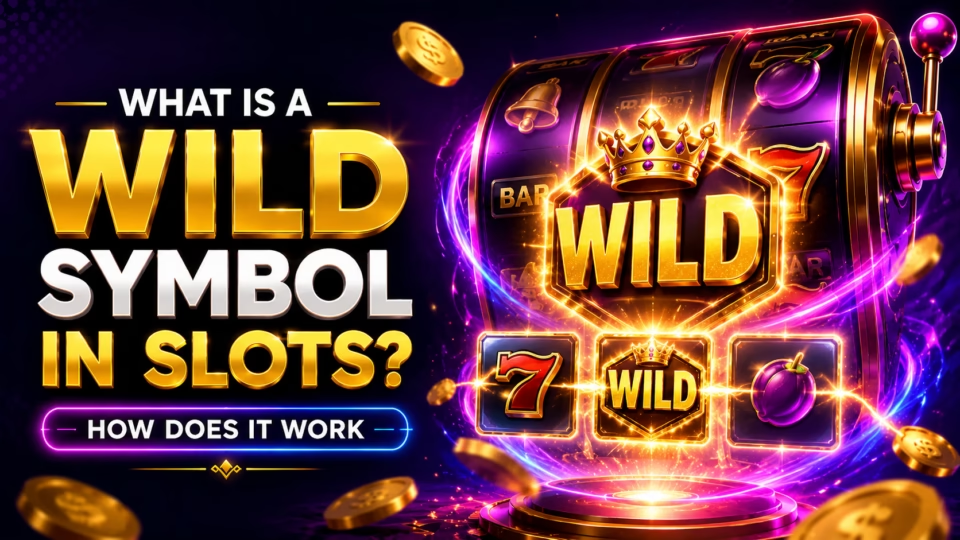
A Wild symbol in slots is a special symbol that can substitute for certain other symbols to help complete winning combinations. Its role is similar to a joker in a card game, but the exact behavior depends on the slot’s rules. Some Wilds simply replace standard paying symbols, while others can expand, stay on the reels, move between positions, or apply multipliers.
Wild symbols can make a slot feel more active because they create additional ways for regular combinations to connect. However, a Wild does not guarantee a win, and it normally cannot replace every symbol in the game.
Quick facts about Wild symbols
- A standard Wild usually substitutes for regular paying symbols.
- Wilds often cannot substitute for Scatter or Bonus symbols.
- Special Wilds may expand, become sticky, move, or add multipliers.
- A Wild only creates a payout when the resulting combination meets the game’s paytable rules.
- Wild behavior varies significantly between slots, so the official paytable should always be checked.
Wild mechanics are especially useful to understand for beginners and players comparing slot features. They explain how certain winning combinations are formed, but they should not be treated as a strategy for predicting or controlling results.
How Do Wild Symbols Work in Slots?
Wild symbols work by replacing missing symbols in qualifying combinations when the game’s rules allow substitution. The slot’s software evaluates the final reel positions after each spin and checks whether replacing a regular symbol with a Wild creates a valid winning combination.
For example, imagine a five-reel slot where three matching symbols are required from left to right:
Diamond | Diamond | Wild | Cherry | Star
If the Wild is allowed to substitute for the Diamond symbol, the first three positions may be treated as:
Diamond | Diamond | Diamond
That can produce a three-symbol Diamond win if the combination follows the game’s required paylines, ways-to-win system, or other payout rules.
The Wild does not choose which symbol to become before the spin. The game evaluates the completed result and applies the Wild according to its programmed rules.
What Symbols Can a Wild Replace?
A Wild can usually substitute for regular paying symbols, but its exact substitution rules depend on the slot.
Typical regular symbols may include:
- card ranks such as 10, J, Q, K, and A;
- themed character symbols;
- objects associated with the game’s theme;
- premium symbols with higher paytable values.
A Wild commonly does not substitute for Scatter or dedicated Bonus symbols because those symbols often activate features using separate rules. Some games make exceptions, so the paytable remains the authoritative source for a particular slot.
This distinction matters because seeing a Wild next to two Scatters does not automatically mean the game will count three Scatters. Unless the rules specifically allow Wild substitution for Scatters, the Wild will not trigger the bonus.
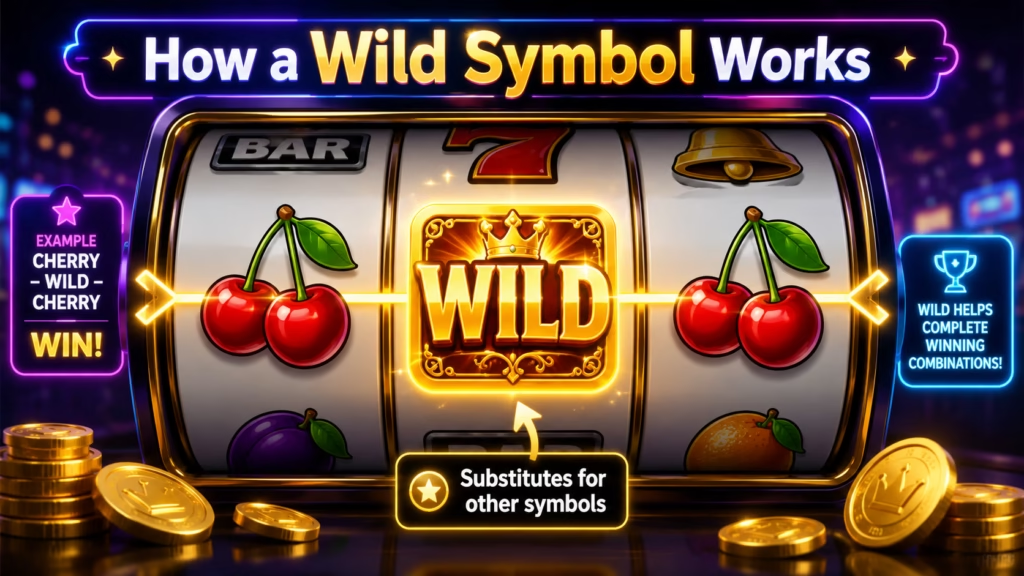
Example of a Wild Symbol Creating a Win
Consider a slot that pays when three identical symbols appear on an active payline.
Without a Wild:
Bell | Bell | Star
This would normally fail to create a three-Bell combination.
With a Wild:
Bell | Bell | Wild
If the Wild substitutes for Bell, the game may evaluate the combination as three Bells and award the corresponding paytable payout.
Wilds can also appear inside longer combinations:
Crown | Wild | Crown | Crown | Wild
If the game’s payout system accepts that arrangement and Wilds substitute for Crown symbols, the result may form a five-symbol Crown combination.
The exact payout still depends on the paytable, bet configuration, and game mechanics. The presence of multiple Wilds does not automatically mean the highest possible payout has been achieved.
Does a Wild Symbol Pay by Itself?
Some Wild symbols have their own payout value, while others only function as substitutes.
If a Wild has a listed value in the paytable, landing several Wild symbols in the required arrangement may produce a Wild-only payout. Other games show Wilds in the paytable without assigning them an independent prize.
This is one reason Wild mechanics should not be assumed to work identically across different slots. Two games can use visually similar Wild symbols while applying completely different payout rules.
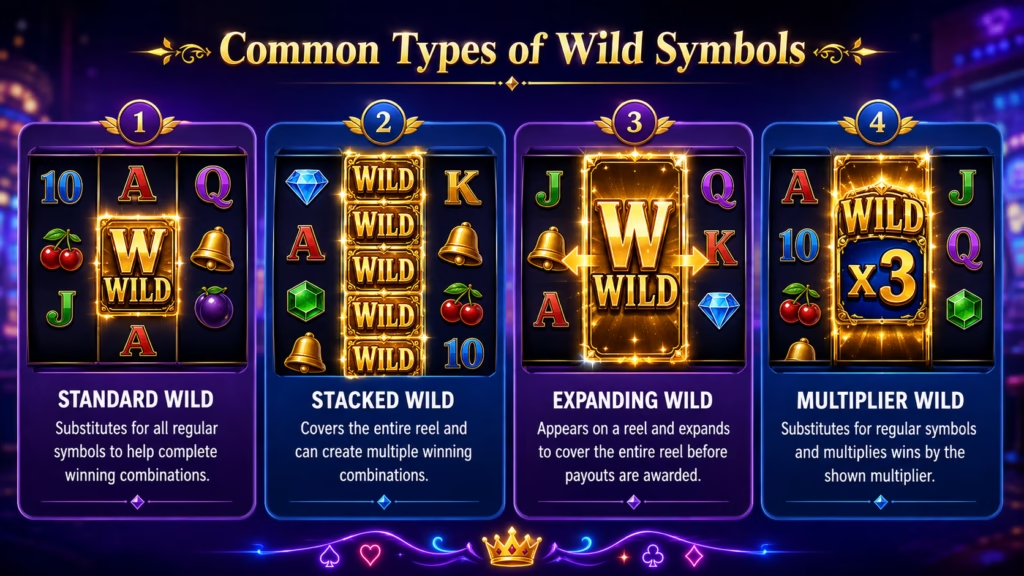
Main Types of Wild Symbols
Modern slots use several variations of the basic Wild mechanic. Understanding these types makes it easier to compare bonus structures between games.
Standard Wild
A standard Wild substitutes for eligible regular symbols and normally disappears when the spin ends.
This is the simplest Wild mechanic and is common in traditional video slots. Standard Wilds usually do not move, multiply prizes, or remain on the reels unless an additional rule says otherwise.
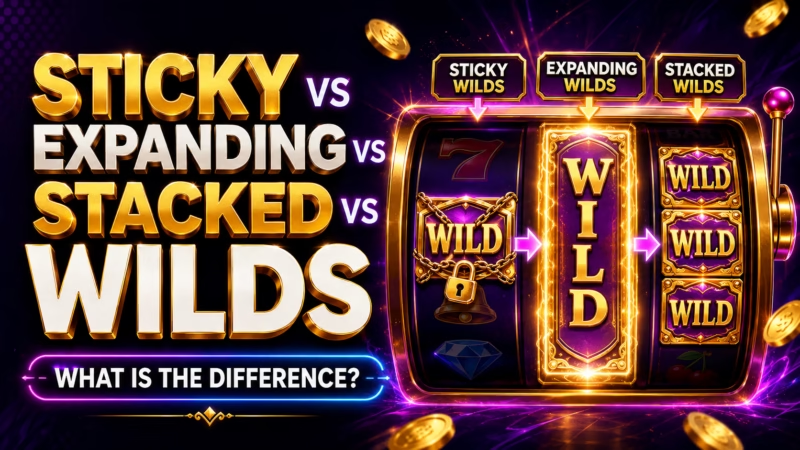
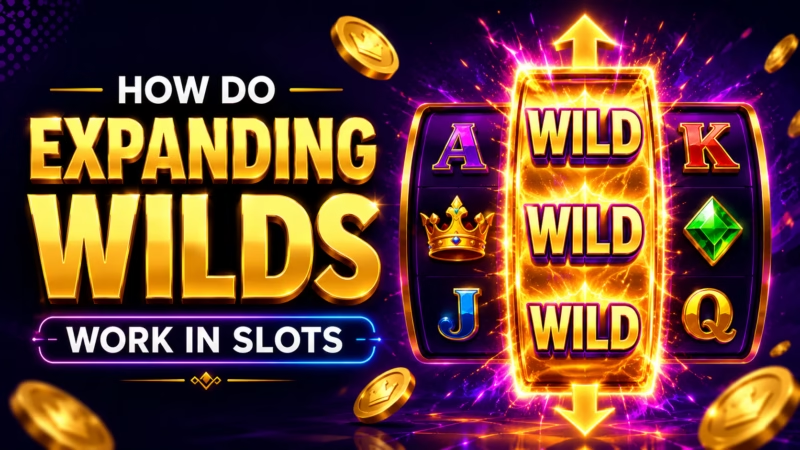
Expanding Wild
An Expanding Wild grows to cover additional positions on a reel after landing.
For example, a Wild appearing in the middle position of a three-row reel may expand vertically until the whole reel becomes Wild.
An Expanding Wild can create more substitution opportunities than a single-position Wild, but expansion rules vary. Some expand whenever they appear, while others only expand during free spins or after a particular condition is met.
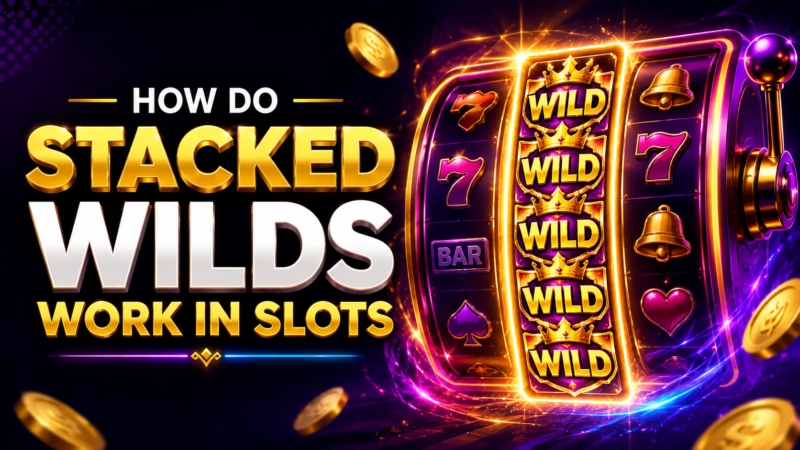
Stacked Wild
A Stacked Wild consists of several Wild symbols positioned together on the same reel.
A stack may cover part of a reel or, in some games, the entire visible reel. When several stacked Wilds land simultaneously, they may connect combinations across multiple paylines or winning ways.
Stacked Wilds should not be confused with Expanding Wilds. A stacked configuration is normally already present when the reels stop, while an Expanding Wild changes size after landing.
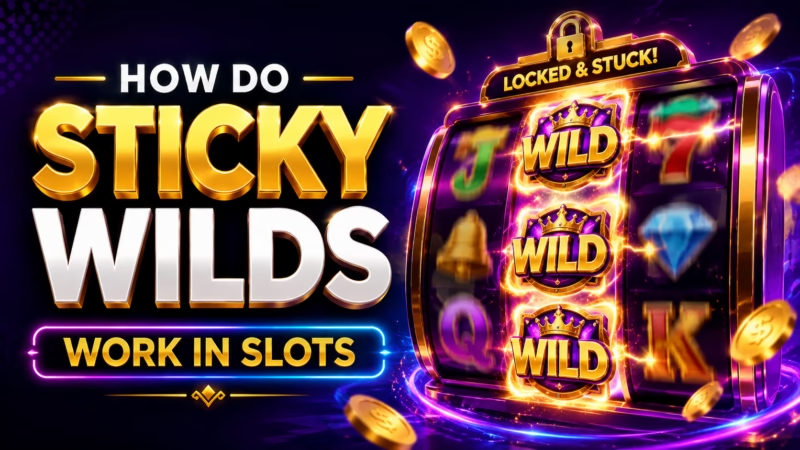
Sticky Wild
A Sticky Wild remains in its position for more than one spin.
Sticky Wilds are particularly common during free-spin features. A Wild may land during the first free spin and remain fixed while the other reels continue spinning for subsequent rounds.
The duration varies by game. Some Sticky Wilds remain until the entire feature ends, while others stay for only a limited number of spins.
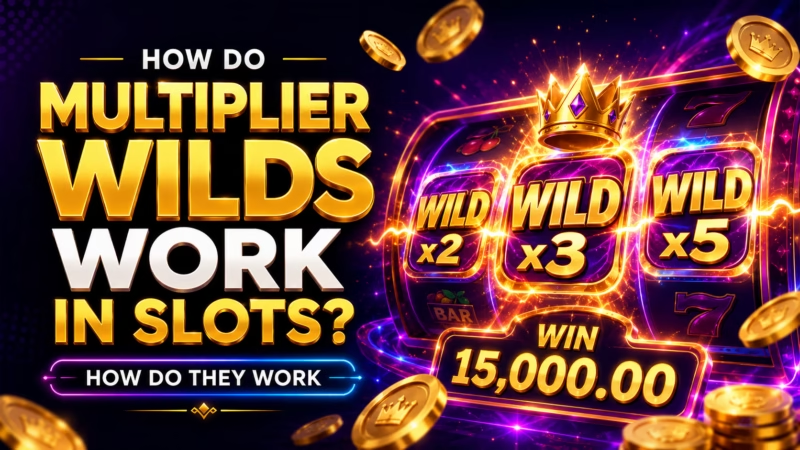
Multiplier Wild
A Multiplier Wild combines symbol substitution with a payout multiplier.
For example, a 2x Wild may substitute for a regular symbol and double a qualifying win involving that Wild. Games can use larger multipliers or combine several Wild multipliers according to their own calculation rules.
Two 2x Wilds do not necessarily produce the same multiplier in every slot. Some games multiply the values together, some add them, and others use only one multiplier. The paytable should explain the calculation.
Walking Wild
A Walking Wild moves to another reel position after each qualifying spin, usually during a bonus feature.
A Wild might begin on reel five and move one reel to the left after every respin. The game may continue awarding respins until the Wild leaves the playable reel area.
Walking Wilds can extend feature sequences, but their direction, duration, and respin rules vary between games.
Random Wild
A Random Wild is added to one or more reel positions through a game feature rather than landing normally from the reel strip.
Random Wilds may appear before the payout is evaluated, during a feature, or after another symbol transformation. Some slots can add several Wilds at once.
Random Wild placement does not mean that the resulting spin will necessarily win. A Wild still needs to form a valid combination under the game’s payout rules.
Shifting or Moving Wild
A Shifting Wild changes position between spins or during a feature.
The mechanic is similar to a Walking Wild but can involve different movement patterns, including horizontal, vertical, or feature-specific movement.
The important distinction is that the Wild remains part of an ongoing mechanic rather than disappearing immediately after one spin.
Wild Symbols in Payline Slots
In a traditional payline slot, a Wild must normally contribute to a winning combination along an active payline.
For example, a game might require matching symbols to start on reel one and continue from left to right. A Wild on reel three can complete a combination only if the other required symbols and positions follow the game’s payout pattern.
A Wild appearing elsewhere on the screen may have no effect if it does not participate in an eligible payline.
Wild Symbols in Ways-to-Win Slots
Ways-to-win systems usually evaluate matching symbols on consecutive reels rather than fixed paylines.
In this format, Wild symbols can substitute for eligible symbols anywhere on the required reels. Because several positions on each reel may contribute to the same combination, one Wild can sometimes participate in multiple winning ways.
The number of ways generated by a Wild depends on the exact reel layout and symbol positions, not simply on how many Wilds appear.
Wild Symbols in Cluster Pays Slots
Cluster Pays games generally require groups of matching symbols to touch each other according to the game’s cluster rules.
A Wild may become part of a cluster by substituting for one of the required symbols. Some cluster games also use Wilds that appear after winning symbols disappear during cascading or tumbling sequences.
Because Cluster Pays mechanics differ significantly between providers, the minimum cluster size and Wild interaction should be checked in the game’s rules.
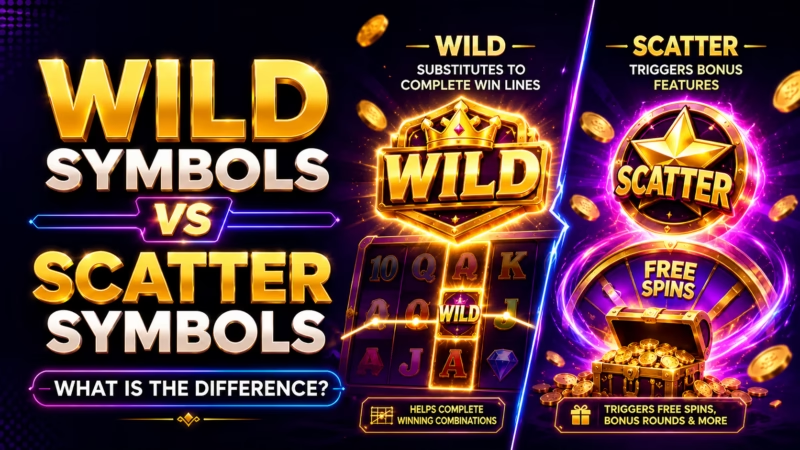
Wild vs Scatter: What Is the Difference?
A Wild primarily helps form regular winning combinations, while a Scatter usually activates payouts or features according to its own landing requirements.
| Feature | Wild | Scatter |
| Substitutes for symbols | Usually yes | Usually no |
| Helps regular combinations | Yes | Not its main role |
| Must follow paylines | Depends on game | Often no |
| Can trigger free spins | Sometimes | Commonly |
| Can pay anywhere | Depends on rules | Often |
| May have special variations | Yes | Yes |
A common mistake is assuming Wild and Scatter symbols are interchangeable. They are normally separate mechanics with separate functions.
Wild vs Bonus Symbol
A Bonus symbol usually activates a special feature, while a Wild usually modifies regular winning combinations.
Bonus symbols may trigger pick games, bonus rounds, free spins, jackpots, or other features after a required number land. Wild symbols can sometimes appear inside these bonus rounds, but they generally serve a different purpose.
Some slots combine functions into one symbol, but this should be explicitly stated in the game’s rules.
Can Wild Symbols Trigger Free Spins?
Wild symbols can trigger free spins only when the specific slot has been designed to use them that way.
Most slots use Scatter or Bonus symbols to activate free spins. A standard Wild usually does not count toward the trigger.
However, a game might include a special Wild Scatter, Wild Bonus symbol, or another combined mechanic. Players should check the feature description rather than assuming that every Wild contributes to bonus activation.
Do More Wild Symbols Mean a Better Slot?
More Wild symbols do not automatically make one slot better than another.
A slot’s overall behavior depends on many interconnected factors, including:
- reel configuration;
- paytable values;
- hit frequency;
- volatility;
- RTP configuration;
- symbol distribution;
- bonus mechanics;
- Wild frequency;
- Wild restrictions.
A game with frequent Wilds could compensate with different prize values or probability structures. Another game might use rare Wilds that become more powerful during a bonus round.
Wild frequency should therefore be considered part of the overall game design rather than as an isolated measure of value.
Do Wild Symbols Increase RTP?
The presence of Wild symbols can contribute to a slot’s mathematical model, but players cannot assume that adding Wilds automatically means a higher RTP.
Return to Player, or RTP, represents the game’s theoretical long-term return under specified conditions. Wild frequency, symbol values, bonus features, reel mathematics, and many other variables can all form part of that calculation.
Two slots can have very different Wild mechanics and still offer similar theoretical RTP values.
RTP also does not predict what will happen during an individual session. Short-term results can vary substantially from the theoretical percentage.
Do Wild Symbols Make Wins More Frequent?
Wild symbols can create additional opportunities for symbols to connect, but Wild presence alone does not tell you the game’s actual hit frequency.
A slot with many Wilds may be designed with other mathematical characteristics that affect how often qualifying wins occur. Hit frequency should therefore be evaluated separately when the information is available.
A Wild appearing on the reels also does not guarantee a payout. It must still connect with eligible symbols in the required pattern.
Common Myths About Wild Symbols
Myth: Every Wild creates a win
A Wild only helps when its position can complete or improve an eligible combination. A Wild in an unrelated position may produce no payout.
Myth: Wilds always replace Scatters
Standard Wilds usually do not substitute for Scatter or Bonus symbols unless the game’s rules specifically say they can.
Myth: A slot with many Wilds is easier to beat
Wild frequency does not create a reliable strategy for beating a slot. Modern slot outcomes are determined according to the game’s programmed random outcome system, and past Wild appearances do not reveal what will happen next.
Myth: A Wild is more likely after several losing spins
Previous spins do not provide a reliable prediction of when a Wild will appear. Each game should be evaluated according to its rules and underlying random outcome process rather than recent visual patterns.
What Should You Check Before Playing a Slot With Wilds?
Before playing, check the game’s information screen or official paytable for the following:
- Which symbols the Wild can replace.
- Whether the Wild has its own payout.
- Which reels can contain Wilds.
- Whether Wilds appear in the base game, bonus game, or both.
- Whether special Wilds expand, move, or become sticky.
- How Wild multipliers are calculated.
- Whether Wilds interact with Scatters or Bonus symbols.
- How paylines, winning ways, or clusters are evaluated.
These details matter more than the Wild’s artwork or name because they determine what the symbol actually does.
Who May Prefer Slots With Wild Features?
Slots with prominent Wild mechanics may appeal to players who enjoy visible feature interactions and more complex reel behavior.
A simple standard Wild is usually easier for beginners to understand. Expanding, Sticky, Walking, and Multiplier Wilds may be more appealing to players who prefer bonus-heavy slots with changing mechanics.
Players who prefer simple classic slots may instead find highly elaborate Wild systems unnecessary.
The choice should be based on entertainment preference rather than an expectation that a specific Wild mechanic will produce better financial results.
How This Information Was Reviewed
The explanations in this guide are based on common slot mechanics and the functional differences between standard Wilds, special Wild variations, Scatters, Bonus symbols, paylines, ways-to-win systems, and cluster mechanics.
The exact behavior of a Wild should always be confirmed in the individual game’s paytable or rules because providers can define substitution, multipliers, movement, bonus interaction, and payout calculations differently.
RTP, volatility, Wild frequency, and bonus features describe aspects of a game’s mathematical design, but none can guarantee the outcome of a particular spin or session. Slots should be treated as entertainment rather than a way to earn money. Set spending and time limits before playing, and stop if gambling is no longer enjoyable or remains within your planned limits.
FAQ
What is a Wild symbol in slots?
A Wild symbol is a special slot symbol that usually substitutes for regular paying symbols to help form valid winning combinations. Its exact behavior depends on the game’s rules, and standard Wilds generally do not replace Scatter or Bonus symbols unless specifically stated.
How do Wild symbols work in slots?
Wild symbols work by filling the role of eligible missing symbols when the final reel configuration is evaluated. If replacing a regular symbol with a Wild creates a qualifying payline, winning way, or cluster, the corresponding paytable payout may be awarded.
Can a Wild replace any symbol?
No. A Wild usually replaces standard paying symbols, but Scatter and Bonus symbols are commonly excluded. Some games use special rules or combined symbols, so the paytable should be checked for the exact substitution rules.
Can a Wild symbol appear anywhere on the reels?
It depends on the slot. Some Wilds can appear on every reel, while others are restricted to specific reels, rows, features, or bonus rounds. The game’s rules should specify any restrictions.
What is the difference between a Wild and a Scatter?
A Wild mainly substitutes for regular symbols to create combinations, while a Scatter normally has separate payout or bonus-triggering rules. Scatters often do not need to follow a fixed payline, while standard Wild combinations commonly follow the game’s normal winning structure.
What is a Sticky Wild?
A Sticky Wild is a Wild symbol that remains in the same reel position for additional spins. Sticky Wilds are frequently used during free-spin or respin features, but the number of spins they remain active depends on the game.
What is an Expanding Wild?
An Expanding Wild increases in size after landing, often covering an entire reel. The expanded symbol can then substitute across several positions, although activation conditions vary between slots.
What is a Multiplier Wild?
A Multiplier Wild substitutes for eligible symbols and also increases a qualifying payout by a specified multiplier, such as 2x or 3x. If several Multiplier Wilds participate in one combination, the way their values are combined depends on the game’s rules.
Do Wild symbols guarantee a win?
No. A Wild symbol does not guarantee a winning spin. It must appear in a position where it can contribute to a qualifying combination, and slot outcomes remain random.
Are slots with more Wilds better?
Not necessarily. Wild frequency is only one part of a slot’s mathematical design. RTP, volatility, symbol distribution, paytable values, bonus mechanics, and other factors also affect the playing experience. More Wilds should not be interpreted as a guarantee of more valuable results.
Brief Conclusion
A Wild symbol in slots substitutes for eligible symbols to help complete winning combinations, but the exact rules vary from game to game. Standard Wilds offer simple substitution, while Expanding, Sticky, Stacked, Walking, Random, and Multiplier Wilds add more complex behavior.
The most important step is to check the game’s paytable to see what the Wild replaces, where it can appear, and whether special rules apply. Wilds can change how a slot plays, but they do not guarantee wins or make future outcomes predictable. Slots should always be played as entertainment with predetermined spending limits.