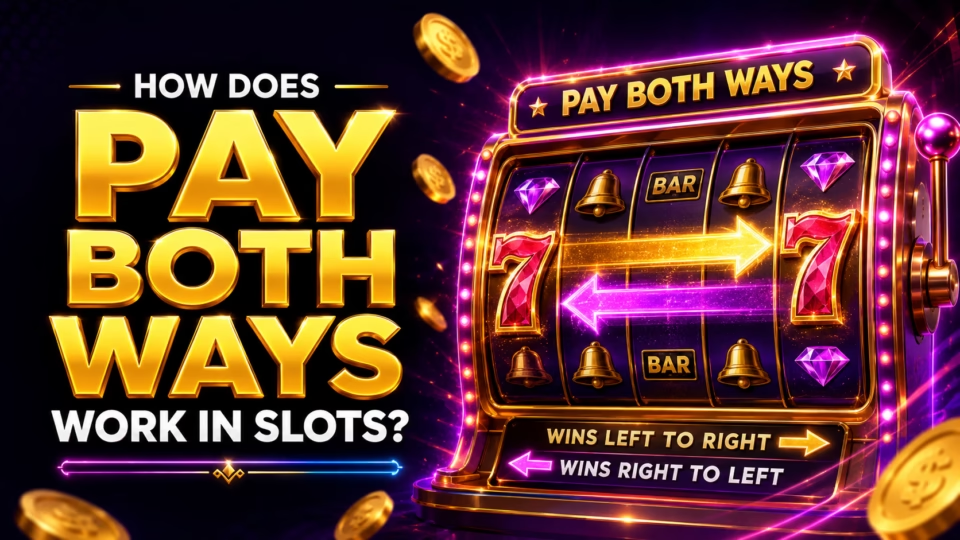
Pay both ways slots allow qualifying symbol combinations to be counted from either side of the reels. Instead of requiring a line win to begin only on the leftmost reel, a pay-both-ways game can also recognize a matching sequence that begins on the rightmost reel and continues across adjacent reels. The exact rules still depend on the game, so the paytable is the final authority on which symbols qualify, how many matching symbols are required, and how overlapping wins are paid.
Quick answer
- A standard line win usually starts from the left; Pay Both Ways can also start the same type of win from the right.
- The feature changes how winning combinations are evaluated, but it does not by itself guarantee a higher RTP, more profit, or a better result on a particular spin.
- A slot may use Pay Both Ways in the base game, on selected paylines, or only during a bonus feature.
- Wild symbols can help complete directional combinations when the game rules allow substitution.
- Always check the paytable because treatment of full-reel matches, overlapping wins, scatters, and bonus symbols can differ between games.
Pay Both Ways is usually most appealing to players who like traditional reel patterns but want winning sequences to be possible from either edge of the grid. It is easy to understand once you stop thinking of the right side as a dead end. The main caution is that two directions do not make the slot predictable. Every spin remains random, and the game mathematics already account for the feature.
What Does Pay Both Ways Mean in Slots?
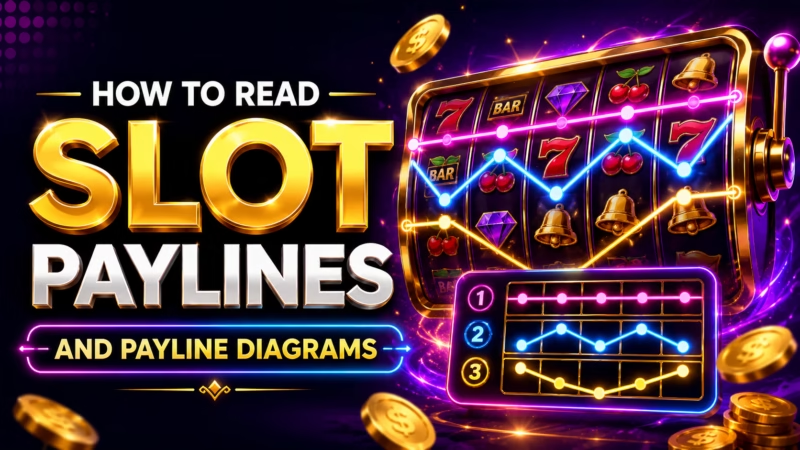
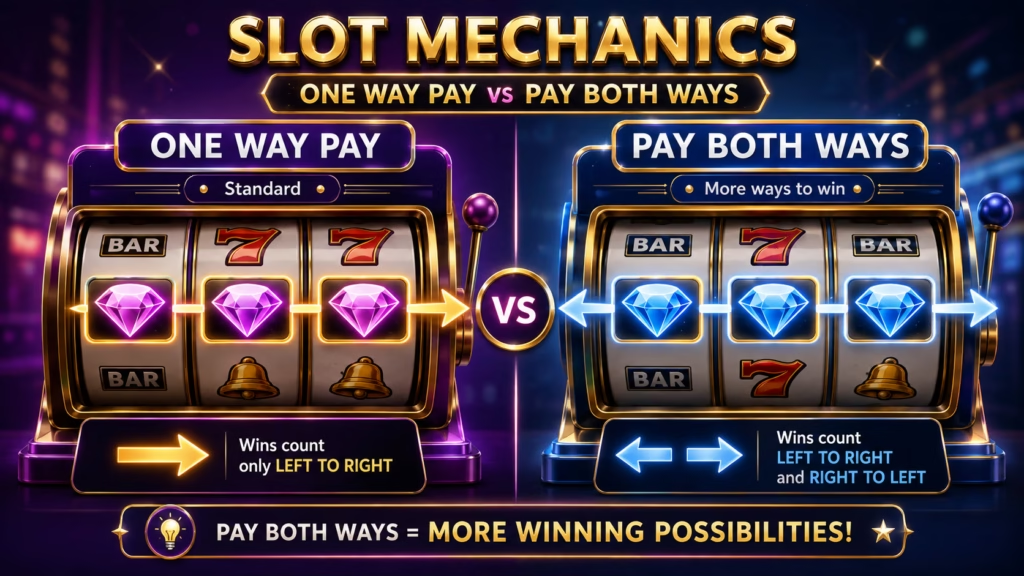
Pay Both Ways is a slot mechanic in which a qualifying payline or adjacent-reel combination may be read from left to right and from right to left. In a conventional one-way payline slot, a three-symbol win might need matching symbols on reels 1, 2, and 3. In a pay-both-ways version, the same type of three-symbol win may also be formed on reels 5, 4, and 3.
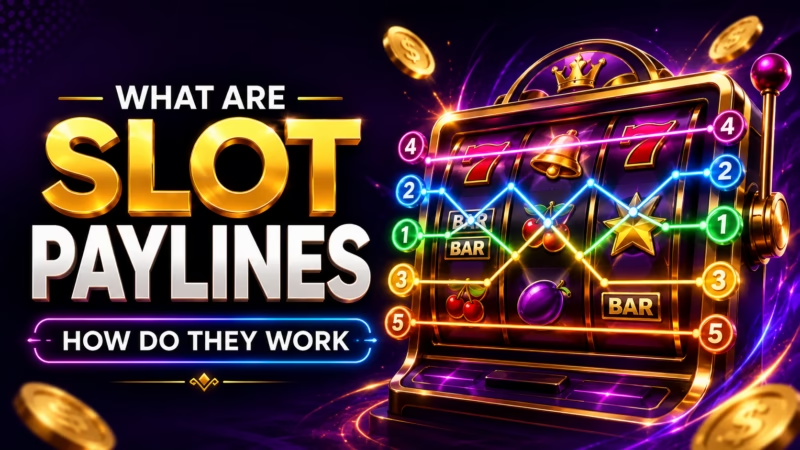
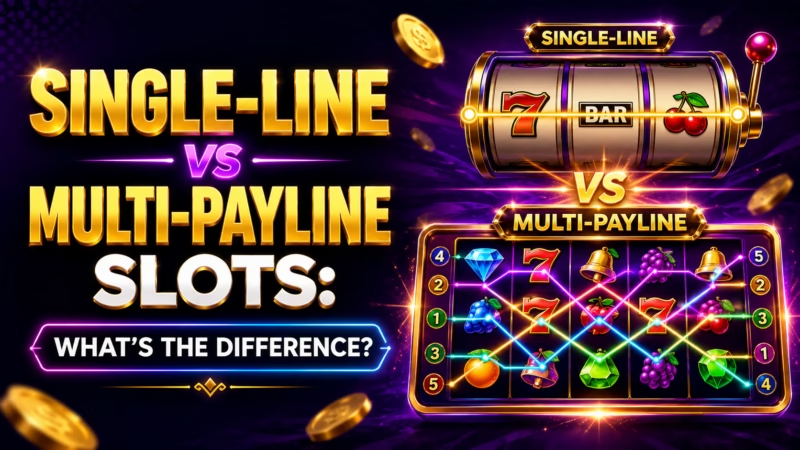
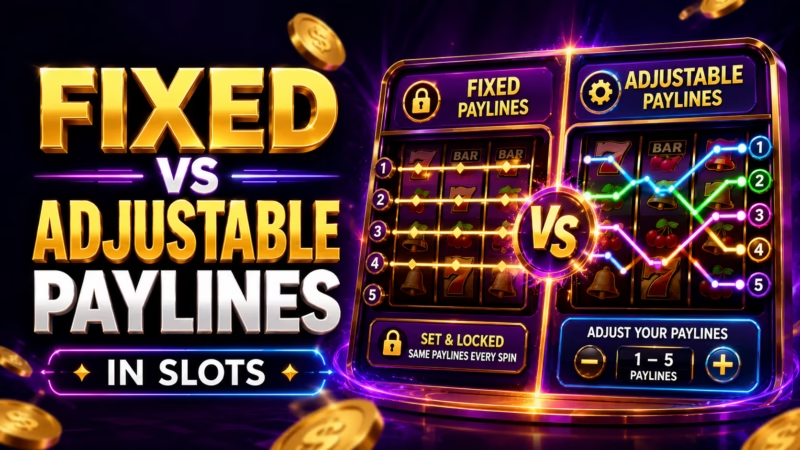
The mechanic does not necessarily create extra visible paylines. A game can still advertise 10, 20, or 30 fixed lines while evaluating those lines in both directions. For example, Play’n GO describes Crystal Sun as a 10-fixed-payline slot whose lines run both ways, while Pragmatic Play describes The Catfather Part II as a 30-line slot in which the symbols pay both ways. The number of displayed paylines and the directions in which those paylines are evaluated are separate parts of the rules.
How Does Pay Both Ways Work Step by Step?
A pay-both-ways spin is evaluated using the same symbol layout produced by the random game outcome, but the pay evaluation can begin at either outer reel. The exact sequence varies by slot, yet the basic logic is straightforward:
- The reels stop and display a completed symbol grid.
- The game checks each eligible payline or winning path from the left edge toward the right.
- The game also checks the eligible path from the right edge toward the left when the Pay Both Ways rule applies.
- A qualifying sequence normally requires matching symbols on consecutive reels, unless the game uses a different rule such as wild substitution.
- The paytable determines the payout for the number and type of matching symbols and specifies how simultaneous or overlapping wins are handled.
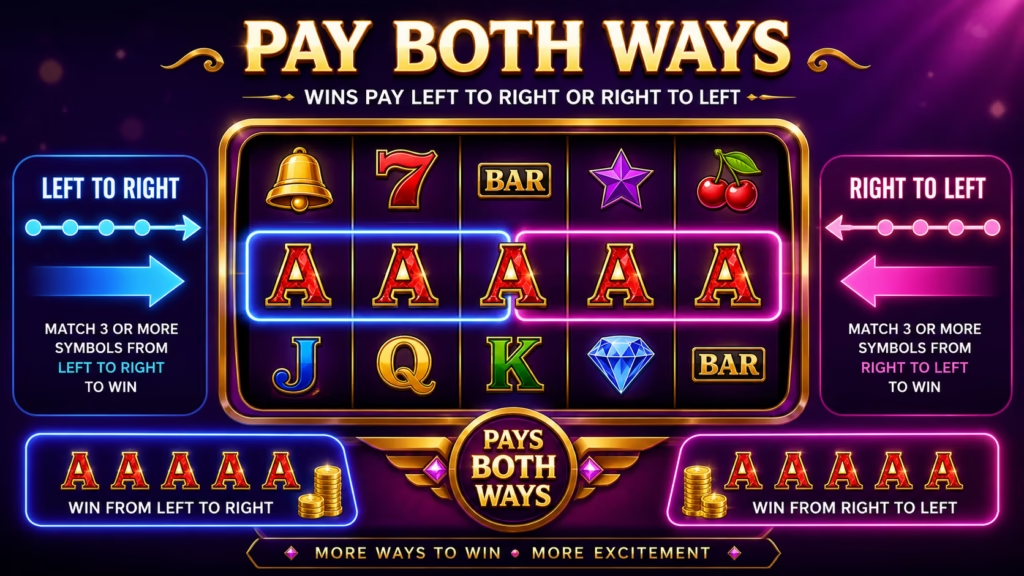
Consider a five-reel slot where a symbol pays for three or more consecutive matches. If the same symbol lands on reels 1, 2, and 3 along an active line, that can form a left-to-right win. If it instead lands on reels 5, 4, and 3, the Pay Both Ways rule can recognize a right-to-left win. Symbols sitting only on reels 2, 3, and 4 would usually not qualify under a simple edge-starting pay-both-ways rule because the sequence does not begin at either outer reel.
What happens with five matching symbols?
A full five-reel match needs special attention because the same symbols may satisfy the directional rule from both edges. There is no safe universal assumption about whether such a result is counted once, twice, or according to another game-specific rule. Some provider descriptions explicitly say that five adjacent matching symbols can award wins in both directions, while other game rules may apply a highest-win or non-duplication rule. Check the individual paytable rather than assuming that every full-line match produces two separate payouts.
Pay Both Ways vs Standard One-Way Paylines
| Rule | Standard Paylines | Pay Both Ways |
| Starting point | Usually the leftmost reel | Either the leftmost or rightmost reel |
| Direction | Left to right | Left to right and right to left |
| Displayed paylines | Depends on the slot | May be the same fixed paylines, just evaluated in both directions |
| Need for adjacent reels | Usually yes for line wins | Usually yes for directional line wins |
| Effect on RTP | Set by the game math | Still set by the complete game math, not by direction alone |
| Guaranteed advantage | No | No |
The practical difference is therefore directional flexibility, not a guaranteed mathematical edge. A player sees more possible edge-starting patterns that can qualify, but developers can balance symbol frequencies, payout values, bonus behavior, and other parameters so that the overall RTP and volatility remain at their intended levels.
Does Pay Both Ways Increase Your Chances of Winning?
Pay Both Ways can create additional qualifying directions, but that does not mean the chance of a win simply doubles. A slot’s hit frequency depends on the entire mathematical model, including symbol distribution, reel weighting, paytable values, wild behavior, bonus triggers, and the definition of a winning combination. Two otherwise different games cannot be compared fairly by looking only at whether they pay in one or two directions.
The same caution applies to RTP. Return to player is a long-run theoretical percentage built into the game’s math; it does not predict the result of a session. A Pay Both Ways slot can have a higher, lower, or similar RTP compared with a one-way slot. If RTP matters to your comparison, use the value shown in the game’s information screen or official rules for the exact version offered by the casino, because operators can sometimes offer different RTP configurations of the same title.
How Wilds, Scatters, and Bonus Features Interact With Pay Both Ways
Wild symbols
Wild symbols can make Pay Both Ways combinations easier to complete when the rules allow the wild to substitute for a missing regular symbol. If a wild lands in the middle of a potential right-to-left sequence, it may complete the same kind of line win that it could complete from the opposite direction. The wild’s exact substitutes, multipliers, expansion behavior, and exclusions must be checked in the game rules.
Scatter symbols
Scatter symbols often use their own award rule rather than a directional payline rule. When a scatter pays based on appearing anywhere on the reels, the left-to-right or right-to-left concept may be irrelevant to that scatter award. Do not assume that Pay Both Ways changes a scatter payout unless the paytable says it does.
Bonus rounds
Pay Both Ways can be permanent or feature-specific. Some slots use the mechanic on every base-game spin, while others activate it only inside free spins or another bonus mode. Play’n GO’s Wild Trigger is an example where the provider describes normal base-game action as left to right, then activates paying both ways during the Duel Free Spins feature. This makes the direction change a bonus mechanic rather than a permanent rule.
Common Misunderstandings About Pay Both Ways Slots
- “Both ways means every symbol can pay from anywhere.” Not usually. Pay Both Ways normally changes the permitted direction of a qualifying line or adjacent-reel sequence. It does not automatically turn a game into a cluster-pay or pay-anywhere slot.
- “Both ways doubles every win.” No. A right-to-left sequence becomes eligible where the rules allow it, but payout treatment depends on the paytable. A five-reel match should not be assumed to pay twice unless the game rules say so.
- “Both ways means higher RTP.” No. RTP is determined by the whole mathematical model. Direction is only one mechanic inside that model.
- “Both ways makes a slot easier to beat.” No. The feature does not make future outcomes predictable and does not create a strategy that guarantees profit.
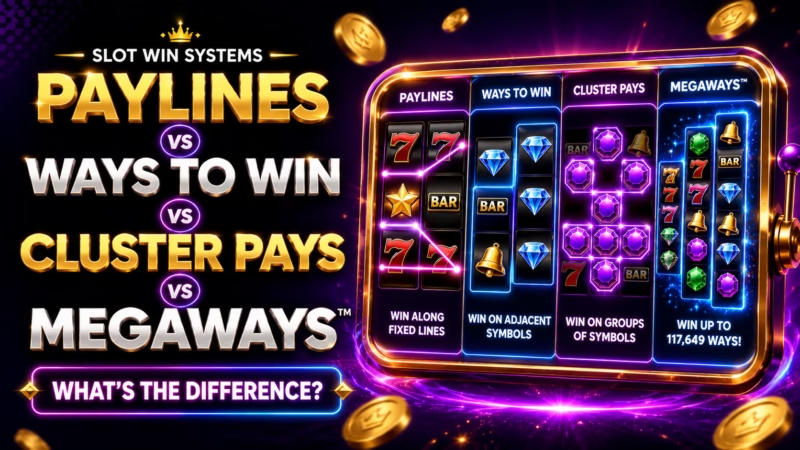
- “Pay Both Ways and ways to win are the same thing.” Not necessarily. A ways-to-win slot usually ignores fixed payline shapes and pays matching symbols on adjacent reels according to its own ways system. Pay Both Ways describes allowed direction and can exist in a fixed-payline game.
How to Evaluate a Pay Both Ways Slot
The best way to evaluate a Pay Both Ways slot is to treat direction as one item on a short rules checklist, not as a reason to choose the game by itself. Before playing for money, open the game information or paytable and verify:
- whether both-way wins apply in the base game, bonus game, or both;
- which paylines or ways are eligible and whether they are fixed;
- the minimum number of consecutive matching symbols required;
- how wilds substitute and whether wild multipliers or expanding wilds change line wins;
- how five-of-a-kind and overlapping directional wins are treated;
- the listed RTP and volatility for the version you are actually playing;
- the bet range, maximum payout rules, and any bonus-buy conditions if those features are available.
A demo mode can be useful for learning the interface and recognizing how the game highlights left-to-right and right-to-left wins, but demo play cannot show what your future real-money results will be. If you choose to play for money, set a spending and time limit in advance. Slots should be treated as entertainment, not as a source of income.
Who May Prefer Pay Both Ways Slots?
Pay Both Ways slots may suit players who understand classic paylines and want a small mechanical twist without moving to a completely different system such as cluster pays or highly variable Megaways layouts. The mechanic is also easy to follow visually because a win can often be traced from one edge of the reels to the other.
How This Information Was Reviewed
This explanation is based on the common edge-starting definition of Pay Both Ways and on published provider descriptions showing several implementations: fixed paylines that run in both directions, selected paylines that pay both ways, and bonus modes that activate two-directional wins. Because individual slot rules differ, the game’s own paytable should always take priority over a general explanation.
RTP, volatility, hit frequency, bonus mechanics, and maximum win are separate parts of the game model and do not guarantee a particular session result. If the rules are unclear, do not infer them from the feature name. Check the information screen before wagering, avoid chasing losses, and stop playing when the activity is no longer within your planned entertainment budget.
FAQ
What does Pay Both Ways mean in slots?
Pay Both Ways means a qualifying winning sequence can be evaluated from both outer edges of the reels. A line may pay left to right and also right to left, subject to the exact paytable and symbol rules.
Does Pay Both Ways double the number of paylines?
Not necessarily. A slot can keep the same displayed fixed paylines and simply evaluate each eligible line in two directions. The advertised line count and the permitted pay directions are separate rules.
Can a right-to-left win start on any reel?
Usually a directional right-to-left line win begins on the rightmost reel and continues across consecutive reels. A sequence in the middle of the grid normally does not qualify unless the game uses a different mechanic. Check the paytable for the exact starting rule.
Do five matching symbols pay twice in a Pay Both Ways slot?
It depends on the game. Some rules can recognize the full combination in both directions, while other games may avoid duplicate payment or apply a specific highest-win rule. The individual paytable determines the correct treatment.
Is Pay Both Ways the same as 243 ways or Megaways?
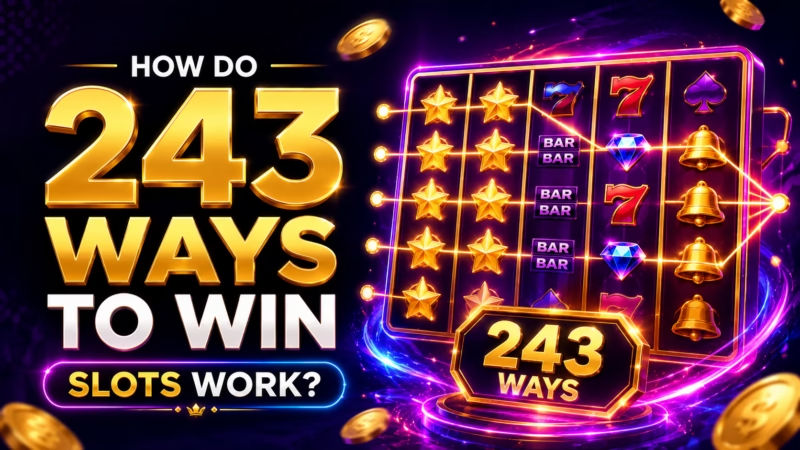
No. Pay Both Ways describes the direction in which qualifying combinations can be formed. 243 ways and Megaways are ways-to-win systems with their own reel and adjacency rules, although a provider could theoretically combine directional rules with other mechanics.
Do scatters pay both ways?
Not automatically. Scatters commonly follow a separate rule based on the number of scatter symbols rather than their direction. If a specific slot applies directional conditions to a scatter, that exception should be stated in its rules.
Does Pay Both Ways improve RTP?
Not by itself. RTP is determined by the complete mathematical model, including symbol frequencies, payouts, bonuses, and other mechanics. A both-way game can have a higher, lower, or similar RTP to a one-way game.
Are Pay Both Ways slots better for small bankrolls?
Not necessarily. Bankroll suitability depends more on bet size, volatility, hit frequency, and session length than on payout direction alone. A high-volatility both-way slot can still produce substantial swings.
Can Pay Both Ways be available only in free spins?
Yes. Some games use one-way pays in the base game and activate both-way wins only during a feature. Always check whether the mechanic is permanent or tied to a particular bonus round.
Can you use a strategy to win more in Pay Both Ways slots?
No strategy can guarantee wins in a random slot. Understanding the pay directions helps you read the game correctly, but it does not let you predict future spins. Set limits and treat slot play as entertainment.
Brief Conclusion
Pay Both Ways slots recognize qualifying combinations from both the left and the right side of the reels. The mechanic can make traditional paylines feel more flexible, but it does not automatically double wins, raise RTP, or reduce volatility. The most important step is to read the specific paytable, especially for full-line matches, wilds, scatters, and bonus-only versions of the feature. If you play for money, use fixed limits and treat the game as entertainment rather than a way to earn income.