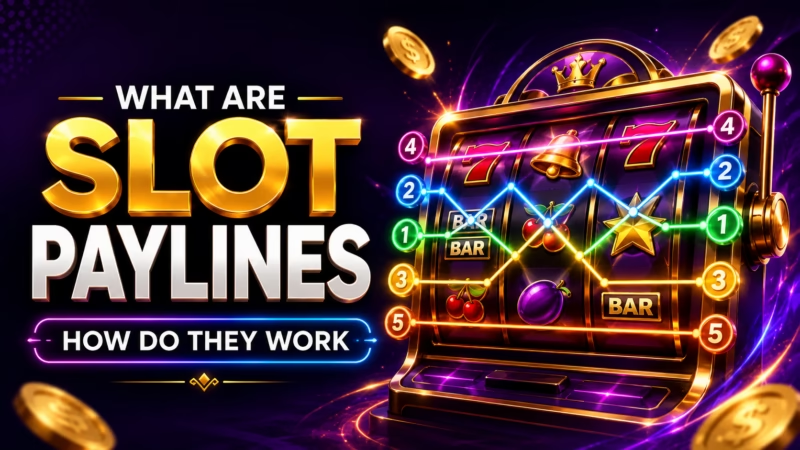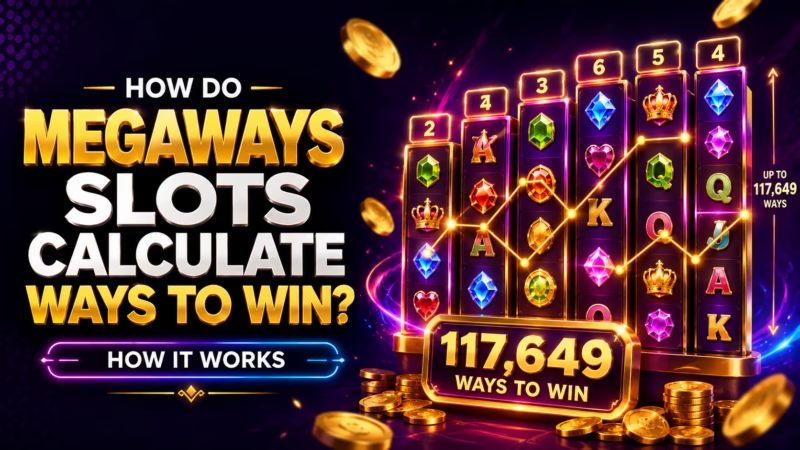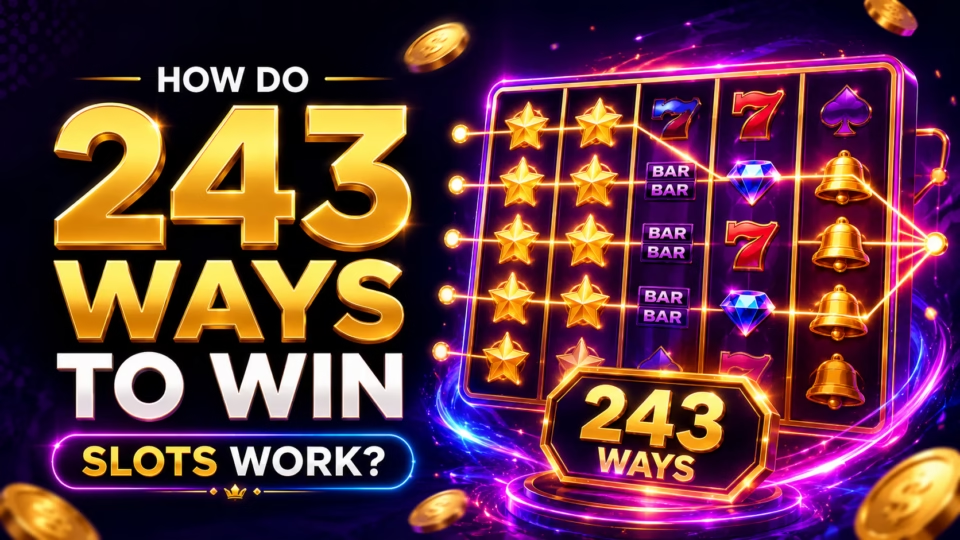
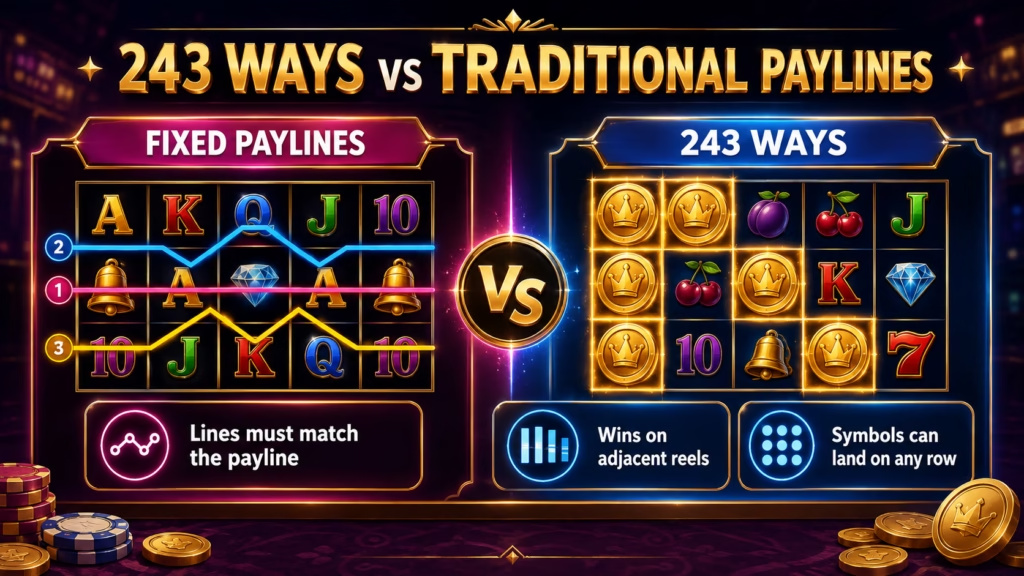
243 ways to win slots replace fixed paylines with a system that pays when matching symbols appear on adjacent reels, usually starting from the leftmost reel. On a standard five-reel, three-row layout, there are 243 possible position combinations because each reel has three symbol positions: 3 × 3 × 3 × 3 × 3 = 243.
The important difference is that players normally do not need matching symbols to follow a specific line. A symbol can appear at the top, middle, or bottom of consecutive reels and still form a winning combination if the game’s paytable conditions are met.
Quick takeaways
- 243 ways to win are not the same as 243 traditional paylines.
- A standard 5×3 slot produces 243 possible reel-position combinations.
- Matching symbols usually need to appear on adjacent reels from the left.
- More matching symbols on the same reel can create several winning ways at once.
- Wilds may substitute for regular symbols, while scatters often follow separate rules.
- 243 ways does not mean 243 guaranteed chances to win on every spin.
- The mechanic does not tell you the RTP or volatility of a slot.
243 ways slots may appeal to players who prefer simple win evaluation without tracing paylines across the reels. Players should still check the paytable, RTP, volatility and bonus rules because the number of ways alone says very little about the actual mathematical value or risk profile of a game.
What Does 243 Ways to Win Mean?
243 ways to win means that a five-reel slot with three positions on each reel can evaluate up to 243 different combinations of reel positions.
The calculation is simple:
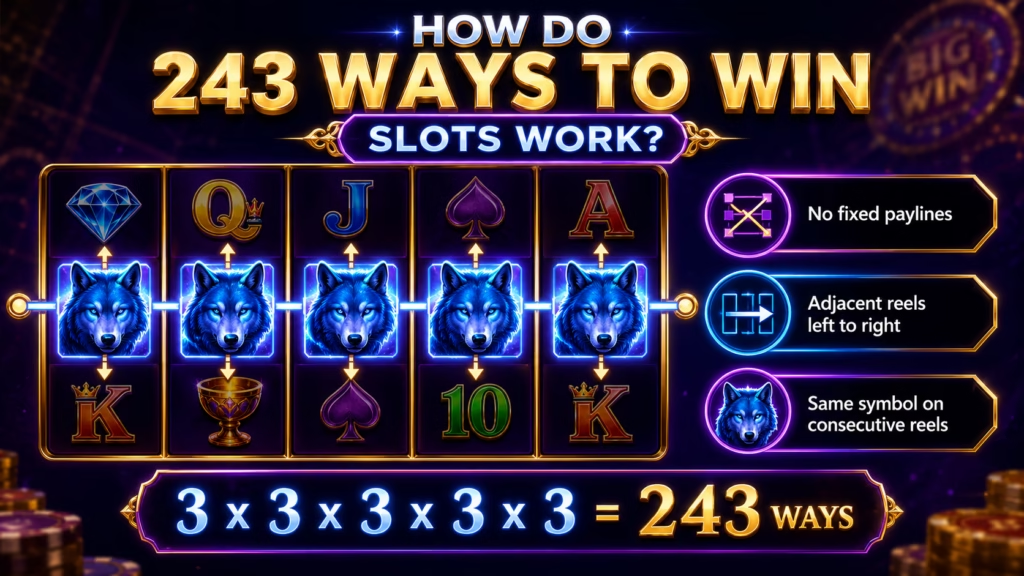
3 × 3 × 3 × 3 × 3 = 243
Each of the five reels contributes three possible symbol positions. A potential way can therefore use any one of the three positions on reel 1, any position on reel 2, any position on reel 3, and so on.
The key point is that these combinations are not displayed as fixed lines. The slot evaluates matching symbols across adjacent reels regardless of whether the symbols form a straight, diagonal or irregular visual pattern.
However, the exact rules depend on the game. Players should check the official paytable because some slots modify the standard ways mechanic or use different requirements for particular symbols.
How Do 243 Ways to Win Slots Work?
In a typical 243 ways slot, a regular symbol creates a win when enough matching symbols appear on consecutive reels beginning with the leftmost reel.
For example, imagine a symbol appears:
- in the bottom position on reel 1;
- in the top position on reel 2;
- in the middle position on reel 3.
If the paytable awards a prize for three matching symbols and the game evaluates wins from left to right, this can qualify even though the symbols do not form a conventional payline.
That flexibility is the main purpose of the ways-to-win system.
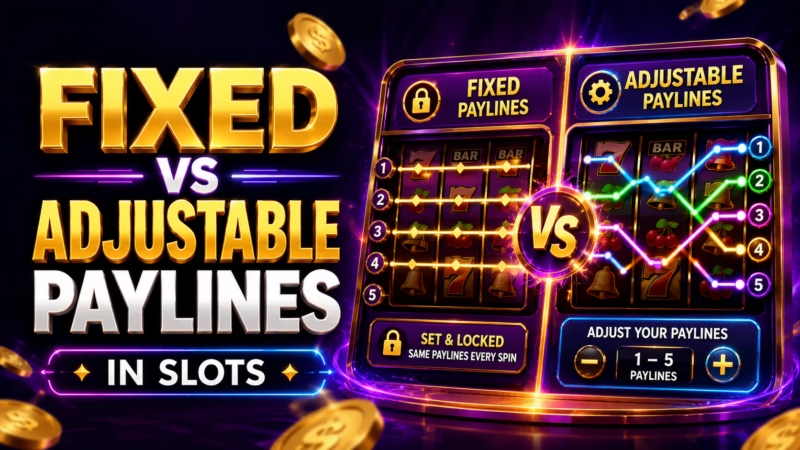
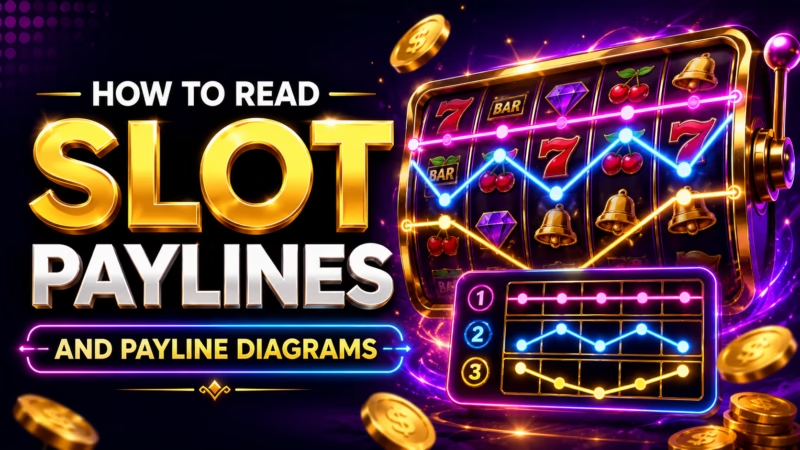
A traditional payline slot asks: Did the symbols land on one of the active predefined lines?
A 243 ways slot generally asks: Did matching symbols appear on the required number of adjacent reels?
This makes the reel layout easier to read once the basic rule is understood.
Why Are There Exactly 243 Ways?
The number 243 comes from the number of visible positions across a common five-reel, three-row slot.
Each reel offers three possible positions:
| Reel | Possible positions |
| Reel 1 | 3 |
| Reel 2 | 3 |
| Reel 3 | 3 |
| Reel 4 | 3 |
| Reel 5 | 3 |
The total number of combinations is:
3⁵ = 243
Another way to write it is:
3 × 3 × 3 × 3 × 3 = 243
This calculation explains why expanding the number of symbol positions can dramatically increase the advertised number of ways.
For example, a hypothetical five-reel game with four active positions on every reel could produce:
4 × 4 × 4 × 4 × 4 = 1,024 ways
Modern slots may also use variable reel heights or mechanics where the number of active ways changes between spins. Those games should be evaluated according to their own rules rather than assuming that every “ways” system behaves exactly like a classic 243 ways slot.
How Multiple Winning Ways Are Created
Several copies of the same symbol on one or more reels can create multiple winning combinations during a single spin.
Suppose the same symbol appears:
- twice on reel 1;
- once on reel 2;
- three times on reel 3.
If three matching reels are enough for a payout, those symbols can produce:
2 × 1 × 3 = 6 combinations
The six combinations come from the different ways each matching position can be paired with matching positions on the next reels.
If the matching symbol continues onto reels 4 or 5, additional combinations may be created depending on the game’s paytable and evaluation rules.
This multiplication effect is one reason a ways-to-win slot can award several combinations from the same visible group of symbols.
Do Symbols Have to Be on the Same Row?
No. Regular winning symbols in a typical 243 ways slot do not have to appear on the same horizontal row.
A symbol at the top of reel 1 can potentially connect with a matching symbol at the bottom of reel 2 and another matching symbol in the middle of reel 3.
Their exact vertical positions usually do not matter.
What generally matters is:
- the correct symbols are present;
- they appear on adjacent reels;
- they begin on the required starting reel;
- enough consecutive reels contain the symbol to satisfy the paytable.
The game’s own rules take priority because individual slots can introduce exceptions.
Do Wins Have to Start on Reel 1?
Most classic 243 ways slots evaluate regular symbol wins from the leftmost reel, but this should not be assumed for every game.
A common structure is:
Reel 1 → Reel 2 → Reel 3 → Reel 4 → Reel 5
If a symbol appears on reels 2, 3 and 4 but not reel 1, it would normally not qualify as a standard left-to-right ways win under that rule.
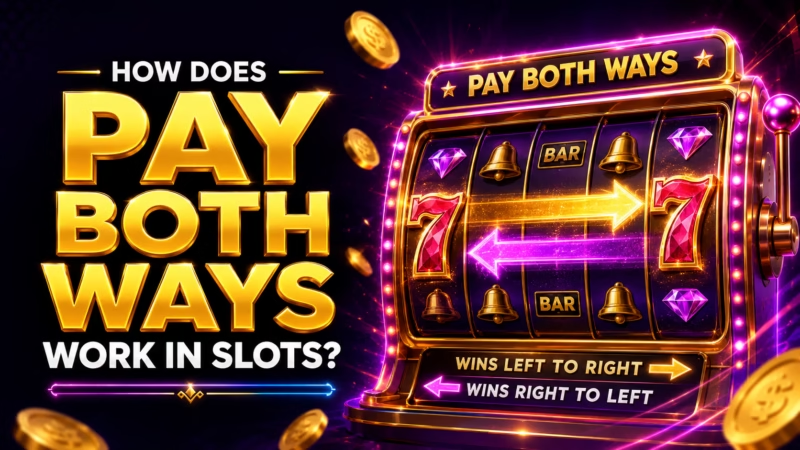
Some modern slots use alternative systems, including both-ways payouts or mechanics with different starting conditions. The paytable should therefore be checked before playing.
243 Ways to Win vs Paylines
The biggest difference between 243 ways and traditional paylines is how symbol positions are evaluated.
| Feature | 243 Ways | Traditional Paylines |
| Fixed visual lines | Usually no | Yes |
| Symbols must follow a specific path | Usually no | Yes |
| Adjacent reels matter | Yes | Usually yes |
| Same row required | No | Only when the payline follows that row |
| Multiple symbol positions can multiply wins | Yes | Depends on active paylines |
| Rules easy to identify visually | Usually | Depends on payline layout |
Neither format is automatically better.
A 243 ways system is often easier to understand because players do not need to inspect dozens of individual paylines. Traditional paylines can provide more clearly defined winning patterns.
The mathematical performance of a slot depends on its complete game model rather than whether it uses paylines or ways.
How Are Payouts Calculated in 243 Ways Slots?
A 243 ways slot generally calculates the value of a winning symbol according to its paytable and then applies that value to the number of qualifying ways.
However, payout calculations differ between games.
Important variables can include:
- the number of matching symbols;
- the number of consecutive reels involved;
- the number of winning combinations;
- the player’s stake;
- symbol-specific payout values;
- wild substitutions;
- multipliers;
- bonus modifiers.
Players should not assume that two different 243 ways slots calculate prizes identically.
The paytable is the authoritative place to check how the stake relates to each winning combination and how simultaneous wins are counted.
How Do Wild Symbols Work With 243 Ways?
Wild symbols can often substitute for regular paying symbols and therefore help complete additional winning ways.
For example, if matching symbols appear on reels 1 and 2 and a wild lands on reel 3, the wild may complete a three-reel combination.
Several wilds or regular matching symbols on the same reels can create multiple possible combinations.
Wild behavior is highly game-specific. A wild may also expand, move, multiply payouts or have restrictions on which symbols it can replace.
The game’s paytable should always be checked rather than assuming that every wild behaves like a standard substitute.
How Do Scatters Work?
Scatters usually operate independently from the 243 ways calculation.
While normal paying symbols generally need to appear on adjacent reels, scatter symbols may pay or trigger a feature according to the number appearing anywhere on the reels.
For example, a game might use scatters to activate free spins when a required number appear. The exact trigger, payout and eligible reel positions depend entirely on the slot.
This means a slot can use both 243 ways for regular combinations and a separate scatter mechanic for bonus features.
Does 243 Ways Mean You Win More Often?
No. A slot having 243 ways to win does not by itself prove that it produces more frequent wins.
The number of ways describes how symbol positions can form combinations. Hit frequency depends on the complete mathematical design of the game, including reel strips, symbol probabilities, bonus mechanics and payout structure.
A 243 ways slot could have frequent small wins or relatively infrequent wins. Another slot with fewer paylines could theoretically have a different hit frequency entirely.
Players should therefore avoid using the number of ways as a shortcut for judging how frequently a game pays.
Does 243 Ways Affect RTP?
The 243 ways mechanic does not determine a slot’s RTP.
RTP, or return to player, is the theoretical percentage of stakes a game is designed to return over a very large number of plays under specified conditions.
Two slots can both use 243 ways while having different RTP values.
RTP may also vary between versions of the same game or between operators when multiple configurations are available. Check the RTP shown in the game rules or information screen for the version being played.
Most importantly, RTP is a long-term theoretical measure. It does not predict what will happen during an individual session.
Does 243 Ways Affect Volatility?
243 ways alone does not tell you whether a slot has low, medium or high volatility.
Volatility describes how a game’s payouts are distributed. Higher-volatility slots generally concentrate more value into less frequent, potentially larger payouts, while lower-volatility games generally distribute payouts more evenly.
A provider can build either type of mathematical model around a ways-to-win system.
If bankroll swings matter to you, volatility is therefore more useful to examine than the advertised number of ways.
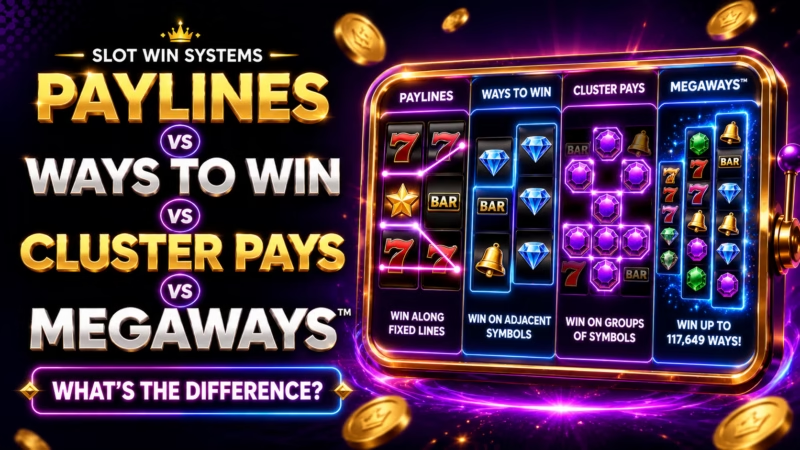
243 Ways vs Megaways
243 ways and Megaways are related concepts because both move away from traditional fixed paylines, but they are not the same mechanic.
A classic 243 ways game normally has a stable number of visible symbol positions, such as three positions on each of five reels.
Megaways-style games typically use changing reel heights, causing the number of available combinations to vary between spins. Depending on the particular game, the total can rise dramatically when more symbols appear on the reels.
For a player, the practical distinction is simple: 243 ways normally describes a fixed combination structure, while variable-ways mechanics can change the available number of ways from one spin to another.
Specific Megaways rules should always be checked in the individual game’s paytable.
Common Myths About 243 Ways Slots
“243 ways means 243 paylines”
Not exactly. The number represents combinations of reel positions rather than 243 separately drawn conventional paylines.
“Every spin gives you 243 winning chances”
The game evaluates possible combinations, but most of them will not contain the matching symbols required for a payout.
“More ways means a higher RTP”
There is no automatic relationship. RTP depends on the complete mathematical configuration of the slot.
“More ways means lower risk”
The number of ways does not determine volatility. A 243 ways slot can still be highly volatile.
“You can predict wins by watching where symbols land”
No. In properly operated RNG-based online slots, individual spin outcomes are generated independently according to the game’s system. Previous outcomes do not provide a reliable method for predicting the next result.
How to Evaluate a 243 Ways Slot Before Playing
The number “243” should be only one part of your evaluation.
Check:
- RTP: the theoretical long-term return for the version offered.
- Volatility: the likely pattern of smaller versus larger bankroll swings.
- Paytable: how much each symbol pays for three, four or five matching reels.
- Wild rules: whether wilds substitute, expand or add multipliers.
- Scatter rules: how bonus features are triggered.
- Bonus features: free spins, respins, multipliers or other modifiers.
- Bet limits: whether the available stake range fits your planned entertainment budget.
- Game rules: whether wins run left to right, both ways or use another system.
This approach gives a much clearer picture than choosing a slot simply because it advertises hundreds or thousands of winning ways.
Who May Prefer 243 Ways Slots?
243 ways slots may suit players who dislike tracing traditional paylines and prefer a more flexible reel-matching system.
The format can be especially easy to understand for players who already know the basic rule: match the required symbol across consecutive reels and its vertical position usually does not matter.
Players who prefer very clearly defined fixed paylines may find conventional line-based slots more intuitive.
Neither format improves the player’s ability to predict or control random outcomes.
Practical Tips for Playing Ways-to-Win Slots
Start by opening the paytable rather than relying on the number displayed in the game’s marketing.
Confirm how regular symbols connect, whether wins must start on reel 1 and whether wilds or scatters use separate rules.
If you are comparing two games, examine RTP and volatility separately. A game offering thousands of ways is not automatically more favorable than one offering 243 ways.
Set a fixed spending limit before playing. Increasing the number of combinations does not turn slots into a reliable way to make money, and short-term outcomes can differ substantially from theoretical RTP.
Casino games should be treated as paid entertainment. If gambling stops being enjoyable or begins affecting money intended for necessities, stopping is more useful than changing the slot mechanic or stake size.
How This Information Was Reviewed
The 243 ways mechanic is evaluated here by separating the reel-combination system from other slot characteristics such as RTP, volatility, wilds, scatters and bonus features.
The basic 243 calculation applies to the conventional five-reel, three-position structure, while individual game rules can modify how winning combinations are evaluated. For that reason, the game’s own paytable should be used to confirm payout direction, qualifying symbols, RTP, feature behavior and stake rules.
RTP and volatility describe mathematical characteristics of a game, but neither can predict a particular spin or session. The number of ways also provides no guarantee of winning frequency or profitability.
Slots should be played only as entertainment and within predetermined financial limits.
FAQ
What does 243 ways to win mean in slots?
243 ways to win usually means that a five-reel slot with three visible symbol positions per reel can form 243 possible reel-position combinations. The total comes from 3 × 3 × 3 × 3 × 3. Regular wins usually require matching symbols on consecutive reels according to the game’s paytable.
How do 243 ways to win slots work?
243 ways slots normally award regular symbol combinations when matching symbols appear on adjacent reels, commonly beginning on reel 1. The symbols do not usually need to follow a predefined line or stay on the same row.
Are 243 ways the same as 243 paylines?
No. 243 ways describe combinations of symbol positions across the reels rather than 243 separately defined visual paylines. The slot automatically evaluates qualifying combinations without requiring players to trace individual lines.
Do 243 ways slots pay from both directions?
Not necessarily. Many ways-to-win slots evaluate regular combinations from left to right, but some games use different rules. Check the game’s paytable to determine whether wins start from the left, work in both directions or follow another system.
Can one spin have several winning ways?
Yes. Multiple copies of the same symbol on adjacent reels can create several qualifying combinations at the same time. The number of combinations can multiply as additional matching symbol positions appear, subject to the game’s payout rules.
Is 243 ways better than 20 paylines?
Neither system is inherently better. The number of ways or paylines does not by itself determine RTP, volatility, hit frequency or potential payout size. The full paytable and mathematical configuration matter more.
Do 243 ways slots have higher RTP?
Not automatically. A slot’s RTP is determined by its complete mathematical model rather than the number of ways to win. Two 243 ways games can have different RTP values, and some games may also be available in several RTP configurations.
Are 243 ways slots more likely to win?
Not necessarily. Having 243 ways creates many possible symbol-position combinations, but hit frequency depends on symbol probabilities, reel configuration, payout values and bonus mechanics. The advertised number of ways should not be interpreted as the probability of winning a spin.
What happens when several matching symbols appear on one reel?
Several matching symbols on one reel can multiply the number of qualifying ways when corresponding symbols appear on adjacent reels. For example, two matches on one reel, one on the next and three on the third can create six three-reel combinations if those symbols qualify under the paytable.
Can you predict wins in a 243 ways slot?
No reliable strategy can predict the next random outcome simply from previous spins or visible symbol patterns. Ways-to-win mechanics describe how combinations are evaluated after symbols land. They do not provide a method for controlling future results.
In short
243 ways to win slots use combinations of reel positions instead of fixed paylines. On a standard 5×3 layout, 3 × 3 × 3 × 3 × 3 creates 243 possible ways, and matching symbols normally qualify when they appear on adjacent reels according to the paytable.
The mechanic can make winning patterns easier to recognize, but it does not determine RTP, volatility or how often a slot will pay. Check the individual game’s rules before playing, set spending limits and treat slots as entertainment rather than a way to earn money.