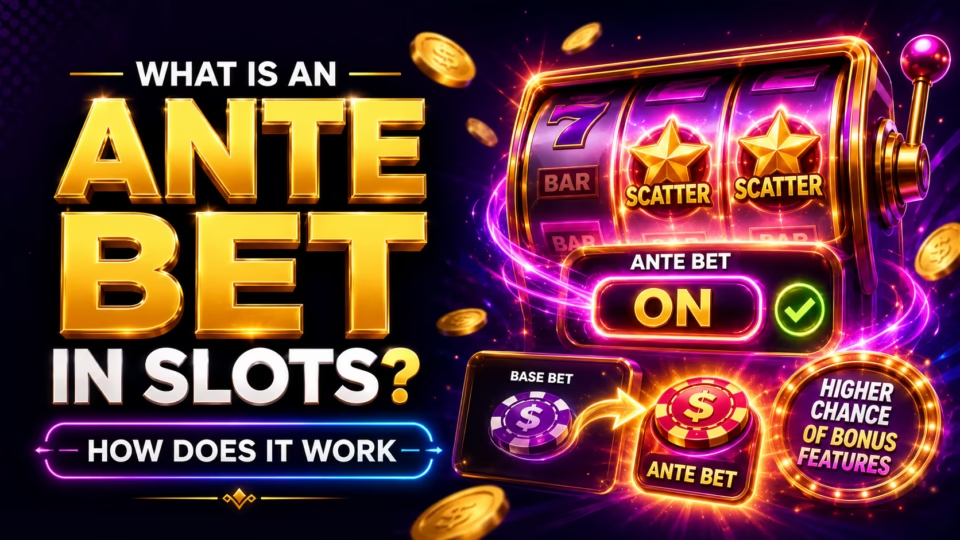
An ante bet in slots is an optional setting that increases the cost of each spin in exchange for a modified game feature, usually a higher chance of triggering free spins or another bonus round. Unlike a bonus buy, an ante bet does not normally provide immediate entry into the bonus. The player must still land the required scatter symbols or meet the normal trigger conditions.
The exact effect varies by slot. Some ante bets add more bonus symbols to the reels, while others increase bonus frequency, add special symbols, guarantee certain modifiers or offer several enhancement levels.
Quick takeaways
- An ante bet raises the total stake per spin.
- It usually improves the probability of activating a specific feature.
- It does not guarantee that the bonus will trigger.
- Ante bet rules, costs and RTP can differ between games.
- The setting should be checked in the paytable before real-money play.
Ante betting may appeal to players who enjoy bonus-focused slots and are comfortable paying more per spin for more frequent feature opportunities. It is less suitable for players with a small budget, anyone who prefers the lowest possible stake or players who may be tempted to increase spending after a losing streak.
What Does Ante Bet Mean in a Slot?
An ante bet in a slot is an additional wager attached to every spin while the option is active. The word ante traditionally refers to an opening wager in card games, but slot developers use the term differently. In slots, the ante is usually optional and changes part of the game’s mathematical configuration.
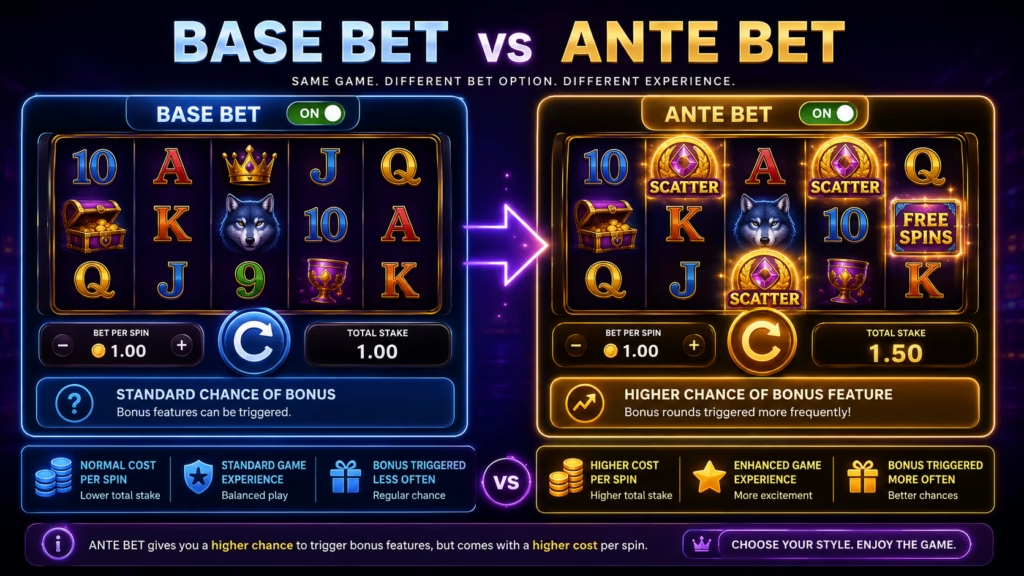
A typical ante bet may increase the normal stake by 25%, 50%, 100% or another amount specified in the game rules. In return, the slot may place more scatters on the reels, improve the chance of activating free spins or enable an enhanced version of the base game.
The increased stake pays for the modified probability or feature configuration. It does not purchase a guaranteed win, improve the result of every spin or allow the player to predict when a bonus will appear.
How Does Ante Bet Work in Slots?
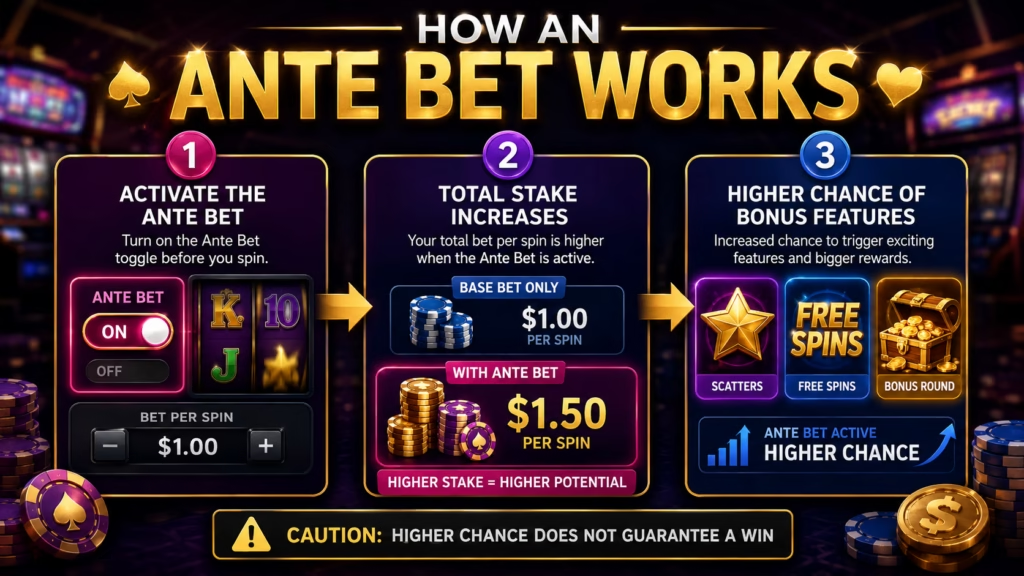
An ante bet works by switching the slot from its standard betting mode to an alternative mode with a higher spin cost and adjusted feature probabilities.
1. The player selects a normal stake.
2. The player activates the ante bet option.
3. The game displays a higher total stake.
4. The reels use the ante configuration for every subsequent spin.
5. The player continues spinning until the option is disabled or the balance becomes insufficient.
For example, suppose a slot offers a 25% ante bet and the normal stake is $1. Activating the option would raise the total cost to $1.25 per spin.
$1 base stake x 1.25 = $1.25 total stake
If the game rules state that the ante mode doubles the chance of triggering free spins, the bonus becomes theoretically more likely to appear. However, twice as likely does not mean the feature will appear within a particular number of spins. Each spin remains random.
Different games can use very different ante configurations. One slot may charge a modest increase for more frequent free spins, while another may charge several times the normal stake to guarantee special symbols on every spin. Game-specific rules always take priority over general assumptions.
What Does an Ante Bet Change?
Bonus Trigger Probability
The most common ante bet increases the probability of triggering free spins or another bonus feature. The game may achieve this by adding more scatters to the reel strips, changing symbol weighting or using a separate mathematical configuration.
The required number of scatters may remain unchanged. A slot that normally requires four scatters may still require four scatters in ante mode, but those symbols may appear more frequently.
Total Bet per Spin
An ante bet should be evaluated through its total cost, not only through the displayed base stake. A $0.40 stake with a 25% ante costs $0.50 per spin. Over 100 spins, that difference raises the total amount wagered from $40 to $50.
This higher spending rate matters even when the stake increase looks small. Players should calculate the real spin cost before activating the setting rather than assuming the original bet remains unchanged.
Reel or Symbol Configuration
Not every ante bet focuses only on free spins. Some games use special bets to add wilds, multipliers, jokers or enhanced symbols to the base game.
Some slots also offer several ante levels. A lower level may increase bonus frequency, while a higher level may add guaranteed special symbols or stronger modifiers. The more expensive level is not automatically better value because the stake multiplier and RTP may also change.
RTP and Mathematical Settings
An ante bet may have the same RTP as the standard game, but this should never be assumed. Some slots publish separate RTP figures for the base game, ante mode, bonus buy and other special bets.
RTP represents the theoretical percentage returned across a very large number of wagers. A 96% RTP does not mean a player will receive $96 back after wagering $100, and it does not predict the outcome of a short session.
Check the in-game help screen for the RTP attached to the selected mode. Casinos may offer different approved RTP configurations of the same slot, so the figure shown in one review or at another operator may not match the version currently open.
Ante Bet vs Regular Spins vs Bonus Buy
| Option | Cost | Bonus access | Typical purpose | Main risk |
| Regular spins | Standard stake | Natural trigger only | Lowest spin cost | Bonus rounds may be infrequent |
| Ante bet | Increased stake per spin | Bonus remains random | Increase feature probability or enhance spins | Balance can fall faster |
| Bonus buy | Large one-time payment | Usually immediate | Enter a feature without waiting | High cost concentrated in one wager |
The main difference between an ante bet and a bonus buy is certainty of access. An ante bet usually increases the chance of entering a bonus naturally, while a bonus buy normally charges a fixed multiple of the stake to start the feature immediately.
An ante bet should not be described as a cheaper bonus buy because the final cost is unknown. A player could trigger the feature quickly, or spend more than the listed bonus-buy price without triggering it at all.
Availability also depends on the game, casino and jurisdiction. Special bet and bonus buy options may be disabled in certain markets even when the original game supports them.
Common Types of Ante Bets
Increased Scatter Frequency
This format raises the chance of landing enough scatters to activate free spins. The bonus rules usually remain the same after the feature begins.
This type may suit players who like the normal base game but want more opportunities to reach its main bonus.
Multiple Ante Levels
Some slots offer several enhancement levels rather than one on-or-off switch. A higher level may cost more while adding stronger modifiers or further increasing the feature probability.
Multiple levels require careful comparison because the most expensive setting is not automatically the best value. Each level may have a different stake multiplier, RTP or gameplay purpose.
Enhanced Base Spins
An enhanced-spin ante changes the base game itself. It may guarantee a wild, add multiplier symbols or activate a special reel on every spin.
These modes can cost much more than a typical 25% bonus-chance option. The total price per spin should be checked before activation.
Combined Bonus and Symbol Boosts
Some slots combine several changes within one ante mode. A setting may guarantee a special symbol on qualifying wins while also increasing the chance of triggering the bonus game.
Combined configurations must be evaluated using the game-specific rules because the additional cost may be paying for several separate changes at once.
Does an Ante Bet Guarantee More Wins?
An ante bet does not guarantee more wins. It normally changes the probability of a particular event, such as landing a bonus, but individual spins remain random.
A higher bonus frequency also does not prove that the player will receive a better financial result. Bonus rounds can produce low, average or high payouts, including payouts below the amount spent reaching them.
The ante setting may create a faster or more feature-focused experience, but it cannot remove the house advantage or turn the slot into a predictable game. The outcome must still be treated as chance-based entertainment.
Is an Ante Bet Worth Using?
An ante bet may be worth considering when the player understands the added cost, prefers bonus-driven gameplay and accepts that the feature is still not guaranteed. The setting is primarily a way to change the pace and structure of play, not a strategy for making money.
To compare an ante bet properly, check:
- The percentage or multiplier added to the normal stake.
- The stated increase in bonus probability.
- The RTP for the ante configuration.
- The exact feature affected by the setting.
- Whether the ante changes the maximum permitted bet.
- Whether the bonus itself remains identical.
- How quickly the higher stake could use the planned budget.
A useful theoretical comparison is:
Expected cost per trigger = total stake per spin / probability of triggering the feature per spin
This calculation requires the true trigger probability, which many games do not publish. Marketing phrases such as higher chance are not enough to calculate expected cost unless the game provides a specific frequency or probability multiplier.
Even when a slot says the trigger chance is doubled, the ante is not automatically better value. The result depends on the additional stake, the original trigger probability, the ante-mode RTP and whether any other parts of the mathematical model change.
How to Check an Ante Bet Before Playing
Open the game’s information menu, paytable or help section before activating an ante bet. The relevant information may appear under names such as Ante Bet, Bonus Chance, Extra Bet, Feature Chance, Super Spin or Special Bet.
1. Normal stake: Confirm the original cost per spin.
2. Ante cost: Identify the added percentage or bet multiplier.
3. Final stake: Look at the total displayed beside the spin button.
4. Feature effect: Confirm exactly what becomes more likely or what is guaranteed.
5. RTP: Check whether a separate figure applies to the ante mode.
6. Bonus rules: Verify the required symbols, free-spin count and retrigger conditions.
7. Maximum bet: Make sure the enhanced stake does not exceed your personal limit or any casino bonus restriction.
8. Availability: Special bet options may be disabled in some markets or by some operators.
The paytable should take priority over third-party reviews because the active casino version may use different settings.
Common Ante Bet Myths
The Bonus Must Trigger After Enough Spins
An ante bet does not create a countdown. A long sequence without a bonus does not force the next spin to trigger one, unless the game explicitly includes a documented collection or guaranteed-feature mechanic.
A Higher Bet Produces Better Bonus Payouts
A higher total stake can scale payouts when wins are expressed as multiples of the bet, but it does not guarantee a stronger multiplier, a longer feature or a profitable result.
Ante Bet Is Always Better Than Bonus Buy
Neither option is universally better. Ante betting keeps the trigger random and spreads the cost across multiple spins. Bonus buying concentrates the cost in one purchase and normally provides immediate access. Both can lead to rapid losses.
Ante Bet Improves the RTP
An ante bet may raise, lower or leave RTP unchanged. The correct value must be checked in the rules for the exact game mode.
Ante Bet Makes the Slot Less Random
The slot remains random. The game may use a different probability configuration, but the player still cannot predict the next symbol combination or bonus trigger.
Practical Tips for Using Ante Bets Responsibly
Set a total spending limit before activating an ante bet and calculate how many enhanced spins that limit can cover. For example, a $25 budget provides 100 spins at $0.25, but only 80 spins if the ante raises the total stake to $0.3125.
Avoid activating an ante because the bonus feels due. Previous spins do not provide reliable information about the next random outcome.
Use demo mode when available to understand the controls, stake display and feature rules. Demo play can demonstrate how the setting operates, but a short demo session cannot establish the slot’s true bonus frequency or predict real-money results.
Disable the ante if the increased cost causes discomfort, rushed decisions or attempts to recover losses. Use spending limits, time limits and regular breaks. Stronger controls, including self-exclusion, may be appropriate when gambling becomes difficult to control.
How This Information Was Reviewed
This explanation is based on common ante bet structures used in online slots, with attention to total stake, bonus-trigger changes, special symbol configurations, RTP and feature availability.
The exact ante cost, probability increase and RTP should always be verified in the active game’s paytable. These values can differ between titles, configurations, casinos and jurisdictions.
RTP, volatility and bonus frequency describe long-term mathematical behavior. They do not guarantee a result during an individual session. Slots should be treated as paid entertainment, not as a source of income. Stop playing when the planned money or time limit is reached, and do not continue in an attempt to recover losses.
FAQ
What is an ante bet in slots?
An ante bet in slots is an optional extra wager applied to each spin. It usually increases the chance of triggering free spins or activates an enhanced reel configuration, but the exact effect depends on the game.
How does ante bet work in slots?
An ante bet increases the total spin cost and switches the game to a modified mathematical mode. The slot may add bonus symbols, increase feature probability or include special wilds and multipliers while the option is active.
Does an ante bet guarantee a bonus round?
No, an ante bet normally does not guarantee a bonus round. It may make the required symbols more likely to appear, but the trigger remains random unless the rules explicitly state that a feature is guaranteed.
How much does an ante bet cost?
The cost depends on the slot. Some ante bets add a percentage to the normal stake, while more advanced enhanced-spin modes can cost several times the standard bet. Always check the final total beside the spin button.
Is ante bet the same as bonus buy?
No, an ante bet and a bonus buy work differently. An ante bet raises the cost of repeated spins while the player waits for a random trigger. A bonus buy usually charges a large one-time amount and starts the bonus immediately.
Does ante bet increase RTP?
Not necessarily. Ante mode can have a higher, lower or identical theoretical RTP compared with regular play. The correct percentage should be checked in the game information for the selected betting mode.
Can an ante bet improve bonus frequency?
Yes, many ante bets are designed to improve bonus frequency. However, the size of the improvement varies, and a higher probability does not guarantee that the bonus will appear within a particular number of spins.
Can I turn an ante bet off?
Yes, ante betting is normally optional and can be disabled through the game controls. Confirm that the total stake has returned to the standard amount before continuing.
Are ante bets available in every online slot?
No, ante bets are available only in selected slots. Casino operators or regional rules may also disable special betting modes even when the original game supports them.
Is an ante bet a good way to win more money?
No, an ante bet is not a reliable way to win money. It changes the cost and probability structure of the slot, but outcomes remain random and the house advantage still applies. Set limits and treat the game as entertainment.
Brief Conclusion
An ante bet in slots increases the price of each spin in return for a higher bonus chance or another specified enhancement. It does not guarantee free spins, a larger payout or a profitable session. Check the total stake, ante-mode RTP and exact feature rules before activating it, and avoid the option when its higher spending rate does not fit your budget.