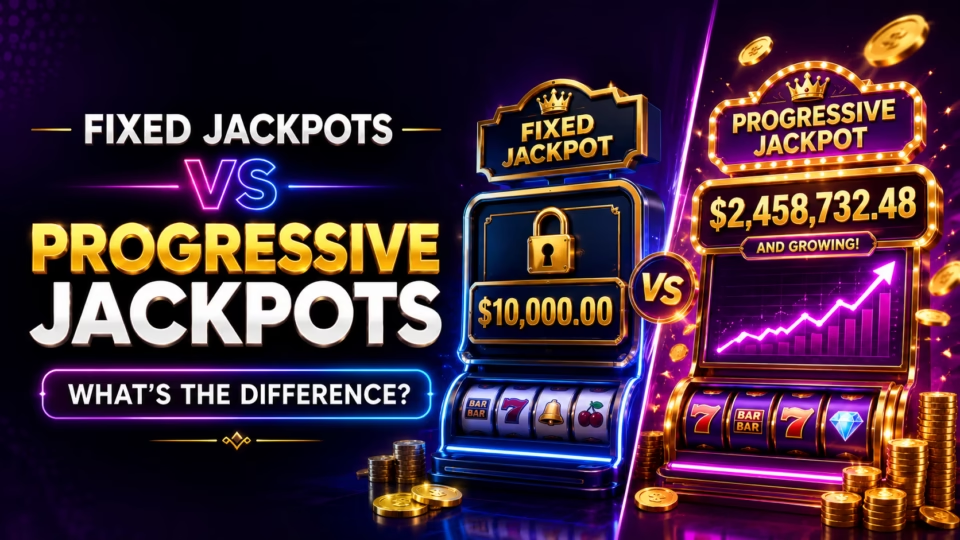
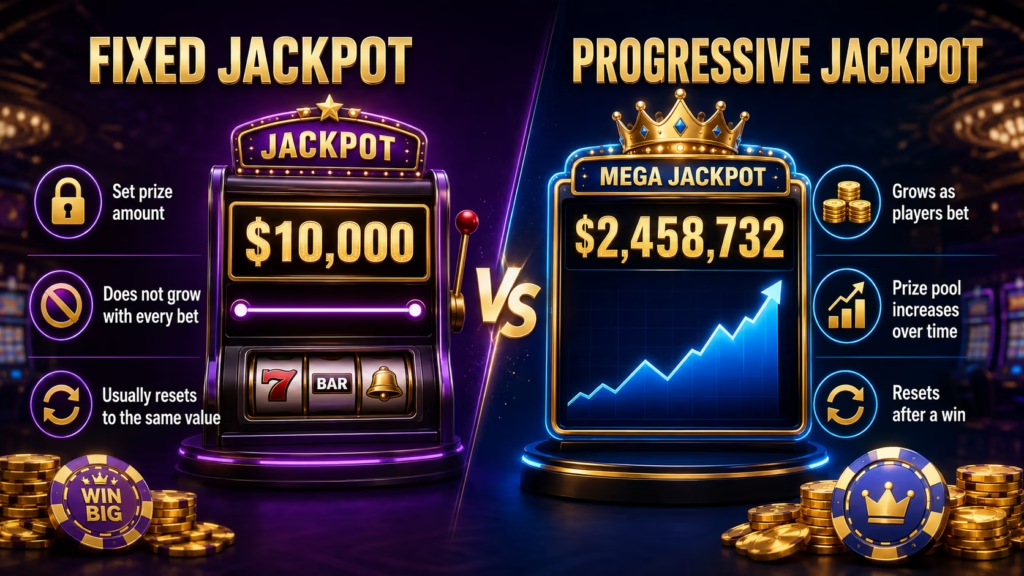
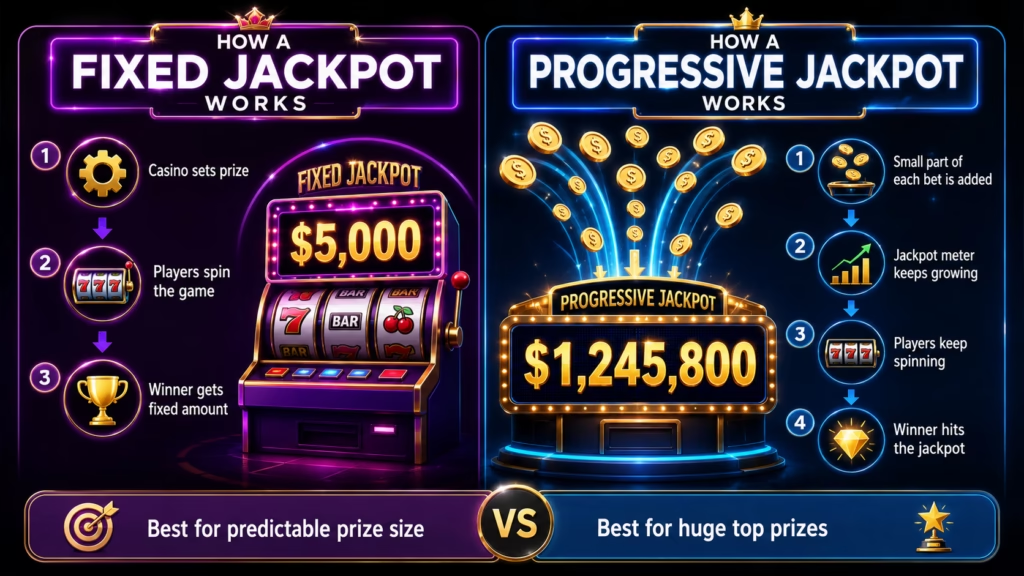
The main difference between fixed jackpots and progressive jackpots is how the prize value is determined. A fixed jackpot pays a predetermined maximum amount that normally stays the same, while a progressive jackpot grows as eligible bets are placed until someone wins it and the prize resets.
For players, the practical difference is not only jackpot size. The two formats can also differ in jackpot frequency, qualification rules, bet requirements, RTP distribution, volatility, and the way the jackpot is funded.
- Fixed jackpots have a predetermined prize value.
- Progressive jackpots can grow until the jackpot is triggered.
- Progressive jackpots may reach much larger amounts, but large prizes are generally harder to hit.
- Some progressive jackpots require a specific bet, stake level, or feature to qualify.
- Neither jackpot type improves your ability to predict or control the outcome.
Fixed jackpots may appeal to players who prefer simpler rules and clearly defined prizes. Progressive jackpots are usually more appealing to players attracted by unusually large potential payouts. In either case, jackpot games should be treated as entertainment rather than a way to make money.
Fixed Jackpots vs Progressive Jackpots at a Glance
| Feature | Fixed Jackpot | Progressive Jackpot |
| Prize size | Predetermined | Increases until won |
| Maximum potential | Usually limited to stated value | Can become significantly larger |
| Prize growth | No | Yes |
| Reset after win | Normally returns to its standard value | Usually resets to a base amount |
| Funding | Built into the game’s payout structure | Often funded partly through qualifying bets |
| Qualification rules | Usually straightforward | May include special bet or feature requirements |
| Network connection | Usually unnecessary | May be local or networked |
| Player appeal | Clear, predictable prize amount | Potential for very large jackpots |
The exact rules depend on the game. A paytable or official game rules should always be checked because two jackpot slots that use the same general format can handle qualification and payouts differently.
What Is a Fixed Jackpot?
A fixed jackpot is a jackpot with a predetermined prize amount that does not continuously increase as players place bets. If a game advertises a top jackpot of $10,000, for example, the jackpot typically remains $10,000 until the game’s rules or configuration changes.
Fixed jackpots are common in games where the developer wants the maximum payout to remain easy to understand. The prize may be triggered by a specific symbol combination, bonus feature, wheel result, random jackpot mechanic, or another condition described in the game’s rules.
A fixed jackpot does not mean the jackpot is easy to win. The prize amount is fixed, but the probability of triggering it can still be very low.
Example of a Fixed Jackpot
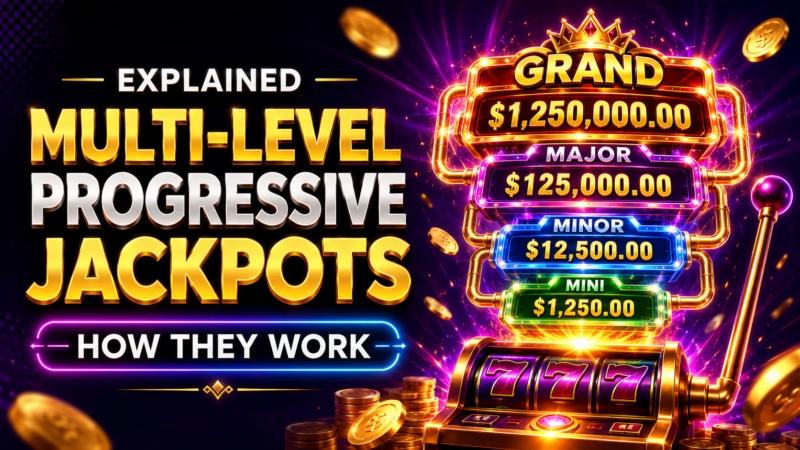
Imagine a slot with four jackpot levels:
- Mini: $20
- Minor: $100
- Major: $1,000
- Grand: $10,000
If these values do not increase as bets are placed, they are fixed jackpots. Winning the Grand jackpot pays the defined $10,000 rather than a prize pool that has been accumulating from previous wagers.
The exact amount may still depend on stake level or game configuration in some titles, so the paytable remains the authoritative source for a particular game.
What Is a Progressive Jackpot?
A progressive jackpot is a prize pool that increases over time until an eligible player wins it. A portion of qualifying betting activity may contribute to the jackpot, although the exact funding mechanism varies by game and operator.
After the jackpot is won, the displayed amount usually returns to a predetermined starting value known as the seed or reset value. The jackpot then begins increasing again.
For example, a progressive jackpot might start at $100,000 and gradually grow to $500,000, $1 million, or more before being triggered. The upper amount depends on player activity, game rules, network size, and how long the jackpot remains unwon.
A growing jackpot does not mean the probability of winning increases as the prize becomes larger. Unless the rules specifically state otherwise, jackpot size and jackpot probability should be treated as separate factors.
How Progressive Jackpots Grow
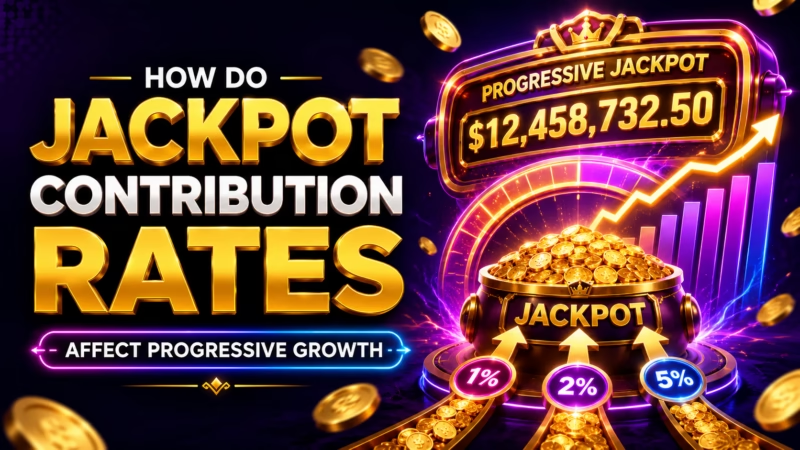
Progressive jackpots usually grow because qualifying betting activity contributes to the prize pool. The contribution may come from a portion of wagers rather than being charged as a separate visible fee.
Suppose a progressive slot has:
- a $100,000 starting jackpot;
- many eligible players;
- a contribution mechanism linked to qualifying bets.
As players continue playing, the displayed jackpot could rise to $120,000, then $150,000 and beyond until the jackpot is triggered.
The exact contribution percentage should not be assumed. Providers and operators can use different configurations, and some games do not publicly display the contribution rate to players.
Local vs Networked Progressive Jackpots
Not every progressive jackpot grows from the same pool of players. Progressive systems can operate at different scales.
Standalone Progressive Jackpots
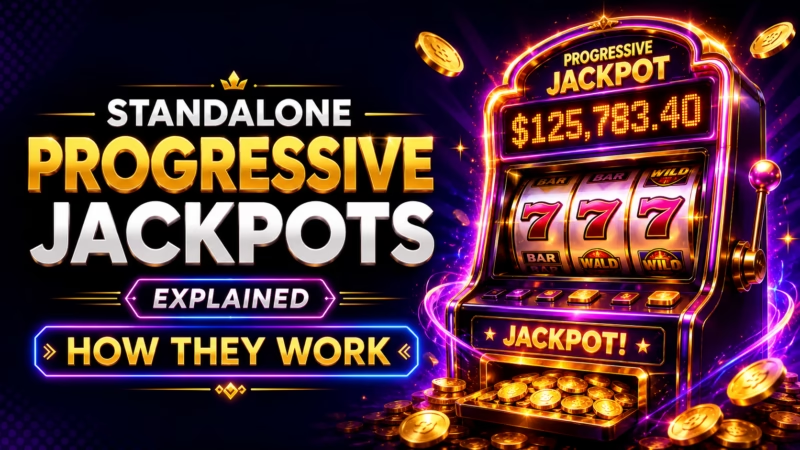
A standalone progressive jackpot is linked to a single game or machine. Because fewer bets contribute to the jackpot, the prize may grow more slowly than a large networked jackpot.
Local Progressive Jackpots
A local progressive jackpot may connect several games or machines within the same casino or operator environment. Eligible play across the connected games contributes to the shared jackpot according to the system’s rules.
Wide-Area or Networked Progressive Jackpots
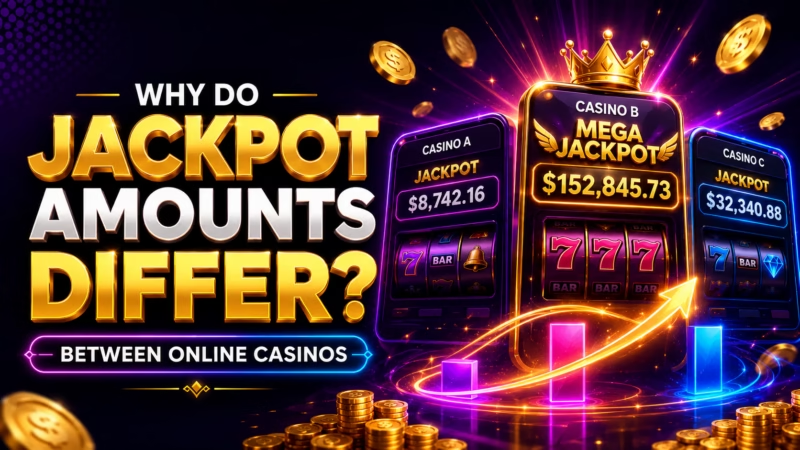
A networked progressive jackpot can connect eligible games across multiple casinos or platforms. A larger player pool can make the jackpot increase faster and may support much larger prizes.
Networked jackpots are the format most commonly associated with headline-level jackpot amounts, although a larger prize does not make the jackpot easier to trigger.
Which Type Usually Has the Bigger Jackpot?
Progressive jackpots generally have greater potential to reach very large prize amounts because their value can continue growing until someone wins. Fixed jackpots have a defined payout ceiling unless the game’s settings are changed.
However, jackpot size alone is a poor way to evaluate a game.
A $5 million progressive jackpot may look more attractive than a $10,000 fixed jackpot, but the probability of triggering the larger prize may be extremely low. Players should consider the jackpot conditions, game RTP, volatility, stake requirements, and overall payout structure rather than focusing only on the headline number.
Are Fixed Jackpots Easier to Win?
A fixed jackpot is not automatically easier to win than a progressive jackpot. Jackpot probability is determined by the individual game’s mathematics and trigger rules, not simply by whether the jackpot is fixed or progressive.
Some fixed jackpots may trigger more frequently because they offer smaller prizes. Other fixed jackpots may remain extremely rare. Likewise, progressive games can contain several jackpot levels, with smaller Mini or Minor prizes occurring more often than the largest Grand jackpot.
Unless the provider publishes jackpot odds, players should not assume the probability based on jackpot size alone.
Do Progressive Jackpots Have Lower RTP?
Progressive jackpot games can allocate part of their theoretical return to the jackpot component, but this does not mean every progressive game has a lower RTP than every fixed-jackpot game.
RTP, or return to player, represents the theoretical percentage of wagered money returned to players over a very large number of game rounds. It does not predict what will happen during one session.
For a progressive game, part of the theoretical return may be connected to the jackpot prize. That can make the non-jackpot portion of the game feel different from a similar game without a progressive prize.
RTP configurations can also vary between operators. Players comparing jackpot games should check the actual RTP displayed in the game information rather than assuming that one jackpot format always has better mathematical value.
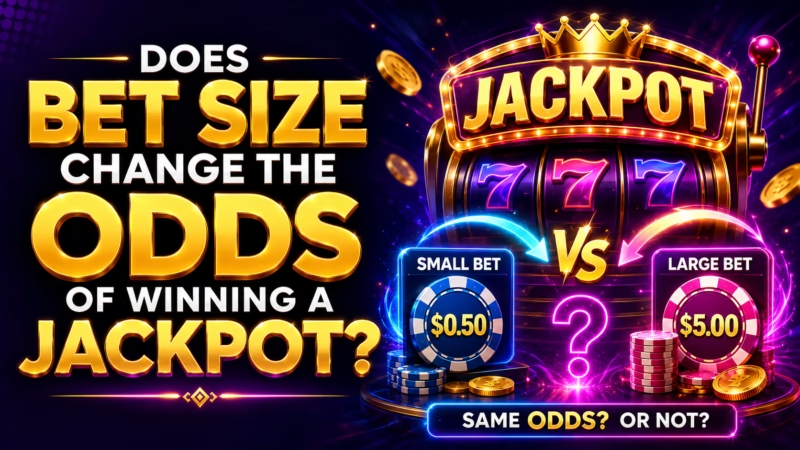
Does Bet Size Affect Jackpot Eligibility?
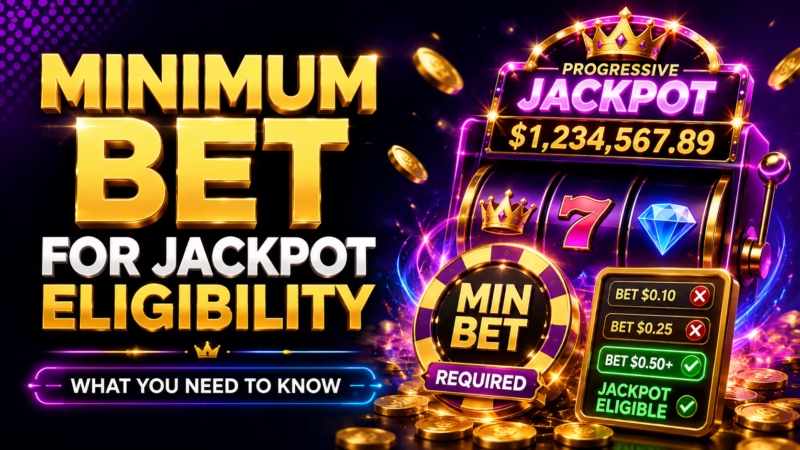
Bet size can affect jackpot eligibility in some games, but the rules are not universal.
A progressive jackpot may require:
- a minimum qualifying stake;
- the maximum bet;
- a specific number of active lines;
- an optional jackpot side bet;
- participation in a particular bonus feature.
Other progressive jackpots can be triggered at any eligible stake.
Fixed jackpots can also use stake-dependent prizes. For example, the displayed jackpot may scale according to the bet level even though the jackpot itself does not progressively increase.
Before playing, check whether increasing the bet actually changes jackpot eligibility. Betting more purely because a jackpot looks attractive can increase losses without improving eligibility if the game’s rules do not require the higher stake.
Fixed vs Progressive Jackpots and Volatility
Progressive jackpot games can feel highly volatile because a significant portion of their appeal may be concentrated in a very rare top prize. However, jackpot format alone does not determine a game’s complete volatility profile.
Two progressive slots can behave very differently. One may provide frequent small wins between jackpot opportunities, while another may produce longer periods with fewer meaningful payouts.
The same applies to fixed-jackpot games.
Volatility describes the distribution and variability of potential payouts. It does not tell you when a jackpot will occur, and it does not make future wins more predictable after a losing streak.
Which Jackpot Type Is Better?
There is no universally better option between fixed jackpots vs progressive jackpots because they serve different player preferences.
A Fixed Jackpot May Suit You If:
- you prefer clearly defined prize values;
- you want simpler jackpot rules;
- the growing size of a prize pool is not important to you;
- you prefer evaluating a game by its mechanics rather than a changing headline jackpot.
A Progressive Jackpot May Suit You If:
- very large potential jackpots are part of the entertainment appeal;
- you understand that the top jackpot may be extremely rare;
- you are comfortable checking qualification conditions before playing;
- you accept that much of the game’s theoretical payout may be concentrated in rare outcomes.
Players with limited budgets should be particularly careful with games that encourage larger bets to qualify for a jackpot. A larger theoretical prize does not justify exceeding a predetermined spending limit.
Common Myths About Fixed and Progressive Jackpots
“A Progressive Jackpot Is Due After It Gets Very Large”
A large progressive jackpot is not necessarily due. In games using random jackpot triggers, previous unsuccessful rounds do not mean the next player has a higher chance unless the specific jackpot system explicitly uses probability rules that change with jackpot size.
“Maximum Bet Always Gives Better Jackpot Odds”
Maximum bet does not automatically improve jackpot odds. Some games require a certain stake for eligibility, while others allow the same jackpot trigger at multiple bet levels.
Check the rules instead of assuming that a larger wager provides better odds.
“A Fixed Jackpot Cannot Change”
Fixed means the jackpot does not continuously increase through progressive contributions. The provider or operator may still change game configurations, prize values, or available versions.
“Progressive Jackpots Are Better Because the Prize Is Bigger”
A larger jackpot is only one characteristic of a game. The probability of winning, RTP, volatility, stake requirements, and normal-game payouts can matter more to the actual playing experience.
How to Compare Jackpot Games Before Playing
When comparing the difference between fixed and progressive jackpots, evaluate the complete game rather than the jackpot number alone.
- Jackpot type: Determine whether the top prize is fixed or progressive.
- Current jackpot value: For progressive games, compare the current value with the reset amount if that information is available.
- Eligibility: Check whether a minimum or maximum bet is required.
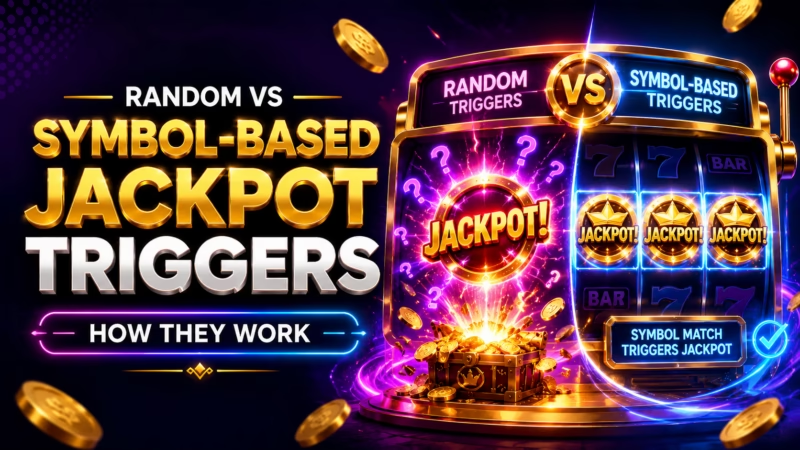
- Trigger mechanism: Find out whether the jackpot comes from symbols, a bonus round, a random trigger, or another mechanic.
- RTP: Use the RTP of the actual game version offered by the casino.
- Volatility: Consider whether the payout profile matches your preferred level of risk.
- Jackpot payout conditions: Check whether the jackpot is paid as one amount or under another arrangement.
- Game and casino terms: Rules, limits, availability, and jackpot conditions can vary by operator.
The most important practical step is reading the paytable and jackpot rules before increasing a stake. A game should not be chosen solely because its jackpot counter is displaying a large number.
How This Information Was Reviewed
This comparison is based on the structural differences between fixed and progressive jackpot mechanics, including prize calculation, jackpot growth, qualification conditions, RTP considerations, volatility, and common trigger formats.
Specific jackpot odds, RTP values, contribution percentages, minimum stakes, maximum bets, and payout conditions are game-specific and should be confirmed in the official game rules or paytable.
RTP and volatility describe long-term mathematical characteristics and do not predict the result of an individual session. Jackpot games use uncertain outcomes, and neither a growing jackpot nor a previous losing streak provides a reliable way to predict the next result.
Casino games should be treated as paid entertainment. Set spending and time limits before playing, never chase losses, and stop if gambling is no longer enjoyable or no longer stays within your planned budget.
FAQ
What is the main difference between fixed and progressive jackpots?
A fixed jackpot has a predetermined prize value, while a progressive jackpot increases until an eligible player wins it. After a progressive jackpot is won, it typically resets to a predefined starting amount and begins growing again.
Can a fixed jackpot be as large as a progressive jackpot?
A fixed jackpot can have a large predetermined value, but progressive jackpots have greater potential to grow beyond their starting amounts. Actual prize sizes depend on the individual game and jackpot system.
Are progressive jackpots harder to win?
Progressive jackpots are not automatically harder to win, although very large top-tier jackpots are often designed as rare events. The exact probability depends on the game’s mathematical model and trigger conditions.
Does a progressive jackpot increase my chances of winning as it grows?
A growing jackpot does not normally mean that your probability of winning is increasing. Jackpot size and trigger probability are separate unless the game’s published rules specifically connect them.
Do I need to place the maximum bet to win a progressive jackpot?
Not always. Some games require a certain stake or maximum bet, while others allow jackpot eligibility across several bet levels. Check the game’s rules before assuming that a higher wager is necessary.
What happens to a progressive jackpot after somebody wins?
A progressive jackpot usually resets to a predetermined seed value after it is won. The prize then begins accumulating again through eligible play according to the jackpot system.
Do fixed jackpot games have better RTP?
Fixed jackpot games do not automatically have better RTP. RTP depends on the mathematics and configuration of the individual game, so the actual value should be checked in the game’s information or paytable.
Can a casino control when a progressive jackpot pays?
The answer depends on the specific jackpot system and game rules, so broad claims should be avoided. Legitimate regulated games should operate according to their defined technical rules, but players should check the provider, operator information, and applicable regulatory details when those factors matter.
Is a progressive jackpot worth playing when the prize is unusually high?
A larger jackpot can make the potential top prize more attractive, but it does not guarantee better short-term value or a higher probability of winning. Consider the game’s RTP, qualification rules, stake requirements, and your spending limits before playing.
Can a jackpot strategy guarantee a win?
No jackpot strategy can guarantee a random jackpot outcome. Changing bet patterns, switching machines, tracking previous results, or waiting for a jackpot to become due does not provide a guaranteed way to win. Gambling outcomes remain uncertain, so play only with money you can afford to spend on entertainment.
Brief Conclusion
The difference between fixed jackpots and progressive jackpots is straightforward: fixed jackpots offer predetermined prizes, while progressive jackpots can increase until they are won.
Fixed jackpots offer clearer prize values and often simpler mechanics. Progressive jackpots provide the possibility of much larger prizes but may involve additional qualification rules and extremely rare top-tier outcomes.
Neither format provides predictable profits or guaranteed wins. Compare jackpot rules, RTP, volatility, bet requirements, and the full payout structure, then treat the game as entertainment rather than an investment or source of income.