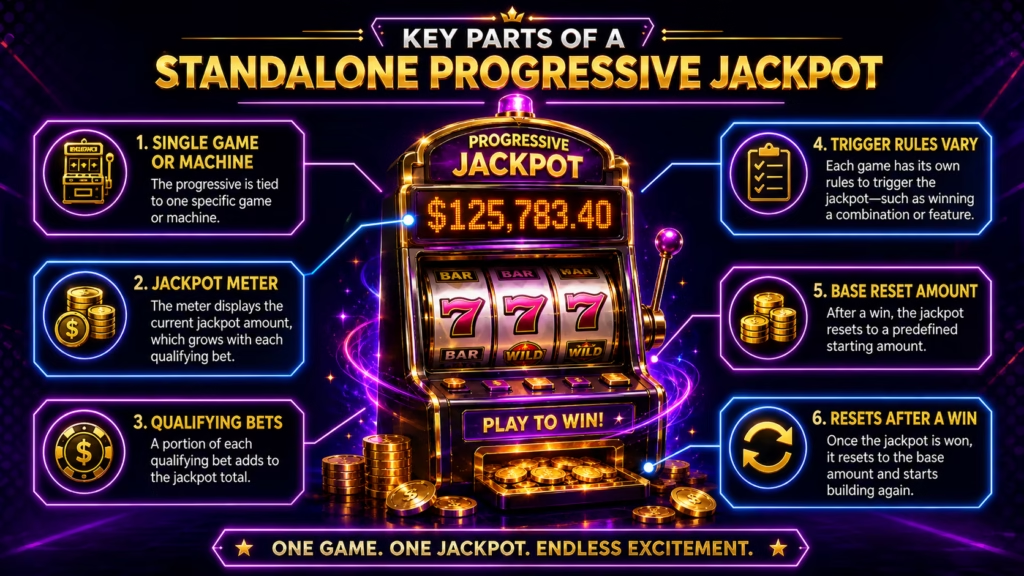
A standalone progressive jackpot is a progressive prize attached to a single game instance rather than a network of multiple machines or games. Play on that game contributes to its own jackpot, so the progressive pool grows independently until the jackpot is triggered and then returns to a defined reset value.
- A standalone progressive is funded by play on one game instance rather than a shared network.
- The jackpot normally increases from a startup or reset value as eligible wagers contribute to the progressive pool.
- Winning conditions depend on the game. The jackpot may use symbols, a bonus feature, a random mystery trigger, or another defined mechanism.
- A higher displayed jackpot does not automatically mean the next spin is more likely to win it.
- Bet size may affect jackpot eligibility or probability in some games, so the paytable and jackpot rules should always be checked before playing.
Standalone progressive slots may appeal to players who like jackpot mechanics but do not specifically need the extremely large prizes associated with wide-area networks. They still involve random outcomes and potentially long periods without a jackpot, so the displayed prize should never be treated as an indication that a win is due.
What Is a Standalone Progressive Jackpot?
A standalone progressive jackpot is a progressive prize that belongs to one instance of gaming equipment. That game contributes to its own jackpot payoff and is not connected to other gaming equipment contributing to the same prize. By comparison, a linked jackpot receives contributions from multiple games, while a multi-site progressive connects games across multiple gaming venues.
The word progressive refers to the changing prize value. Progressive jackpots are monetary awards that increase according to credits wagered or another defined metric. The game therefore starts with a jackpot value, accepts contributions according to its configured rules, and displays an increasing prize until a qualifying jackpot event occurs.
For a physical casino slot, a standalone progressive can be associated with an individual gaming machine rather than a bank of interconnected machines. Digital implementations can be structured differently, so players should verify the jackpot rules instead of assuming that every online game using the word standalone is technically configured in exactly the same way.
How Do Standalone Progressive Jackpots Work?
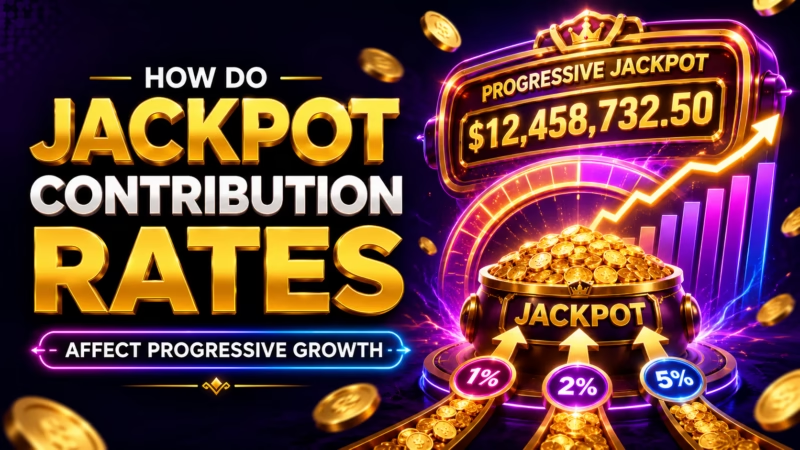
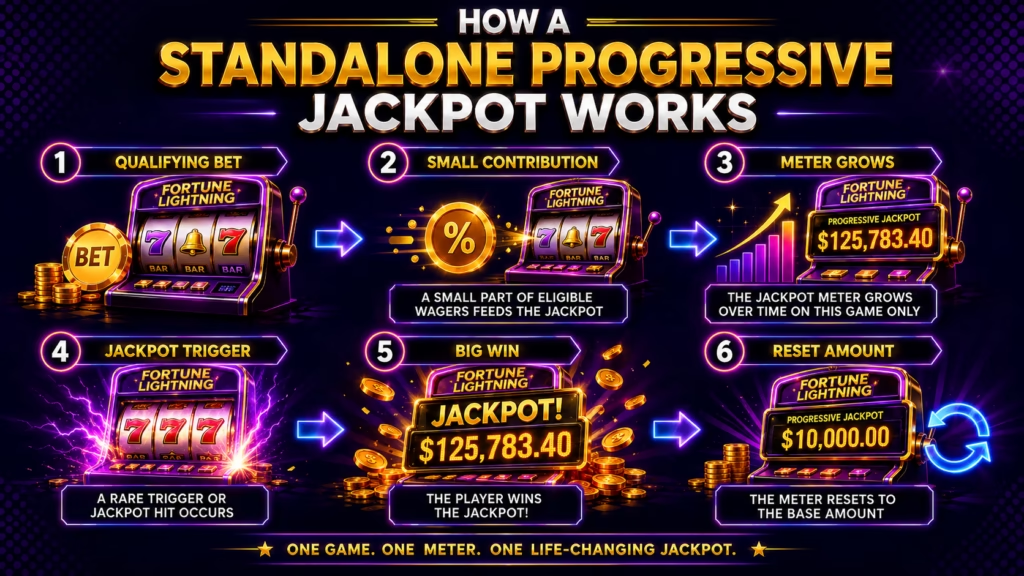
A standalone progressive jackpot normally begins at a predefined startup or reset amount. Eligible gameplay then contributes to the jackpot according to the game’s mathematical configuration. Jackpot parameters can include the current value, startup value, reset value, percentage increment rate and any jackpot ceiling used by the system.
For example, imagine a slot whose progressive prize resets to $1,000. As qualifying play occurs, the jackpot meter could gradually move to $1,050, $1,200 or higher. The exact contribution rate cannot be assumed from the displayed jackpot because it is determined by the game’s configuration and rules.
When the required jackpot condition occurs, the current progressive value is awarded according to the game’s rules. The jackpot payoff then normally returns to its reset value after the win so normal operation can continue.
The important point is that only the game associated with that standalone jackpot feeds its own progressive pool. A linked progressive works differently because several participating games contribute to the same jackpot.
Standalone Progressive vs Linked and Wide-Area Jackpots
| Jackpot type | Where contributions come from | Pool scope | Typical practical effect |
| Standalone progressive | One game instance | Individual game | Jackpot grows from activity on that game |
| Linked progressive | Multiple connected game instances | Local or shared network | More games can contribute to one jackpot |
| Multi-site or wide-area progressive | Connected games across multiple venues | Large network | A broader contribution base can support very large jackpots |
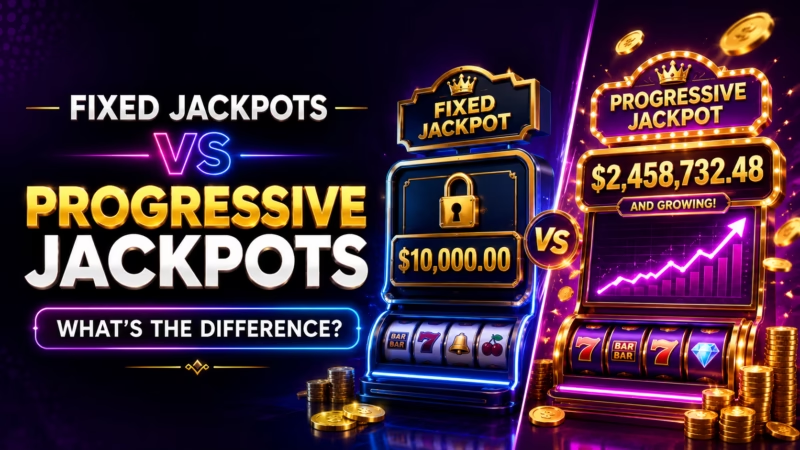
The main difference between progressive jackpot types is where the contributions come from. A standalone jackpot uses one game instance, linked jackpots combine multiple instances, and multi-site jackpots connect participating equipment across multiple gaming venues.
Because a standalone progressive receives contributions from a narrower source, it will often have a smaller potential funding base than a large linked network. That does not mean every standalone jackpot must be smaller. Reset amounts, contribution rates, wager volume, jackpot limits and game design can all affect the displayed value.
Standalone and linked progressives can also coexist within the same broader game family, with different jackpot levels or features operating under different contribution structures.
How Is a Standalone Jackpot Triggered?
A standalone progressive jackpot can be triggered in several ways, and there is no universal jackpot trigger shared by every slot.
A traditional design may require a particular combination of jackpot symbols. Another game may award the progressive through a bonus feature, pick feature or Hold and Spin mechanic. A mystery progressive can instead trigger through a random event without requiring the player to land an obvious jackpot symbol.
Mystery-triggered jackpots can also use a hidden threshold selected within a defined range. That is different from a conventional symbol-triggered progressive and should be understood through the specific game rules.
This distinction matters because watching the reels alone may not tell a player how a progressive works. The game’s jackpot information, help screen and paytable should explain qualifying wagers and the conditions under which the jackpot can be won.
Does Bet Size Affect a Standalone Progressive Jackpot?
Bet size may affect jackpot eligibility, jackpot value or the probability of triggering a progressive, but the answer depends on the individual game.
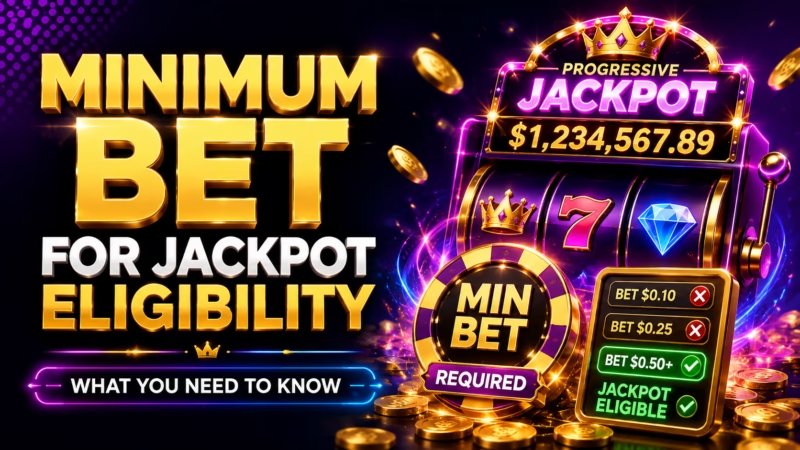
Some games make a progressive available at every permitted stake. Others require a minimum qualifying bet. Certain designs can change jackpot-related probabilities or prize values according to the amount wagered. Players should therefore avoid assuming that a minimum bet and maximum bet provide identical jackpot conditions.
The correct information should be taken from the game’s rules or paytable. Jackpot eligibility and qualifying wagers can vary between games and operators.
Increasing a bet simply because a jackpot is large is not a sound strategy. A larger wager increases the amount at risk, and unless the rules explicitly state that the larger stake changes jackpot eligibility or probability, the player should not assume that it creates a better chance of winning.
Does the Jackpot Become Easier to Win as It Gets Bigger?
A larger standalone progressive jackpot is not automatically easier to win.
In many progressive designs, the meter grows because wagers are contributing value to the prize pool, while the underlying trigger mechanism remains governed by the game’s mathematics. A jackpot that has climbed far above its reset value can therefore still be difficult to trigger.
Mystery-triggered and must-hit-style jackpots require more careful interpretation. Some mystery progressives use a hidden trigger threshold between a reset value and a ceiling. That is a different mechanism from a conventional symbol-triggered progressive and should be understood through the specific game rules.
The practical rule is simple: do not use the size of the meter alone to estimate the probability of the next spin winning the jackpot.
What Happens After Someone Wins?
After a standalone progressive is won, the jackpot normally returns to its configured reset value rather than starting from zero.
The reset value is the amount initially offered before the jackpot begins increasing again. Jackpot systems may also use additional accounting mechanisms to help fund future reset values, although the exact setup depends on the jackpot design and regulatory requirements.
For example, a jackpot displayed at $8,420 might reset to $5,000 after being awarded if $5,000 is its configured reset value. The next cycle then begins from that amount and grows as new qualifying play contributes.
A player cannot determine the contribution rate, reset funding method or mathematical probability merely by watching the meter. Those details belong to the underlying game configuration.
Do Standalone Progressive Jackpots Affect RTP?
A progressive jackpot can form part of a game’s theoretical return calculation, but the exact relationship must be checked for the specific game.
This is important because players sometimes treat the progressive jackpot as an entirely separate extra prize on top of the advertised RTP. That assumption may be incorrect. Depending on the game’s mathematics, some of the theoretical return can be associated with rare jackpot outcomes.
RTP also does not predict what will happen during one session. A theoretical RTP is a long-run mathematical measure, not a promise that a particular player will recover a specific percentage of their wagers.
Common Myths About Standalone Progressive Jackpots
“The jackpot has not hit for a long time, so it must be due.” A long period without a jackpot does not by itself prove that the next spin has a greater chance of winning. Random jackpot mechanisms do not become predictable simply because previous spins lost.
“A bigger meter means better jackpot odds.” The current prize value and the probability of triggering it are separate characteristics unless the rules explicitly connect them.
“Standalone means the jackpot is fixed.” Standalone describes the scope of the progressive pool, not a fixed prize. A standalone progressive can continue increasing as its own qualifying play contributes to the jackpot.
“Every progressive jackpot requires the maximum bet.” There is no universal rule. Eligibility and bet requirements depend on the game’s configuration, so the paytable should be checked before wagering.
How to Evaluate a Standalone Progressive Slot
Before choosing a standalone progressive, focus on the game rules rather than the headline jackpot alone. Check the reset value, current jackpot, qualifying bet, jackpot trigger, whether different stakes change eligibility, the published RTP where available, volatility information and the mechanics used to reach the progressive.
The trigger is particularly important. A symbol-based jackpot behaves differently from a mystery-triggered prize or a jackpot embedded in a Hold and Spin feature. Understanding that distinction makes it easier to judge whether the gameplay style suits your preferences, even though it cannot predict the result.
Players with limited budgets should be especially careful when jackpot eligibility requires larger wagers. Chasing a progressive by raising the stake can shorten a session rapidly without guaranteeing that the jackpot becomes more likely to hit.
Standalone progressive slots are therefore most suitable for players who enjoy the additional jackpot mechanic and are comfortable treating the jackpot as a rare potential outcome rather than an objective that must eventually be reached.
How This Information Was Reviewed
This explanation follows the standard technical distinction between standalone, linked and multi-site progressive jackpots used in regulated gaming environments. Individual regulatory bodies and game implementations can establish additional requirements, so game-specific rules should still be checked.
Players should verify jackpot eligibility, wager requirements, reset values, trigger conditions and published RTP in the official paytable, help screen or operator rules rather than assuming that all standalone progressives operate identically.
Progressive jackpots, RTP figures and bonus mechanics cannot guarantee a particular outcome. Casino games should be treated as entertainment rather than a source of income. Set spending and time limits before playing, and stop if gambling is no longer staying within those limits.
FAQ
What is a standalone progressive jackpot?
A standalone progressive jackpot is a growing jackpot attached to a single instance of gaming equipment. That game contributes to its own progressive prize instead of sharing the jackpot with other connected machines or games.
How do standalone progressive jackpots work?
Standalone progressive jackpots usually begin at a startup or reset value and increase as qualifying play contributes to the jackpot. When the specified jackpot trigger occurs, the current prize is awarded and the meter normally returns to its reset value.
What is the difference between a standalone and linked progressive jackpot?
A standalone jackpot receives contributions from one game instance, while a linked progressive receives contributions from multiple connected games. A multi-site progressive extends that concept across multiple gaming venues.
Are standalone progressive jackpots easier to win?
Not necessarily. Standalone describes how the jackpot is connected and funded, not how frequently it must be won. Jackpot probability depends on the individual game’s mathematics and trigger rules.
Does a higher jackpot mean it is about to pay?
No. A higher displayed jackpot does not by itself show that a win is imminent. Some mystery jackpot designs use hidden thresholds, but conventional progressive meters should not be treated as countdowns to a guaranteed payout.
Do you need to bet the maximum to win a standalone progressive?
Not always. Some games may require a particular qualifying wager, while others may make the jackpot available at different stakes. Check the game’s paytable or help screen because wager requirements vary.
Can a standalone progressive have multiple jackpot levels?
Yes. Standalone progressive mechanics can be used alongside multiple jackpot prizes or levels depending on the game design.
Is a standalone progressive jackpot random?
The jackpot outcome can involve an RNG when the game uses random determination. The precise trigger may instead involve defined symbols, a bonus mechanic or a mystery event, so the game’s rules should be checked.
Is a standalone progressive slot a good way to make money?
No. A standalone progressive slot is a gambling game with uncertain outcomes, not a reliable method of earning money. RTP, jackpot size and previous results cannot guarantee a profitable session.
Brief Conclusion
A standalone progressive jackpot is a progressive prize funded by one game instance rather than a shared network. The jackpot grows according to the game’s contribution rules, is awarded when its specified trigger occurs and normally resets afterward. The jackpot amount alone does not reveal when it will hit or whether the next spin has better odds. Check the paytable for qualifying bets, trigger rules and RTP, and treat progressive slots as entertainment rather than a way to generate income.