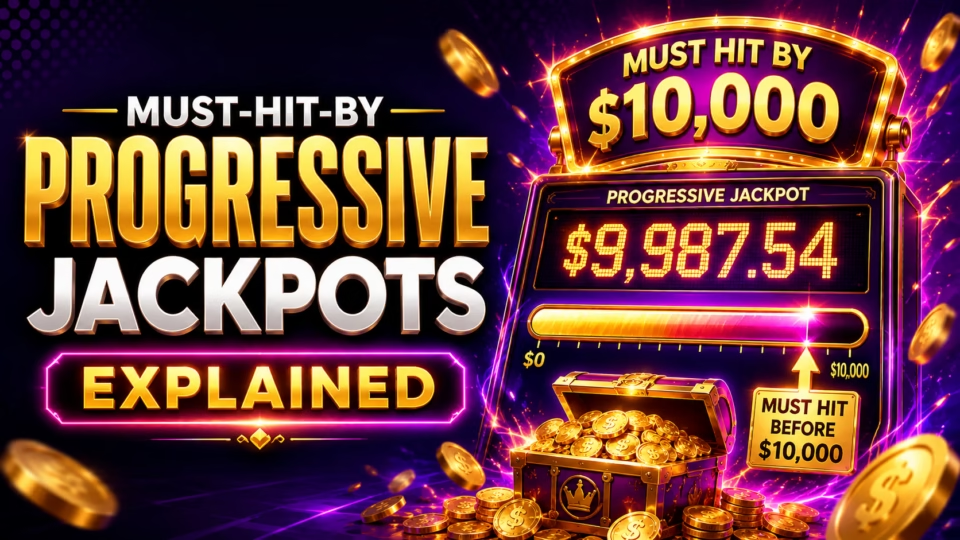
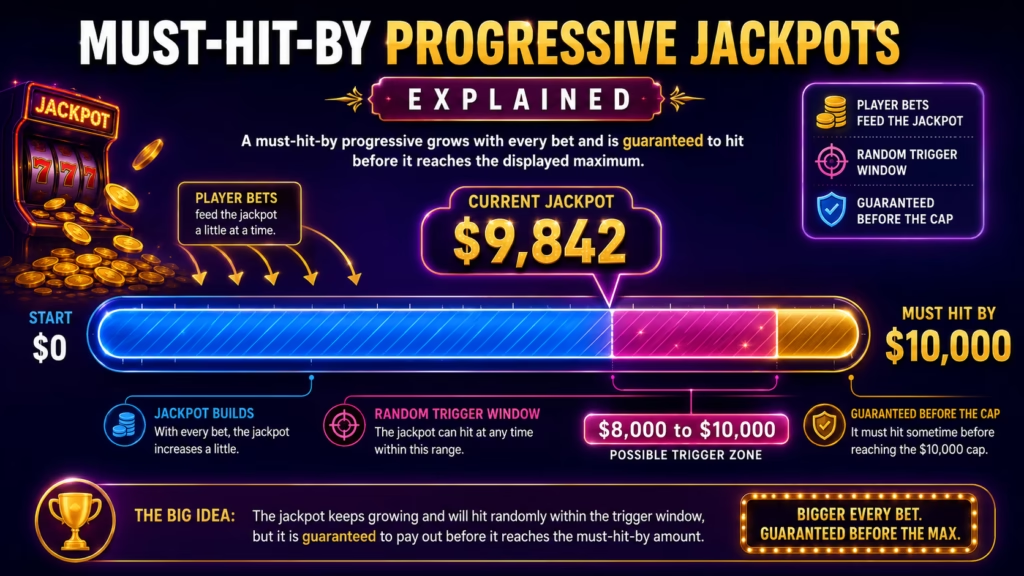
A must hit by jackpot is a progressive jackpot designed to award its prize before, or when, the jackpot meter reaches a stated maximum value. In a common Must-Hit-By Mystery setup, the system secretly selects a winning threshold somewhere between the jackpot reset value and its advertised maximum. Qualifying wagers then increase the meter until a contribution reaches or passes that hidden threshold.
The important point is that the advertised “Must Hit By $X” figure is usually the upper boundary, not necessarily the exact amount at which the jackpot will pay.
- A Must-Hit-By jackpot has a defined upper limit.
- Many versions use a hidden randomly selected trigger value.
- The jackpot can be awarded well before reaching the advertised maximum.
- Only qualifying wagers may contribute to or be eligible for the jackpot.
- A meter being close to its maximum does not automatically mean the game is profitable to play.
Must-Hit-By games tend to appeal to players who like visible progressive meters and clearly defined jackpot ranges. They require more caution from anyone tempted to chase a rising meter, because knowing the maximum value does not tell you exactly when the jackpot will trigger or whether continuing to play has a positive expected return.
How Do Must Hit By Jackpots Work?
A Must-Hit-By progressive jackpot normally starts at a preset minimum amount and increases as qualifying play occurs. The system guarantees that the jackpot will be resolved within a specified range according to the game rules.
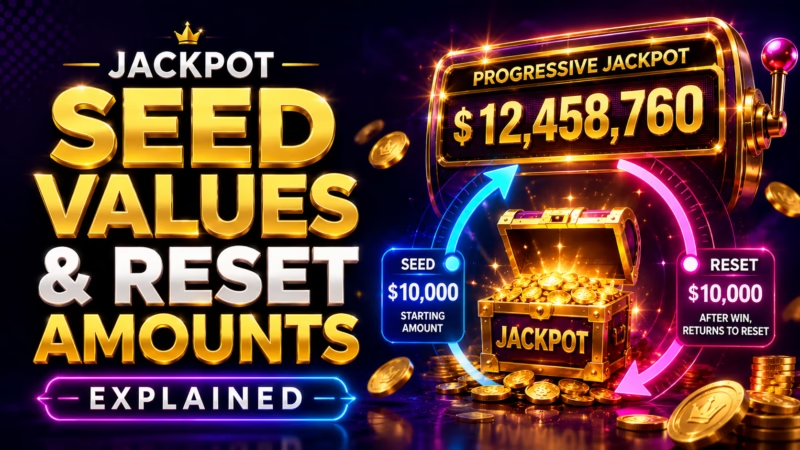
In a typical mystery-trigger implementation, a percentage of each qualifying progressive wager is added to the progressive meter. A random number generator selects a hidden dollar value between the permitted minimum and maximum. The jackpot pays when a qualifying contribution moves the meter to or past that value. After the award, the meter resets to its specified minimum.
Does a Must-Hit-By Jackpot Pay Exactly at the Maximum?
No. A Must-Hit-By jackpot does not normally need to reach the displayed maximum before paying.
If a game says “Must Hit By $5,000,” the jackpot might trigger at $3,850, $4,200, $4,997 or another eligible value inside the permitted range, depending on its rules.
In a mystery-trigger implementation, the maximum acts as the upper boundary of the trigger range. The actual trigger is concealed from players. This distinction matters because “Must Hit By $5,000” does not necessarily mean the jackpot will eventually reach exactly $5,000.
Consider a simplified example:
- Jackpot reset value: $1,000
- Advertised Must Hit By amount: $2,000
- Secret trigger selected by the system: $1,742.35
- Current meter: $1,741.90
If the next qualifying contribution pushes the meter to $1,742.35 or higher, that wager could trigger the jackpot under this type of system. The player normally cannot see the hidden trigger. The visible information is the current meter and the maximum amount by which the jackpot must be resolved.
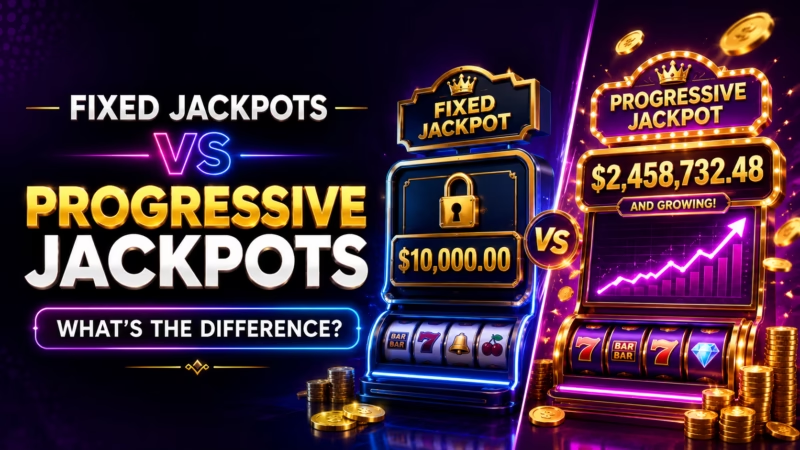
Must-Hit-By vs Regular Progressive Jackpots
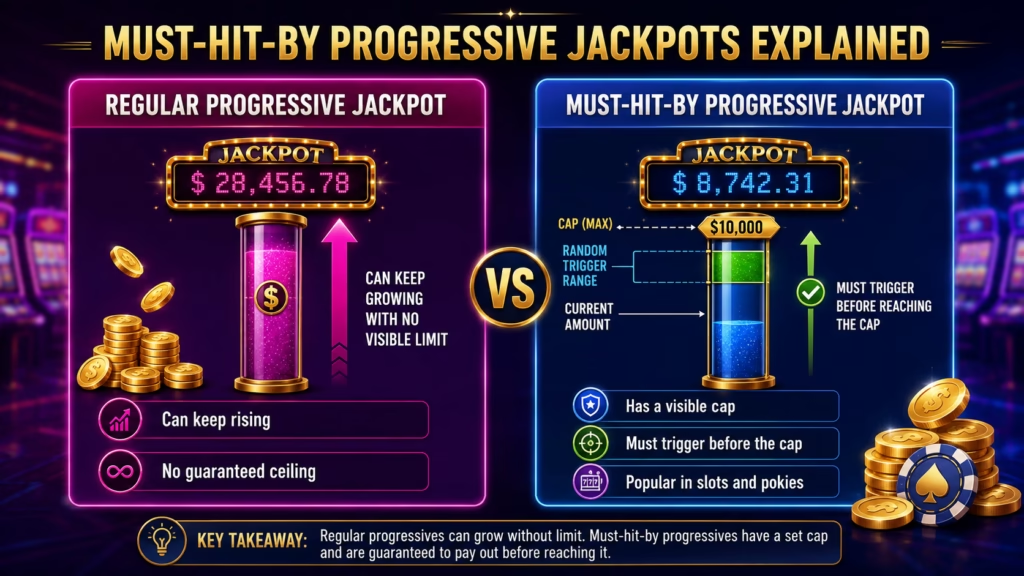
Both systems use jackpots that can grow, but their trigger mechanics can be very different.
| Feature | Must-Hit-By Progressive | Traditional Progressive |
| Jackpot increases | Usually yes | Yes |
| Advertised maximum | Usually yes | Not always |
| Must award within a stated range | Yes, according to the game rules | Not necessarily |
| Hidden mystery trigger possible | Common | Possible but not required |
| Specific symbol combination required | Depends on game | Common in many slots |
| Resets after jackpot | Usually | Usually |
A traditional progressive slot may require a specific combination, bonus event or jackpot trigger. Its jackpot can potentially continue growing until that required event occurs. A Must-Hit-By system introduces an upper boundary. The game rules determine exactly how the jackpot is awarded before or at that boundary.
Are All Must-Hit-By Jackpots Mystery Jackpots?
No. Must-Hit-By and mystery jackpot are closely related terms, but they are not automatically identical in every game.
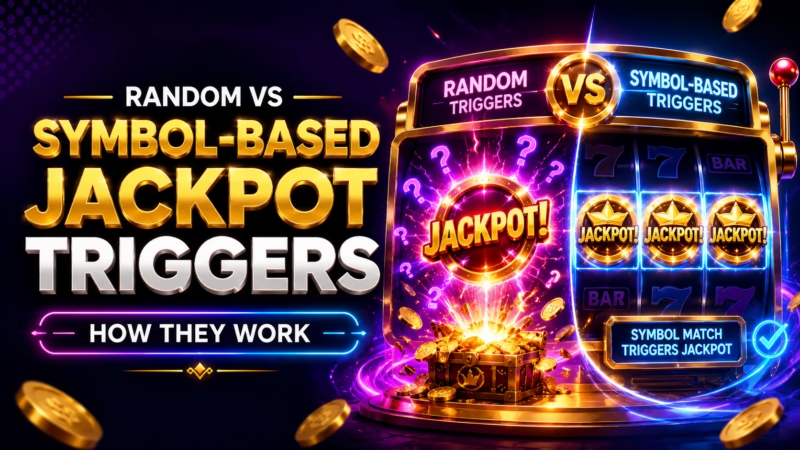
A mystery progressive generally does not require the player to land a conventional jackpot symbol combination. Instead, another programmed mechanism determines when the prize is awarded. A Must-Hit-By Mystery commonly combines that mechanism with a minimum-to-maximum jackpot range and a hidden trigger value.
Other games may use different rules while still advertising a maximum award boundary. The paytable or jackpot rules should therefore take priority over assumptions based only on the words “Must Hit By.”
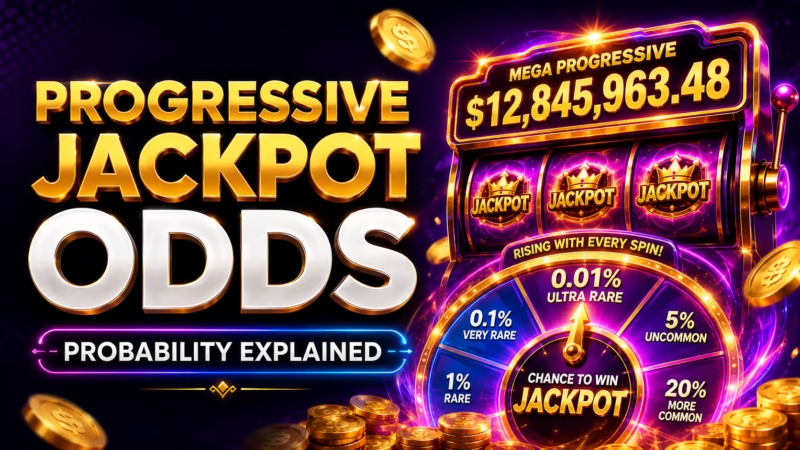
Does the Chance of Winning Increase as the Jackpot Gets Higher?
A higher meter means the jackpot has less distance remaining before its advertised maximum, but that fact alone is not enough to calculate the probability of winning the next wager.
For a hidden-threshold system, the jackpot cannot remain unresolved indefinitely beyond its permitted range. However, the exact probability associated with the next wager depends on how the hidden trigger is selected, how much each qualifying wager contributes, whether contribution rates change with bet size, which wagers qualify, whether multiple games feed the same jackpot and the mathematical configuration of the system.
The phrase “Must Hit By” therefore should not be interpreted as a simple rule that every spin becomes progressively luckier.
Does Bet Size Affect a Must-Hit-By Jackpot?
Bet size can affect eligibility, contribution rate or jackpot probability in some games, but there is no universal rule.
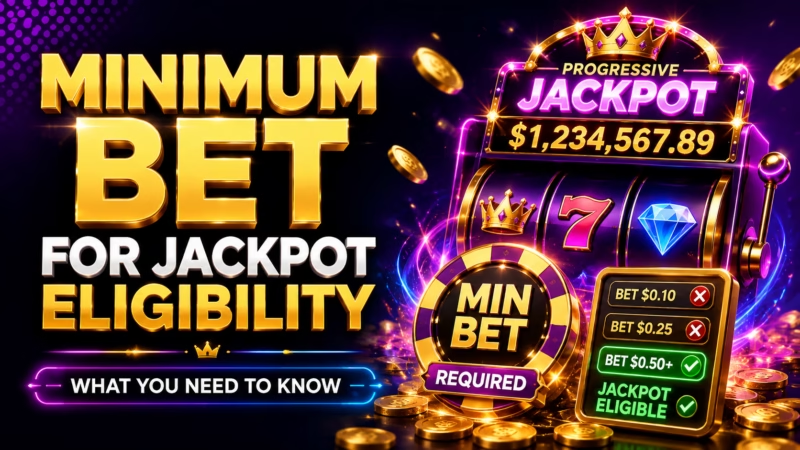
Some jackpots require a minimum progressive wager before a player becomes eligible. Other games may handle wager levels, denominations or contribution rates differently.
Before playing, check:
1. the minimum qualifying wager;
2. whether all bet sizes qualify;
3. whether jackpot odds scale with the wager;
4. how much of each wager contributes to the meter;
5. whether different denominations use different jackpot rules.
Increasing a bet solely because a jackpot meter looks attractive can increase losses much faster if the underlying jackpot probability does not improve proportionally.
What Makes the Jackpot Meter Increase?
A progressive jackpot meter normally increases according to rules programmed into the game or linked progressive system.
A portion associated with qualifying play may be directed toward the growing jackpot. The contribution rate should not be confused with the player’s chance of winning.
If $1 of play increases a jackpot by one cent, that tells you how quickly the meter moves. It does not, by itself, reveal the probability that the next wager will trigger the jackpot.
Can You Calculate the Best Time to Play a Must-Hit-By Jackpot?
A high meter can make a Must-Hit-By jackpot mathematically more valuable than the same game immediately after a reset, but the displayed jackpot amount alone is not enough to prove that playing has positive expected value.
A proper calculation can require the current jackpot amount, reset amount, maximum Must-Hit-By value, trigger distribution, jackpot contribution rate, qualifying bet amount, probability rules for different denominations, base-game RTP, additional jackpot levels and competition from other eligible players or machines. Some of these numbers may not be publicly available.
For that reason, simple rules such as “play whenever the meter is above 90% of the maximum” should not be treated as reliable universal strategies. Even when a theoretical expected-value calculation looks favorable, short-term results remain uncertain and another eligible player may trigger a linked jackpot first.
What Happens After Someone Wins?
After a Must-Hit-By jackpot is awarded, the progressive generally resets to a predefined starting amount and begins another jackpot cycle.
The next cycle can then use a new trigger according to the game mechanics. This reset explains why a recently won Must-Hit-By jackpot may suddenly display a much lower meter even though the underlying game continues operating normally.
Common Must-Hit-By Jackpot Myths
“The jackpot is guaranteed to hit at the maximum”
Not necessarily. The maximum normally means the jackpot must be resolved by that point, not that the meter must physically reach the exact advertised figure.
“A jackpot near the maximum guarantees a win soon for me”
No. It indicates that the current jackpot cycle is closer to its upper boundary, but another eligible player may win it first.
“The biggest possible bet always gives the best jackpot odds”
Not universally. Eligibility and probability rules depend on the individual game.
“You can predict the hidden trigger”
A mystery trigger is concealed specifically so players do not know its exact value. A rising meter does not reveal the stored trigger.
“Must-Hit-By jackpots guarantee profit”
They do not. A guaranteed eventual jackpot award to somebody is very different from a guaranteed profit for one particular player.
How to Evaluate a Must-Hit-By Jackpot
A useful way to evaluate a Must-Hit-By game is to focus on its rules rather than just the size of the meter. Check the following before wagering:
1. Reset value: Find the amount at which the jackpot starts after a win.
2. Must-Hit-By limit: Confirm the maximum displayed value.
3. Qualification rules: Determine the minimum wager needed to participate.
4. Trigger rules: Check whether the jackpot is mystery-triggered or requires another event.
5. Bet scaling: See whether higher bets change eligibility or probability.
6. Linked participation: Determine whether other machines, games or online players can trigger the same jackpot.
7. Game RTP: Check the stated RTP and whether different configurations are available.
8. Casino rules: Review jackpot eligibility, maximum payouts and other applicable terms.
A large meter is only one part of the decision. The game rules determine what that number actually means.
Who Might Like Must-Hit-By Progressive Games?
Must-Hit-By progressives may appeal to players who enjoy watching a jackpot grow but prefer knowing that the progressive has a defined upper boundary.
They may be less suitable for players who find themselves increasing bets, extending sessions or chasing losses because a meter appears “too close” to its maximum to leave.
A jackpot approaching its upper limit can create psychological pressure to continue playing. That pressure should not replace a predetermined spending or time limit. Casino games should be treated as entertainment rather than a source of income. Stop when the amount or time you planned to spend has been reached, regardless of where the jackpot meter stands.
How This Information Was Reviewed
This explanation focuses on the structural features that define progressive and Must-Hit-By Mystery jackpots: qualifying wagers, progressive contributions, minimum and maximum meter values, hidden trigger mechanisms, jackpot validation and reset procedures.
Exact mechanics can vary by game, operator and jurisdiction. Before playing a specific Must-Hit-By game, verify its paytable, jackpot rules, qualifying wager and current operator terms. RTP, jackpot size and a rising progressive meter cannot guarantee the result of an individual session.
FAQ
What is a must hit by jackpot?
A must hit by jackpot is a progressive jackpot with a stated maximum boundary by which the jackpot must be awarded according to the game rules. Many versions use a hidden randomly selected trigger between a reset value and the maximum.
How do must hit by jackpots work?
Must-Hit-By jackpots typically grow as qualifying wagers contribute to a progressive meter. In a mystery version, the system selects a hidden value within the permitted range, and the jackpot is awarded when qualifying play causes the meter to reach or cross that trigger.
Does a Must-Hit-By jackpot have to reach the advertised maximum?
No. The jackpot can trigger before reaching the maximum. The displayed Must-Hit-By figure normally represents the upper limit of the jackpot cycle rather than the exact winning value.
Are Must-Hit-By jackpots random?
Many Must-Hit-By Mystery jackpots use a random process to select a hidden trigger value. The exact implementation varies, so the individual game rules should be checked before assuming how its jackpot is determined.
Is a Must-Hit-By jackpot more likely to hit when it is close to the maximum?
Being close to the maximum means less meter distance remains in the current jackpot range, but it does not provide enough information to calculate the probability of the next wager. The exact trigger distribution and qualification mechanics also matter.
Can you make money by waiting for a Must-Hit-By jackpot to get high?
A high jackpot can change the mathematical value of a progressive game, but a high meter does not guarantee profit. Accurate expected-value calculations require information that may not be available, and another eligible player can win a linked jackpot first.
Does a bigger bet increase the chance of hitting a Must-Hit-By jackpot?
It depends on the game. Some progressive systems have minimum qualifying wagers or different rules for denominations and bet levels. Check the paytable instead of assuming that betting more produces proportionally better jackpot odds.
What happens when a Must-Hit-By jackpot is won?
The jackpot is paid according to the game rules and the progressive meter generally resets to a predefined minimum amount. A new jackpot cycle can then begin.
Can the casino choose when a Must-Hit-By jackpot pays?
In properly regulated progressive systems, the jackpot operates according to the approved game configuration rather than an operator simply deciding during play when to award it. Exact regulatory and technical requirements vary between jurisdictions.
Short Conclusion
A Must-Hit-By progressive jackpot combines a growing jackpot with a defined maximum award boundary. In common mystery versions, a hidden trigger is selected somewhere between the reset amount and that maximum, and qualifying play eventually moves the meter across it.
The most important distinction is simple: Must Hit By does not mean Must Hit At. A jackpot can pay well before reaching its advertised maximum, and a high meter does not guarantee that an individual player will win or make a profit. Check the game qualification and jackpot rules, set firm limits, and treat progressive games as entertainment rather than a way to earn money.