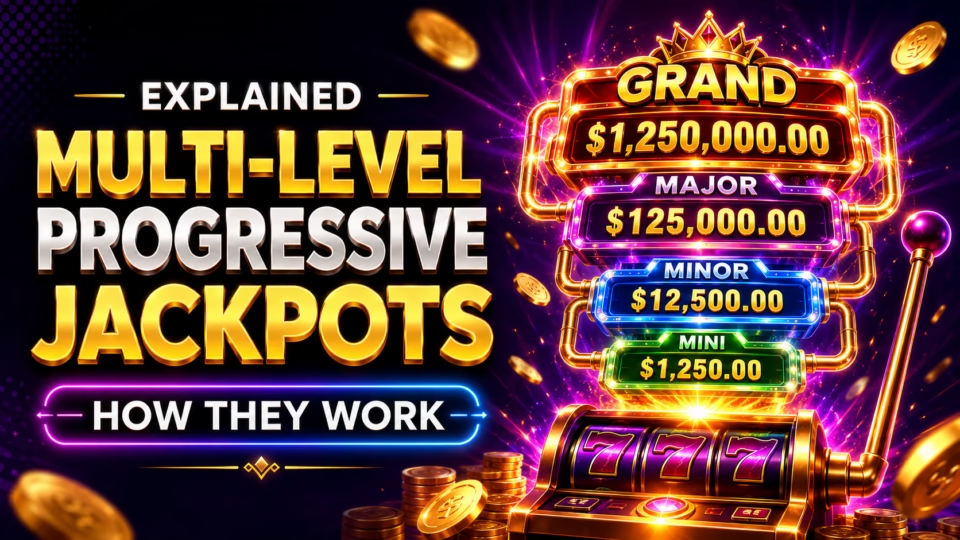
A multi-level progressive jackpot is a jackpot system with several progressive prize tiers running at the same time. Instead of building only one jackpot, the game can maintain multiple separate meters, with each level having its own value, trigger conditions and reset amount. A progressive jackpot generally increases from a preset starting value through contributions connected to eligible wagers.
Quick takeaways:
- Multi-level progressive jackpots offer several jackpot tiers within one game or linked game system.
- Jackpot levels may use names such as Mini, Minor, Major, Maxi, Mega or Grand, but the naming and number of tiers vary by game.
- Each progressive level can have its own starting value, growth rate and award rules.
- A jackpot may be triggered through symbols, a bonus feature or another mechanism defined in the game rules.
- A growing jackpot does not mean a win is due. In RNG-based casino games, outcomes remain random according to the game design.
Multi-level progressives usually appeal most to players who like jackpot-focused slots but want more than one potential jackpot prize. They can also create a highly volatile experience because a portion of the game’s potential return may be concentrated in comparatively infrequent jackpot awards.
What Is a Multi-Level Progressive Jackpot?
A multi-level progressive jackpot, often shortened to MLP, combines several progressive prizes inside the same jackpot structure. Each prize level can increase independently instead of the game displaying only one growing jackpot.
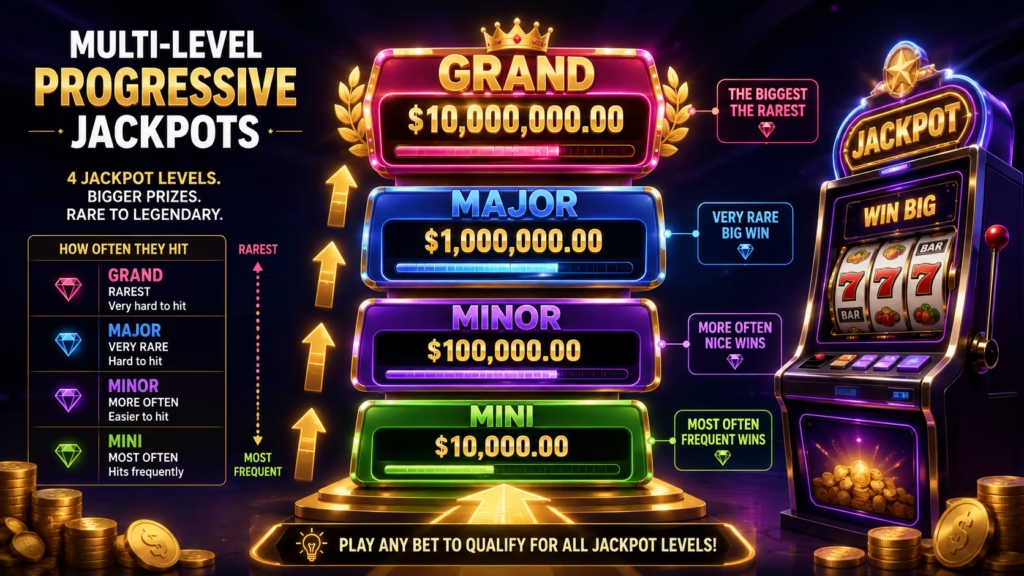
For example, a game might offer four progressive levels. The smallest could reset to a relatively modest amount after being won, while the highest tier could start much larger and continue growing for considerably longer. The exact number of jackpots is not standardized and can vary between games and providers.
The names are not standardized either. A provider might use Mini, Minor, Major and Grand, while another game might include Maxi, Mega or branded jackpot names. What matters is not the label but the rules attached to each meter.
How Do Multi-Level Progressive Jackpots Work?
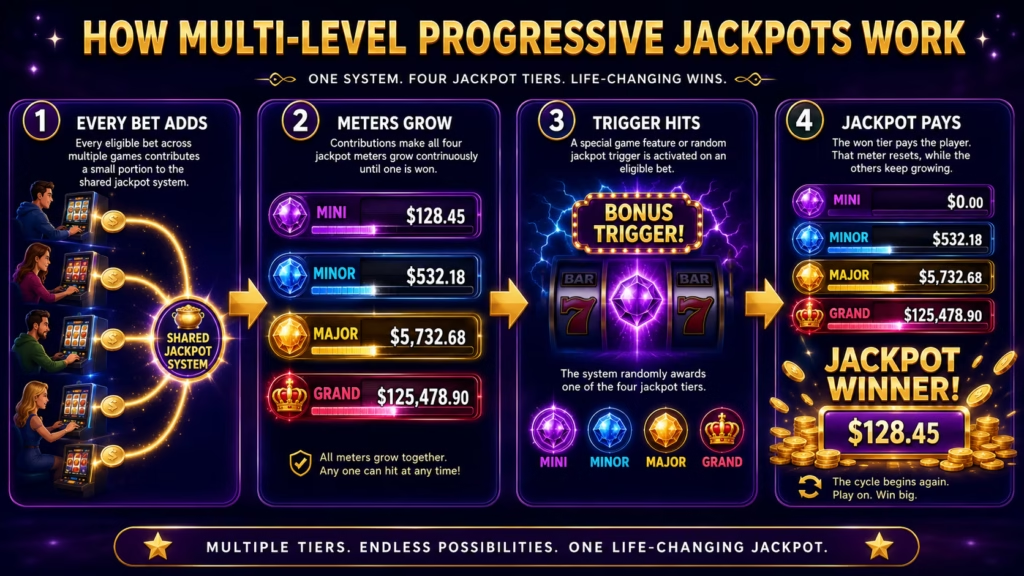
Multi-level progressive jackpots usually work through four basic components: a starting amount, jackpot funding, an award mechanism and a reset rule.
1. Each Jackpot Starts From a Base Value
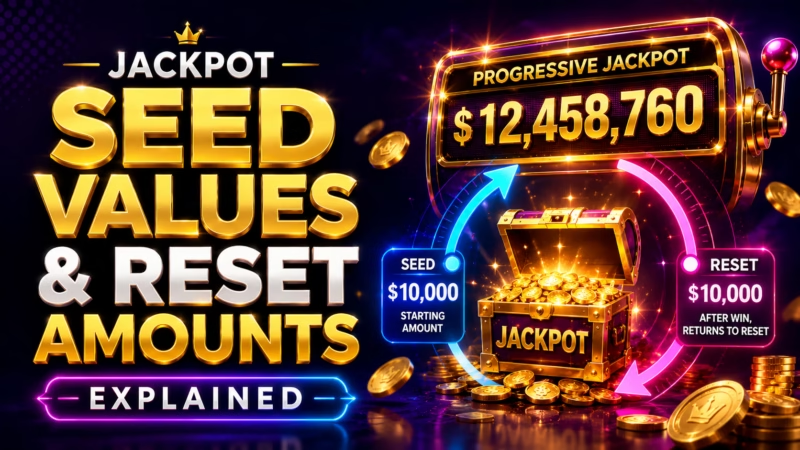
A progressive jackpot does not normally restart from zero after being won. It has a predefined seed or starting value specified by the game or jackpot system.
This means two jackpot levels in the same slot can behave differently. A lower tier may reset frequently to a smaller base amount, while the top jackpot may return to a significantly larger starting value.
2. Eligible Play Contributes to Progressive Meters
A progressive jackpot grows because the jackpot system allocates funding according to predetermined rules. The exact contribution method is game-specific, and different jackpot levels do not necessarily grow at identical rates.
Players should therefore avoid assuming that a fixed percentage of every bet is always added directly to every jackpot meter. The specific progression rate, eligibility rules and funding method should be checked in the game rules or paytable.
3. A Defined Event Awards One of the Levels
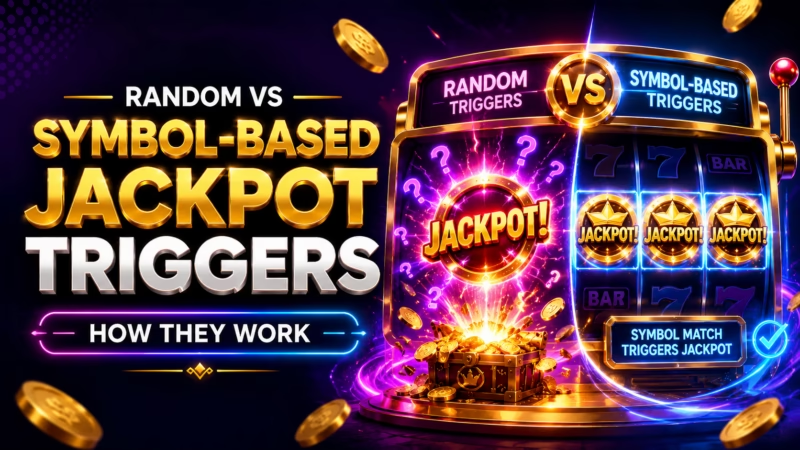
There is no single universal trigger for a multi-level progressive jackpot. Some games use specific symbol combinations, while others use dedicated jackpot features, mystery triggers, Lock & Respin mechanics, collection features or bonus wheels.
The progressive jackpot is still governed by predetermined game rules even when the presentation makes the trigger look different. The paytable or help screen is the best place to check how each level can be awarded.
4. The Winning Meter Resets
After a progressive jackpot is awarded, its meter normally returns to the defined reset value and begins building again.
Winning one level does not automatically mean every other level must reset. Whether other meters continue unchanged, reset or are affected by the jackpot event depends on the specific system.
What Are Mini, Minor, Major and Grand Jackpots?
Terms such as Mini, Minor, Major and Grand generally indicate relative jackpot tiers rather than a universal payout structure.
A lower jackpot level usually represents a smaller progressive prize, while the highest level represents the headline jackpot. However, providers can use different names and different numbers of levels.
Players should not compare two games based only on the words Grand or Major. The actual displayed amount, reset value, trigger rules and eligibility conditions matter more than the tier name.
Multi-Level Progressive vs Single Progressive Jackpot
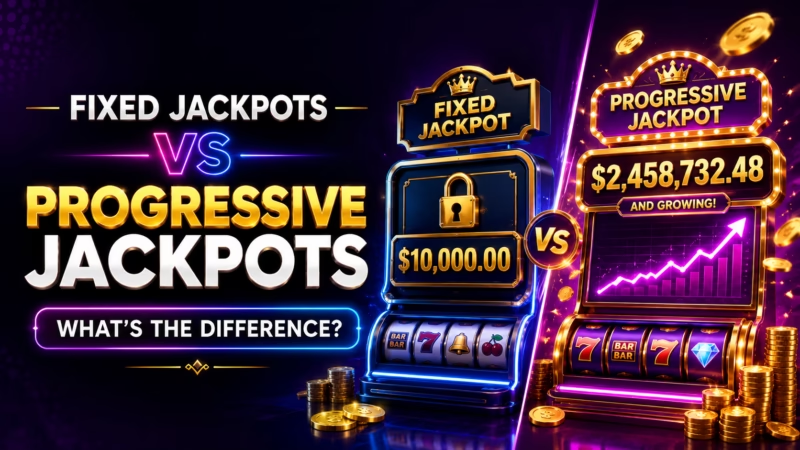
A single progressive game builds one main progressive prize. A multi-level progressive game maintains multiple jackpot prizes.
| Feature | Single Progressive | Multi-Level Progressive |
| Progressive prize levels | Usually one | Several |
| Jackpot meters | One primary meter | Multiple meters |
| Potential triggers | Game-specific | May differ between levels |
| Prize structure | Concentrated in one jackpot | Spread across several tiers |
| Complexity | Usually simpler | Usually more layered |
Neither format is automatically better for the player. A multi-level structure provides more jackpot tiers, but the probabilities and value distribution depend on the mathematical model of the individual game.
Standalone, Linked and Multi-Site Progressives
The term multi-level describes how many jackpot tiers exist, while standalone, linked and multi-site describe how the progressive system is connected.
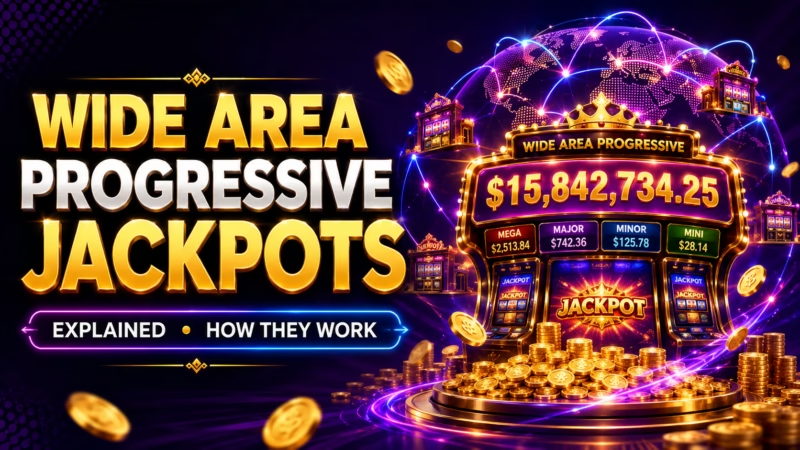
A standalone progressive is associated with a limited individual game configuration. A linked progressive connects multiple eligible games or machines to a progressive system. A multi-site or wide-area arrangement can extend the progressive network beyond a single local group, depending on the system and jurisdiction.
A multi-level progressive can therefore also be linked. Multi-level and linked describe different characteristics and should not be treated as interchangeable terms.
Does Bet Size Affect Jackpot Eligibility?
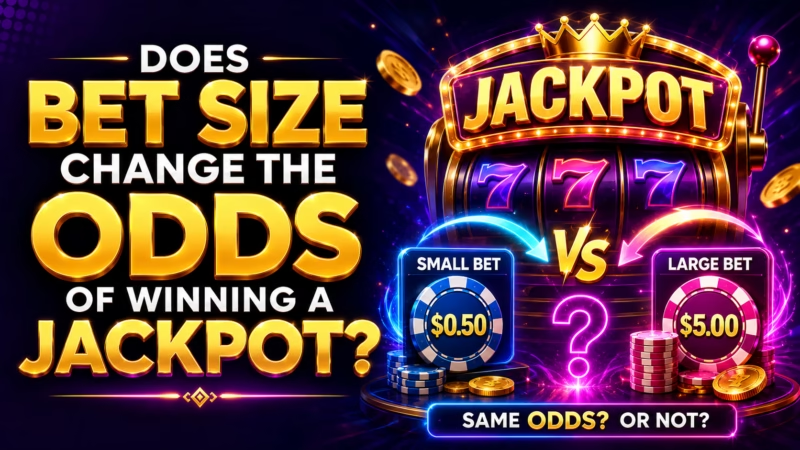
Bet size can affect progressive jackpot eligibility in some games, but there is no universal rule.
A game may require a particular wager configuration to qualify for one or more jackpot levels, while another game may make the progressive available across a broader range of wagers. The rules should clearly explain any eligibility restrictions.
Before playing, check:
- whether all bet sizes qualify;
- whether a particular jackpot requires an additional wager;
- whether jackpot probability changes with stake;
- whether the displayed progressive prize is paid in full at your selected bet;
- whether each jackpot level uses the same eligibility conditions.
Never assume that raising the bet automatically makes the jackpot proportionally easier to win unless the game rules explicitly say so.
How Multi-Level Progressive Jackpots Affect RTP and Volatility
Progressive jackpots can make the relationship between RTP and short-term results especially difficult to judge.
A game’s theoretical RTP may include both its ordinary base-game return and a progressive jackpot component. Some games present one combined RTP figure, while others may separate the base game and jackpot components.
Progressive jackpots can also contribute significantly to volatility because a portion of the theoretical return may be tied to infrequent, potentially large awards.
For the player, the practical consequence is important: a game can have an apparently competitive theoretical RTP while still producing highly uneven individual sessions. RTP is a long-term mathematical expectation. It does not tell you whether the next session, next 100 spins or next 1,000 spins will be profitable.
Are Multi-Level Progressive Jackpots Random?
In RNG-based online casino games, qualifying outcomes are generated according to the game’s mathematical rules. A random jackpot can still use several different mechanisms.
A progressive may be awarded because a random reel outcome produces the required symbols. Another game may first randomly trigger a bonus and then determine which jackpot is awarded through the bonus rules. Some products use mystery progressive triggers that are not tied to a visible symbol combination.
The only reliable way to know the mechanism is to read the rules for the specific game.
Does a Bigger Jackpot Mean It Is More Likely to Hit?
A larger displayed jackpot does not, by itself, prove that the jackpot is more likely to be awarded soon.
A progressive meter can increase simply because eligible play continues contributing to it. The growing amount should not be interpreted as a countdown to a jackpot unless the game explicitly contains a rule that connects the jackpot value with its trigger conditions.
For an ordinary RNG-based progressive, previous spins do not make a future random outcome due. A high meter shows accumulated value, not a guaranteed approach to a win.
Common Multi-Level Progressive Jackpot Myths
The Grand jackpot must hit soon because it is unusually high
Not necessarily. A high meter shows that the jackpot has accumulated value. It does not automatically reveal when the winning event will occur.
Playing longer improves my chances on the next spin
Past losses do not make a normal random spin more favorable. Each eligible outcome continues to follow the game’s defined probability model.
Every jackpot level has the same odds
Not necessarily. Different jackpot levels can have different trigger rules and mathematical probabilities.
Maximum bet always gives the best jackpot chance
Not universally. Bet requirements vary by game, so the paytable and jackpot rules should be checked before increasing the stake.
A progressive jackpot is extra money outside RTP
Not necessarily. A game’s theoretical return may include a progressive component, or the base-game and jackpot components may be presented separately.
How to Evaluate a Multi-Level Progressive Game
Before playing a multi-level progressive jackpot slot, focus on the rules rather than the size of the headline meter.
- Number of jackpot levels. Identify exactly which prizes are progressive.
- Current jackpot amounts. Check the live meter values shown by the game.
- Eligibility requirements. Confirm whether your selected stake qualifies for every jackpot.
- Trigger method. Check whether jackpots come from reel symbols, a bonus, a mystery trigger or another mechanic.
- RTP information. Determine whether the listed RTP includes the jackpot contribution.
- Reset values. Knowing the normal starting level gives useful context for a large current jackpot.
- Game volatility. Progressive jackpot games can concentrate substantial value into infrequent prizes.
- Casino terms. Availability, limits and jackpot handling can differ between operators and jurisdictions.
The largest displayed jackpot should not be the only selection criterion. A player with a limited entertainment budget may find a highly volatile progressive format unsuitable even if the headline jackpot is attractive.
How This Information Was Reviewed
This explanation is based on the standard structure of progressive jackpot systems, including jackpot funding, jackpot displays, RNG behavior, RTP, reset values and player eligibility.
The exact jackpot levels, probabilities, progression rates, reset amounts and eligibility rules cannot be assumed across all games. Those details should always be checked in the individual game’s rules or paytable.
Multi-level progressive slots should be treated as paid entertainment, not as a method of generating income. Jackpot size, RTP and previous results cannot guarantee a winning session. Set spending limits before playing and stop if gambling stops being recreational.
FAQ
What is a multi-level progressive jackpot?
A multi-level progressive jackpot is a system that offers several progressive jackpot tiers within the same game or connected jackpot setup. Each tier can have its own starting value, current meter and award conditions.
How do multi-level progressive jackpots work?
Multi-level progressive jackpots start from predefined values and increase according to the jackpot system’s funding rules until the relevant level is awarded. The winning level then resets according to the game’s rules.
How many jackpot levels can an MLP slot have?
There is no universal number of jackpot levels. Four-tier systems are common in some products, but games can offer fewer or more levels depending on the design.
Are Mini, Minor, Major and Grand jackpots always progressive?
No. Jackpot labels alone do not prove how a prize works. Check the game’s rules to determine which levels are progressive, fixed or awarded through another mechanic.
Can the Grand jackpot be predicted?
No reliable prediction can be made from the displayed jackpot amount alone. In RNG-based games, previous losing spins do not guarantee that a jackpot is approaching.
Does betting more increase the chance of winning a progressive jackpot?
It depends on the game. Some progressive games use wager-related eligibility or probability rules, while others work differently. The paytable should state whether bet size affects qualification or jackpot probability.
What happens to the jackpot after someone wins?
The awarded progressive meter normally returns to its defined reset value. Other jackpot levels may continue unchanged or operate according to separate reset rules, so the exact behavior depends on the individual system.
Is a multi-level progressive jackpot the same as a wide-area progressive?
No. Multi-level refers to having several jackpot tiers, while wide-area describes the scope of a progressive network. A game can be both multi-level and linked or wide-area.
Do progressive jackpots change a slot’s RTP?
A progressive jackpot can form part of the game’s theoretical return. Depending on how the game reports RTP, the jackpot component may be included in one combined figure or shown separately from the base-game return.
Are multi-level progressive slots good for small bankrolls?
They may be less suitable for players who dislike high variance or need predictable session length. Progressive jackpots can involve infrequent, potentially large awards. Gambling should be treated as entertainment and spending limits should be set in advance.
Brief Conclusion
Multi-level progressive jackpots combine several growing jackpot prizes in one system, giving players multiple progressive tiers instead of one headline award. Each level can have different values, triggers, progression rules and eligibility requirements.
The most important point is that a larger jackpot does not mean a win is due. Check the paytable, jackpot eligibility, trigger conditions, RTP information and reset rules before playing. Multi-level progressives can create large potential prizes, but they also involve random outcomes and potentially high volatility, so they should be approached strictly as entertainment.