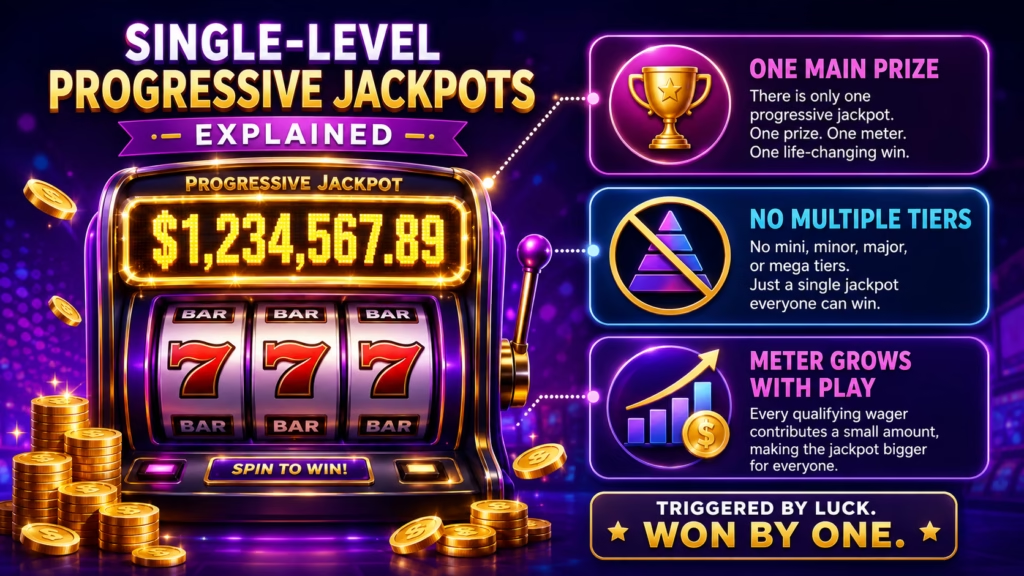
A single-level progressive jackpot is a casino jackpot with one progressive prize rather than several separate jackpot tiers. The jackpot usually starts at a predefined seed value, grows as qualifying wagers are made, and resets after somebody wins it. The exact contribution rate, trigger method, eligibility rules and reset value depend on the specific game.
The main difference from a multi-level progressive is simple: a single-level system has one growing jackpot to target, while multi-level systems may divide progressive prizes into tiers such as Mini, Minor, Major and Grand.
Quick takeaways:
- A single-level progressive jackpot has one accumulating progressive prize.
- The jackpot usually increases as eligible bets contribute to its prize pool.
- Winning the jackpot may depend on symbols, a bonus feature or a random trigger.
- A larger displayed jackpot does not necessarily mean the jackpot has become easier to win.
- Bet requirements, RTP contribution and eligibility rules should always be checked in the game rules or paytable.
Single-level progressive jackpots may appeal to players who prefer a straightforward jackpot structure and want to see one headline prize growing rather than track several jackpot levels. They require more caution from anyone tempted to increase bet size simply because the displayed jackpot has become large.
What Is a Single-Level Progressive Jackpot?
A single-level progressive jackpot is a progressive prize system in which only one jackpot amount increases over time. Once the qualifying winning condition occurs, the accumulated jackpot is paid and the meter normally returns to a predetermined starting amount.
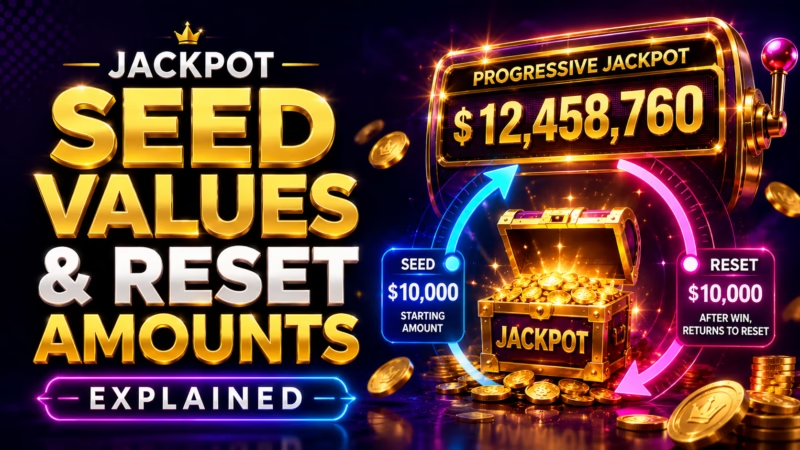
For example, a game might begin with a progressive jackpot of $10,000. Qualifying wagers gradually increase the displayed amount to $14,500. When an eligible player triggers the jackpot, that player receives the progressive prize according to the game rules, and the meter then resets to its configured seed value.
The word “progressive” refers to the fact that the jackpot can increase. The phrase “single-level” refers to the fact that there is only one progressive jackpot tier.
This distinction is important because many modern jackpot games use several levels. A single-level progressive keeps the prize structure simpler by concentrating the progressive mechanic into one jackpot.
How Do Single-Level Progressive Jackpots Work?
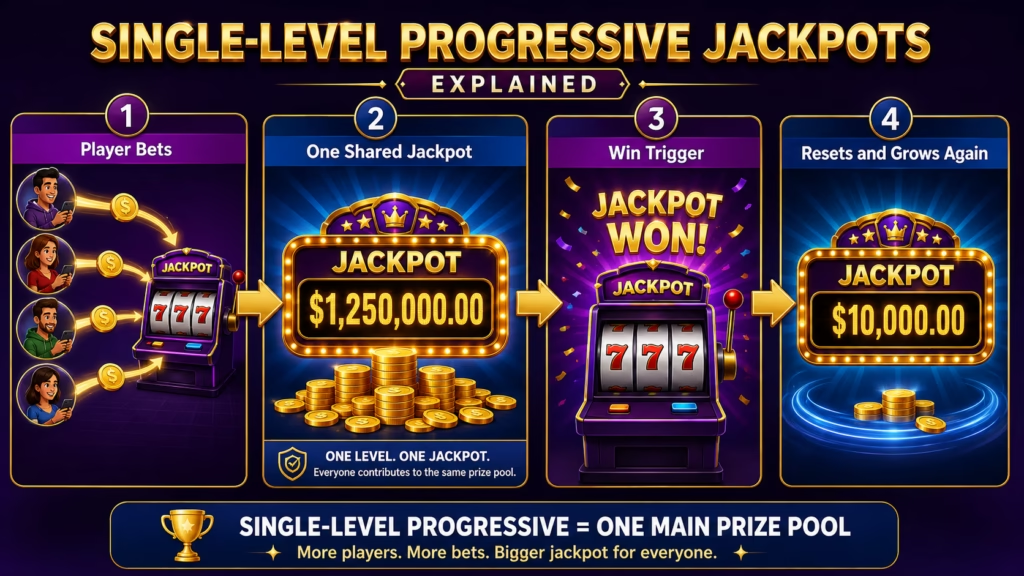
Single-level progressive jackpots generally follow a four-stage cycle:
1. The jackpot starts at a seed value.
2. Qualifying wagers contribute to or otherwise drive the progressive meter.
3. An eligible jackpot trigger occurs.
4. The jackpot is awarded and resets.
The precise implementation varies between games.
1. The Jackpot Starts at a Seed Value
The seed value is the amount from which the progressive jackpot begins after a reset. It prevents the jackpot from returning to zero after a win.
If a jackpot resets to $5,000, for example, the next jackpot cycle begins at approximately that configured level rather than starting from nothing.
The reset amount is determined by the game or jackpot system. Players cannot choose or influence it.
2. The Progressive Prize Grows
A progressive jackpot normally increases as qualifying wagers are placed. A portion of eligible wagering activity may be allocated to the jackpot pool, although the exact contribution mechanism varies by game and operator.
Suppose a progressive meter displays $20,000 and qualifying wagering gradually pushes it to $22,000. The extra $2,000 represents jackpot growth since the most recent reset.
Players should not assume that every wager contributes in exactly the same way. Some games require particular bet levels, jackpot side bets or other qualifying conditions.
3. A Jackpot Trigger Occurs
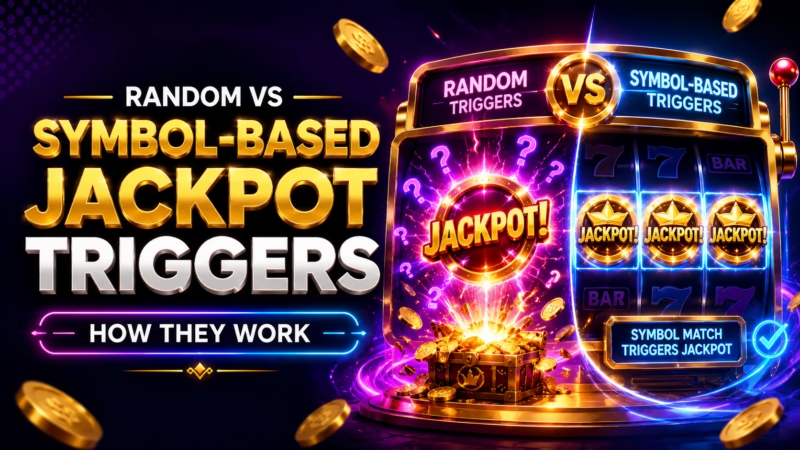
The jackpot is awarded when the game’s specified trigger condition is satisfied. A single-level progressive jackpot does not have one universal trigger mechanism.
Common structures include:
- landing a specific combination of jackpot symbols;
- activating a dedicated jackpot bonus;
- collecting particular symbols or values;
- triggering a randomly determined jackpot event;
- satisfying another condition defined in the game rules.
Because the trigger method affects how the jackpot works, the paytable and official game rules are more useful than assumptions based on the size of the jackpot meter.
4. The Jackpot Resets
After a qualifying jackpot win, the progressive meter normally resets to its configured seed amount and begins another cycle.
A reset does not mean future players are recovering money lost from the previous jackpot. Each eligible game outcome remains governed by the rules and random mechanism of that game.
Single-Level vs Multi-Level Progressive Jackpots
The most important difference is the number of progressive prizes available.
| Feature | Single-Level Progressive | Multi-Level Progressive |
| Progressive jackpot tiers | One | Two or more |
| Prize structure | Simple | More complex |
| Typical display | One growing amount | Several jackpot meters |
| Possible jackpot names | One main jackpot | Mini, Minor, Major, Grand or similar |
| Player focus | One headline prize | Several possible progressive prizes |
| Trigger structure | Depends on the game | May use different triggers for each level |
A multi-level jackpot can provide smaller progressive prizes alongside a much larger top prize. A single-level progressive usually concentrates attention on one accumulating jackpot.
Neither structure is automatically better. The relevant questions are how the jackpot is triggered, what wager qualifies, how frequently different prizes can occur and how the progressive component affects the game’s overall mathematics.
Are Single-Level Progressive Jackpots Local or Networked?
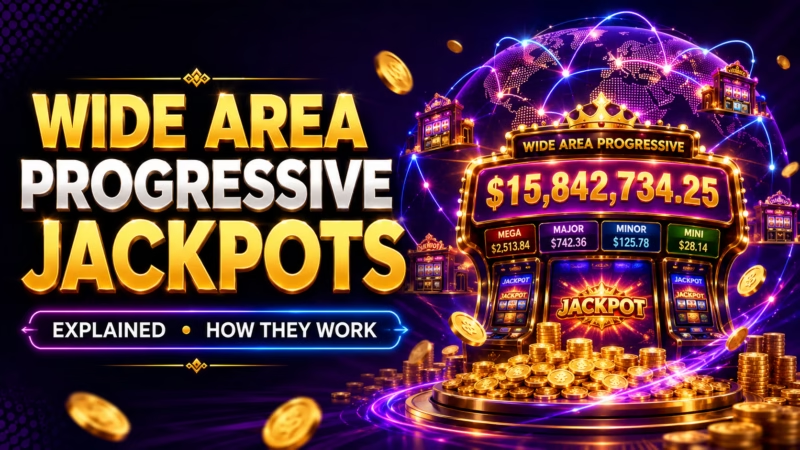
A single-level progressive jackpot can potentially be implemented in different network structures. “Single-level” describes the number of jackpot tiers, not necessarily how many machines, casinos or online games contribute to the jackpot.
A progressive jackpot may be linked only to one game installation or connected across multiple eligible games or operators, depending on the system.
A wider network can allow a jackpot meter to grow faster because more qualifying wagering activity may feed the same progressive pool. However, a larger network should not automatically be interpreted as better winning odds.
Players should check the game’s jackpot information rather than assuming that “single-level” means “single machine” or “single casino.”
Does Bet Size Affect a Single-Level Progressive Jackpot?
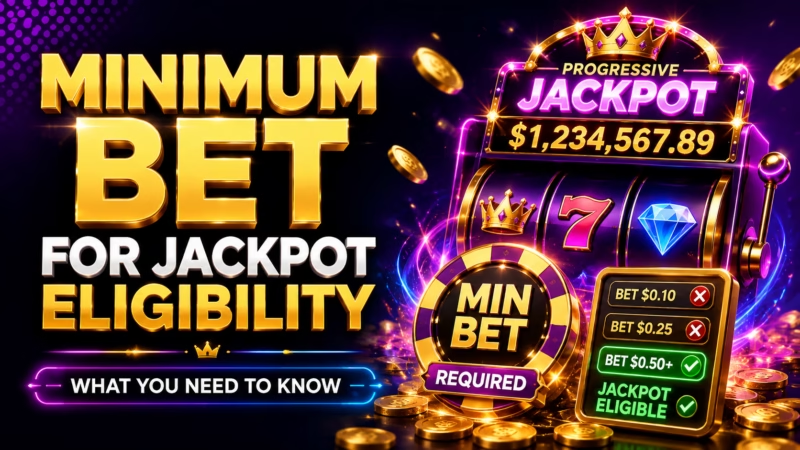
Bet size may affect jackpot eligibility in some games, but maximum bet is not universally required to win a progressive jackpot.
Different games may use different rules. A jackpot could require:
- a minimum qualifying wager;
- a specific jackpot bet;
- all paylines or ways to be active;
- a particular stake level;
- or simply any eligible wager.
Some games may also scale a jackpot award according to the amount wagered, while others award the displayed jackpot once the qualifying conditions are met.
The practical rule is simple: check jackpot eligibility before playing. Increasing the wager without understanding the rules can raise the amount at risk without necessarily improving jackpot eligibility or probability.
Does a Bigger Jackpot Mean Better Odds?
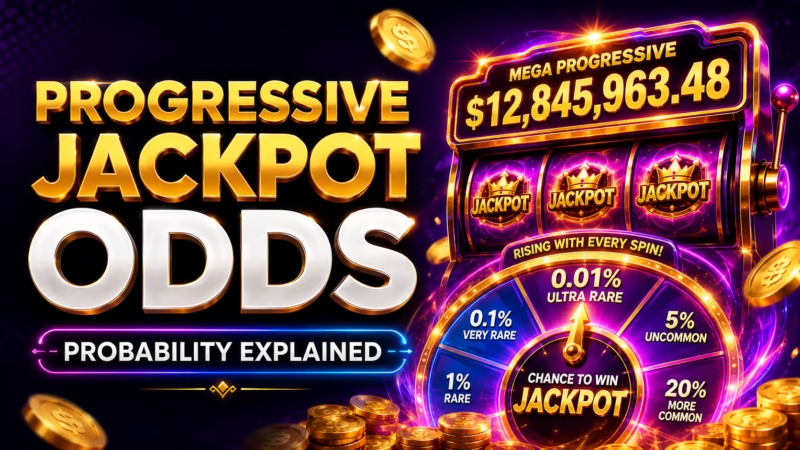
A larger progressive jackpot does not normally mean that the jackpot has become more likely to trigger unless the game rules specifically connect probability with jackpot size.
The meter shows the value of the prize, not automatically the probability of receiving it.
If the jackpot trigger has a fixed probability under a game’s mathematical model, the chance of hitting it can remain unchanged while the prize increases from $10,000 to $50,000.
The financial value of the opportunity can change as the prize grows, but this should not be confused with an increased probability of winning. A jackpot can become much larger while remaining extremely difficult to hit.
How Do Progressive Jackpots Affect RTP?
A progressive jackpot can form part of a game’s theoretical return, but the way the jackpot component is incorporated into RTP depends on the game’s mathematical model and published rules.
RTP, or return to player, is a long-term theoretical percentage calculated over a very large number of game rounds. It does not tell a player what will happen during one session.
Progressive games can be particularly misleading if RTP is interpreted too simply. Part of the theoretical return may depend on a jackpot event that occurs rarely, meaning ordinary sessions may look very different from the long-term mathematical average.
The published RTP should therefore be checked alongside:
- jackpot contribution rules;
- qualifying bet requirements;
- jackpot trigger conditions;
- current jackpot structure;
- game-specific RTP information.
A higher jackpot amount also does not guarantee that a particular player has a profitable opportunity. Gambling outcomes remain uncertain.
Can You Predict When a Single-Level Jackpot Will Hit?
A properly functioning random progressive jackpot cannot be reliably predicted from recent results, the length of time since the previous win or the current meter alone.
Common assumptions such as “the jackpot has not hit for weeks, so it must be due” confuse probability with historical patterns.
Previous losing rounds do not create a debt that the game must repay to the next player.
Some jackpot systems can contain special rules, such as a must-hit-by value or another defined trigger range. If such a mechanism exists, it should be explicitly described in the game’s rules. Players should not assume that every progressive jackpot becomes due at a particular amount.
Common Myths About Single-Level Progressive Jackpots
“The jackpot is due after a long losing streak”
A long period without a jackpot does not by itself prove that the next spin or round has a higher chance of triggering it. Random outcomes should not be treated as a countdown.
“Maximum bet always gives the best jackpot odds”
Some games require a certain bet for jackpot eligibility, while others do not. Betting more without checking the rules can simply increase expenditure.
“A large jackpot must be easier to win”
The displayed prize amount and trigger probability are separate variables unless the game’s rules explicitly link them.
“The jackpot meter shows how close the game is to paying”
A progressive meter normally displays prize value. It should not be interpreted as a progress bar toward an inevitable jackpot unless the game specifically uses such a mechanic.
“You can recover losses by waiting for the jackpot”
A progressive jackpot should never be treated as a way to recover previous gambling losses. The possibility of a large prize does not remove the risk of losing further wagers.
What to Check Before Playing a Single-Level Progressive Jackpot
The most useful information is found in the game rules and paytable rather than the headline jackpot amount.
- Jackpot trigger: Find out exactly what event awards the progressive prize.
- Bet requirement: Confirm whether a minimum or specific qualifying stake is required.
- Maximum-bet rule: Do not assume maximum stake is necessary unless the rules say so.
- Jackpot award structure: Check whether the full displayed amount is paid at every qualifying stake.
- RTP: Review the available RTP information and whether alternative configurations exist.
- Reset value: The starting jackpot can help explain how much the current meter has increased.
- Network structure: Determine whether the jackpot is local or connected across a broader network if that information is provided.
- Game rules: Check whether special mechanics such as must-hit-by limits apply.
These criteria are more meaningful than selecting a game simply because its current jackpot is larger.
Who May Prefer Single-Level Progressive Jackpots?
Single-level progressive jackpots may suit players who prefer simple jackpot structures with one clearly visible top prize.
The format can be easier to understand than a game with four or five progressive levels because there is only one progressive meter to evaluate.
It may be less suitable for players who prefer frequent smaller bonus prizes or who find themselves chasing a growing jackpot by increasing stakes. A large prize display can make disciplined bankroll limits especially important.
Before playing, decide the maximum amount you are prepared to spend and do not increase that limit because the jackpot has grown.
How to Evaluate a Single-Level Progressive Game
A progressive game should be assessed using its rules and mathematics, not just its advertised jackpot.
A practical evaluation can use five criteria:
1. Understand the trigger. Know what actually causes the jackpot to be awarded.
2. Check eligibility. Confirm which wagers qualify.
3. Review RTP information. Remember that theoretical RTP does not predict a short session.
4. Compare the reset and current jackpot. This shows how much the prize has grown, but not when it will be won.
5. Set a fixed spending limit. Decide the limit before playing rather than changing it in response to wins, losses or jackpot growth.
A progressive jackpot can add a large potential prize to a casino game, but it does not provide a reliable method for earning money.
How This Information Was Reviewed
The explanation of single-level progressive jackpots is based on the core mechanics that should be checked when evaluating any progressive game: number of jackpot tiers, reset structure, jackpot growth, qualifying wagers, trigger conditions, RTP information and payout rules.
Specific jackpot contribution percentages, probabilities and wagering requirements are not universal. These details should be confirmed in the official game rules or paytable because they can differ between games and operators.
RTP describes theoretical long-term return and does not predict the result of an individual session. Jackpot size also does not by itself indicate when a jackpot will trigger.
Casino games should be treated as entertainment rather than a source of income. Set spending and time limits before playing, never chase losses and stop if gambling stops being enjoyable or affordable.
FAQ
What is a single-level progressive jackpot?
A single-level progressive jackpot is a progressive prize system with one accumulating jackpot tier. The prize normally starts from a seed amount, grows through qualifying wagering activity and resets after an eligible jackpot win.
How do single-level progressive jackpots work?
Single-level progressive jackpots generally start at a reset value, increase as eligible wagers contribute to the progressive system, pay when the specified trigger occurs and then reset. The exact trigger and contribution rules vary by game.
What is the difference between single-level and multi-level progressive jackpots?
A single-level progressive has one progressive jackpot, while a multi-level system contains several progressive prizes. Multi-level games may use tiers such as Mini, Minor, Major and Grand, while a single-level game focuses on one accumulating prize.
Do you need to bet the maximum to win a single-level progressive jackpot?
Not necessarily. Some games require a particular qualifying wager, but maximum bet is not a universal requirement. The paytable or game rules should state the exact jackpot eligibility conditions.
Does a progressive jackpot become easier to win as it grows?
Not automatically. Jackpot value and jackpot probability are separate characteristics unless the game’s rules specifically connect them. A jackpot may become much larger while its trigger probability remains unchanged.
Can you tell when a progressive jackpot is about to hit?
Usually not. Previous results and the current jackpot amount generally do not reveal when a random jackpot will trigger. Special systems such as must-hit-by jackpots can have additional rules, but those rules should be explicitly stated.
Does a single-level progressive jackpot affect RTP?
It can. The progressive jackpot may form part of the game’s theoretical RTP, but the exact treatment depends on the game’s mathematical configuration. Players should check the published RTP and jackpot rules for the specific game.
Are single-level progressive jackpots always linked between multiple casinos?
No. Single-level describes the number of progressive jackpot tiers, not the size of the jackpot network. A single-level jackpot may use a local or wider network structure depending on the game.
Is a single-level progressive jackpot worth playing when the prize is very large?
A larger jackpot increases the potential prize but does not guarantee favorable short-term results or increase the probability of winning. Consider the game’s RTP, jackpot rules, qualifying bet and your spending limit rather than choosing based only on jackpot size.
Brief Conclusion
A single-level progressive jackpot has one progressive prize that typically grows from a predefined seed value until an eligible player triggers it. Its simplicity makes it easier to understand than a multi-level jackpot system, but the essential details still vary between games.
Before playing, check the trigger, qualifying wager, RTP, reset value and payout rules. Do not assume a bigger jackpot is easier to win or that maximum bet improves your chances unless the rules explicitly say so. Progressive jackpots remain random casino games and should be treated as entertainment, not as a way to make money.