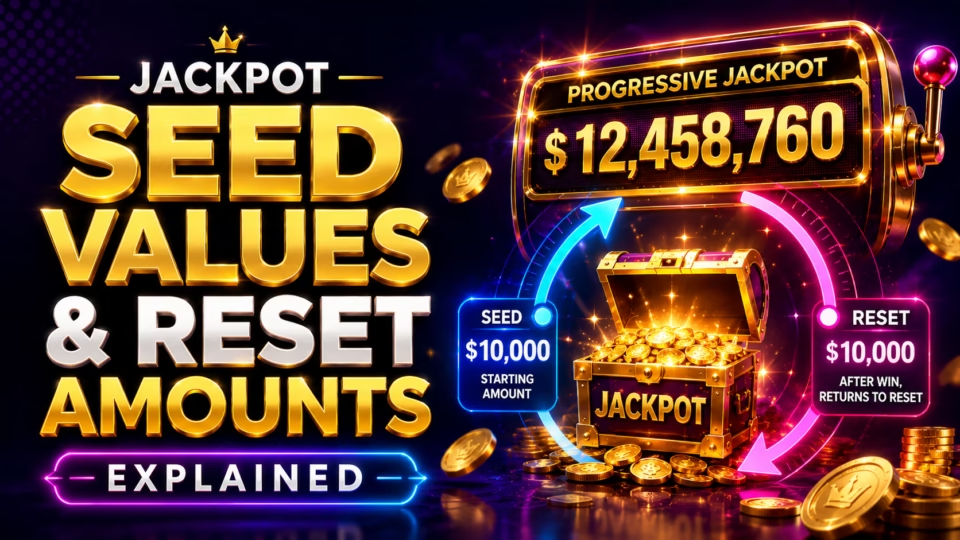
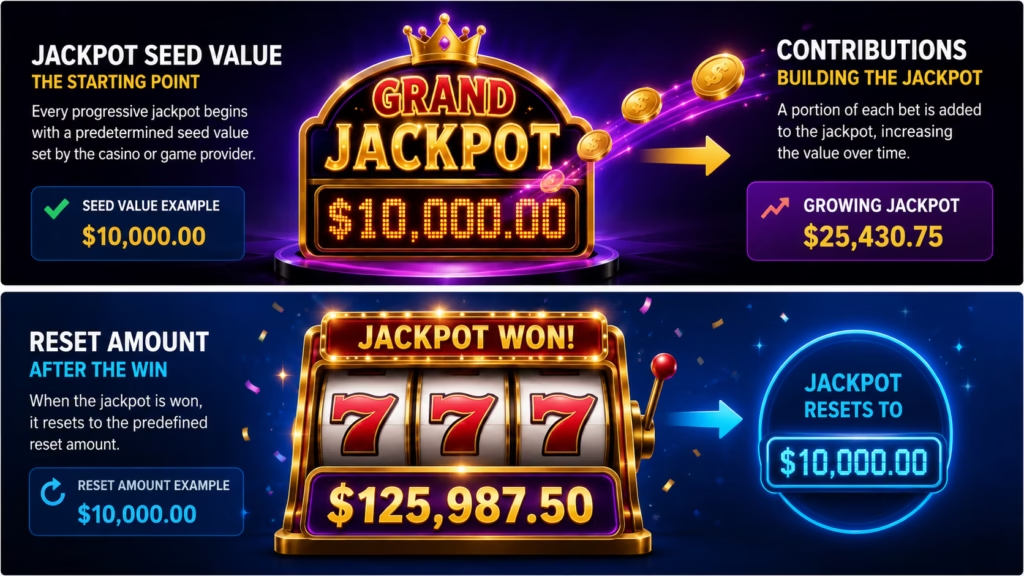
A jackpot seed value is the starting amount placed into a progressive jackpot before player contributions begin increasing the prize. The jackpot reset amount is the value to which the jackpot returns after the jackpot has been won. In many games, the seed value and reset amount are effectively the same figure, although jackpot systems can use different rules depending on the provider, casino, jackpot network, and game configuration.
For example, if a progressive jackpot starts at $10,000 and grows as eligible bets are placed, $10,000 may be described as its seed value. If someone wins the jackpot at $85,000 and the meter immediately returns to $10,000, then $10,000 is also the jackpot reset amount.
Key points:
- A jackpot seed value establishes the prize’s starting level.
- A jackpot reset amount determines where the meter starts again after a win.
- Seed and reset values are often identical, but they do not have to be.
- A larger jackpot meter does not automatically mean the jackpot is more likely to trigger.
- Exact jackpot rules should always be checked in the game’s paytable or official jackpot information.
Jackpot terminology is especially useful for players comparing progressive slots, multi-level jackpots, linked casino jackpots, and games where several prize meters operate independently.
What Is a Jackpot Seed Value?
A jackpot seed value is the initial monetary value assigned to a jackpot before additional contributions increase the displayed prize. It prevents a progressive jackpot from starting at zero after launch or after a previous jackpot has been paid.
The seed can be funded according to the structure of the jackpot system. Depending on the game, funding may be handled by a game provider, casino operator, jackpot network, or through a mechanism built into the jackpot’s mathematical model. Players should not assume that the displayed starting value represents money contributed during the current jackpot cycle.
Consider a hypothetical jackpot with a $5,000 seed value. When a new jackpot cycle begins, the meter shows $5,000. Eligible wagering then contributes small amounts to the progressive pool. If the jackpot eventually reaches $17,500 before being won, the $12,500 difference represents growth above the original starting value.
The exact funding method varies, so the game’s official rules are the appropriate source for determining how a specific jackpot is seeded.
What Is a Jackpot Reset Amount?
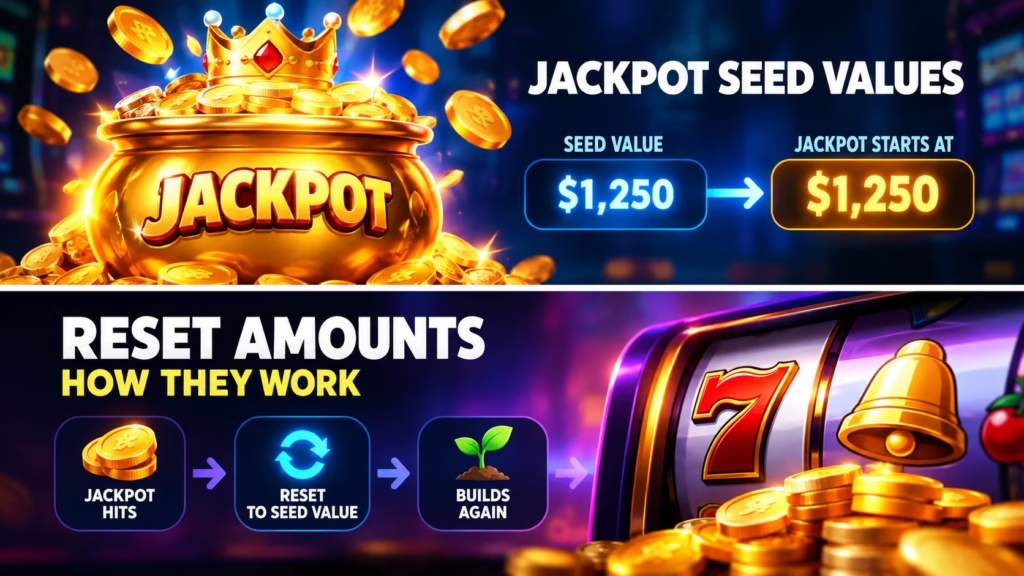
A jackpot reset amount is the amount displayed immediately after a progressive jackpot has been won and the jackpot meter begins a new cycle.
- Jackpot reset amount: $20,000
- Jackpot grows to: $74,350
- A qualifying player wins the jackpot.
- The jackpot pays according to its rules.
- The meter resets to $20,000.
- Progressive accumulation begins again.
The reset prevents the jackpot from beginning its next cycle at zero.
A reset amount can therefore be viewed as the floor from which the next jackpot grows, although jackpot rules may include additional mechanisms that affect the displayed meter.
Jackpot Seed Value vs Jackpot Reset Amount
The terms jackpot seed value and jackpot reset amount describe closely related concepts, but they refer to different moments in the jackpot’s life cycle.
| Term | What It Means | When It Applies |
| Jackpot seed value | Initial value assigned to a jackpot | When a jackpot or jackpot cycle is established |
| Jackpot reset amount | Value restored after a jackpot win | Immediately after the jackpot is hit |
| Current jackpot value | Amount currently shown to players | While the jackpot is accumulating |
| Progressive contribution | Amount added as qualifying bets are made | During the active jackpot cycle |
A jackpot can have a $10,000 seed value, reset to $10,000 after every win, and later display $40,000 because contributions have accumulated.
In a simpler system, the seed value and reset value are identical. More complex jackpot structures may define them differently, so these terms should not automatically be treated as interchangeable without checking the rules.
How Does a Progressive Jackpot Grow Above Its Seed Value?
A progressive jackpot generally grows because a predefined portion of eligible wagering contributes to the jackpot pool. The exact contribution mechanism depends on the game and jackpot system.
A simplified hypothetical model looks like this:
Current jackpot = starting value + accumulated jackpot contributions
If a jackpot starts at $25,000 and receives $8,000 in eligible contributions, its displayed value could reach $33,000.
This example explains the basic principle rather than the mathematics of every progressive game. Actual jackpot systems can include several accounting pools, multiple jackpot levels, reserve amounts, network contributions, or other provider-specific mechanisms.
Players should therefore avoid calculating future jackpot amounts from betting volume unless the contribution rules are explicitly published.
Who Provides the Jackpot Seed?
The source of a jackpot seed depends on the structure of the jackpot.
In some systems, the seed is incorporated into the jackpot configuration operated by the casino or game provider. In networked progressive systems, funding may be managed across participating games or casinos. Some jackpot models can also maintain reserve funding used to support future reset values.
This matters because the displayed seed is not necessarily a direct reflection of recent player wagers.
The technical accounting behind a jackpot may also be invisible to players. What matters from a player’s perspective is the starting jackpot, current jackpot value, qualifying conditions, and rules governing how the prize is awarded.
Can a Jackpot Reset to a Different Amount?
Yes. A jackpot reset amount does not necessarily have to remain permanently fixed.
Different jackpot configurations can use different starting or reset rules. A provider may also operate several versions of a game, and jackpot parameters can depend on the casino or jackpot network.
For this reason, seeing the same game title at two casinos does not automatically prove that both versions participate in an identical progressive pool.
Before comparing jackpots, check:
- whether the jackpot is local or networked;
- whether the games belong to the same jackpot network;
- the displayed jackpot amount;
- the jackpot’s qualifying conditions;
- whether jackpot values are shown in the same currency;
- whether the official rules identify a starting or minimum jackpot.
The displayed jackpot meter and official game rules are more reliable than assuming every installation uses the same configuration.
Seed Values in Multi-Level Progressive Jackpots
A multi-level progressive jackpot can contain several independent jackpot tiers, each with its own starting value and growth pattern.
A hypothetical four-level system might contain:
- Mini
- Minor
- Major
- Grand
The Mini jackpot might reset frequently at a relatively low value, while the Grand jackpot could begin from a much larger seed and accumulate over a longer period.
Each level may also have separate triggering conditions.
Winning one jackpot tier does not necessarily mean every other jackpot meter resets. The exact behavior depends on the game’s rules.
This is why players evaluating multi-level jackpots should examine individual tiers rather than treating the displayed jackpot system as one single prize pool.
Does a Bigger Jackpot Mean It Is More Likely to Pay?
A larger progressive jackpot does not automatically mean the jackpot is more likely to trigger.
The jackpot meter shows prize value, not necessarily jackpot probability.
In some jackpot designs, the triggering probability may remain governed by the same mathematical conditions regardless of how large the meter becomes. Other jackpot formats can use different mechanics, including prize ranges or special trigger systems.
Without published rules, it is not reasonable to assume that a jackpot at $1 million is “due” simply because it has grown far above its reset amount.
A long period without a jackpot also does not prove that the next spin has a higher chance of winning it.
Does the Jackpot Seed Affect RTP?
A jackpot’s funding can form part of the game’s overall mathematical design, but the seed value alone is not enough to determine a game’s RTP.
RTP, or return to player, is a theoretical long-term percentage calculated across a very large number of plays. A progressive jackpot may contribute part of the overall theoretical return, but the exact treatment depends on the game’s mathematics.
Two important distinctions apply:
- A high jackpot value does not tell you the game’s complete RTP.
- Theoretical RTP does not predict what will happen during a particular session.
Players comparing progressive games should check the published RTP information where available rather than trying to infer it from the jackpot meter.
Jackpot Reset Amount vs Current Jackpot Value
The reset amount is the starting point, while the current jackpot value is the amount available under the jackpot’s current cycle and rules.
Suppose a jackpot resets to $50,000.
- Day 1: $50,800
- Day 5: $57,400
- Day 15: $72,600
- Jackpot won: $74,150
- New cycle: meter returns to $50,000
In this hypothetical example, $50,000 is the reset value and $74,150 is the value reached before the jackpot was won.
The difference between those amounts shows how much the visible jackpot increased during that cycle, but it does not reveal the probability of winning it.
Local vs Networked Jackpot Seeds
A local progressive jackpot usually accumulates from a limited group of machines or games, while a networked progressive jackpot can combine qualifying activity from a much larger group of participating games or casinos.
Networked jackpots can therefore accumulate differently because more eligible play may contribute to the progressive system.
Seed values can also differ significantly between jackpot structures.
The important point is that jackpot size alone does not indicate whether a game offers better underlying odds. A large network jackpot can attract attention because of its prize size, but players should still examine eligibility requirements and game rules separately.
Common Misconceptions About Jackpot Reset Amounts
“The jackpot has grown far above its seed, so it must pay soon”
This conclusion is not justified unless the jackpot rules specifically describe a maximum value, must-hit-by mechanism, or other trigger range.
For ordinary random progressive systems, jackpot age or size should not automatically be interpreted as evidence that the next payout is approaching.
“The reset amount is the smallest amount the casino is willing to pay”
The reset amount is better understood as part of the jackpot’s configuration. Its funding and accounting depend on the underlying system.
It should not be interpreted as a prediction of when the prize will be won.
“A higher seed means better chances”
A larger jackpot seed means a larger starting prize. It does not, by itself, establish a higher jackpot probability.
Probability and prize size are separate characteristics unless the game rules explicitly connect them.
“A jackpot that just reset is not worth playing”
A reset jackpot has a smaller prize than the same jackpot after substantial accumulation, but that fact alone does not reveal the probability of triggering the jackpot.
Players should compare the complete game mathematics rather than relying solely on the meter.
How to Evaluate a Progressive Jackpot
When comparing jackpot games, look beyond the headline prize.
1. Current jackpot amount: Check the actual displayed prize.
2. Reset or starting amount: This shows the base level of the jackpot cycle.
3. Jackpot type: Determine whether the jackpot is local, networked, multi-level, mystery, or another format.
4. Qualifying bet: Check whether all stakes qualify or whether specific conditions apply.
5. RTP: Review the available theoretical return information.
6. Game rules: Read the paytable and jackpot conditions.
7. Jackpot tier: Multi-level games can apply different rules to different prizes.
8. Currency and jurisdiction: Jackpot presentation and availability can vary between operators and markets.
A player interested mainly in jackpot mechanics may prefer a game with clearly explained eligibility rules. A player with a limited entertainment budget should pay particular attention to bet requirements rather than choosing a game solely because its headline jackpot is large.
How This Information Was Reviewed
This explanation treats jackpot seed values, reset amounts, progressive accumulation, jackpot tiers, and jackpot eligibility as separate parts of the jackpot system.
Exact values and rules can vary by provider, casino, jurisdiction, and jackpot network. For a specific game, verify the paytable, game rules, current jackpot meter, qualifying stake, and published RTP information before playing.
Jackpot size, RTP, and previous jackpot history cannot guarantee a future result. Casino games involve risk, and random outcomes should not be treated as a predictable source of income. Set spending and time limits before playing and stop if gambling is no longer entertainment.
FAQ
What is a jackpot seed value?
A jackpot seed value is the amount used to establish the jackpot at the beginning of a progressive cycle. Additional eligible wagering can then increase the jackpot above that starting value according to the game’s rules.
What is a jackpot reset amount?
A jackpot reset amount is the value to which a jackpot returns after the previous jackpot has been won. The reset creates the starting point for the next progressive cycle.
Are jackpot seed values and reset amounts the same?
Jackpot seed values and reset amounts are often the same, but this is not guaranteed. A jackpot system can use different configuration rules, so the exact values should be checked in the game’s official information.
Who pays the jackpot seed amount?
The funding structure depends on the jackpot system. A casino operator, provider, jackpot network, or an accounting mechanism within the progressive system may support the starting amount. The exact arrangement is not always visible to players.
Does a jackpot start from zero after someone wins?
Progressive jackpots commonly return to a predefined reset value rather than zero. The exact reset depends on the jackpot rules and configuration.
Is a jackpot more likely to hit when it is far above its reset amount?
Not necessarily. A jackpot’s current value does not automatically indicate its probability of triggering. Unless the rules describe a maximum or must-hit-by mechanism, players should not assume that a large jackpot is due to pay.
Does a higher jackpot seed mean a higher RTP?
No. A larger jackpot seed does not by itself establish a higher RTP. RTP depends on the complete mathematical model of the game, including regular payouts and any jackpot component included in the theoretical return.
Can different casinos have different reset amounts for the same game?
They may, depending on game configuration and whether the casinos participate in the same jackpot network. Check the jackpot rules and displayed meter at the specific casino rather than assuming every version is identical.
What happens to other jackpot levels when one jackpot is won?
That depends on the multi-level jackpot system. Some tiers operate independently, so winning one level may reset only that level. The game’s rules should explain what happens to each jackpot meter.
Can jackpot seed values help predict when a jackpot will be won?
No. A jackpot seed value identifies a starting prize amount, not the timing of the next win. Random jackpot outcomes cannot be reliably predicted from the seed, reset value, previous wins, or current meter alone.
Brief Conclusion
A jackpot seed value establishes where a progressive jackpot begins, while the jackpot reset amount determines where the next cycle starts after a win. The two values are often identical, but jackpot systems can use different configurations.
The most important distinction is that jackpot value and jackpot probability are not the same thing. A jackpot growing far above its reset amount does not automatically mean it is due to pay. Check the game’s paytable and jackpot rules for exact values and eligibility conditions, and treat jackpot games as entertainment rather than a way to generate income.