A local area progressive jackpot, often shortened to LAP, is a progressive jackpot shared by multiple eligible games within a limited network. In a land-based casino, that usually means several machines or table games inside the same gaming property. In online gaming, a local progressive jackpot can be restricted to games or players within a single casino operator rather than being shared across a wider network of unrelated casinos.
Key points:
- Local area progressives pool jackpot contributions from multiple eligible games.
- The network is smaller than a wide area progressive jackpot network.
- Local jackpots commonly start from a preset reset or seed value and increase as qualifying play continues.
- A higher jackpot meter does not automatically mean the next spin is more likely to win.
- Eligibility, required wager size and jackpot triggers depend on the individual game’s rules.
- Progressive jackpots should be treated as entertainment, not as a way to generate income.
Local progressive jackpots can appeal to players who want a shared jackpot without necessarily chasing the exceptionally large prizes associated with wide area networks. The important point is to understand the trigger, qualifying wager and game mathematics before deciding whether the progressive feature is worth considering.
What Is a Local Area Progressive Jackpot?
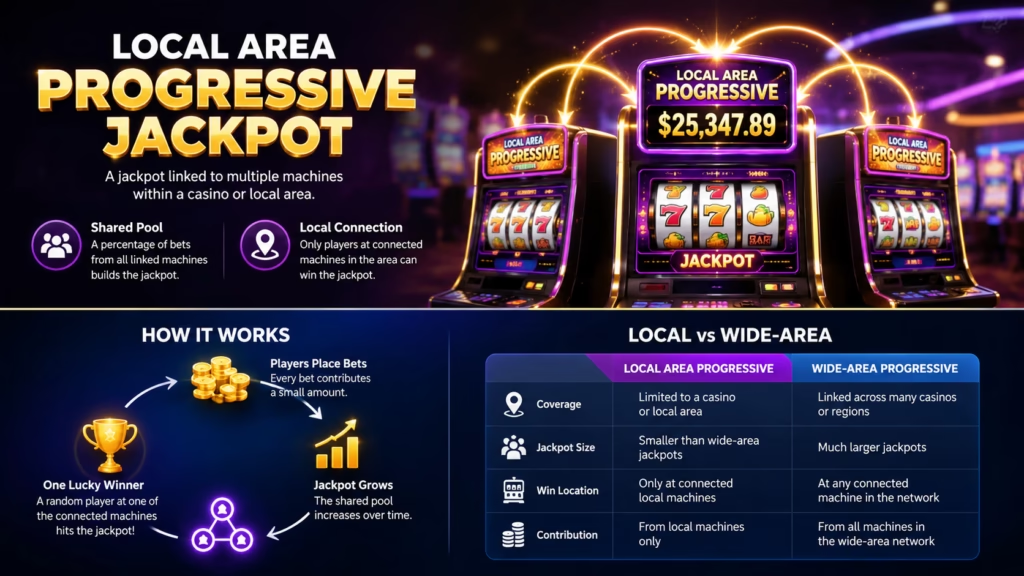
A local area progressive jackpot is a shared jackpot connected to several games within a limited gaming environment. Bets or qualifying game activity from participating machines contribute to the same progressive system rather than each machine maintaining an entirely separate top prize.
Progressive jackpot systems are generally structured as standalone jackpots, linked jackpots, or broader multi-site networks. A standalone jackpot belongs to one game instance, a linked jackpot connects multiple game instances to a common jackpot, and a multi-site or wide area progressive connects gaming venues through a larger system.
The term local area progressive is commonly used for a linked jackpot where the network remains within a particular casino, property or similarly limited operator environment.
How Do Local Area Progressive Jackpots Work?
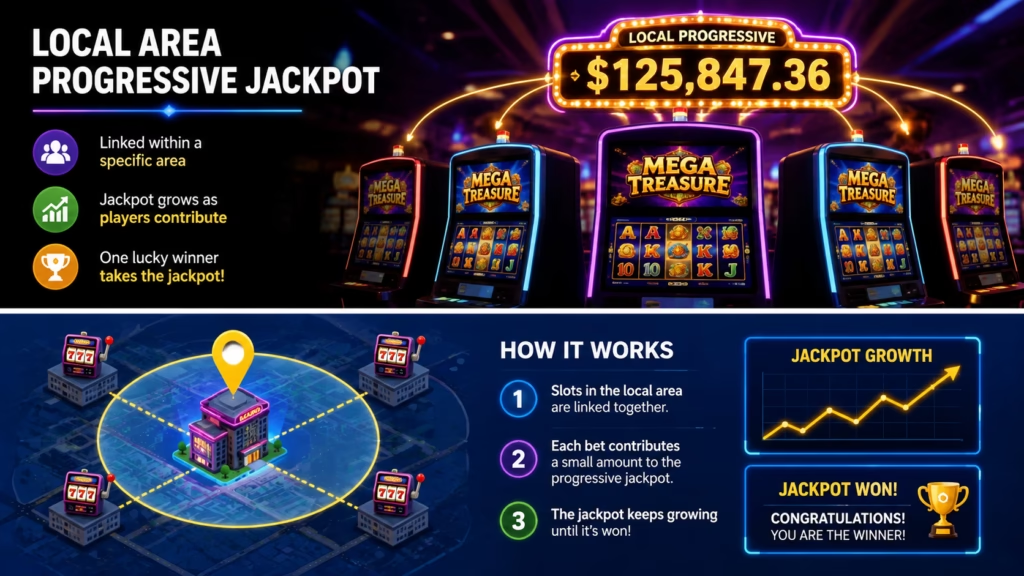
Local area progressive jackpots work by connecting several eligible games to a shared jackpot controller. The controller tracks the jackpot amount and processes contributions generated by participating play.
A simplified example looks like this:
1. A local jackpot resets to $10,000.
2. Ten eligible machines are connected to the same progressive.
3. Qualifying wagers are made across those machines.
4. A predetermined portion of eligible wagering contributes to the progressive system.
5. The displayed jackpot gradually increases.
6. An eligible player eventually triggers the jackpot according to the game’s rules.
7. The jackpot is paid and normally returns to its designated reset value.
The exact contribution percentage should not be assumed. Progressive systems can use configurable increment rates, and the actual value is part of the game’s mathematical configuration. Startup values, percentage increment rates, jackpot ceilings and related settings can differ between systems.
Where Does the Jackpot Money Come From?
A progressive jackpot generally increases as eligible wagers are made. This does not mean the entire wager goes into the jackpot. Only the amount defined by the progressive configuration contributes to the jackpot or associated pools.
For example, imagine a fictional slot where a $1 qualifying wager contributes one cent toward a progressive jackpot. If 5,000 qualifying spins occur across the connected machines, those contributions would add $50 to the jackpot.
That example explains the principle only. Real contribution rates vary by game and system.
What Happens After a Local Progressive Jackpot Is Won?
A local progressive jackpot normally returns to a predefined reset value, also called a startup or seed value, after the jackpot is awarded.
A jackpot that displays $42,600 immediately before a win might therefore reset to $10,000 rather than returning to zero. The exact reset value is determined by the game or progressive system.
Some systems can also use diversion pools, where part of progressive contributions is allocated to another pool that can help fund a future reset amount. This is why the amount visible on the jackpot meter does not necessarily represent every dollar associated with the progressive system.
Local Area Progressive vs Standalone vs Wide Area Progressive
The major difference between progressive jackpot types is how many games and locations contribute to the shared prize.
| Jackpot type | Typical network | Jackpot growth | Typical prize potential |
| Standalone progressive | One machine or game instance | Usually slower | Usually smaller |
| Local area progressive | Multiple games in a limited casino or operator network | Can grow faster | Often medium-sized |
| Wide area progressive | Games connected across multiple gaming venues | Potentially fastest | Can support much larger jackpots |
A wide area progressive connects games across multiple gaming venues or a broader network. A local progressive instead keeps the network restricted to a smaller environment such as one property or operator.
The table describes common characteristics, not guaranteed outcomes. A large local network can sometimes produce a larger jackpot than a relatively small networked progressive, and jackpot size depends on the seed amount, contribution structure, wagering volume and game rules.
Do Local Area Progressives Have Better Odds Than Wide Area Jackpots?
A local area progressive does not automatically have better jackpot odds simply because fewer machines are connected.
The jackpot probability is determined by the mathematical rules of the game and jackpot trigger. Network size primarily affects how much qualifying play is feeding the jackpot and how many players may be competing for it.
It is therefore incorrect to reason that ten linked machines must produce better personal jackpot odds than 1,000 linked machines. Your probability on an individual qualifying wager depends on the game’s programmed conditions.
Does a Higher Jackpot Mean It Is More Likely to Hit?
A rising local progressive meter does not normally prove that the next jackpot is more likely to occur.
Many progressive jackpots use fixed probabilistic winning conditions. If the required jackpot combination has the same probability on every eligible spin, the jackpot becoming larger changes the potential prize but not the probability of the next spin producing that combination.
There are important exceptions. Some progressive systems use mystery triggers, ceilings or hidden trigger thresholds. In these systems, the jackpot may be awarded once the meter reaches a randomly selected hidden threshold between defined values.
Players should therefore check the actual rules rather than assuming that every progressive jackpot uses the same trigger mechanism.
How Can a Local Progressive Jackpot Be Triggered?
Winning Combination
A jackpot may require a particular reel combination, hand or other game outcome. The qualifying result and wager requirements should be stated in the game rules or paytable.
Bonus Feature
Some games place the progressive jackpot inside a bonus round. The player must first trigger the feature and then achieve the required jackpot outcome.
Mystery Trigger
A mystery progressive does not necessarily require a visible jackpot symbol combination. The jackpot may instead be triggered by a separate random mechanism or hidden threshold.
Multi-Level Progressive
A local progressive can contain multiple jackpot tiers such as Mini, Minor, Major and Grand. Each level may use a different trigger, reset value or probability.
The names of jackpot levels are marketing labels rather than universal mathematical standards, so players should check the rules for the specific game.
Do You Need to Bet Maximum to Win a Local Progressive?
Maximum bet is not universally required to win a local progressive jackpot.
Some games make the jackpot available at several wager levels. Others may require a particular qualifying wager, side bet, denomination or maximum stake.
Before playing, check:
- The minimum qualifying wager.
- Whether jackpot eligibility changes with bet size.
- Whether every denomination qualifies.
- Whether a separate progressive side bet is required.
- Which jackpot levels are available at your selected stake.
Increasing a wager solely because a jackpot is displayed can increase the amount of money at risk without guaranteeing any improvement in the chance of winning.
How Do Local Progressive Jackpots Affect RTP?
A progressive jackpot can form part of a game’s theoretical return to player, or RTP, but RTP should not be confused with the likelihood of winning during an individual session.
A game might have part of its theoretical long-term return tied to a very rare jackpot. Two games with similar headline RTP figures can still feel completely different if one returns more through frequent base-game wins while the other allocates more theoretical value to rare awards.
RTP is a long-term mathematical expectation across a very large number of plays. It does not predict what one player will receive during a particular session.
Are Local Progressive Jackpots Easier to Win?
A smaller jackpot should not automatically be described as easier to win.
Jackpot size and jackpot probability are separate game parameters. A $20,000 local progressive could have longer jackpot odds than another progressive displaying $100,000 if the games use different mathematical models.
The safest comparison is based on the actual game rules, not the size of the meter. If jackpot odds are not disclosed, the displayed prize alone is not enough information to calculate the probability of winning it.
Who May Prefer Local Progressive Jackpots?
Local progressive games may appeal to players who enjoy jackpot mechanics but do not specifically need the extremely large headline prizes associated with wide area networks.
They may be more appealing to:
- Players who like linked slot banks or shared casino-floor jackpots.
- Players who prefer medium-sized progressive prizes.
- Players who enjoy watching a jackpot meter increase.
- Players interested in multi-level jackpot mechanics.
- Players who understand that jackpot events can still be rare.
Players with a limited entertainment budget should be especially careful with games that require larger qualifying wagers. A progressive prize can encourage longer sessions or higher stakes, neither of which improves the certainty of a winning result.
How to Evaluate a Local Progressive Before Playing
The best way to evaluate a local progressive jackpot is to examine the rules rather than focusing only on the displayed jackpot value.
Check these points first:
1. Jackpot eligibility: Find the exact wager required to qualify.
2. Trigger mechanism: Determine whether the jackpot uses symbols, a bonus, a mystery trigger or another condition.
3. Current jackpot: Compare the current amount with its reset value if that information is available.
4. RTP: Check whether the casino or game rules disclose an RTP configuration.
5. Bet range: Make sure qualifying for the jackpot does not require a stake above your planned budget.
6. Jackpot levels: Check whether different Mini, Major or Grand prizes use separate requirements.
7. Game rules: Read the paytable and help screen rather than relying only on jackpot signage.
8. Casino conditions: Online availability, jackpot terms and withdrawal rules can vary between operators.
A growing meter can make a game look more attractive, but the jackpot amount alone says little about short-term risk.
Common Local Progressive Jackpot Myths
“The jackpot is overdue.”
A progressive jackpot does not necessarily become due simply because it has not been won recently. Random games do not have to compensate for previous losing spins.
“More players means my spin has worse odds.”
Another player joining a linked progressive does not automatically alter the probability of your qualifying game outcome. More activity may affect how quickly the shared meter grows, but the trigger mathematics determine individual jackpot probability.
“A big jackpot means it will hit soon.”
A high meter can simply mean the progressive has accumulated contributions for longer. It only implies increasing trigger probability when the specific jackpot design uses a mechanism where the current meter affects that probability.
“Maximum bet always gives the best jackpot odds.”
Some games use wager-dependent eligibility or probabilities, but others do not. The game’s paytable and progressive rules are the correct sources for determining how bet size affects the jackpot.
How This Information Was Reviewed
This guide distinguishes progressive jackpot types using standard industry terminology for standalone, linked and multi-site progressive implementations, along with common regulatory and gaming-industry definitions of local area progressive systems.
Individual games can use different reset values, contribution rates, qualifying wagers, jackpot triggers and RTP configurations. These details should therefore be verified in the game’s paytable, help screen or casino rules before playing.
Neither jackpot size nor RTP guarantees a winning session. Casino games involve chance and should be treated as paid entertainment. Set spending and time limits before playing, and stop if gambling is no longer enjoyable or no longer remains within the limits you intended.
FAQ
What is a local area progressive jackpot?
A local area progressive jackpot is a shared progressive prize connected to multiple eligible games within a limited network, commonly a single casino property or operator environment. Participating games contribute to the same jackpot rather than maintaining separate top prizes.
What does LAP mean in casino games?
LAP usually means Local Area Progressive. The term describes a linked progressive jackpot operating within a restricted gaming area or system rather than across multiple independent gaming venues.
How is a local progressive jackpot different from a wide area progressive?
A local progressive uses a limited group of participating games, while a wide area progressive connects games across multiple gaming venues or a broader network. Wide area systems can pool substantially more wagering activity, but larger potential prizes do not automatically mean different odds on an individual qualifying play.
Do local progressive jackpots grow with every bet?
Local progressive jackpots grow according to the game’s configured contribution rules. Not every bet necessarily qualifies, and different wager levels may contribute differently. Check the paytable or jackpot information for the exact conditions.
Are local progressive jackpots easier to win?
Not necessarily. Jackpot probability depends on the game’s mathematical trigger, not simply on whether the jackpot is local or wide area. A smaller network can affect jackpot growth without automatically improving your personal chance of triggering the prize.
Does the jackpot become easier to win as it gets bigger?
Usually not unless the game’s specific trigger mechanism makes jackpot probability dependent on the current meter. Fixed-probability jackpots can continue growing while the probability of each qualifying outcome remains unchanged. Mystery or threshold-based systems may work differently.
Do I have to bet maximum coins to win a local progressive jackpot?
Not always. Some progressive games require a particular wager or side bet, while others allow jackpot eligibility across several stake levels. Always verify the qualifying wager before playing.
What happens after someone wins a local progressive jackpot?
The progressive normally resets to a predefined starting value and begins accumulating again according to the game’s rules. Some systems can also maintain additional pools used for jackpot resets or other configured purposes.
Is a progressive jackpot included in RTP?
Progressive jackpot returns can be included in the mathematical RTP calculation of a game. Because part of the theoretical return may depend on a rare jackpot event, the stated RTP should not be interpreted as an expected return for one session.
Can you predict when a local progressive jackpot will hit?
No reliable method can predict the next jackpot in a properly random progressive game. Past spins, the time since the previous jackpot and visual patterns on the reels do not guarantee the next outcome. Check the game rules, stay within predetermined limits and treat progressive games as entertainment rather than a source of income.
Brief Conclusion
A local area progressive jackpot connects several eligible games to one shared progressive prize within a limited casino or operator network. It sits between a standalone progressive and a multi-site wide area progressive in terms of network structure.
The most important factors are not simply the size of the jackpot, but how the jackpot is triggered, which wagers qualify, how the progressive affects RTP and what rules apply to the specific game. A larger meter does not guarantee better odds or an approaching win, and every progressive game should be played within fixed entertainment limits.