A wide area progressive jackpot is a progressive prize pool connected across multiple slot machines, casinos, or online casino platforms rather than being limited to one machine or one casino. Bets placed on participating games contribute to a shared jackpot, allowing the prize to grow faster and potentially reach much larger amounts than a standalone progressive jackpot.
The important point is that a wide area progressive jackpot is still based on random game outcomes. A large displayed jackpot does not mean a win is becoming more likely, and previous spins do not make the next jackpot trigger more predictable.
Key points:
- A wide area progressive network connects multiple participating games or locations to one jackpot pool.
- A small portion of qualifying wagers can contribute to the progressive prize.
- The jackpot usually resets to a predetermined starting amount after it is won.
- Jackpot eligibility and trigger rules depend on the specific game and network.
- A larger jackpot does not necessarily mean better overall RTP or better odds for an individual player.
Wide area progressive slots may appeal most to players who enjoy very large headline jackpots and accept that the top prize can be extremely difficult to hit. Players who prefer more predictable session value or frequent smaller wins should look beyond the jackpot amount and check the game’s RTP, volatility, paytable and bonus structure.
What Is a Wide Area Progressive Jackpot?
A wide area progressive jackpot, often shortened to WAP jackpot, is a progressive jackpot shared by a network of participating gaming machines or online games. Instead of one machine building its own prize pool, qualifying play across the network contributes to the same progressive jackpot.
The “wide area” part refers to the size of the network. Depending on the system, participating games may be installed at multiple casinos, operate across different properties or be connected through approved online platforms.
This structure matters because more qualifying wagers can feed the same prize pool. As a result, wide area progressives can grow much faster than jackpots funded by a single machine.
The exact contribution rate, trigger mechanism, eligibility requirements and reset value are determined by the particular game or jackpot system. These details should be checked in the game’s official rules or paytable rather than assumed from the jackpot display.
How Do Wide Area Progressive Jackpots Work?
Wide area progressive jackpots work by linking eligible games to a central jackpot system. When qualifying bets are made, part of the game mathematics supports the progressive prize pool. The jackpot value can continue increasing until the specified jackpot event occurs.
A simplified example looks like this:
- A progressive network starts with a jackpot of $1 million.
- Players make qualifying bets on connected games.
- The jackpot gradually increases as qualifying play occurs across the network.
- One eligible game produces the required random jackpot outcome.
- The qualifying player receives the progressive jackpot according to the game’s rules.
- The jackpot returns to its predetermined reset value and begins growing again.
This example explains the basic mechanism, but the exact contribution calculation does not have to be visible to the player. Different jackpot systems can use different mathematical structures.
Most importantly, the growing jackpot should not be interpreted as a countdown toward a guaranteed win. Unless the game rules specifically describe a must-hit-by mechanism, a progressive jackpot becoming unusually large does not mean it must be awarded soon.
Where Does the Jackpot Money Come From?
A wide area progressive jackpot is funded through the mathematical structure of participating games. Part of the expected return associated with qualifying wagers can be allocated to the progressive jackpot component.
This does not mean that a visible percentage of every wager is necessarily added directly to the displayed jackpot. Progressive systems can account for jackpot funding, reset amounts and other mathematical requirements in different ways.
For players, the practical issue is simpler: part of the game’s theoretical return may be tied to a prize that is won very rarely.
This is one reason RTP should be interpreted carefully on progressive games. A slot can have a published theoretical RTP that includes the contribution of a very rare jackpot event. A player who never hits that event will obviously experience a different short-term result.

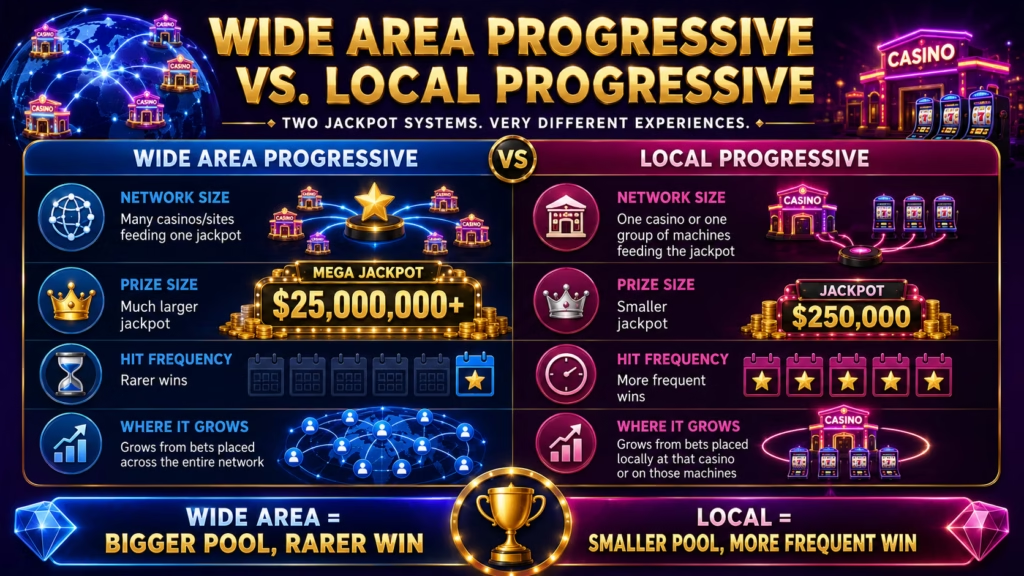
Wide Area Progressive vs Local Progressive vs Standalone Jackpot
The size of the connected network is one of the biggest differences between progressive jackpot formats.
| Jackpot type | Connected games | Typical jackpot potential / growth |
| Standalone progressive | Usually one machine or game instance | Lower potential; usually slower growth |
| Local progressive | Multiple games within one casino or smaller network | Moderate potential; faster than standalone |
| Wide area progressive | Games across multiple locations or platforms | Potentially very large; can grow quickly |
A standalone progressive jackpot generally builds from activity on a single machine or individual game configuration.
A local progressive jackpot connects several machines or games within a smaller environment, such as one casino or a limited group of properties.
A wide area progressive jackpot draws activity from a much larger connected network. The broader contribution base is what makes especially large progressive prizes possible.
None of these formats automatically offers a better gambling value. Jackpot size is only one component of the game’s mathematics.
How Is a Wide Area Progressive Jackpot Triggered?
A wide area progressive jackpot is normally triggered according to predefined rules built into the game or jackpot system. The trigger can be tied to a particular random event, special jackpot feature, bonus sequence or another qualifying game outcome.
The precise mechanism varies between games.
Some progressive jackpots can be triggered during normal play. Others may require a particular feature to activate first. Certain games may also have several progressive levels, with smaller jackpots triggering under different conditions from the top prize.
Players should check the game’s rules for three points:
- whether a particular bet size is required;
- whether all wagers are eligible for the top jackpot;
- whether the jackpot is triggered directly or through a bonus feature.
Do not assume that simply playing a progressive slot makes every spin eligible for every jackpot level.
Do You Need to Bet the Maximum to Win?
Not necessarily. Maximum betting requirements depend on the specific wide area progressive game.
Some older or particular progressive systems may require a specific wager to qualify for the top jackpot. Other games allow jackpot eligibility at multiple bet levels, while the prize calculation or eligibility conditions may change according to the stake.
The correct approach is to check the paytable or jackpot rules before playing.
Increasing the wager simply because a large jackpot is displayed can substantially increase the amount of money at risk. A qualifying bet should still fit within a predetermined entertainment budget.
Are Wide Area Progressive Jackpots Random?
Wide area progressive jackpots are generally based on random outcomes under the rules of the relevant game. A jackpot that has not been won for a long time is not automatically “due.”
This distinction is important because progressive counters create a powerful visual impression. Watching a jackpot rise from several million to an even larger amount can make the prize appear increasingly ready to hit.
The displayed value and the probability of winning are separate concepts unless the game’s rules explicitly connect them.
Previous losses also do not create credit toward a future jackpot on ordinary random progressive systems. A long losing session does not make the next qualifying spin inherently more deserving of a win.
Does a Bigger Jackpot Mean Better Odds?
A bigger wide area progressive jackpot does not automatically mean better odds of hitting it.
The jackpot amount tells the player how much the prize is currently worth. It does not, by itself, reveal the probability of winning.
The probability depends on the underlying jackpot mechanism. Without published game mathematics or official rules, players should not try to estimate jackpot odds merely from how quickly the counter moves or how long the jackpot has been accumulating.
A jackpot can become unusually large because a large network generates substantial wagering activity, because the jackpot has remained unclaimed, or because of both factors.
Wide Area Progressive Jackpots and RTP
A progressive jackpot can form part of a game’s theoretical RTP, but RTP does not predict the result of an individual session.
For example, suppose part of a progressive slot’s theoretical return comes from an extremely rare top jackpot. That jackpot may significantly affect the game’s long-term mathematical return while remaining irrelevant to the experience of almost every short playing session.
Players comparing progressive slots should therefore consider:
- the stated RTP;
- whether alternative RTP configurations exist;
- volatility;
- jackpot eligibility rules;
- smaller base-game payouts;
- bonus features;
- jackpot structure.
Where multiple RTP versions of a game exist, the version offered by a particular casino may differ. The game information or official paytable should be checked before playing.
Are Wide Area Progressive Slots More Volatile?
Wide area progressive games can be highly volatile when a meaningful share of their payout potential is concentrated in rare prizes, but a progressive jackpot alone does not establish a game’s exact volatility.
Two progressive slots can have very different mathematical designs.
One may offer frequent smaller wins alongside the progressive jackpot. Another may place considerably more emphasis on rare high-value events.
Players who dislike long periods without significant returns should therefore check the game’s stated volatility and payout structure rather than choosing solely because a jackpot is large.
Why Can Wide Area Progressive Jackpots Become So Large?
Wide area progressive jackpots can reach large values because many participating games contribute activity to the same network.
Imagine one jackpot funded only by activity from a single slot machine and another connected to a large number of participating games. The larger network can generate far more qualifying wagering activity over the same period.
The jackpot can therefore increase rapidly without increasing any individual player’s probability of winning.
This network effect is the central reason wide area progressives can produce headline prizes much larger than those commonly associated with standalone machines.
Common Myths About Wide Area Progressive Jackpots
“The jackpot has not hit recently, so it is due”
A standard random progressive jackpot does not become due simply because it has not been won for a long period. Previous outcomes should not be used to predict the next random result.
“The machine that paid a jackpot will not pay again soon”
A previous jackpot does not automatically prevent another eligible random outcome unless the actual game rules impose a specific restriction.
“A rapidly growing jackpot means somebody will win soon”
Rapid growth primarily shows that the prize pool is increasing. It does not necessarily indicate an approaching jackpot trigger.
“Playing longer improves my chance enough to justify chasing the jackpot”
More qualifying plays create more individual opportunities to encounter a jackpot outcome, but they also require more wagering. Playing longer does not transform a random game into a profitable strategy.
“The largest progressive jackpot must have the best RTP”
Jackpot size and RTP measure different things. A very large progressive prize does not prove that the game offers a higher theoretical return than another slot.
What Should You Check Before Playing a Wide Area Progressive Slot?
The jackpot number should not be the only selection criterion.
1. Jackpot eligibility. Confirm which wager levels qualify.
2. RTP. Check the RTP of the version available at the casino.
3. Volatility. Higher volatility may produce more irregular results.
4. Paytable. Understand base-game payouts and bonus mechanics.
5. Jackpot rules. Determine how the progressive prize is triggered.
6. Bet range. Make sure qualifying wagers fit your budget.
7. Casino terms. Withdrawal, verification and bonus conditions can vary by operator.
8. Personal limits. Decide your spending and session limits before starting.
Players interested mainly in large jackpots may enjoy the wide area progressive format. Players primarily interested in longer sessions, frequent smaller wins or lower-risk entertainment may prefer games where less of the appeal is concentrated in a rare top prize.
Wide Area Progressive Jackpots Should Not Be Chased
A growing progressive jackpot can encourage players to continue because the prize appears increasingly valuable. The jackpot amount, however, does not remove the mathematical house advantage or make continued wagering profitable.
Set a maximum entertainment budget before playing and do not increase it because the progressive counter has risen.
Progressive slots should be treated as paid entertainment. They are not a method of generating income, and no betting pattern can guarantee the jackpot.
If gambling stops being enjoyable, causes financial pressure or leads to attempts to recover previous losses, stopping the session is more important than the current jackpot value.
How This Information Was Reviewed
This explanation evaluates wide area progressive jackpots through the mechanics that matter to players: network structure, jackpot funding, eligibility, random triggering, RTP, volatility and common misconceptions.
Exact jackpot rules can differ between games and operators, so players should verify the paytable, jackpot conditions, qualifying bet and RTP shown for the specific game they intend to play.
RTP, volatility and jackpot size are mathematical characteristics, not predictions of a particular session. None guarantees a win, and a progressive casino game should be treated as entertainment rather than a way to earn money.
FAQ
What is a wide area progressive jackpot?
A wide area progressive jackpot is a shared progressive prize connected to multiple participating gaming machines, casinos or online games. Qualifying activity across the network contributes to the same jackpot, allowing it to grow beyond what a single-machine progressive would normally support.
How do wide area progressive jackpots work?
Wide area progressive jackpots connect eligible games to a shared jackpot system. Qualifying wagers support the progressive prize until the game’s predefined random jackpot condition occurs, after which the prize is awarded and normally resets to a specified starting value.
What does WAP mean in slot machines?
WAP commonly means wide area progressive in the context of progressive slot systems. It describes a jackpot network connecting participating games across a wider group of locations or platforms rather than restricting the jackpot to one machine.
Are wide area progressive jackpots harder to win?
Wide area progressive jackpots can offer extremely large prizes, but the exact probability of winning depends on the individual jackpot system. Jackpot size alone does not reveal the odds, so players should not assume that a larger or older jackpot is easier or harder to hit without official game information.
Does the jackpot become easier to win as it gets bigger?
Usually, a rising jackpot value does not by itself mean the jackpot is becoming easier to win. The trigger probability depends on the game’s rules. An exception can exist where a game specifically uses a must-hit-by or similar mechanism, which should be stated in its rules.
Do I have to bet maximum coins to win a wide area progressive jackpot?
Maximum betting is not universally required. Eligibility rules vary between progressive systems, so check the game’s paytable to determine the minimum qualifying wager and whether stake size changes eligibility for specific jackpot levels.
Can you predict when a wide area progressive jackpot will hit?
No reliable betting method can predict the next random jackpot outcome. Jackpot history, previous losing spins and the current prize value should not be treated as reliable predictors unless the game’s published rules explicitly define a nonstandard trigger condition.
Does a large progressive jackpot increase RTP?
A growing jackpot can affect the theoretical value associated with a progressive game, depending on how its mathematics are designed, but players should not assume that a large jackpot automatically means a superior RTP. The published RTP and jackpot rules should be checked separately.
Are wide area progressive jackpots worth playing?
Wide area progressive jackpots may appeal to players who value the possibility of an exceptionally large prize and understand that the top jackpot can be very rare. They may be less suitable for players who prioritize frequent returns or predictable session length. No progressive jackpot should be treated as an investment or income opportunity.
What happens after a wide area progressive jackpot is won?
The jackpot normally returns to a predetermined reset or seed amount and begins accumulating again according to the system’s rules. The exact reset value and contribution structure depend on the individual progressive network.
Brief Conclusion
A wide area progressive jackpot connects many participating games to one shared prize pool, allowing the jackpot to grow far beyond a typical standalone progressive. The large prize is the main attraction, but jackpot size does not tell you when the jackpot will hit or guarantee better odds.
Before playing, check the qualifying wager, RTP, volatility, paytable and jackpot rules. Most importantly, treat progressive slots as entertainment, set limits before playing and never chase a growing jackpot as a way to recover losses or make money.