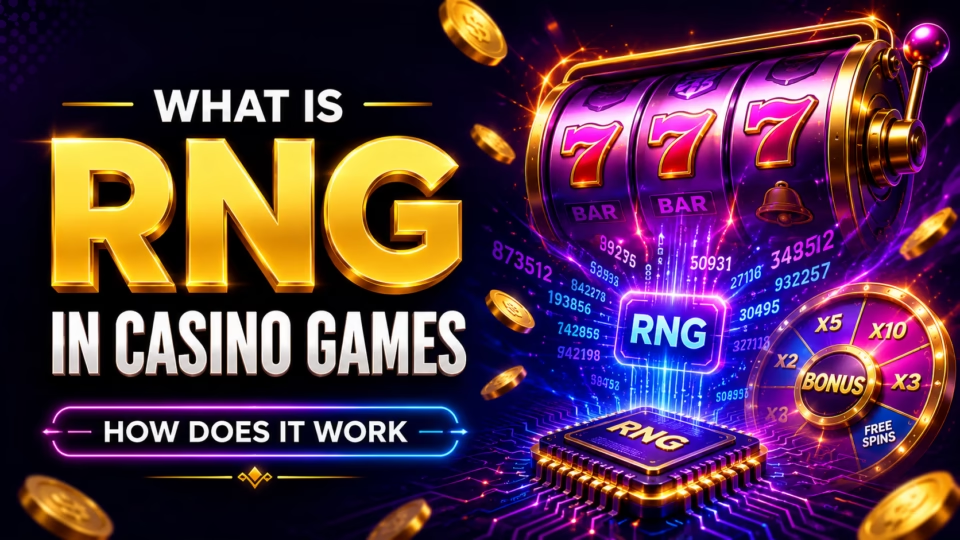
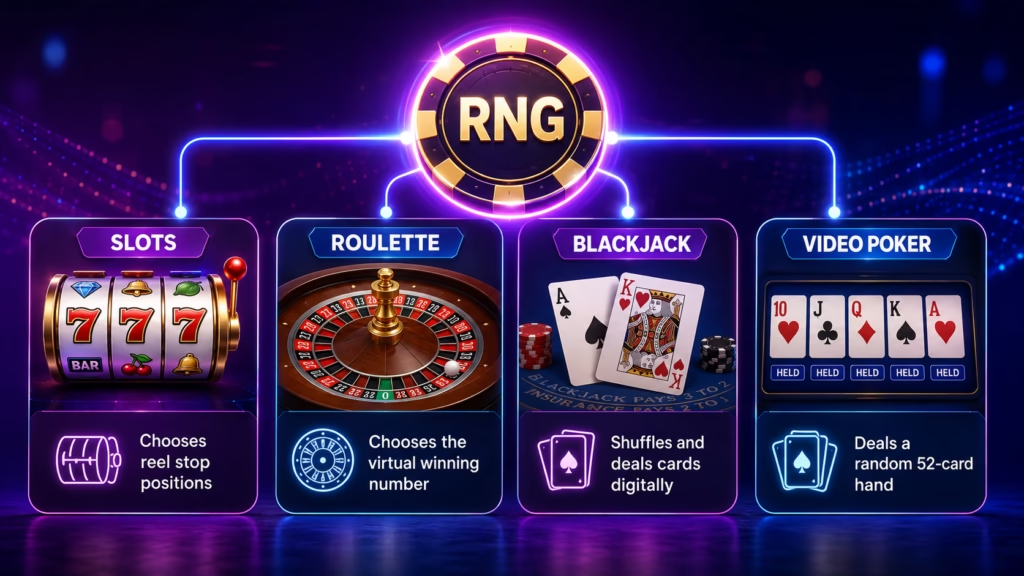
RNG in casino games is the system used to generate random values that determine game outcomes. In online slots, digital roulette, video poker and many other casino games, a Random Number Generator produces values that the game software converts into results such as reel positions, cards or roulette numbers.
The important point is that an RNG determines individual outcomes without trying to make a particular player win or lose based on previous results. A properly designed random system should make future outcomes sufficiently unpredictable and should not compensate for previous wins or losses.
Understanding RNG is particularly useful for players trying to understand why slot results can look streaky, why RTP does not guarantee a certain return in one session and why betting systems cannot reliably predict independent random outcomes.
Key Points About Casino RNGs
- RNG determines individual game outcomes using randomly generated values.
- Previous wins or losses should not tell you what the next RNG result will be.
- RNG and RTP are connected through the game’s mathematical model, but they are not the same thing.
- Random does not mean that every possible outcome has an equal probability.
- A losing streak does not mean that the game is due to produce a win.
- Players cannot reliably predict the next RNG result from previous spins.
What Does RNG Mean in Casino Games?
RNG stands for Random Number Generator. It refers to hardware or software designed to produce random values that can then be used by a casino game’s mathematical system.
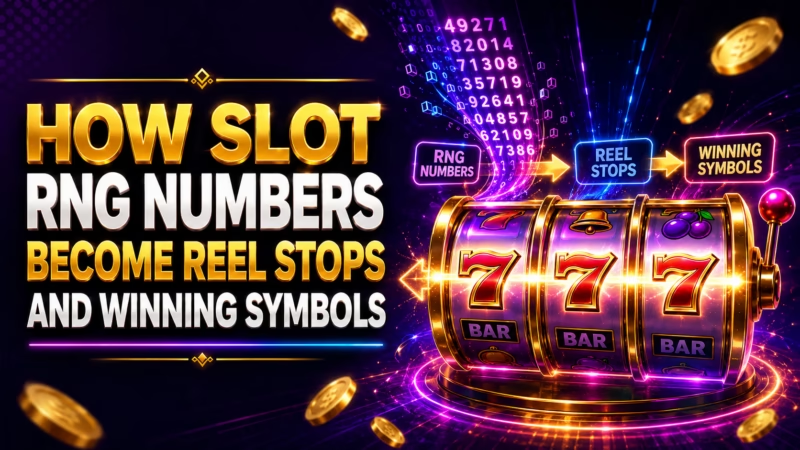
In a slot, the RNG does not necessarily choose a visible cherry, wild or jackpot symbol directly. The software can generate numerical values first and then use the game’s internal rules, reel structure or weighting system to translate those values into the symbols shown on the screen.
The same basic idea can apply to different casino formats. A digital roulette game can use an RNG to determine a number, while a card game can use random values when selecting or arranging virtual cards. The exact implementation depends on the game.
How Does Casino RNG Work?
Casino RNG works by generating a value and passing that value through the rules and mathematical model of the game to determine an outcome.
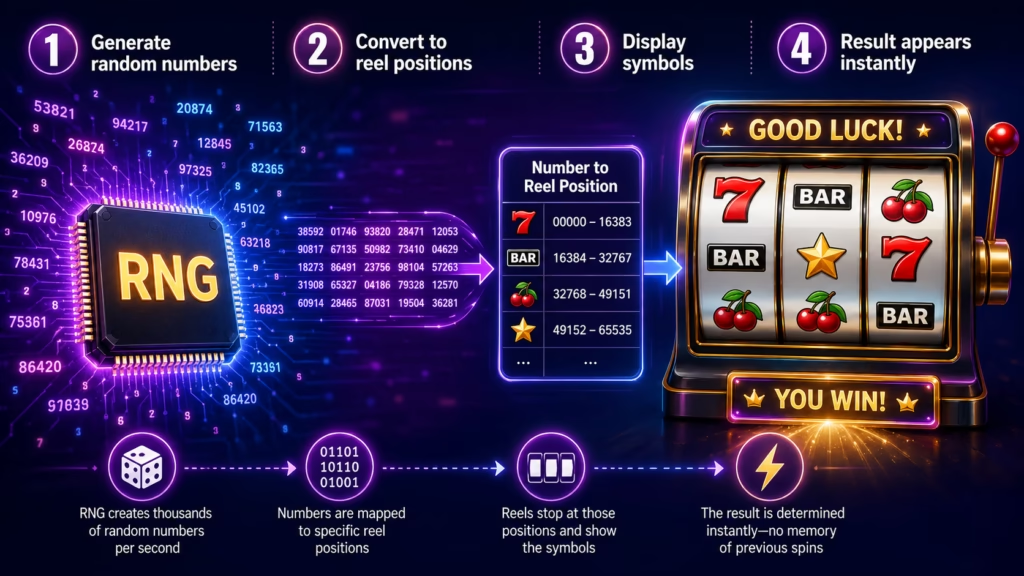
A simplified slot spin might work like this:
- The player presses Spin.
- The game obtains random values from its RNG.
- Those values are mapped to positions or outcomes defined by the game’s mathematics.
- The game evaluates the resulting symbol combination.
- The reels animate and display the result.
- Any applicable payout is calculated according to the paytable.
The animation players see is therefore the presentation layer of the game. The underlying random selection and game rules determine the actual result.
The precise technical sequence varies between casino platforms and games, so it is inaccurate to claim that every slot uses exactly the same RNG architecture.
What Happens When You Press Spin?
Pressing Spin causes the game to obtain or use random data according to its programmed design. Because RNG output can change extremely quickly, pressing the button a fraction of a second earlier or later may correspond to a different value and therefore a different result.
This does not mean that timing a spin can become a reliable strategy. A properly designed software RNG should be unpredictable without the necessary internal information. There is therefore no practical perfect second at which a player can press Spin to force a winning combination.
What Is a PRNG?
A PRNG, or Pseudorandom Number Generator, generates apparently random values through a deterministic computational process.
Pseudo does not automatically mean fake or rigged. It means that the numbers are produced algorithmically rather than being created from a purely physical source of randomness.
This distinction matters because a deterministic algorithm could theoretically reproduce the same sequence if its algorithm, internal state and starting conditions were completely known. Proper implementation, seeding, unpredictability and testing are therefore critical.
PRNG vs True Random Number Generator
A pseudorandom generator creates values algorithmically, while a true or nondeterministic random generator obtains randomness from a physical or nondeterministic source.
For casino players, the more practical question is not whether a game uses something marketed as true randomness. The important questions are whether the random system is appropriate for the game, sufficiently unpredictable and compliant with the rules applying to that gambling market.
Different gaming systems and jurisdictions can use different technical approaches, so players should avoid assuming that every online casino operates an identical RNG system.
RNG vs RTP: What Is the Difference?
RNG determines individual outcomes, while RTP describes the game’s theoretical long-term return according to its mathematical model.
Suppose a slot has a theoretical RTP of 96%. That does not mean a player should receive $96 back after wagering $100. It describes a mathematical expectation across a sufficiently large amount of play under the relevant game configuration.
The RNG can still produce extremely different short-term sequences. One player might encounter several wins close together, another might experience a long losing period, and neither result by itself proves that the published theoretical RTP is incorrect.
RTP therefore does not tell the RNG that a particular player must win because they have recently lost.
RNG selects outcomes. RTP describes the long-term mathematical characteristics created by the game’s probability and payout structure.
RNG vs Volatility and Hit Frequency
RNG, volatility and hit frequency describe different parts of a casino game’s behavior.
RNG determines random outcomes. Volatility describes how strongly payouts can vary and how the game’s risk and reward are distributed. Hit frequency generally describes how often a defined winning outcome occurs within the game’s mathematical model.
A high-volatility slot can use a properly functioning RNG while still producing long periods with relatively few meaningful payouts. Randomness does not require wins and losses to alternate evenly.
This is why short casino sessions often look less orderly than players expect. Random sequences naturally can contain clusters, repetitions and streaks.
Are RNG Casino Games Fair?
An RNG being random does not automatically mean a casino game offers favorable odds to the player.
A game can be statistically random while still having a mathematical house advantage. Randomness concerns how outcomes are selected, while the house edge or RTP concerns how probabilities and payouts combine economically.
Testing is therefore important. In regulated gambling markets, technical standards may require game and RNG testing, but the exact rules and procedures vary by jurisdiction.
For a player, fair RNG should not be interpreted as I have an equal chance of winning and losing. A game can satisfy randomness requirements and still have a house edge.
Does RNG Make Every Outcome Equally Likely?
No. Random selection does not require every visible outcome to have identical probability.
A slot can contain different symbol probabilities, reel structures or weighted outcomes while still using an RNG. The RNG supplies random values, while the game’s mathematical model determines how those values correspond to possible results.
This explains why a jackpot symbol does not need to appear as frequently as a low-value symbol. Players should therefore check the game’s paytable and rules rather than assuming that visually similar symbols have equal probabilities.
Can a Casino Change the RNG After You Start Winning?
A properly regulated random game should not dynamically punish a player simply because that player has recently won.
That does not mean every version of every casino game worldwide has identical mathematics. Providers may offer different approved configurations, and RTP or other game parameters can sometimes vary by operator or version.
For that reason, the RTP, paytable and game rules should be checked for the specific version being played rather than assumed from another casino.
Does RNG Remember Previous Spins?
A properly designed RNG-based casino game should not make the next random result predictable from a simple sequence of earlier results.
If a roulette-style RNG game produces red several times, black does not automatically become due. If a slot produces 50 losing spins, the next spin does not automatically receive a higher probability of winning merely because of that losing sequence.
This is the basis of the gambler’s fallacy, the mistaken belief that previous independent outcomes force an opposite result to occur soon.
Game features can still maintain state when explicitly designed to do so. For example, a collection feature or persistent bonus mechanic may track progress across spins. That is different from secretly modifying the randomness to compensate for previous wins or losses.
Common Myths About Casino RNG
A Slot Has to Pay After Enough Losses
Not necessarily. A long losing sequence does not create a debt that the RNG must repay on the next spin. Theoretical RTP is not a short-term repayment schedule.
Casinos Can See the Next Winning Spin
A properly implemented random system is designed to prevent practical prediction of future results. The exact security design depends on the platform and game.
Changing the Bet Resets the RNG
Changing the stake does not provide a reliable way to manipulate random output. Some games may have mechanics, jackpots or features whose rules differ by stake, so the game’s own rules should always be checked.
A Slot That Has Not Paid Recently Is Ready to Hit
Previous results alone do not establish when the next major win will occur. A cold-looking history can continue, and a game that recently produced a large payout can theoretically produce another one.
RNG Means Every Symbol Has the Same Chance
No. The RNG generates random data, but the game’s mathematical model can map that data to outcomes with different probabilities.
How to Check an RNG Casino Game Before Playing
Players cannot realistically audit casino source code themselves, but several practical checks can reduce uncertainty.
- Check the casino’s regulatory status. Find out which gambling authority oversees the operator and what technical standards apply in that jurisdiction.
- Check the game provider. Established game suppliers usually provide identifiable game information, rules and paytables.
- Read the paytable and game rules. Look for the RTP, payout structure, bonus mechanics and any special conditions affecting the game.
- Check the exact game version. Do not assume that an RTP quoted on another website applies to the version offered by your casino.
- Do not treat randomness as a strategy opportunity. RNG cannot turn a negative-expectation casino game into a reliable source of income.
- Set financial and time limits before playing. Random outcomes can create both winning and losing streaks, so a short-term result should never be interpreted as evidence that future winnings are guaranteed.
Casino games should be treated as paid entertainment, not as a method of earning money.
How This Information Was Reviewed
This explanation separates three concepts that players often mix together: random outcome generation, game mathematics and long-term theoretical return.
The article uses standard technical definitions of random and pseudorandom generation together with common regulatory principles for casino game fairness. Gambling regulations and testing procedures differ between jurisdictions, so exact requirements should be checked for the market in which the casino operates.
Exact RTP, probabilities, bonus rules and game configurations should always be checked in the paytable or rules for the specific game being played. RTP, volatility, hit frequency and RNG behavior cannot guarantee the result of an individual session.
Players who find themselves increasing stakes to recover losses, spending more than planned or struggling to stop should stop gambling and use the responsible gambling controls and support resources available in their jurisdiction.
FAQ
What does RNG stand for in casino games?
RNG stands for Random Number Generator. It is hardware or software used to generate random values that casino game software can convert into outcomes such as slot reel positions, virtual cards or roulette results.
How does casino RNG work?
Casino RNG generates random values that are processed by the game’s mathematical rules to select an outcome. The RNG provides randomness, while the paytable, probability model and game configuration determine what those possible outcomes mean and how much they pay.
Is casino RNG really random?
A regulated casino RNG should meet the randomness and unpredictability requirements of the relevant jurisdiction. Software RNGs may be pseudorandom rather than physically random, but pseudorandom does not mean predictable in normal use. Testing methods and regulatory requirements vary between markets.
Can an online casino control when I win?
A properly regulated RNG game should follow its approved mathematical and random selection rules rather than changing outcomes to punish an individual player for winning. Requirements vary by jurisdiction, so players should use appropriately regulated operators and verify the rules applying to the specific casino.
Can you predict a casino RNG?
A properly designed software RNG should not be practically predictable by observing previous results. Predicting future values generally requires internal information that ordinary players do not have.
Does increasing the bet improve the RNG?
Increasing a wager does not make the RNG luckier. A larger stake usually increases the amount of money exposed to each outcome. Some games may have stake-dependent features or eligibility rules, so those conditions should be checked in the game’s rules.
Does RNG reset after a big win?
A previous big win does not create a reliable prediction about the next random outcome. The exact internal implementation differs between games, but players should not expect resetting, leaving the game or returning later to create a mathematical advantage.
Is RNG the same as RTP?
No. RNG determines individual random outcomes, while RTP describes the theoretical long-term return created by a game’s probabilities and payouts. A 96% RTP does not mean a player will receive 96% of their money back during a particular session.
Can RNG be beaten with a betting system?
No reliable betting pattern can turn unpredictable random outcomes into guaranteed wins. Systems based on previous spins, increasing bets after losses or waiting for a game to become due do not remove the underlying house advantage and can increase the amount of money at risk.
Are demo mode and real-money RNG always identical?
Not necessarily in every game or jurisdiction. Demo and real-money versions may be intended to represent the same game, but players should not assume identical configuration, RTP or rules without checking. The specific game information and operator terms are the appropriate sources for confirmation.
Short Conclusion
RNG in casino games generates the random values used to determine individual outcomes. It is separate from RTP, volatility and hit frequency, although all of these elements contribute to how a casino game behaves.
A properly implemented RNG makes future outcomes unpredictable rather than ensuring that every player receives evenly distributed wins and losses. Random sequences can contain streaks, repeated outcomes and long losing periods.
The practical lesson is simple: previous results do not reveal when the next win will happen, RTP does not guarantee a return during one session, and RNG cannot be reliably exploited as a winning strategy. Check the exact game’s rules and RTP, use regulated operators where gambling is legal, set strict limits and treat casino games as entertainment rather than a way to make money.