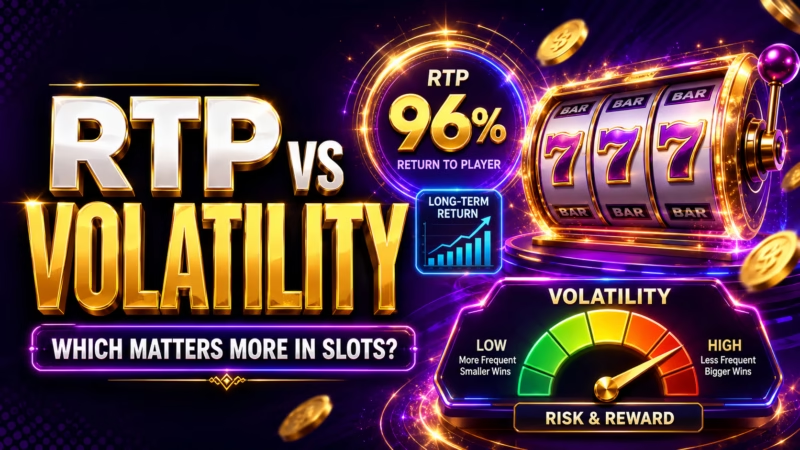
Live dealer games do not automatically have a higher RTP than RNG games. The return to player is primarily determined by the game rules, payout table, available betting options and, in games such as blackjack, the decisions made by the player. When a live dealer game and an RNG version use identical rules, their theoretical RTP should be similar.
Quick takeaways
- Neither live dealer nor RNG technology guarantees a higher RTP.
- Classic blackjack can offer one of the highest RTP figures in either format when favorable rules and correct basic strategy are used.
- European single-zero roulette normally has a higher RTP than American double-zero roulette, regardless of whether the wheel is physical or digitally generated.
- Side bets, multipliers and game-show features often use different payout models from the base game.
- RTP is a long-term statistical percentage, not a prediction of what will happen during one session.
This comparison is most useful for players choosing between live blackjack, roulette or baccarat and their computer-generated equivalents. Players should be more cautious when comparing games with different names, bonus mechanics or side bets, because visually similar games may use substantially different rules.
What Does RTP Mean in Casino Games?
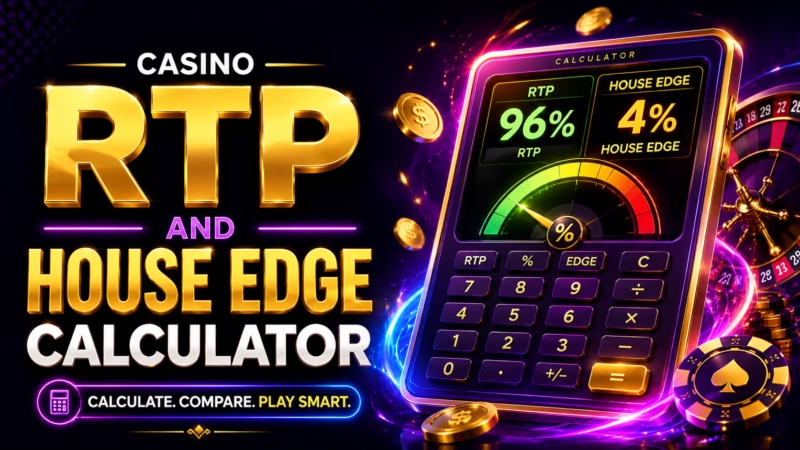
Return to player, or RTP, is the theoretical percentage of wagered money that a game is designed to return as prizes over a very large number of rounds. A game with a theoretical RTP of 97% is designed to retain approximately 3% as the house edge over the long term.
RTP does not mean that a player should expect to receive $97 back from every $100 wagered during a particular session. Actual short-term results can be much higher or lower because RTP is calculated across a large volume of gameplay. Previous wins and losses also do not make an independent random result more likely to occur next.
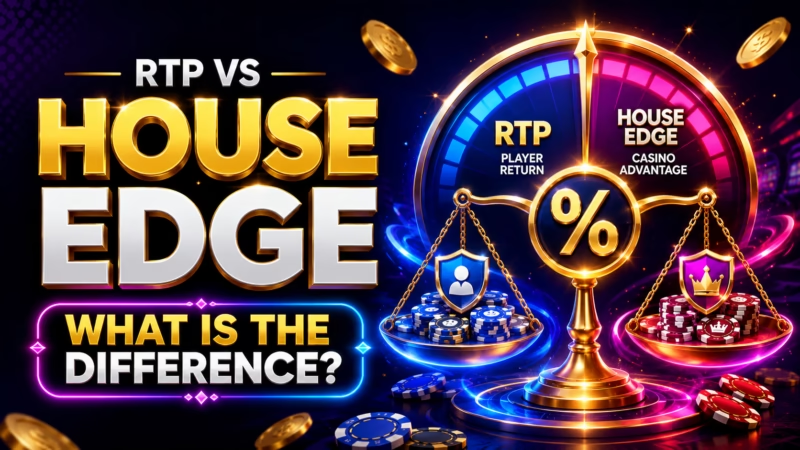
RTP + house edge = approximately 100%
For example, a 2.70% house edge corresponds to an RTP of approximately 97.30%. This relationship can become more complicated when a game includes progressive jackpots, optional side bets or multiple wager types with separate payout tables.
Live Dealer vs RNG RTP: The Direct Comparison
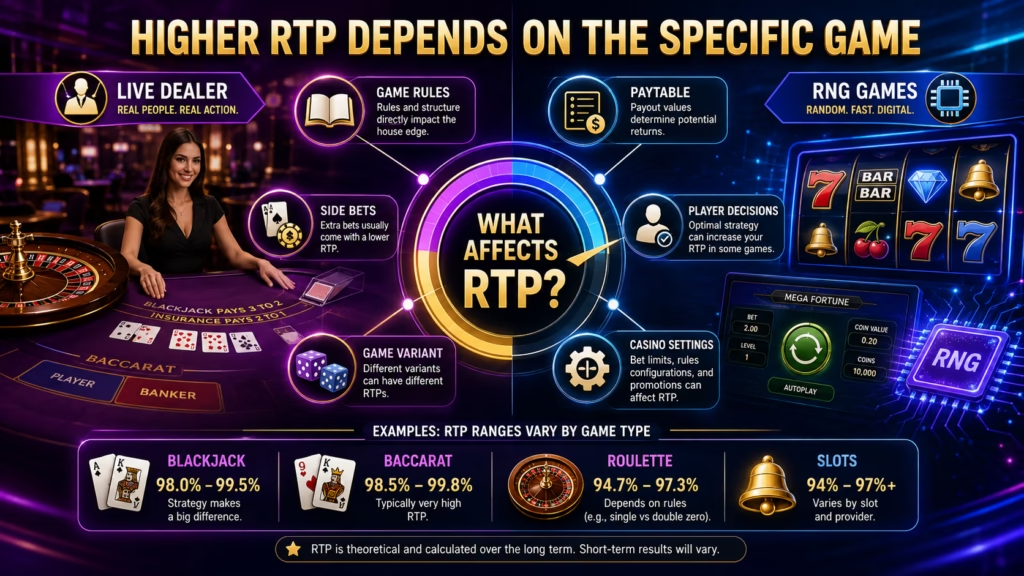
The live dealer vs RNG RTP comparison is mainly a comparison of rules, not technology. A physical roulette wheel does not produce a better theoretical return simply because a dealer spins it, and a digital blackjack table does not necessarily have a lower return because software deals the cards.
Live dealer games use physical equipment such as cards, shoes, roulette wheels and dealing devices. RNG games use software to select outcomes randomly according to the programmed game mathematics. Both formats require integrity controls appropriate to the technology being used.
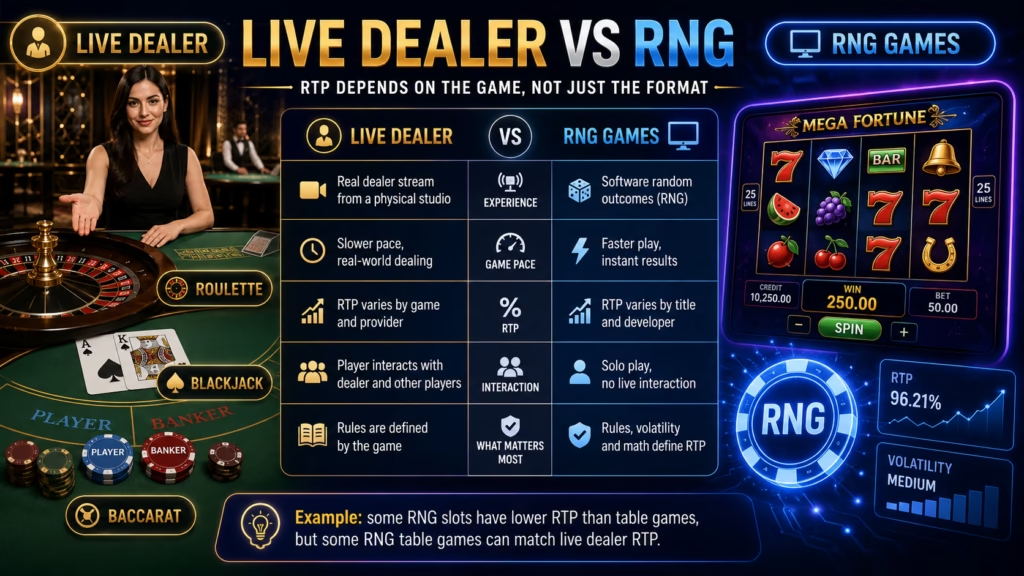
| Factor | Live dealer games | RNG games |
| Result generation | Physical cards, wheels or equipment | Random number generator |
| Main influence on RTP | Rules, payouts and player decisions | Programmed rules, payouts and player decisions |
| Playing speed | Usually slower | Usually faster |
| Rule variety | Depends on available tables | Often offers more versions |
| Human interaction | Real dealer or presenter | No live dealer |
| RTP advantage | No automatic advantage | No automatic advantage |
| Main risk | Side bets and altered table rules | Rapid play and unclear game variants |
The most reliable comparison is therefore not “live dealer versus RNG.” It is “specific live game rules versus specific RNG game rules.”
Blackjack: Which Format Has the Higher RTP?
Live dealer blackjack and RNG blackjack can both offer a high theoretical RTP. The decisive factors are the blackjack payout, number of decks, dealer rules, doubling rules, surrender availability, splitting restrictions and the strategy used by the player.
A blackjack game becomes less favorable when it pays 6:5 instead of 3:2 for a natural blackjack. Restrictions on doubling or splitting may also reduce RTP. Conversely, rules such as double after split can improve the theoretical return when used correctly.
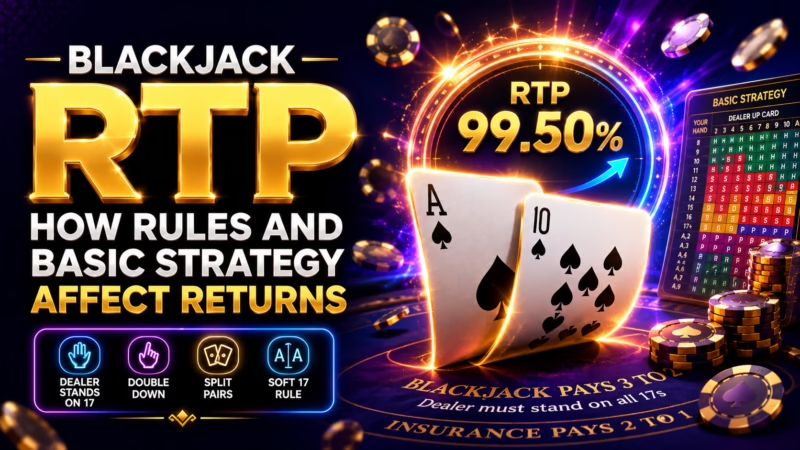
Some live blackjack versions can reach an RTP above 99% when favorable rules are combined with correct basic strategy. This does not mean that every live blackjack table offers the same percentage. An RNG blackjack game could offer an equal or higher RTP if its rules are more favorable, or a lower RTP if it uses unfavorable payouts, limited player options or modified rules.
What to check before playing blackjack
- Whether blackjack pays 3:2 or 6:5
- Whether the dealer stands or hits on soft 17
- How many decks are used
- Whether doubling after a split is allowed
- Whether resplitting aces is allowed
- Whether surrender is available
- Which side bets are offered
- Whether the displayed RTP assumes perfect basic strategy
The published blackjack RTP often assumes mathematically correct decisions. A player who regularly deviates from basic strategy may experience a lower effective return than the advertised theoretical percentage.
Roulette: Physical Wheel or RNG Software?
Roulette RTP is determined mainly by the number of zero pockets and the payout rules. Whether the result comes from a physical wheel or RNG software does not change the underlying probability when the wheel layout and payouts are identical.
Standard European roulette has 37 pockets: numbers 1 to 36 and a single zero. With the usual 35:1 payout for a straight-up number, its theoretical RTP is approximately 97.30%.
Standard American roulette has 38 pockets because it adds a double-zero pocket. Under the usual payout structure, its theoretical RTP is approximately 94.74%. Both live and RNG roulette can use either a single-zero or double-zero layout, so the wheel format matters more than whether a dealer is present.
French roulette may be more favorable for certain even-money bets when rules such as La Partage apply. Under La Partage, only half of an even-money wager is lost when the ball lands on zero. Availability and exact application depend on the specific table.
Multiplier roulette requires a separate comparison
Multiplier roulette should not be compared with classic roulette by looking only at the maximum advertised payout. These games may reduce the normal straight-up payout to fund randomly selected multipliers.
Some multiplier roulette games pay less than the traditional 35:1 on an ordinary straight-up win while selected numbers can receive larger multipliers. Live and RNG versions can use similar bonus structures, so the important question is the complete payout model, not whether a real wheel is visible.
Baccarat: Live Dealer vs RNG RTP
Live dealer baccarat and RNG baccarat normally follow the same drawing rules, so the RTP can be similar when the commission, payouts and betting options match.
In traditional baccarat, the Banker bet usually provides the highest theoretical RTP among the three main wagers. The Player bet is generally close behind, while the Tie bet normally carries a much larger house edge. Exact percentages depend on the rules, number of decks and commission structure.
“No Commission” baccarat should not be assumed to offer a better return. Removing the standard Banker commission usually requires another rule adjustment, such as reducing the payout when the Banker wins with a particular total. That modification can change the RTP.
Side bets on pairs, totals, card combinations or bonus outcomes use separate probabilities and payout tables. A high-paying side bet can have a much lower RTP than the main Banker or Player wager even though both appear on the same table.
Do RNG Games Offer More RTP Choices?
RNG platforms often provide more game variations because software can offer several blackjack, roulette or baccarat versions without requiring separate studios, dealers and physical tables. This can make it easier to find favorable rules, but it also creates more opportunities to select a poor variant by mistake.
RNG games also tend to run faster. Faster gameplay does not reduce the theoretical RTP per round, but it can increase the amount wagered per hour. A player completing 150 rounds can expose more money to the house edge than a player completing 50 rounds at the same stake.
Are Live Dealer Games Fairer Than RNG Games?
A live dealer game is not automatically fairer because the player can watch the cards or wheel. Live games require controls over physical equipment, card shuffling, dealing procedures, wheel performance, video feeds and result recording. RNG games require controls over software, random number generation and the programmed payout model.
The visible dealer may make the process easier to understand, but visual transparency is not a substitute for regulation and game rules. Players should use legal operators in their jurisdiction and check that rules, payouts and house-edge information are clearly available.
Independent testing is particularly important for RNG products because players cannot personally observe the software selecting results. Testing claims should be checked for the specific provider, operator and regulated market rather than assumed to apply to every game online.
Common RTP Myths
“A real dealer improves the odds”
A dealer presents and manages the game but does not improve the mathematical payout percentage. Rules such as the number of decks, blackjack payout or roulette wheel layout determine the theoretical return.
“RNG games can change because I am winning”
A properly configured random game does not need to compensate for an individual player’s recent results. Independent random outcomes do not become more favorable after losses or less favorable after wins.
“The highest maximum payout means the highest RTP”
Maximum payout and RTP measure different things. A game can advertise a large multiplier while returning a lower percentage overall because the multiplier occurs rarely or because ordinary winning bets pay less.
“A 99% RTP means I will lose only 1%”
A 99% theoretical RTP describes a long-term mathematical average. A single player can lose substantially more than 1% of the amount wagered during a short session.
“Past roulette results show what will happen next”
A sequence of red results does not make black due on the next independent spin. History panels describe previous outcomes, but they do not change the probabilities of the next valid spin.
How to Choose Between Live Dealer and RNG Games
Choose the specific rules first and the format second.
A live dealer game may suit players who prefer a slower pace, visible physical equipment and interaction with a dealer. The slower rhythm can also make it easier to track spending, although this depends on the player.
An RNG game may suit players who prefer instant availability, private play, lower table limits or the ability to control the pace. The faster format requires stricter limits because it can produce considerably more betting rounds in the same period.
Checklist before choosing a game
- Open the rules or information screen and find the published RTP or house edge.
- Check whether the percentage applies to the base wager or a side bet, then review blackjack payouts, roulette zeros or baccarat commission rules.
- Do not assume that similarly named games are mathematically identical. Compare their minimum bets, rules and expected playing speed.
- Set fixed spending and time limits before starting, and leave when either limit is reached instead of trying to recover losses.
RTP should be treated as a comparison tool, not a winning strategy. A higher-RTP game may reduce the theoretical long-term cost of play, but it cannot guarantee a profitable session.
How This Information Was Reviewed
This comparison is based on the mathematical relationship between RTP, house edge, game rules and payout structures. Live dealer and RNG formats were evaluated according to how results are produced, which rules influence the theoretical return and how playing speed affects total wagering.
Players should verify the displayed RTP, paytable, blackjack rules, roulette layout, baccarat commission and side-bet payouts inside the specific game. Operators and providers may offer several configurations of the same title.
RTP, volatility and bonus features do not predict an individual result. Casino games should be treated as paid entertainment rather than a way to make money. Players should stop when gambling is no longer enjoyable, when planned limits are reached or when they feel pressure to recover losses.
FAQ
Do live dealer games have a higher RTP than RNG games?
No. Live dealer games do not automatically have a higher RTP. The theoretical percentage depends on the rules and payouts of the specific game. Identical live and RNG rules should produce a similar theoretical return.
Is live blackjack better than RNG blackjack?
Live blackjack is not inherently better mathematically. Compare the blackjack payout, dealer soft-17 rule, deck count, splitting options, doubling rules and surrender availability. The format should be a secondary consideration.
Can live blackjack have a 99% RTP?
Yes. Some live blackjack variants can publish an RTP above 99% when favorable rules and correct basic strategy are used. The exact percentage must be checked because different tables may use different rules.
Which has a higher RTP, live roulette or RNG roulette?
Neither format has an automatic advantage. A single-zero RNG roulette game normally has a higher RTP than a double-zero live roulette game, while a single-zero live game can match a comparable single-zero RNG version.
Does a real roulette wheel change the house edge?
No. A physical wheel does not change the theoretical house edge when the number of pockets and payouts are the same. A second zero, special multiplier rules or altered payouts can change the RTP.
Are RNG casino games rigged?
A properly regulated RNG game should generate results according to its approved mathematical design. Players should check the operator’s legal status, provider information, published rules and RTP instead of assuming that every online game is equally controlled.
Do side bets have the same RTP as the main game?
Usually not. Side bets use separate probabilities and payout tables. Their RTP may be substantially different from the base blackjack, baccarat or roulette wager, so each bet should be checked independently.
Does faster RNG gameplay affect RTP?
Faster play does not normally change the RTP per round, but it can increase total wagering per hour. More rounds create more exposure to the house edge and may cause a bankroll to be spent faster.
Can RTP predict whether I will win today?
No. RTP cannot predict the result of a session, hand or spin. It is a long-term theoretical average calculated across a large number of rounds.
Should I always choose the game with the highest RTP?
A higher RTP is generally a useful comparison factor, but it should not be the only criterion. Consider betting limits, playing speed, volatility, rules and whether the game encourages side bets or rapid repeat wagering.
Brief Conclusion
Live dealer and RNG games can offer nearly identical RTP when they use the same rules and payouts. The strongest differences usually come from blackjack conditions, roulette wheel layouts, baccarat commissions, side bets and bonus mechanics, not from whether the result is produced by physical equipment or software.
Compare the exact game rules before playing, use RTP only as a long-term reference and set firm spending limits. No RTP percentage can guarantee a win in a particular session.