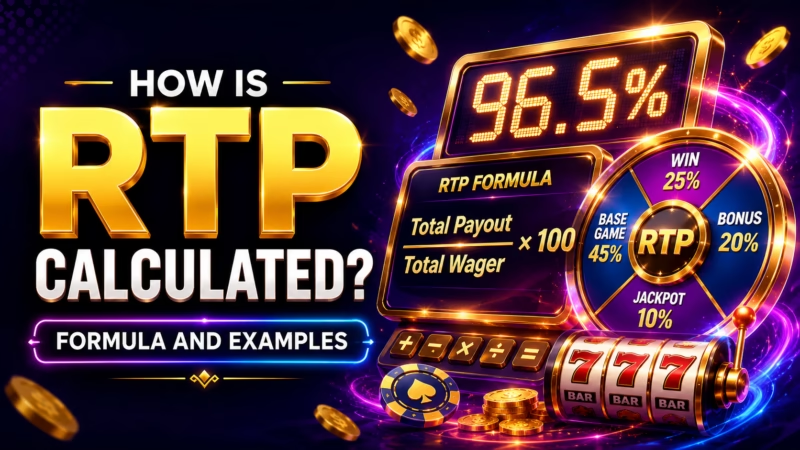
Progressive jackpot RTP is the theoretical percentage of wagers returned through both regular game prizes and, when included, progressive jackpot payouts. Part of each eligible wager may contribute to a growing jackpot pool, which means less of the game’s return may come from frequent base-game wins and more may be concentrated in a rare jackpot result.
This distinction matters because two slots with the same advertised RTP can feel completely different. A standard slot may distribute most of its theoretical return through regular wins and bonus features, while a progressive jackpot slot may reserve part of its return for a prize that very few players will ever trigger.
Key points
- Progressive jackpot RTP may be displayed as one combined percentage or divided into base-game and jackpot components.
- Jackpot contribution can reduce the portion of RTP returned through ordinary spins.
- A contribution rate is not always identical to the jackpot RTP component.
- Progressive jackpots usually add substantial volatility because a small number of very large wins account for part of the theoretical return.
- RTP describes long-term game mathematics, not the expected result of one session.
Progressive jackpot games may appeal to players who accept lower win consistency in exchange for access to a potentially much larger prize. Players with limited budgets or those who prefer frequent small wins should pay particular attention to the base-game RTP rather than relying only on the total advertised percentage.
What Is Progressive Jackpot RTP?
Progressive jackpot RTP is the theoretical return of a casino game that includes access to one or more jackpots funded by player wagers. A progressive jackpot starts from a predetermined seed value and increases as eligible bets contribute money to its pool.
A game may present its RTP in either of these formats:
1. Combined RTP: One percentage covering base-game wins, bonus features and progressive jackpots.
2. Split RTP: Separate percentages for the base game and the jackpot component.
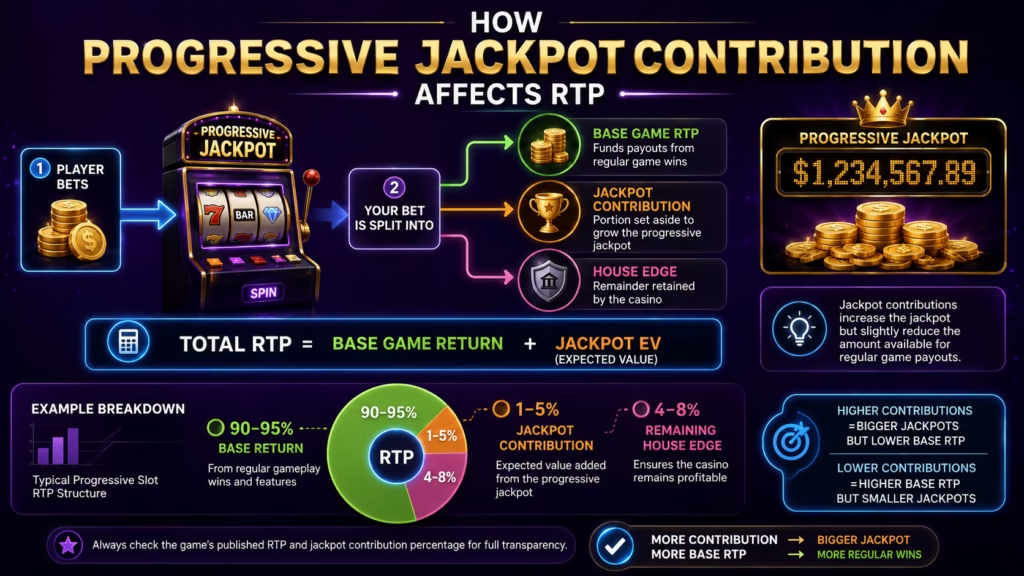
For example, a progressive slot might display a total theoretical RTP of 96%, consisting of a 94.5% base-game return and a 1.5% jackpot component. The numbers are hypothetical, but they demonstrate why the total figure alone does not reveal how frequently value is returned during normal play.
Regulatory guidance may allow progressive jackpot RTP to be shown as one combined figure or divided into base-game and jackpot components. The rules should also explain jackpot funding, seed values, ceiling values and player eligibility.
What Is Jackpot Contribution?
Jackpot contribution is the portion of an eligible wager allocated to a progressive jackpot system. The contribution may feed one jackpot, several jackpot tiers, a seed fund, a reserve pool or another part of the progressive system.
Suppose a player stakes $1 and the game allocates 1 cent to its progressive jackpot structure. That represents a 1% contribution from the wager. The remaining game mathematics determine how much theoretical value is returned through ordinary symbols, bonus rounds and other prizes.
The player usually does not pay jackpot contribution as a separate charge. It is generally built into the cost and mathematical design of the wager. However, optional jackpot side bets can operate differently, so the game rules should always be checked.
How Jackpot Contribution Affects RTP
Jackpot contribution changes where the theoretical return is distributed. A larger jackpot component generally means that more of the game’s expected return depends on rare jackpot awards and less comes from regular gameplay.
Total RTP = Base-game RTP + Jackpot RTP component
Consider this hypothetical comparison:
| Game | Base-game RTP | Jackpot component | Total RTP |
| Standard slot | 96.0% | 0% | 96.0% |
| Progressive Slot A | 95.0% | 1.0% | 96.0% |
| Progressive Slot B | 93.5% | 2.5% | 96.0% |
All three examples show the same total RTP, but they would not necessarily provide the same playing experience. Progressive Slot B places a greater share of its theoretical return inside the jackpot system. Players who do not win a jackpot may therefore experience a return closer to the lower base-game component over ordinary play.
This does not mean that Progressive Slot B is malfunctioning or secretly withholding wins. It means that its mathematical return is more heavily concentrated in a rare outcome.
Jackpot Contribution Is Not Always the Same as Jackpot RTP
The jackpot contribution rate and jackpot RTP component are related, but they should not automatically be treated as identical.
A contribution rate describes how much wagered money enters the progressive system. The jackpot RTP component describes the theoretical value expected to be returned to players through jackpot awards. The two values can differ because the progressive structure may include:
- A guaranteed starting or seed amount
- Multiple jackpot levels
- Reserve pools used after a jackpot resets
- Capped jackpots
- Contributions redirected after a ceiling is reached
- Different eligibility or trigger probabilities at different bet levels
For capped jackpots, the rules should explain what happens to contributions collected after the maximum jackpot value is reached. Money may be redirected to an overflow fund, reserve pool or another jackpot tier.
Players should therefore avoid assuming that a listed 1% contribution automatically creates a 1% jackpot RTP component. The official paytable or help screen is the correct place to verify how the game calculates and presents its return.
Why Progressive Jackpot Slots Can Feel Lower Paying
Progressive jackpot slots can feel less generous because part of their theoretical return may be tied to extremely rare prizes. The ordinary game can consequently produce a lower return than the combined RTP suggests.
Progressive jackpots also tend to be highly volatile. Jackpots are normally infrequent and large, which makes their short-term RTP difficult to measure and means the base game and progressive component should be considered separately.
Imagine that two slots both advertise a 96% RTP:
- The first returns nearly all of its theoretical value through regular wins and bonus rounds.
- The second has a 94% base-game RTP plus a 2% progressive jackpot component.
A player completing a few hundred spins is far more likely to notice the base-game behavior than the theoretical value of the jackpot. This is why the second game may feel harsher even though both games display the same total RTP.
Does a Larger Jackpot Increase the Effective RTP?
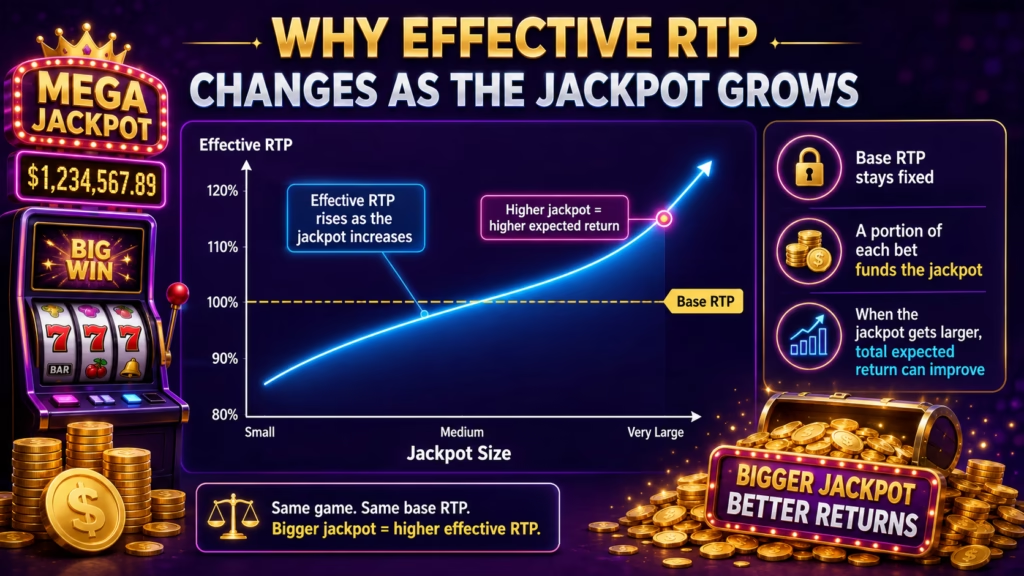
A larger current jackpot can increase the mathematical value of the jackpot opportunity when the trigger probability and eligibility rules remain unchanged. The basic expected jackpot value depends on the probability of winning and the amount available.
Jackpot RTP component = Jackpot probability × Jackpot value ÷ qualifying wager
For a game with multiple jackpot tiers, the expected value of each tier would be calculated separately and then combined.
However, the advertised RTP may not update every time the jackpot meter changes. A published percentage may be based on a long-term average jackpot value, a reset value or another method specified in the game mathematics. Players should not assume that the number displayed in the paytable represents the exact real-time RTP at the current meter value.
A large jackpot also does not mean the game is due. Previous spins should not make a jackpot automatically more likely unless the official rules specifically use a probability that changes with contributions, time or another disclosed condition.
Combined RTP Versus Base-Game RTP
The base-game RTP is usually the more useful number for understanding ordinary play. It represents the theoretical return without the progressive jackpot component.
The combined RTP is useful for comparing the full mathematical value of eligible wagers, but it can hide how much return depends on an exceptionally rare prize.
| RTP figure | What it includes | What it helps explain |
| Base-game RTP | Regular wins and included non-jackpot features | How the game may behave without jackpot awards |
| Jackpot RTP | Expected value of progressive prizes | How much theoretical return depends on jackpot wins |
| Combined RTP | Base game plus jackpot component | The game’s complete theoretical return for eligible wagers |
Games connected to progressive systems should be evaluated at base-game level separately because large, infrequent jackpots can distort actual performance measurements.
Jackpot Eligibility Can Change the Relevant RTP
A player only receives the complete progressive jackpot RTP if the wager qualifies for the jackpot under the game’s rules.
Eligibility may depend on:
- Activating an optional jackpot bet
- Playing at a required stake level
- Betting on all paylines
- Using a specific coin value
- Selecting a qualifying game mode
- Playing for real money rather than in demo mode
- Participating from an eligible casino or jurisdiction
Some games allow every stake to trigger the jackpot but scale the probability according to the amount wagered. Other games require a fixed side bet or minimum stake. The rules should clearly state when a player is not eligible and what theoretical RTP applies without jackpot access.
Betting more should not be assumed to improve percentage return. A larger wager may increase the potential prize or number of qualifying chances, but it also increases the amount at risk. The exact relationship must be confirmed in the official rules.
Local and Networked Progressive Jackpots
The type of progressive system affects jackpot growth and volatility, although it does not by itself reveal whether a game has a good RTP.
Standalone jackpot
A standalone jackpot is connected to one game or machine. It usually grows more slowly because fewer wagers contribute to the pool. The jackpot may be smaller, but the game can still allocate a meaningful percentage of its return to the progressive prize.
Local progressive jackpot
A local jackpot connects several games within one casino or operator network. Contributions from more players can increase the jackpot faster than a standalone system.
Wide-area or networked jackpot
A networked jackpot may collect contributions from many casinos, games or locations. The wider pool can support very large prizes, but the jackpot may account for a noticeable share of the total RTP and add substantial volatility.
A larger network does not automatically mean better returns. Players should compare the base-game RTP, total RTP, qualifying stake and jackpot rules rather than judging the game only by the displayed prize.
Common Progressive Jackpot RTP Myths
A growing jackpot must be close to paying
A growing jackpot does not normally show that a win is imminent. The meter shows accumulated value, not necessarily the probability of the next spin winning.
A 96% progressive slot plays like any other 96% slot
Two games with the same total RTP may distribute returns differently. A progressive slot can allocate more value to rare jackpots and less to ordinary wins.
Every contribution from my bet stays in the visible jackpot
Contributions may be divided among jackpot tiers, seed funds, reserve pools or overflow systems. The visible meter may represent only one part of the structure.
Higher bets always have higher RTP
Higher stakes may be required for eligibility or may change jackpot odds, but this varies by game. A larger bet does not automatically improve the return percentage.
RTP tells me how much I will get back today
RTP is a long-term theoretical average, not a session-level promise. A 96% RTP does not mean that every $100 wagered returns $96 to the same player.
How to Evaluate a Progressive Jackpot Game
Before playing, use the following checks:
1. Find the exact RTP. Check whether the percentage is combined or divided into base-game and jackpot components.
2. Confirm eligibility. Identify the minimum wager, required paylines and any optional jackpot bet.
3. Check the base-game return. This figure is often more relevant to players who are unlikely to trigger the jackpot.
4. Read the contribution rules. Look for information about seed values, reserve pools, jackpot tiers and capped amounts.
5. Compare volatility. A progressive jackpot can make the complete game substantially more volatile.
6. Review all RTP configurations. Some providers allow casinos to select from several approved RTP versions.
7. Check the current paytable. Casino listings and third-party reviews may contain outdated or operator-specific figures.
8. Set a fixed spending limit. Jackpot size should not be used as a reason to increase stakes or continue beyond a planned budget.
Players seeking frequent smaller wins may prefer games with a stronger base-game RTP and lower volatility. Players primarily interested in the possibility of a very large prize may accept a larger jackpot component, provided they understand that the probability of winning it can be extremely low.
How This Information Was Reviewed
This explanation is based on the mathematical separation between base-game returns and progressive jackpot returns, together with commonly used standards covering RTP disclosure, jackpot funding, eligibility, seed values, caps and random outcomes.
The exact RTP, contribution rate, trigger probability and eligibility requirements must still be checked in the game’s current paytable or help screen. These values may vary between games, casinos and approved configurations.
RTP, volatility and jackpot size do not guarantee a specific result. Progressive jackpot games should be treated as paid entertainment rather than a method of earning money. Stop playing when the planned time or spending limit has been reached, regardless of how large the jackpot has become.
FAQ
What is progressive jackpot RTP?
Progressive jackpot RTP is the theoretical percentage of wagers returned through regular game prizes and progressive jackpot awards. It may be displayed as one combined figure or separated into base-game and jackpot components.
How does jackpot contribution affect RTP?
Jackpot contribution moves part of the game’s theoretical value into the progressive prize system. A larger jackpot component can leave a smaller percentage available for regular base-game wins, even when the total RTP remains unchanged.
Is jackpot contribution included in the advertised RTP?
Jackpot contribution may be included in the advertised RTP, but presentation varies. Some games show one combined percentage, while others disclose the base-game and progressive components separately. The paytable should state which method is used.
Is the jackpot contribution rate equal to jackpot RTP?
The jackpot contribution rate is not necessarily equal to the jackpot RTP component. Contributions may fund seed amounts, reserves, multiple prize tiers or overflow pools, so the exact relationship depends on the game rules.
Does the RTP increase when a progressive jackpot grows?
The mathematical value of the jackpot opportunity may increase as the prize grows, provided the trigger probability and qualifying wager remain unchanged. However, the published RTP may be based on an average or reset jackpot value and may not update with the live meter.
Can I receive the advertised RTP without qualifying for the jackpot?
A player who is not eligible for the jackpot may have a lower applicable RTP than the combined figure. Check whether a minimum bet, side bet, active payline setting or specific mode is required.
Are progressive jackpot slots lower RTP than regular slots?
Progressive slots are not always lower in total RTP, but their base-game RTP may be lower because part of the return is reserved for rare jackpot prizes. Compare both the combined percentage and base-game component.
Does a higher bet improve jackpot RTP?
A higher bet only improves jackpot eligibility or probability when the rules explicitly say so. Increasing the stake also increases financial exposure, so players should not raise bets based on assumptions about better returns.
Can RTP predict whether I will win a jackpot?
RTP cannot predict a jackpot win or the result of a playing session. It represents a theoretical average across a very large number of wagers, while individual outcomes remain random.
Brief Conclusion
Progressive jackpot contribution affects returns by directing part of each eligible wager toward rare jackpot prizes. The total RTP may look competitive, but the base-game RTP reveals how much theoretical value remains in ordinary gameplay. Check whether RTP is combined or split, confirm jackpot eligibility and never treat a growing jackpot as evidence that a win is due.