The Sic Bo house edge ranges from about 2.78% on the most favorable standard bets to more than 30% on some high-payout bets, and certain paytables can push the casino advantage even higher. Big, Small, Odd and Even are generally the lowest-house-edge choices at 2.78% when triples lose, while doubles, triples and some specific totals can carry much larger mathematical disadvantages.
The important detail is that there is no universal Sic Bo house edge by bet. The probability of rolling each combination is fixed with three fair six-sided dice, but casinos and game providers can change the payouts. A better payout directly reduces the house edge, while a lower payout increases it.
Quick takeaways:
- Big and Small normally have a 2.78% house edge.
- Odd and Even also have a 2.78% house edge when triples automatically lose.
- Single Number bets commonly carry a 7.87% house edge.
- Specific Total bets can range from roughly 9.72% to 18.98% on a common paytable.
- Doubles and triples usually offer much larger payouts but often come with significantly higher house edges.
Sic Bo may appeal to players who enjoy simple dice-based betting and want to compare probability with payout size. Players with limited budgets should be particularly careful with high-house-edge combination, double and triple bets because the larger advertised payouts do not mean better mathematical value.
What Is the House Edge in Sic Bo?
The Sic Bo house edge is the theoretical percentage of each wager that the casino expects to retain over a very large number of bets. A 2.78% house edge does not mean that a player will lose exactly $2.78 from a $100 session. It means the theoretical expected loss is $2.78 for every $100 repeatedly wagered under the same rules over the long term.
Sic Bo uses three six-sided dice, creating 216 equally likely ordered outcomes. The probability of each bet can therefore be calculated directly from the number of winning combinations. The casino creates its advantage by paying less than mathematically fair odds for those winning outcomes.
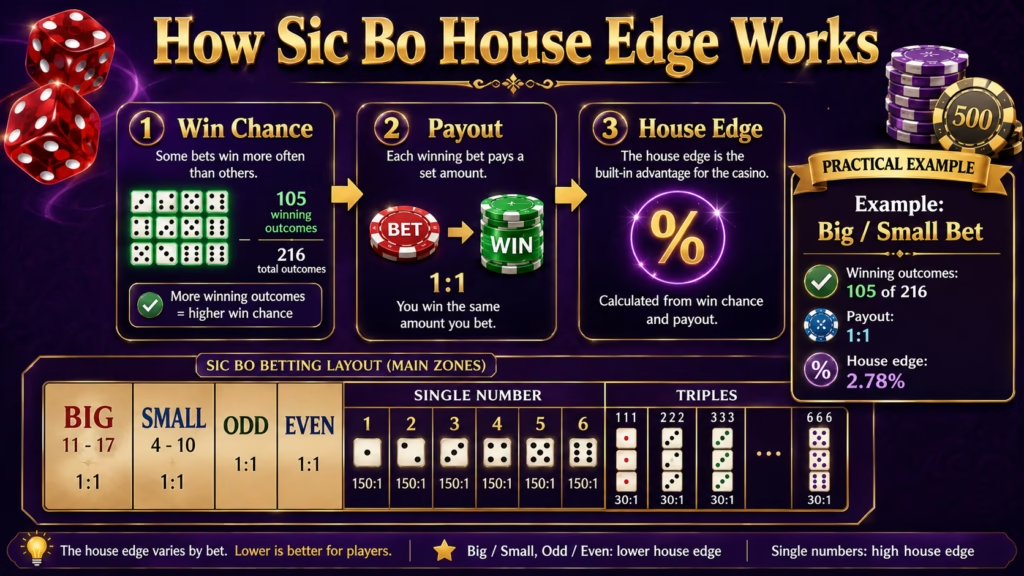
For example, Big wins on totals from 11 through 17 except triples. There are 105 winning combinations out of 216, giving a win probability of approximately 48.61%. A fair payout would need to be slightly better than even money, but standard Sic Bo normally pays 1:1. That difference produces the 2.78% house edge.
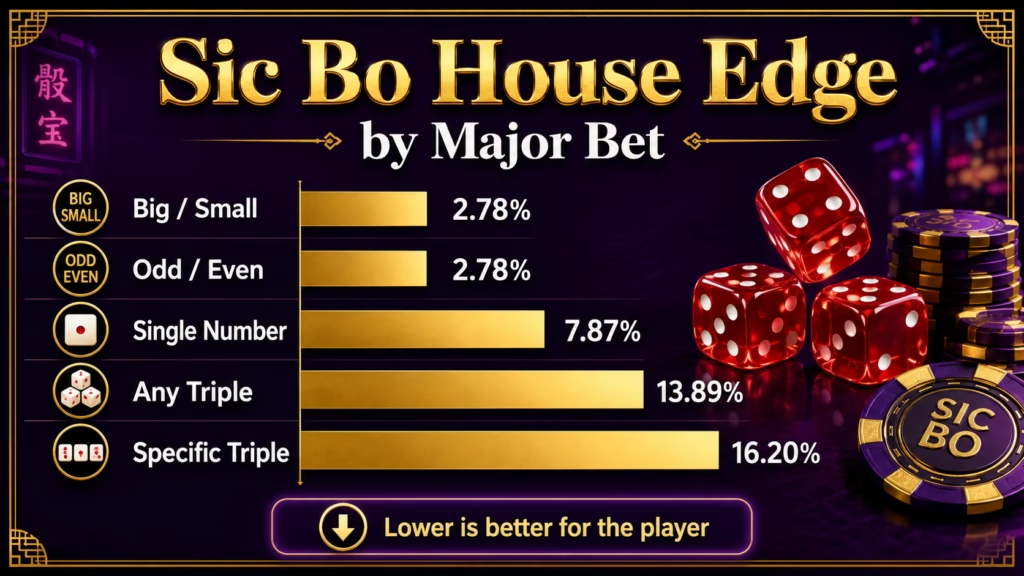
Sic Bo House Edge by Bet
The table below uses a common traditional payout structure as a practical baseline. The exact numbers on a live or online Sic Bo table should always be checked before betting because alternative paytables can materially change the house edge.
| Sic Bo bet | Common payout | Win probability | House edge |
| Small | 1:1 | 48.61% | 2.78% |
| Big | 1:1 | 48.61% | 2.78% |
| Odd | 1:1 | 48.61% | 2.78% |
| Even | 1:1 | 48.61% | 2.78% |
| Total 4 or 17 | 60:1 | 1.39% | 15.28% |
| Total 5 or 16 | 30:1 | 2.78% | 13.89% |
| Total 6 or 15 | 17:1 | 4.63% | 16.67% |
| Total 7 or 14 | 12:1 | 6.94% | 9.72% |
| Total 8 or 13 | 8:1 | 9.72% | 12.50% |
| Total 9 or 12 | 6:1 | 11.57% | 18.98% |
| Total 10 or 11 | 6:1 | 12.50% | 12.50% |
| Specific Triple | 180:1 | 0.46% | 16.20% |
| Any Triple | 30:1 | 2.78% | 13.89% |
| Specific Double | 10:1 | 7.41% | 18.52% |
| Two-Number Combination | 5:1 | 13.89% | 16.67% |
| Single Number | 1:1 / 2:1 / 3:1 | varies by matches | 7.87% |
| Three-number exact combination* | 30:1 | 2.78% | 13.89% |
| Four-number combination* | 7:1 | 11.11% | 11.11% |
*These bets are not available on every Sic Bo table.
Big and Small House Edge
Big and Small have a standard Sic Bo house edge of 2.78%, making them the benchmark low-edge bets on most traditional tables.
Small normally wins when the three dice total 4 through 10. Big wins on totals 11 through 17. A triple such as 3-3-3 or 5-5-5 normally causes both bets to lose even when the numerical total would otherwise fall within the selected range.
There are 105 winning outcomes out of 216 for either bet. At an even-money payout, that creates the 2.78% casino advantage.
For a player primarily comparing bets by mathematical value, Big and Small are usually far more favorable than chasing specific totals, doubles or triples. A lower house edge still does not make either bet profitable or predictable.
Odd and Even House Edge
Odd and Even can also have a 2.78% house edge under rules where any triple causes the bet to lose.
The mathematical structure is almost identical to Big and Small. There are 105 winning combinations out of the 216 possible three-dice results after losing triples are accounted for. The winning probability is approximately 48.61%.
Odd and Even are not available on every layout, so players should check the betting interface instead of assuming these wagers are included.
House Edge on Specific Total Bets
Specific Total bets predict the exact sum of all three dice. Their house edges differ because some totals have many more possible combinations than others, while the casino also changes the payout according to the total.
On the common paytable shown above, 7 and 14 have the lowest house edge among the specific totals at 9.72%. Totals 9 and 12 are much less favorable at 18.98% when they pay only 6:1.
The important comparison is not simply which total occurs most frequently. The payout must also be considered. A total of 10 or 11 occurs in 27 of the 216 outcomes, more often than any other eligible specific total, but a 6:1 payout still leaves a 12.50% house edge.
Why Specific Total Payouts Matter So Much
A small change in the payout can dramatically change the Sic Bo house edge.
- A 6:1 payout on a total of 9 or 12 produces an 18.98% house edge.
- A 7:1 payout on the same total reduces the house edge to 7.41%.
- A total of 4 or 17 has a 15.28% house edge when paying 60:1.
- The same total drops to a 12.50% house edge at 62:1.
This is why comparing the actual paytable is more useful than memorizing a single Sic Bo house edge chart.
Specific Double House Edge
A Specific Double commonly has an 18.52% house edge when it pays 10:1 and wins when at least two of the three dice show the selected number.
For example, a bet on a double 4 wins when the roll contains at least two fours. There are 16 qualifying combinations out of 216 under rules that include 4-4-4 as a winner.
Payout differences are substantial. An 11:1 double reduces the house edge to 11.11%, while an 8:1 version increases it to 33.33% under the same probability structure. Some rule sets also treat triples differently, so the game’s rules need to be checked rather than relying on the bet name alone.
Specific Triple and Any Triple House Edge
A Specific Triple at 180:1 has a house edge of approximately 16.20%. The player chooses one exact triple, such as 6-6-6, which has only one winning outcome among 216 possible rolls.
The huge 180:1 payout can look attractive, but the true probability is only about 0.46%.
An Any Triple bet at 30:1 has a house edge of approximately 13.89%. Any of the six triples qualifies, producing six winning results from 216 outcomes.
Alternative tables can be much worse. For example, a Specific Triple paying 150:1 has a substantially higher house edge than a 180:1 version, and an Any Triple paying 24:1 is also less favorable than a 30:1 version.
Single Number House Edge
The standard Single Number bet has a 7.87% house edge when it pays 1:1 if the selected number appears once, 2:1 if it appears twice and 3:1 if it appears on all three dice.
For one selected number:
- Exactly one match occurs in 75 of 216 outcomes.
- Exactly two matches occur in 15 outcomes.
- Exactly three matches occur in one outcome.
- No match occurs in the remaining 125 outcomes.
Unlike a simple even-money bet, the payout therefore depends on how many dice show the selected number.
Some operators increase the payout for three matches, which lowers the house edge. Single Number returns can therefore differ between software versions.
Two-Number Combination House Edge
A two-number combination, sometimes called a domino or pair combination, wins when both selected different numbers appear among the three dice.
At a 5:1 payout, the house edge is 16.67% because 30 of the 216 possible outcomes contain both chosen numbers.
A payout increase to 6:1 changes the calculation dramatically. The same probability with a 6:1 win produces a house edge of only 2.78%. This makes the paytable particularly important when comparing combination bets.
Which Sic Bo Bets Have the Lowest House Edge?
Big and Small are normally the strongest starting point when comparing Sic Bo bets strictly by house edge, with a standard advantage of 2.78%. Odd and Even can match that figure where available.
A practical ranking under a common paytable looks roughly like this:
- Big / Small / Odd / Even: 2.78%
- Single Number: 7.87%
- Total 7 or 14: 9.72%
- Four-number combination: 11.11%
- Totals 8, 10, 11 or 13: 12.50%
- Higher-edge totals, triples, doubles and combinations after that.
The ranking can change when the casino changes payouts. Some Sic Bo versions offer materially better odds on particular totals, combinations and triples than others.
Common Sic Bo House Edge Mistakes
The biggest mistake is assuming the largest payout offers the best value. A 180:1 Specific Triple sounds more rewarding than an even-money Big bet, but its probability is so low that the house edge can still exceed 16%.
Another mistake is assuming a 2.78% house edge predicts a particular session. Short-term results can be far above or below the theoretical expectation because each roll remains random.
Betting systems also do not change the underlying house edge. Increasing a wager after losses, following recent totals or switching between Big and Small cannot alter the probability distribution of the next independent roll.
Finally, never assume two Sic Bo games use identical rules. Payouts for totals, doubles, triples and Single Number bets can differ materially between versions.
How to Compare Sic Bo Paytables
Before choosing a Sic Bo bet, check four things:
1. The winning condition. Confirm whether triples cancel Big, Small, Odd, Even or other bets.
2. The payout. A difference between 5:1 and 6:1 can radically change the house edge.
3. The exact bet definition. Terms such as Double, Pair, Combination and Domino are not used consistently across every casino.
4. The game-specific rules. Do not assume a live dealer table and an RNG version use identical paytables.
Depending on the exact ruleset, the house edge across Sic Bo wagers can range from low single digits to very high double digits. The displayed payout table therefore matters more than the bet name alone.
How This Information Was Reviewed
The Sic Bo house edge figures in this guide are based on the probabilities created by the 216 possible outcomes of three fair six-sided dice and common published payout structures. The calculations compare the probability of each winning outcome with the amount paid for that result.
The figures should not be treated as universal for every casino. Players should verify the paytable, winning conditions and triple rules inside the specific game before wagering because alternative payouts can change the expected return substantially.
House edge describes long-term mathematical expectation, not what will happen during an individual session. Sic Bo remains a game of chance, and no bet selection, betting progression or previous sequence of rolls can guarantee a profit. Set spending and time limits before playing, and treat casino games as entertainment rather than a source of income.
FAQ
What is the lowest house edge in Sic Bo?
The lowest commonly available Sic Bo house edge is 2.78% on Big and Small bets. Odd and Even can also have a 2.78% edge on tables where those wagers are offered and triples automatically lose. Exact rules should still be checked before playing.
What is the Sic Bo house edge on Big?
The standard Big bet has a 2.78% house edge. Big normally wins when the three dice total 11 through 17, except when the result is a triple. The standard payout is 1:1.
What is the Sic Bo house edge on Small?
The standard Small bet has a 2.78% house edge. Small normally covers totals from 4 through 10, but triples lose even if their total falls inside that range.
Which Sic Bo specific total has the best house edge?
Total 7 or 14 has a 9.72% house edge when it pays 12:1, making it one of the better specific-total bets under a common traditional paytable. Other paytables may produce different rankings.
What is the house edge on a Specific Triple in Sic Bo?
A Specific Triple paying 180:1 has a house edge of approximately 16.20%. If the casino pays only 150:1, the house edge rises to approximately 30.09%. The payout therefore needs to be checked before comparing triple bets.
Is Any Triple better than a Specific Triple?
Any Triple can have a lower house edge than a Specific Triple, depending on the payouts. At common payouts of 30:1 for Any Triple and 180:1 for a Specific Triple, the house edges are approximately 13.89% and 16.20%, respectively. Neither bet guarantees a win.
Does Sic Bo have a fixed house edge?
No. Sic Bo does not have one fixed house edge for the entire game. Each wager has its own probability and payout, and casinos can use different paytables.
Can a betting system reduce the Sic Bo house edge?
No betting progression changes the mathematical house edge of a Sic Bo wager. Raising stakes after losses or following previous dice results changes the amount of money exposed to risk, not the probability or payout of the next independent roll.
Does a lower house edge guarantee smaller losses?
No. A lower house edge improves the long-term mathematical expectation but does not guarantee the result of a short session. Random variation can produce wins or losses well above the theoretical average. Players should use fixed limits and avoid treating house edge as a prediction tool.
Brief Conclusion
The Sic Bo house edge depends mainly on the bet and its payout. Big, Small, Odd and Even are generally the most favorable standard wagers at 2.78%, while many specific totals, doubles and triples carry double-digit house advantages. The most useful habit is to compare the actual paytable rather than the headline payout because even a one-unit change in the odds can materially alter the house edge. Sic Bo outcomes remain random, so lower-house-edge betting can reduce the mathematical disadvantage but cannot guarantee a winning session.