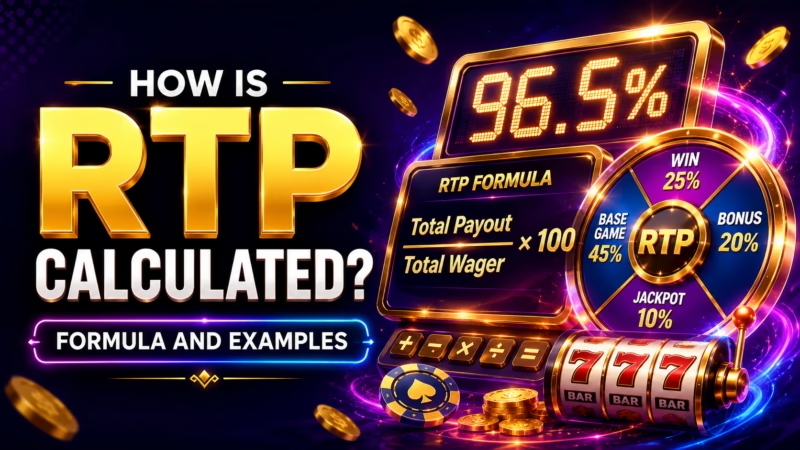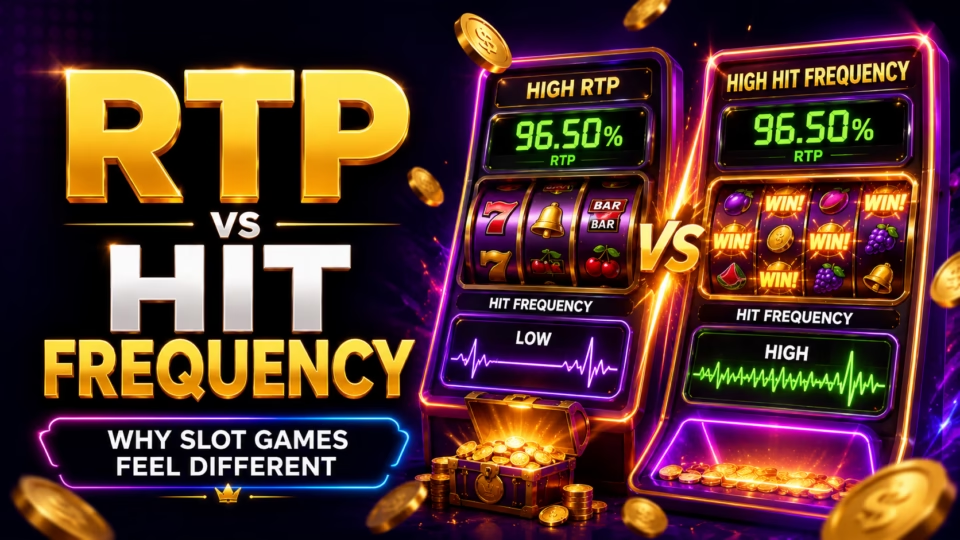
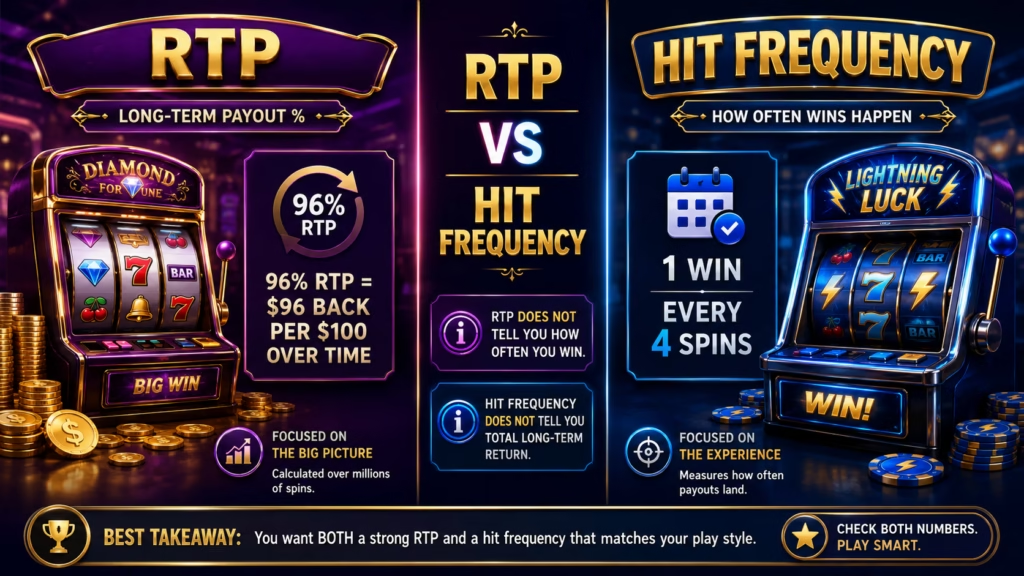
RTP and hit frequency measure different parts of a slot game. RTP estimates how much of all money wagered a game is designed to return over a very large number of spins. Hit frequency estimates how often a spin produces a winning result. A slot can therefore have a high RTP but infrequent wins, or a lower RTP with many small payouts.
Quick takeaways
- RTP measures long-term theoretical return, not how often you will win.
- Hit frequency measures winning-spin frequency, not the size of those wins.
- Two slots with the same RTP can feel different because their payout distributions differ.
- Volatility and bonus frequency also shape the playing experience.
- Neither metric predicts a particular spin or session.
This distinction explains why one 96% RTP game can feel calmer than another. Extra caution is needed when a high hit rate creates constant feedback but many payouts are smaller than the original stake.
What RTP Means in Slots
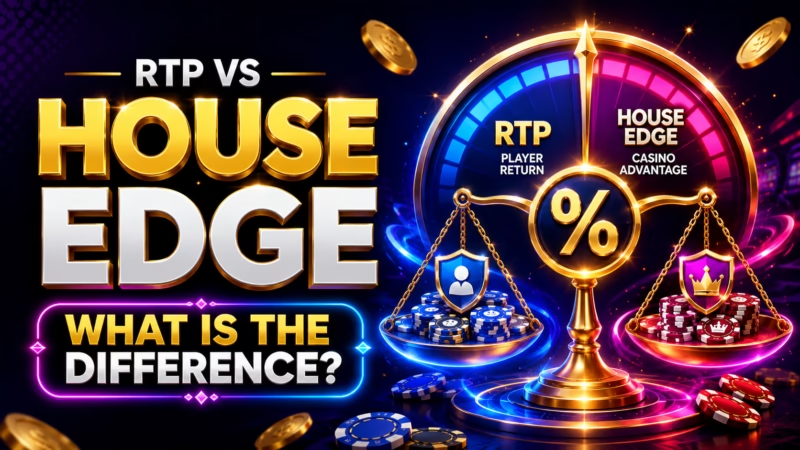
Return to Player, or RTP, is the theoretical percentage of total stakes that a slot is designed to pay back over the long term. A game with 96% RTP theoretically returns $96 for every $100 wagered across a very large sample, while the remaining 4% represents the theoretical house edge.
RTP is not a promise for an individual player. A $100 session on a 96% RTP slot can end with more than $100, much less than $100 or nothing. The percentage becomes meaningful only across a large number of spins and pooled wagers.
RTP also says nothing about payout timing. One game may return value through frequent small wins. Another may allocate more value to rare bonus rounds or large prizes. Both can display the same RTP while producing very different short-term experiences.
Players should check the exact RTP in the game information. Some slots are supplied in several RTP configurations, and the version offered can depend on the casino, market or operating conditions.
What Hit Frequency Means in Slots
Hit frequency is the estimated percentage of spins that produce a payout under the game’s rules. If a slot has a 25% hit frequency, its mathematical model may produce a paying result on roughly one in four spins over a large sample.
A hit does not necessarily mean a profitable spin. If the bet is $1 and the game pays $0.40, the spin may still count as a hit even though the player lost $0.60 overall. This is why frequent hits can still reduce the bankroll.
The definition can vary. One provider may count any base-game payout. Another may include bonus triggers or other events. Some games do not publish hit frequency at all. The paytable or official rules should therefore be checked before comparing percentages.
A 25% hit rate also does not guarantee one win every four spins. Random results can produce several wins close together or a much longer losing sequence.
RTP vs Hit Frequency: The Main Difference
The difference between RTP and hit frequency is simple: RTP measures how much is returned in theory, while hit frequency measures how often a paying result occurs.
| Metric | What it measures | What it does not show |
| RTP | Long-term percentage of stakes returned | How often wins occur |
| Hit frequency | Percentage of spins with a payout | Average win size or long-term return |
| Volatility | How unevenly payouts are distributed | Exact timing of the next win |
| Bonus frequency | How often a feature may trigger | Whether the feature will be valuable |
RTP is mainly a value-distribution metric. Hit frequency is an event-frequency metric. Neither number provides a complete picture without volatility, payout sizes and bonus mechanics.
How Two Slots With the Same RTP Can Feel Different
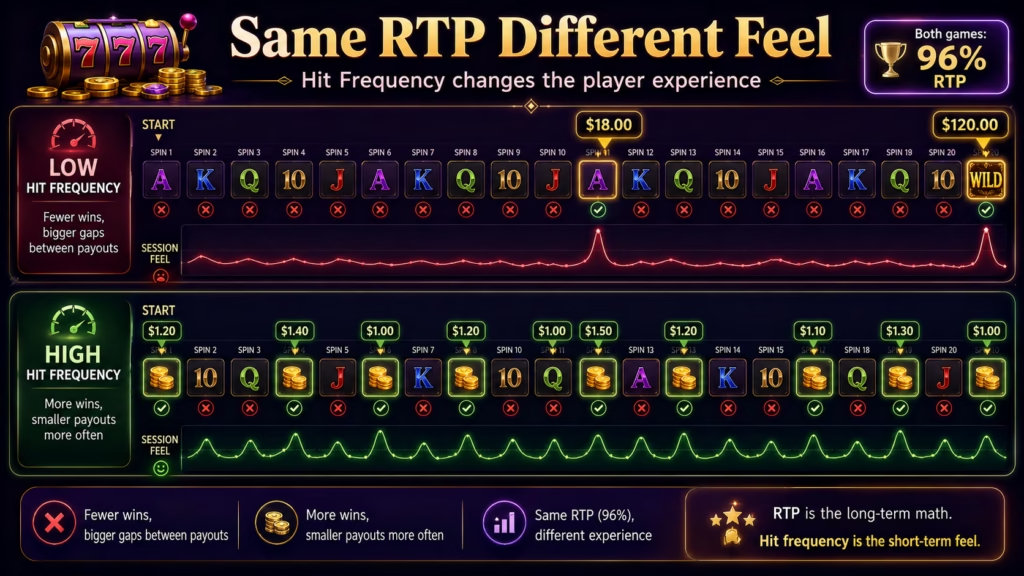
Consider two hypothetical slots with a 96% RTP.
Slot A has a relatively high hit frequency and pays many small amounts. It may return 0.2x, 0.5x or 1x the stake regularly, with fewer dramatic prizes. The game feels active because symbols connect often and the balance moves in smaller steps.
Slot B has a lower hit frequency and places more of its return into occasional larger payouts or bonus rounds. It may produce long stretches without meaningful wins, followed by a larger result. The game can feel harsher even though its theoretical RTP is identical to Slot A.
The difference is payout distribution. RTP describes the total theoretical return, but it does not reveal how that return is divided among small wins, medium wins, bonuses and rare top prizes.
A player comparing only the RTP figures would miss this difference. Both slots may look equal on paper while delivering almost opposite playing experiences.
How Volatility Changes the Picture
Volatility describes how widely slot outcomes tend to vary. Low-volatility slots usually emphasize smaller and more regular payouts. High-volatility slots usually create larger balance swings, with more value concentrated in less frequent, potentially larger wins.
Hit frequency and volatility are related, but they are not interchangeable. A game can record frequent hits while remaining volatile if most ordinary payouts are small and much of the RTP is reserved for rare features.
For example, a slot may produce a paying combination on many spins, but most of those combinations may return less than the stake. A large part of the game’s theoretical value may still be concentrated in a rare free-spins round.
Players who dislike long dry periods often prefer higher hit frequency combined with low or medium volatility. Players who accept larger balance swings may prefer high-volatility games, but the possibility of a larger payout does not make that payout likely during a short session.
Why Frequent Wins Can Still Feel Unprofitable
A high hit frequency can make a slot feel generous because it produces more animations, sounds and balance increases. However, many of those events may be partial returns rather than net wins.
For example, a $1 spin that pays $0.60 is a payout but leaves the player $0.40 behind. Repeated partial returns can create a sense of activity while the bankroll continues to decline.
This is sometimes called a loss disguised as a win. The mathematical result remains a net loss, regardless of celebratory visual or audio effects.
Players should therefore watch the balance and net result, not only the number of winning animations. A slot that displays frequent winning combinations can still reduce the balance quickly if most payouts are smaller than the stake.
Bonus Frequency and RTP Contribution
Bonus frequency measures how often a free-spins round, respin feature or other special event is expected to trigger. It is separate from overall hit frequency because ordinary line wins may occur much more often than bonus rounds.
A slot can have a reasonable hit rate but a rare bonus. If a large share of RTP is assigned to that feature, the base game may feel weak until the feature appears. Another game may trigger bonuses more frequently but give them a lower average value.
This difference can make two games with similar RTP and hit frequency feel very different. One game may rely heavily on a rare bonus round, while another distributes more of its theoretical return through ordinary spins.
Players interested in bonus mechanics should check trigger rules, retriggers, multipliers and any published frequency figures. None of these details guarantees that a feature will trigger or produce a valuable result during a particular session.
How to Compare Slots More Usefully
1. Check the Exact RTP Version
Look for RTP inside the game rules or paytable. Do not assume that a percentage listed on a review page matches every casino version of the slot.
A difference such as 96% versus 94% may be important over a very large volume of wagers, but it still cannot predict the outcome of a short session.
2. Read How Hit Frequency Is Defined
Confirm whether the figure counts any payout, only base-game wins or all game events. Hit-frequency figures published by different providers may not be directly comparable.
A percentage without a clear definition provides limited practical information.
3. Match Volatility to Your Tolerance
Low or medium volatility may suit players who prefer steadier feedback and smaller balance movements. High volatility may suit players who accept longer losing sequences and larger swings.
Volatility should not be confused with winning potential. High volatility changes the distribution of results but does not guarantee a large payout.
4. Examine Payout Distribution
Check common symbol values, the maximum win and the feature structure. A large advertised maximum can be extremely rare and should not be treated as a realistic session target.
The paytable may also show whether ordinary combinations commonly return less than, equal to or more than the selected stake.
5. Consider Bonus Dependence
A game that places much of its RTP inside a rare feature may feel different from one that returns more through the base game.
Players who dislike waiting for bonuses may prefer games where ordinary spins contribute more noticeably to the experience.
6. Use Bankroll Limits
Bet size and session length often matter more to a short session than a small RTP difference. A high hit frequency does not protect a bankroll when most hits return less than the stake.
Players should decide their spending limit before starting rather than increasing bets or extending the session after losses.
Common Myths About RTP and Hit Frequency
“A Higher Hit Frequency Means a Higher RTP”
This is false. A slot can pay often in small amounts and still have a lower RTP than a game with fewer but larger wins.
Hit frequency describes how often payouts occur. It does not describe the total value of those payouts.
“A 96% RTP Slot Returns 96% in Every Session”
This is false. RTP is a long-term theoretical estimate, not a session guarantee. Short-term results can differ sharply from the published percentage.
A player may experience a profit, a small loss or the loss of the entire session budget.
“A High-RTP Slot Should Win More Often”
Not necessarily. A high RTP may be distributed through rare bonuses or larger prizes instead of frequent line wins.
The difference between RTP and hit frequency is precisely why a high-RTP slot can still produce long periods without meaningful payouts.
“A Slot Is Due to Hit After a Losing Streak”
Past spins do not normally make the next random spin more likely to win. A published hit rate describes long-term frequency, not a countdown to the next payout.
Increasing the stake after a losing sequence does not force the game to produce a win.
“More Winning Animations Mean Lower Risk”
Not necessarily. Winning animations can include payouts below the original stake. The net balance change matters more than the number of celebrated results.
Sound and visual effects influence how a result feels, but they do not change its mathematical value.
Which Metric Should Matter Most?
RTP matters most when comparing long-term theoretical value between otherwise similar games. Hit frequency matters most when comparing how active or quiet the game may feel. Volatility matters most when estimating the size and unevenness of balance swings.
No single metric identifies the best slot for every player. Players who value frequent feedback may prefer a higher hit rate. Players who accept longer dry periods may prefer a lower hit rate combined with higher volatility.
Anyone using a limited entertainment budget should prioritize smaller bets, firm spending limits and a game pace that does not encourage rapid overspending. A supposedly suitable mathematical profile does not make a slot safe from losses.
How This Information Was Reviewed
This comparison uses the standard roles of RTP, hit frequency, volatility, payout distribution and bonus frequency. It separates long-term theoretical metrics from short-term outcomes and does not treat any percentage as a prediction.
Players should verify the RTP version, paytable, feature rules, stake limits and hit-frequency definition inside the game. Mathematical configurations, bonus mechanics and availability may vary by operator and jurisdiction.
RTP, volatility and hit frequency do not guarantee wins. Slot games should be treated as paid entertainment, not as a way to earn money. Set a spending limit, avoid chasing losses and stop when play is no longer enjoyable.
FAQ
Is RTP the Same as Hit Frequency?
No. RTP estimates the percentage of total stakes returned over a very large number of spins, while hit frequency estimates how often spins produce payouts. A game can have a high RTP and a low hit frequency, or the opposite.
Can Two Slots Have the Same RTP but Different Hit Frequencies?
Yes. Two slots can both have 96% RTP while distributing their payouts differently. One may produce frequent small wins, while the other may produce fewer but potentially larger wins or place more value inside bonus features.
Does a Higher Hit Frequency Mean Better Chances of Making a Profit?
No. A higher hit frequency means that paying results may occur more often, but many payouts can be smaller than the stake. The player can receive frequent hits while the total balance continues to fall.
What Is Considered a Good Hit Frequency?
There is no universal good hit frequency. A higher rate may suit players who prefer frequent feedback, while a lower rate may suit players who accept longer gaps between payouts. The figure must also be considered alongside volatility and payout sizes.
Is Hit Frequency the Same as Volatility?
No. Hit frequency measures how often payouts occur. Volatility describes how widely payout values and balance movements tend to vary. A slot can have frequent hits and still be highly volatile if most regular wins are small and rare features contain much of the game’s value.
Does a 25% Hit Frequency Mean One Win Every Four Spins?
No. A 25% hit frequency is a long-term mathematical estimate. It does not create a fixed pattern. A player could receive several payouts close together or experience more than four consecutive losing spins.
Is High RTP or High Hit Frequency Better for a Small Bankroll?
Neither metric protects a small bankroll. A higher hit frequency combined with lower volatility may create steadier feedback, but frequent payouts can still be smaller than the stake. A lower bet size and a strict session limit are more important for controlling spending.
Can Hit Frequency Predict When the Next Bonus Will Appear?
No. Overall hit frequency does not predict the next bonus trigger. Bonus frequency is usually a separate metric, and random variation can produce much shorter or longer gaps than the theoretical average.
Where Can I Find a Slot’s RTP and Hit Frequency?
The most reliable place to check is the game’s information screen, paytable or official rules. RTP is commonly displayed, but hit frequency may not be published. The exact RTP version can also vary between casinos.
Do RTP and Hit Frequency Apply to Bonus Buy Features?
Bonus-buy modes may have separate RTP values or mathematical settings. Players should check the rules shown for the feature rather than assuming that the base-game RTP and hit frequency apply unchanged. Availability and terms may also depend on the casino and jurisdiction.
Brief Conclusion
RTP explains the theoretical amount returned over the long term. Hit frequency explains how often payouts occur. Slots feel different because the same RTP can be divided among frequent small wins, rare large payouts and bonus features in completely different ways.
Compare RTP, hit frequency, volatility and payout distribution together. None of these metrics predicts the next spin or guarantees a profitable session.